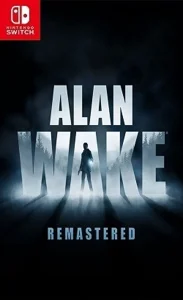
Alan Wake Remastered Switch NSP
Report Link Error
Select the broken download file, then submit the report.
Screenshots
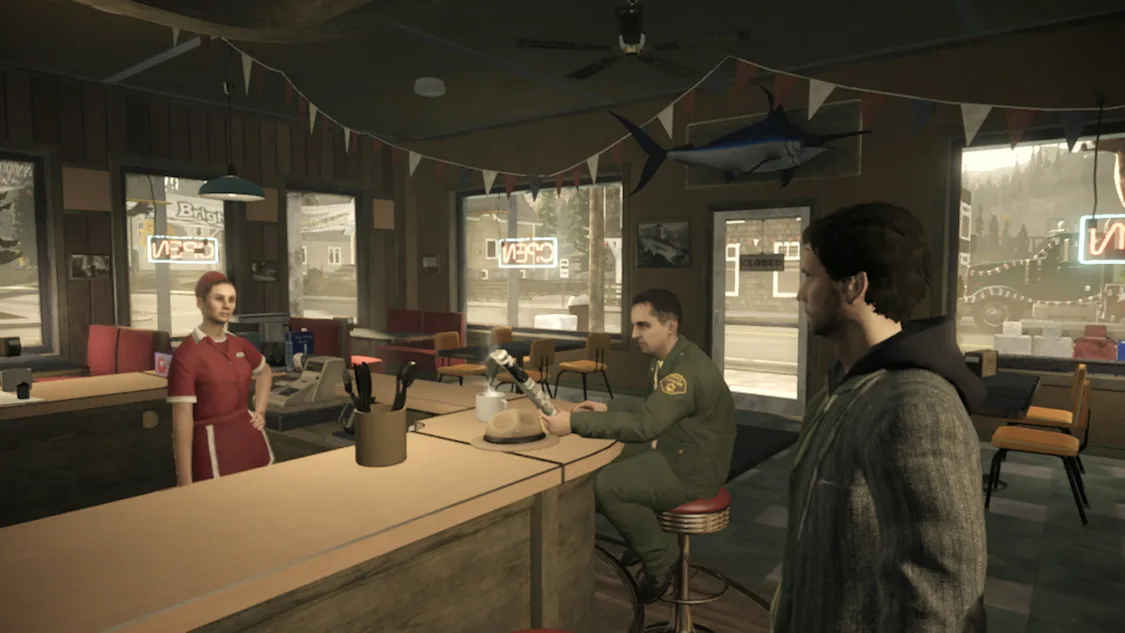
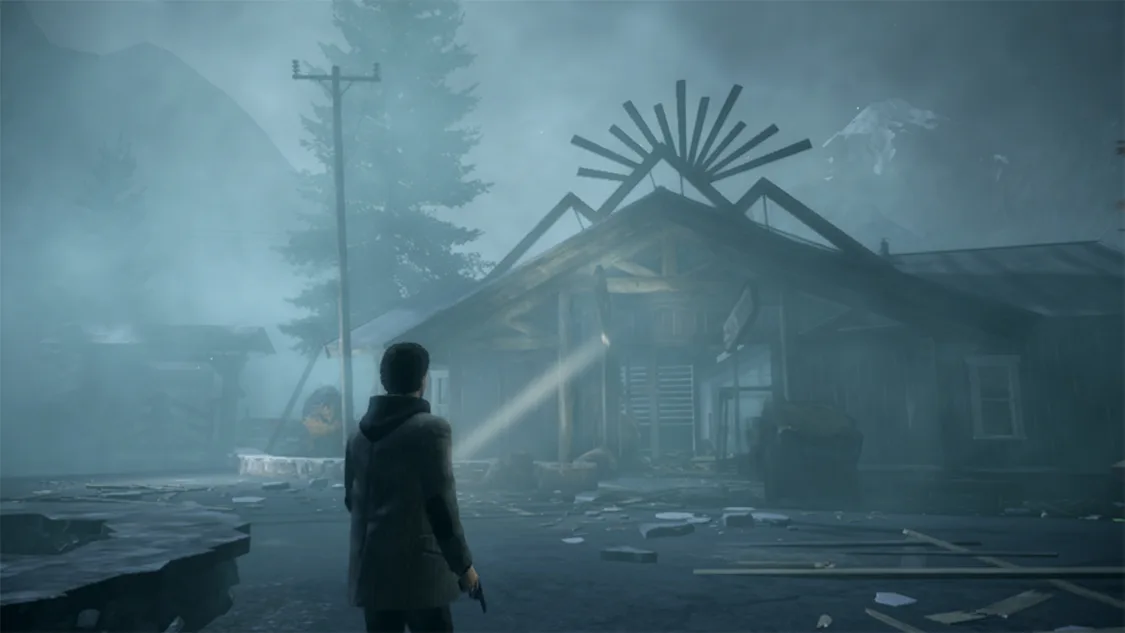
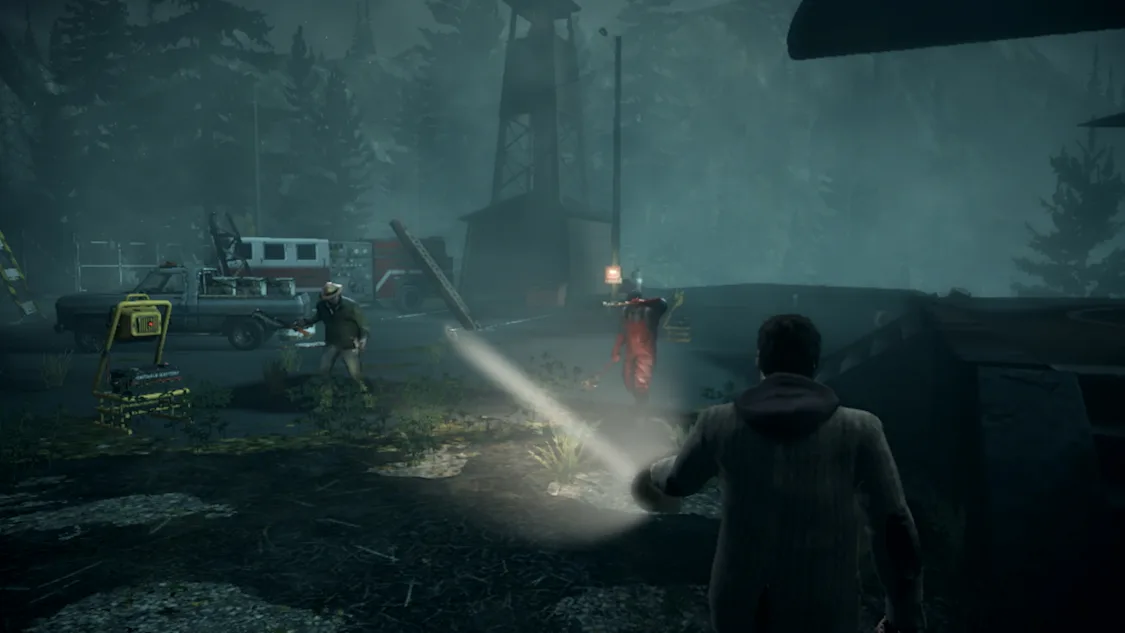
About Game
Alan Wake Remastered Switch NSP places a troubled novelist in a town where darkness is more than a mood. Bright Falls begins as a hoped-for break from a long period of writer’s block, but Alan Wake’s trip with his wife Alice quickly becomes a search for answers after she disappears. What follows is a tense psychological thriller built around fractured memory, ominous environments, and pages from a manuscript Alan does not remember creating.
Bright Falls Through Alan Wake’s Unreliable Perspective
Alan arrives in Bright Falls as a best-selling thriller writer who has been unable to write for two years. The trip is meant to offer quiet and distance, yet the town soon becomes the setting for a deeply personal nightmare. Alice vanishes, and Alan is left to navigate a chain of frightening events that seem to have been anticipated by his own words.
The central unease comes from those manuscript pages. They describe incidents Alan cannot recall writing, and their contents begin to resemble what is happening around him. That premise gives the adventure its unstable perspective: Alan is both the person trying to understand the story and, in some unsettling way, a figure caught inside it. Fiction and reality continually press against one another.
Bright Falls supports that psychological thriller approach through its shadow-filled woods, isolated routes, and hostile encounters. A malevolent force known as the Dark Presence turns ordinary townspeople into possessed enemies, making familiar surroundings feel dangerous. The game’s atmosphere is not just a backdrop for combat; it reinforces Alan’s fear that imagination, memory, and authorship may be working against him.
Managing Batteries, Ammunition, and Panic
Light is the essential rule of survival in Alan Wake combat. Shadowy enemies, known as the Taken, cannot simply be dealt with by firing a weapon immediately. Alan must first direct his flashlight at them, wearing away the darkness protecting them before conventional attacks can be effective. That simple sequence makes each confrontation feel more pressured than a standard shooting exchange.
Resource management gives this system its edge. Flashlight batteries are limited, and ammunition for firearms must also be conserved. Using the beam aggressively can provide a needed opening, but it may leave fewer batteries for the next threat. Holding back, meanwhile, can make a close encounter harder to control. The player is repeatedly asked to judge distance, timing, and the value of each available supply.
This tension suits Bright Falls’ hostile night-time spaces. Exploration can lead toward environmental and light-based puzzles, but dark paths are never merely a pause between story scenes. They can become places where a missed shot or a drained battery changes the tone from cautious travel to panic. The game’s dynamic lighting and sound design help keep that pressure present even before an enemy is clearly visible.
Manuscript Pages and the Story They Foreshadow
The scattered manuscript pages are more than detached collectibles. They offer story context while also complicating Alan’s understanding of what has happened and what may happen next. Because the pages concern a manuscript he does not remember writing, finding one is tied directly to the larger mystery rather than existing outside it as optional background reading.
They also create a distinctive form of story foreshadowing. A page can suggest danger ahead, give shape to an event that has not yet unfolded, or add a troubling detail to Alan’s narrative. This encourages close attention to exploration. Looking into a hidden corner or taking a detour may deliver a clue that changes how the player reads the next stretch of the journey.
That connection between discovery and anticipation strengthens the Alan Wake narrative. The pages make progress feel layered: moving forward advances the immediate search for Alice, while collecting them reveals how far the manuscript’s influence may extend. For players inclined to revisit areas and seek further context, they provide a meaningful reason to explore thoroughly.
A Guide to Alan Wake Remastered’s Key Survival Tools
Alan’s equipment is defined by the need to push back darkness before relying on conventional force. Each survival tool has a clear place in the game’s encounters, and their limited supplies make the choice of tool matter.
- Flashlight first: The focused beam weakens the Taken by stripping away their dark protection, creating the opening needed for a successful attack.
- Pistol control: The pistol provides a conventional answer once an enemy has been exposed to light, making ammunition conservation important during repeated encounters.
- Shotgun pressure: The shotgun adds another firearm option for moments when close-range danger demands a stronger response after darkness has been removed.
- Flare gun relief: The flare gun is part of Alan Wake weapons and gives light a more forceful role when shadow-filled threats close in.
- Flashbang interruption: Flashbangs offer another way to fight the Dark Presence’s minions, fitting the game’s broader emphasis on light as a survival tool.
- Batteries and ammunition: These supplies govern how long Alan can sustain flashlight use and firearm attacks, turning preparation into a constant concern.
The system keeps the action connected to the story’s themes. Alan is not presented as someone who can overpower the darkness through weapons alone. He must expose it, manage what he has, and continue moving through an environment designed to make certainty scarce.
From On-Foot Horror to Bright Falls Vehicle Sections
Much of the experience is built around on-foot Bright Falls exploration, where progress can involve puzzles, manuscript discoveries, and combat in threatening spaces. Those sections allow the atmosphere to settle in: a route ahead can feel uncertain, and the need to preserve batteries and ammunition makes even routine movement feel deliberate.
Vehicle sections change that rhythm. Driving through parts of Bright Falls introduces a different sense of movement and helps vary the pace between tense exploration and close-range encounters. The contrast is useful because it prevents the journey from remaining in one mode for too long. After moving carefully through darkness on foot, travel by car broadens the sense of place without abandoning the town’s uneasy identity.
This variety gives the game’s progression a more episodic feel. Exploration, combat, puzzle-solving, narrative pages, and driving each contribute to the momentum of Alan’s search. Players drawn to story-led horror with action elements may find that blend especially appealing, while those looking for constant weapon-focused combat should expect a stronger emphasis on atmosphere and survival decisions.
The Nintendo Switch Release Context for Alan Wake Remastered
The Nintendo Switch release of Alan Wake Remastered Switch NSP is dated December 1, 2022. Its listed file size is 12GB, with English and Japanese language support. Availability is listed for Europe, USA, Asia, and Japan, placing the release across several regional markets.
The supplied metadata lists Square Enix as both publisher and developer, identifies the genre as Role-Playing, and gives Title ID 01004A6017E8A000. The listed Nintendo Switch firmware requirement is v14.1.2 for both the base release and its update.
For players interested in an oppressive, narrative-driven experience, the appeal lies in the meeting of psychological uncertainty and practical survival. Bright Falls is a place to investigate, but it is also a place where a flashlight beam, a few remaining rounds, and a newly discovered manuscript page can change the meaning of the road ahead.
Recommended Similar Games
 Borderlands: Game of the Year Edition Switch NSP XCIView Game
 Harvest Moon: The Winds of Anthos Switch NSPView Game
 Persona 5 Tactica: Digital Deluxe Edition Switch NSP XCIView Game
 Fire Emblem Engage Switch NSP XCIView Game
 Hogwarts Legacy: Digital Deluxe Edition Switch NSP XCIView Game
 Palia Switch NSPView Game
