The Stretchers Switch NSP
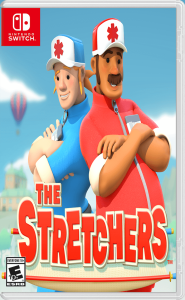
Report Link Error
Select the broken download file, then submit the report.
Screenshots
About Game
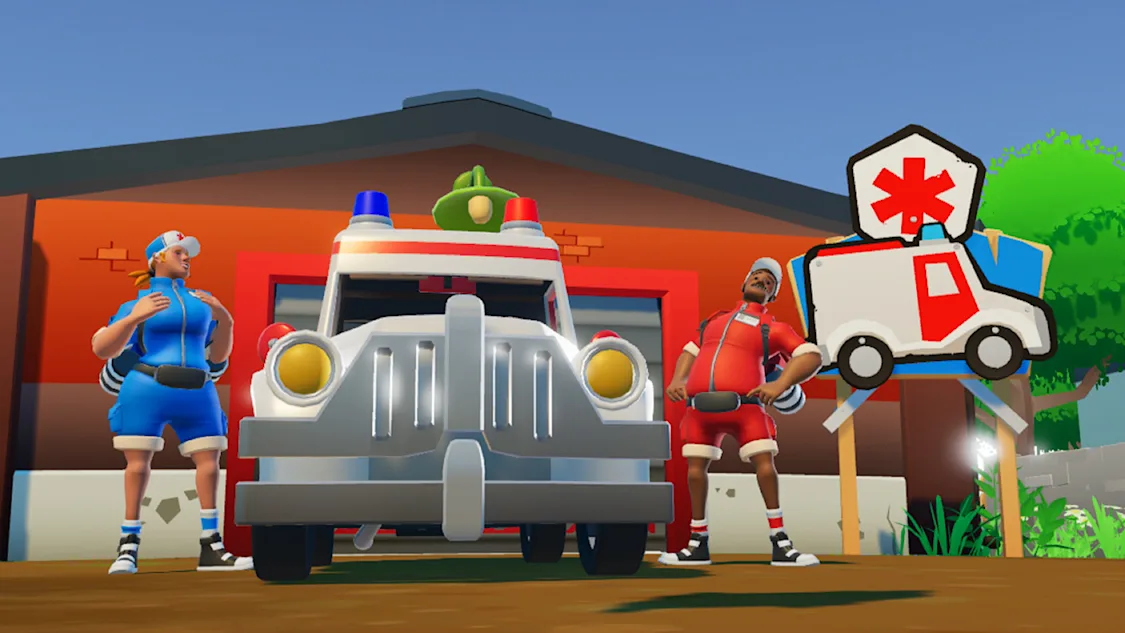
The Stretchers Switch NSP frames rescue work as a lively comedy of movement, timing, and controlled disorder. Developed by Tarsier Studios and published by Nintendo, this Puzzle Game sends paramedics Ted and Ben into a world where the people they are meant to save have been affected by Captain Brains’ strange “Dizziness” ailment. The mission sounds simple—find the Dummies, place them on a stretcher, and get them to an ambulance—but the physical comedy comes from everything that can complicate that plan.
The Stretchers: A Rescue Comedy Built on Physics
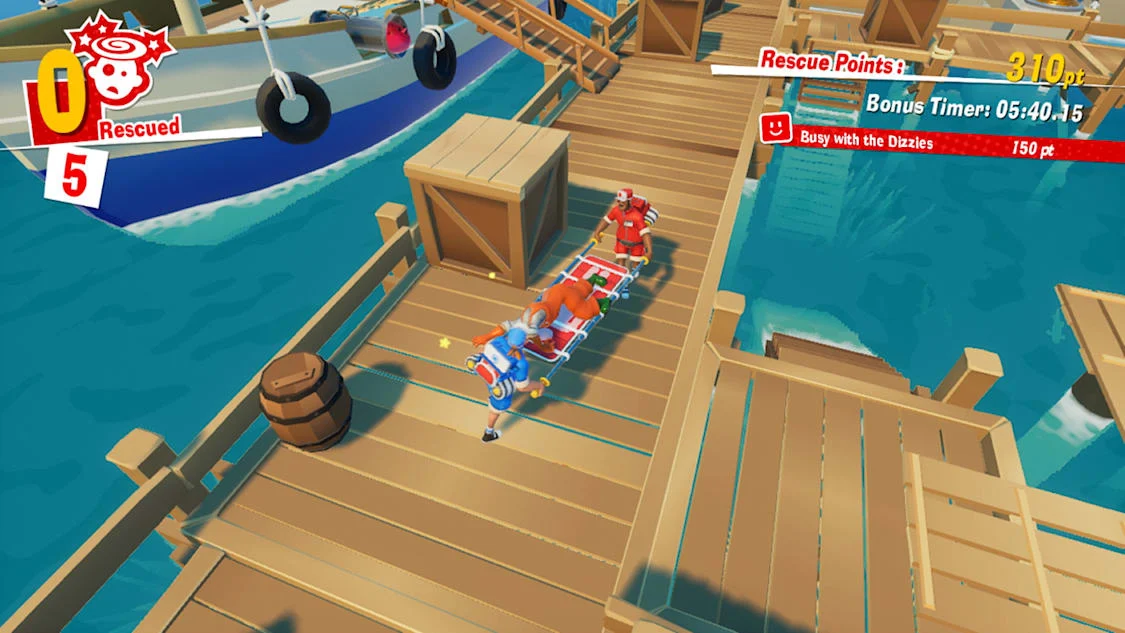
The game’s identity comes from the collision of rescue objectives and slapstick humor. Ted and Ben are tasked with helping Dummies who have been transformed into unusual shapes and sizes, creating situations that are inherently awkward before a player even begins navigating the environment. Carrying someone on a stretcher is not presented as a smooth, automatic action. Movement, positioning, and the physics governing the characters and cargo all matter.
These physics puzzles make even a short trip feel unpredictable. A careful route can become difficult when a stretcher meets an incline, a tight passage, or a misplaced object. The result is a game that treats clumsiness as part of the joke rather than merely a failure state. Comical animations and the unstable nature of carrying a Dummy reinforce a playful atmosphere, while each rescue keeps a clear practical goal in view.
The story gives this silliness a light framework. Captain Brains is the eccentric source of the Dummies’ condition, and the missions take Ted and Ben through a variety of rescue scenarios. The narrative remains focused on moving from one emergency to the next, leaving the physical problem-solving to provide most of the moment-to-moment personality.
Ambulance Driving Between Rescue Objectives
Rescues do not end when a Dummy reaches the vehicle. Ambulance driving is another important part of the routine, as players travel through the world and bring rescued Dummies to the hospital. These sections continue the game’s interest in physics-based gameplay, turning transport into a lively extension of the on-foot missions rather than a quiet break between them.
The driving can include timed challenges, adding pressure without changing the game’s comic character. A rushed trip requires more than simply heading in the right direction; the vehicle’s handling and the surrounding route are part of the challenge. That makes ambulance driving a useful contrast to the slower, more deliberate work of maneuvering a stretcher through an obstacle-filled area.
This shift in pace helps the rescue structure feel varied. Players first work out how to reach and carry a Dummy, then deal with the separate responsibility of getting the patient onward. The objectives remain connected, but the game changes the kind of attention it demands: careful coordination on foot, then controlled movement behind the wheel.
Puzzle Environments, Tools, and Obstacles
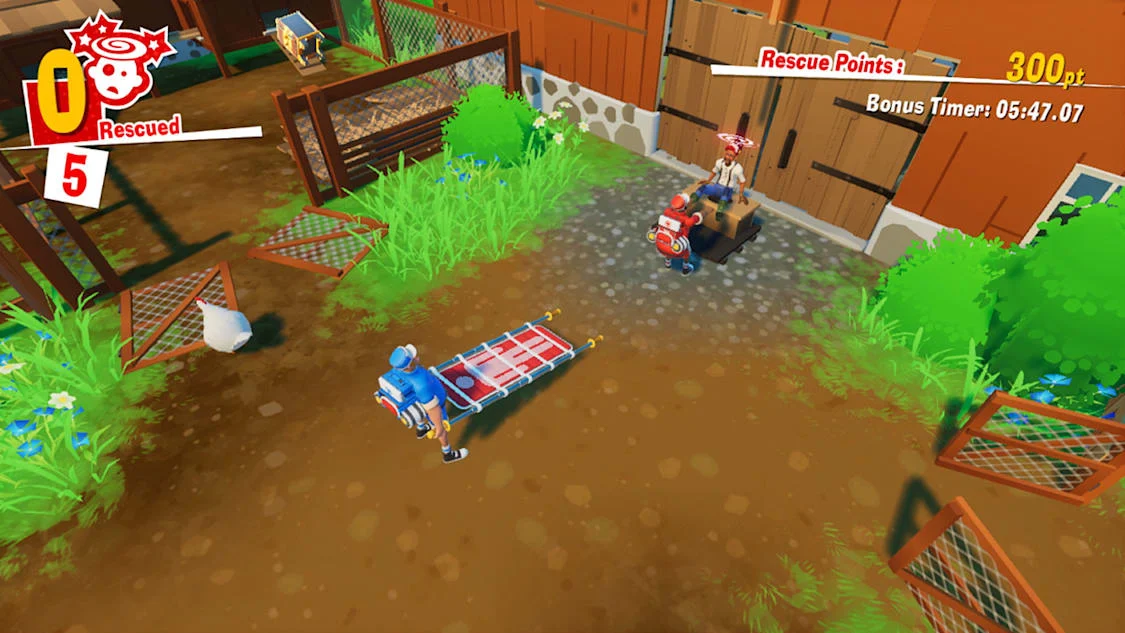
As a puzzle game, The Stretchers builds challenges around the shape of its environments. Levels have distinct layouts and rescue scenarios, with routes that can include narrow pathways, slopes, environmental hazards, and other barriers. The central question is often not just where the Dummy is, but how Ted and Ben can reach them and return safely with a stretcher.
Interactive objects and tools expand the options available when a direct route is blocked. The source of the challenge is not a single type of obstacle; it is the need to read the space, notice what can be used, and adapt to the behavior of the stretcher and its cargo. A route that looks short may be difficult because of tricky terrain, while a longer path may offer better control.
This supports creative problem-solving without losing the game’s accessible rescue premise. Players are regularly asked to balance speed, safety, and maneuverability. Because Dummies must be delivered to the ambulance, a solution is only complete when the return journey has been considered too. The environments therefore give the comedy a functional purpose: the more inconvenient the route, the more chances there are for an awkward but memorable recovery.
Why Cooperative Chaos Fits The Stretchers’ Humor
Ted and Ben can be controlled by one player or by two people in local co-op. That flexibility suits the design well. Solo play asks one person to manage the pair, while co-op turns stretcher handling into a shared responsibility. In either format, the game’s humor grows from imperfect coordination rather than from strict precision alone.
In local co-op, cooperative chaos can emerge when players disagree on a route, move at different speeds, or react differently to a slope or barrier. The stretcher turns those small decisions into a joint problem. A successful rescue requires both paramedics to work toward the same destination, but the physical systems leave room for mistakes and sudden changes in control.
The comical animations give those moments a lighthearted tone. Failure or awkward movement does not sit apart from the game’s presentation; it belongs to the same slapstick comedy that shapes the Dummies, the characters, and the rescue missions. This makes the game especially suited to players who enjoy cooperative problem-solving with room for laughter when a carefully planned carry becomes less graceful than expected.
5 Practical Rescue Habits for Smoother Missions
- Talk before moving. In local co-op, agree on the route and direction before lifting the stretcher. Clear co-op communication can prevent unnecessary turns and awkward repositioning.
- Carry with care. Keep the Dummy secure while navigating. Rushing through narrow paths or across slopes can make an already unstable load harder to manage.
- Read the terrain. Look ahead for tricky terrain, environmental hazards, and tight routes. A careful approach is often more useful than forcing the shortest path.
- Use the environment. Pay attention to available tools and interactive objects when a barrier blocks progress. They are part of the rescue strategy, not just background detail.
- Drive with control. Timed ambulance challenges encourage speed, but controlled ambulance driving remains important when physics affect the journey.
Release and Development Snapshot
The Stretchers Switch NSP was released on November 08, 2019. Nintendo published the game, while Tarsier Studios developed it. Its listed genre is Puzzle Game, a fitting label for a rescue adventure built around carrying, navigation, environmental obstacles, and physics-driven interactions.
The release is region free and supports English, German, Spanish, French, Italian, and Russian. Its combination of simple rescue goals, slapstick presentation, and local cooperative play makes it a natural fit for players looking for a light puzzle experience where communication and improvisation are as important as finding the right route.