Darkest Dungeon Switch NSP
Report Link Error
Select the broken download file, then submit the report.
Screenshots
About Game
Darkest Dungeon Switch NSP brings Red Hook Studios’ gothic role-playing game to Nintendo Switch in a grim expedition through a family estate corrupted by forbidden knowledge. Released on January 18, 2018, this English-language USA and EUR release asks players to guide imperfect heroes through dangerous ruins, sewers, and other haunted places while confronting both physical monsters and the strain of fear.
Darkest Dungeon on Nintendo Switch: Game Overview
Developed and published by Red Hook Studios, Darkest Dungeon is a turn-based role-playing game built around dread, preparation, and consequences. Its story begins when the heir to a ruined estate answers an urgent summons. Beneath the family manor, an ancestor’s search for forgotten knowledge has unleashed horrors that now blight the surrounding land.
The journey leads outward from the Hamlet, the game’s central hub, into procedurally generated dungeons filled with unsettling encounters, treasures, traps, bosses, and monstrous threats. Journal entries from the ancestor provide pieces of the estate’s history, while the larger objective is to reach the Darkest Dungeon itself and confront the source of the spreading madness.
The Nintendo Switch version retains the game’s oppressive gothic tone and its mix of dungeon exploration, roster management, and psychological horror. It is not a role-playing game about building a single invincible party. Heroes carry flaws, gain stress, suffer lasting setbacks, and can be lost permanently. That harsh structure gives each expedition a deliberate, uneasy rhythm.
Turn-Based Combat Built Around Positioning
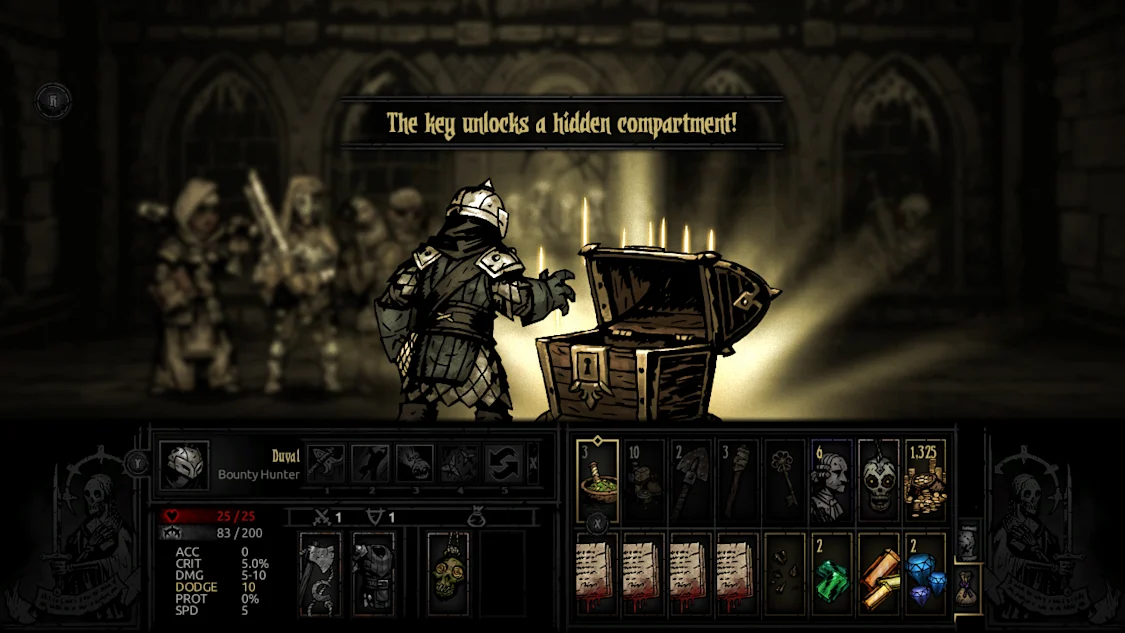
Darkest Dungeon turn-based combat is shaped by more than damage values. Every fight depends on where heroes stand, which abilities are available from those positions, and which enemy represents the greatest immediate danger. A party member placed in the wrong rank may lose access to an important skill, while an enemy left unchecked can create pressure that grows harder to manage over several turns.
Party positioning matters before combat begins and after it changes. Some skills move heroes or enemies, which means a carefully arranged group can be disrupted by an opponent’s attack. Choosing targets is equally important. A durable enemy in front may be difficult to remove, but a dangerous foe in the back line can demand attention first if it is causing stress or creating another urgent threat.
That makes the game a tactical RPG on Switch where adaptation is essential. A battle plan that works against one group of creatures may fail against another. Players are asked to consider skill selection, formation, enemy behavior, and the party’s current condition rather than relying on one repeated approach.
Stress, Afflictions, and the Psychological Cost of Expeditions
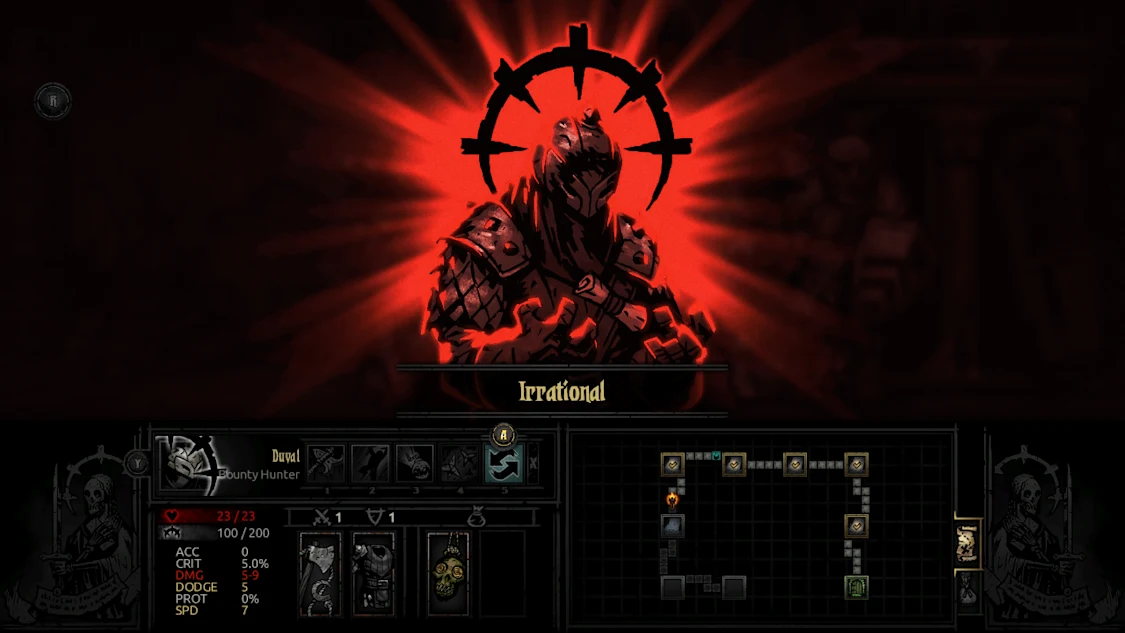
The Darkest Dungeon stress mechanic is central to the game’s identity. Heroes do not simply lose health during an expedition. Combat, traps, and unsettling events can increase their stress, adding a second layer of danger to every dungeon run. A group may survive a fight physically while emerging less capable of handling what follows.
When stress becomes severe, heroes can develop harmful afflictions. These conditions can make them erratic, fearful, or abusive toward companions, turning an already risky expedition into a problem for the entire party. Stress can also escalate to heart attacks, so ignoring the psychological state of a group can be as dangerous as neglecting healing.
This psychological horror gameplay gives the estate its persistent sense of unease. The threat is not confined to the creatures ahead. It also lives in the reactions of the heroes sent to face them. Between expeditions, the Hamlet offers places such as the Abbey and Tavern where stress can be relieved, making recovery part of the campaign’s ongoing routine.
Permadeath and Why Every Dungeon Decision Matters
Darkest Dungeon permadeath gives every loss lasting weight. A fallen hero is gone forever, removing that character from the roster and forcing the player to adjust future plans. The result is a game where a risky decision can affect more than a single battle or one unsuccessful expedition.
Permanent hero death changes how parties are prepared before entering a dungeon. It encourages attention to provisions, light levels, skill choices, and the condition of each hero. It also shapes decisions inside an expedition: continuing deeper may offer rewards, but it can put an exhausted or stressed group in greater danger.
Long-term roster management becomes inseparable from dungeon strategy. A player needs capable heroes for immediate expeditions, but also needs to think about recovery, training, and replacements. Losses are part of the game’s harsh design, not a temporary inconvenience that can be ignored after returning to the Hamlet.
Recruiting Heroes and Building Effective Parties
The roster includes more than a dozen hero classes, each with distinct abilities and combat roles. Some are better suited to certain positions or targets, while others contribute through support, damage, control, or stress-related utility. Their individual skills and quirks ensure that party building is not only about choosing familiar names.
Effective party composition comes from considering how heroes work together in a formation. A group should have access to useful actions from its assigned ranks and should be prepared for the enemy threats likely to appear. Since battles can disrupt placement, flexibility has value as well.
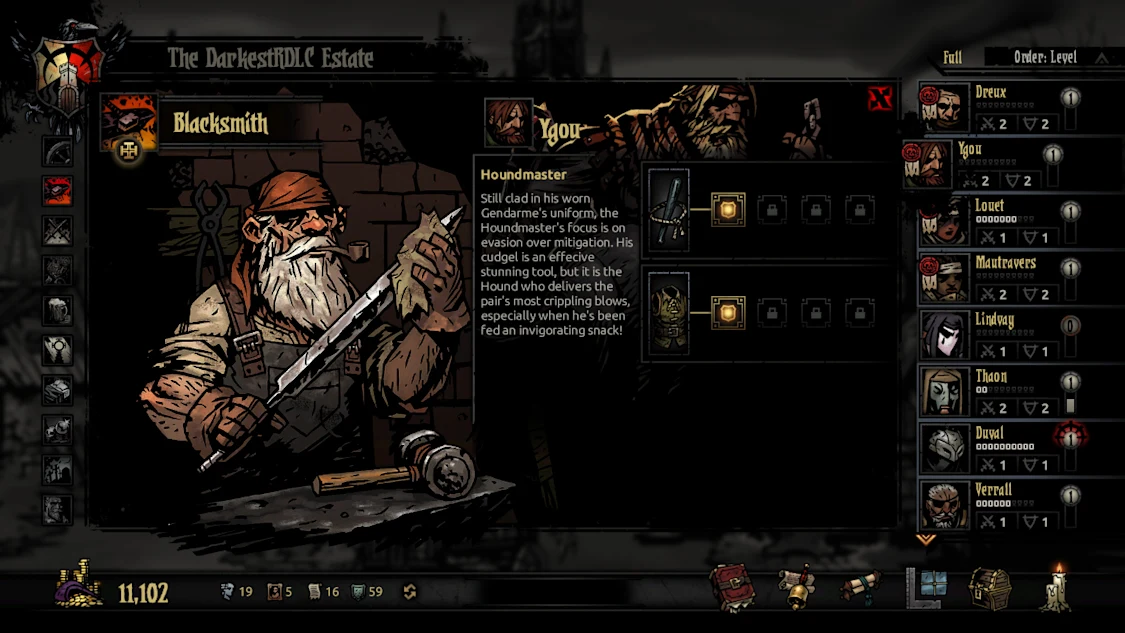
Experimentation is a meaningful part of Darkest Dungeon strategy. Different class combinations can change how a party approaches combat, manages stress, and handles difficult encounters. The Hamlet supports that progression through facilities including the Blacksmith, Guild, and Sanitarium, which can improve heroes and help address negative quirks.
7 Survival Priorities for Early Darkest Dungeon Expeditions
Early runs are a useful place to establish habits that respect the game’s many overlapping risks. These priorities do not remove uncertainty, but they can make an expedition more manageable.
- Build balanced roles. Choose a party whose members can contribute from their intended positions and respond to different enemy threats.
- Watch stress closely. Treat rising stress as an urgent concern, since severe pressure can produce hero afflictions and heart attacks.
- Manage light and provisions. Dungeon resources are part of expedition planning, not an afterthought once combat starts.
- Protect the formation. Use party positioning carefully, and be ready to adapt when enemies disrupt the ranks.
- Plan for recovery. Use the Hamlet’s stress-relief options and other services to prepare heroes for future work.
- Upgrade key facilities. The Blacksmith, Guild, and Sanitarium support long-term improvement and help manage the roster’s weaknesses.
- Respect permanent losses. Avoid treating a damaged party as expendable; a death can reshape later dungeon strategy.
For players drawn to demanding turn-based systems, oppressive gothic atmosphere, and campaigns where recovery matters as much as victory, Darkest Dungeon Switch NSP offers a severe but purposeful challenge. Its replay value comes from procedurally generated dungeons, varied hero classes, changing party combinations, dangerous bosses, and the unpredictable pressure created by stress and permanent loss.
Title ID: 01008F1008DA6000 · Release date: January 18, 2018 · Genre: Role-Playing Game · Publisher/Developer: Red Hook Studios · Region: USA, EUR · Language: English · Firmware: Base v4.1.0, Update v8.0.1 · File size: 2.4GB
Recommended Similar Games
 Torchlight III Switch NSP XCIView Game
 Yo-kai Watch 1 for Nintendo Switch NSPView Game
 MARVEL ULTIMATE ALLIANCE 3: The Black Order Switch NSP XCIView Game
 South Park: The Stick of Truth Switch NSPView Game
 Tokyo Mirage Sessions #FE Encore Switch NSP XCIView Game
 Shin Megami Tensei III NOCTURNE HD REMASTER Switch NSP XCIView Game
