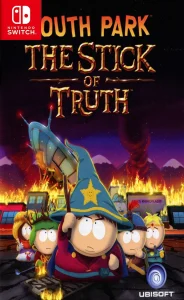
South Park: The Stick of Truth Switch NSP
Report Link Error
Select the broken download file, then submit the report.
Screenshots

About Game
South Park: The Stick of Truth Switch NSP brings Obsidian Entertainment’s role-playing adventure to Nintendo Switch, placing the show’s familiar town, crude humor, and escalating fantasy-game conflict in a portable format. Published by Ubisoft and released in the USA on September 25, 2018, it is an RPG built around exploration, character customization, party support, and deliberately outrageous turn-based battles.
A Portable South Park RPG Arrives on Nintendo Switch
The Nintendo Switch version gives this South Park adventure a natural home: a game about wandering through a compact town, speaking with residents, collecting gear, and chasing strange side objectives fits comfortably into shorter play sessions. South Park is recreated as an explorable setting, with recognizable locations, local oddballs, hidden spaces, and jokes waiting beyond the main route.
Its presentation aims for the feel of an interactive episode. The comedy is intentionally irreverent, the situations quickly become bizarre, and even equipment leans into the show’s sense of ridicule. Outfits and weapons alter the New Kid’s appearance while also contributing to combat strength, so customization is both visual and practical.
That combination gives the South Park RPG Nintendo Switch release a clear identity. It uses familiar role-playing structure—classes, equipment, companions, status effects, quests, and exploration—but filters every system through the town’s childish fantasy conflict and satirical tone. The result is best suited to players comfortable with South Park’s crude style and looking for a humorous RPG rather than a restrained fantasy adventure.
The New Kid’s Quest for the Stick of Truth
The story begins with the player character, known as the New Kid, arriving in South Park and trying to make friends. That simple starting point soon leads into a live-action role-playing game organized by Cartman. The children have divided into competing groups, and their conflict centers on control of the revered Stick of Truth.
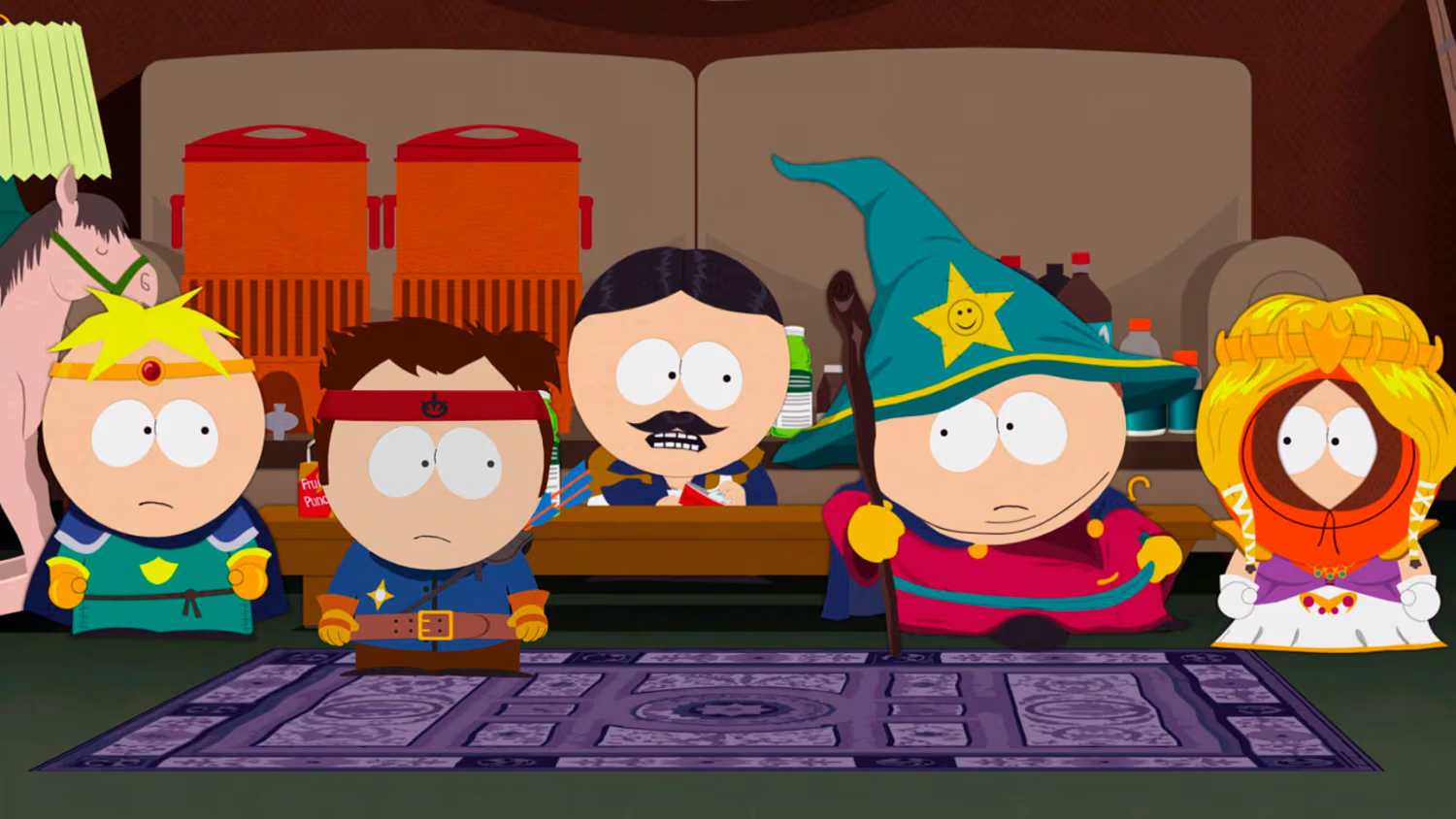
The Stick of Truth quest gives the game a playful premise, but it also creates the framework for progression through the town. The New Kid forms connections with the local cast, joins the struggle, and becomes increasingly important to events that stretch far beyond an afternoon of make-believe. Stan, Kyle, Kenny, and Cartman all become part of the adventure, bringing their own presence to the party-driven RPG structure.
Story decisions affect whom the New Kid befriends and how events develop, giving the player a role inside the town’s shifting alliances. The writing was handled by South Park creators Trey Parker and Matt Stone, helping the game maintain the franchise’s familiar voice as its fantasy role-play setup grows into something much larger.
From Children’s Game to Town-Wide Chaos
What begins as a kids’ game does not remain contained for long. The South Park The Stick of Truth plot expands into a town-wide crisis, drawing in threats that include aliens, gnomes, hippies, and Nazi zombies. The escalation is central to the game’s humor: a dispute over an imaginary artifact keeps colliding with increasingly extreme situations.
This is where the game’s satire becomes part of its atmosphere rather than just decoration. South Park’s residents, institutions, and everyday spaces are treated as material for absurd encounters. The story repeatedly contrasts the children’s earnest commitment to their game with the chaos unfolding around them. That tension allows the adventure to move between fantasy role-play, science-fiction disruption, and deliberately tasteless comic detours without abandoning its setting.
The enemies reflect that tonal swing. Encounters are not limited to conventional fantasy opponents, and the game uses its unusual roster to keep battles and story scenes tied to South Park’s brand of parody. Players expecting a faithful, serious fantasy narrative may find the constant shifts jarring; players seeking a South Park satire RPG will find that the changing threats are part of the point.
Turn-Based Combat With Tactical Timing
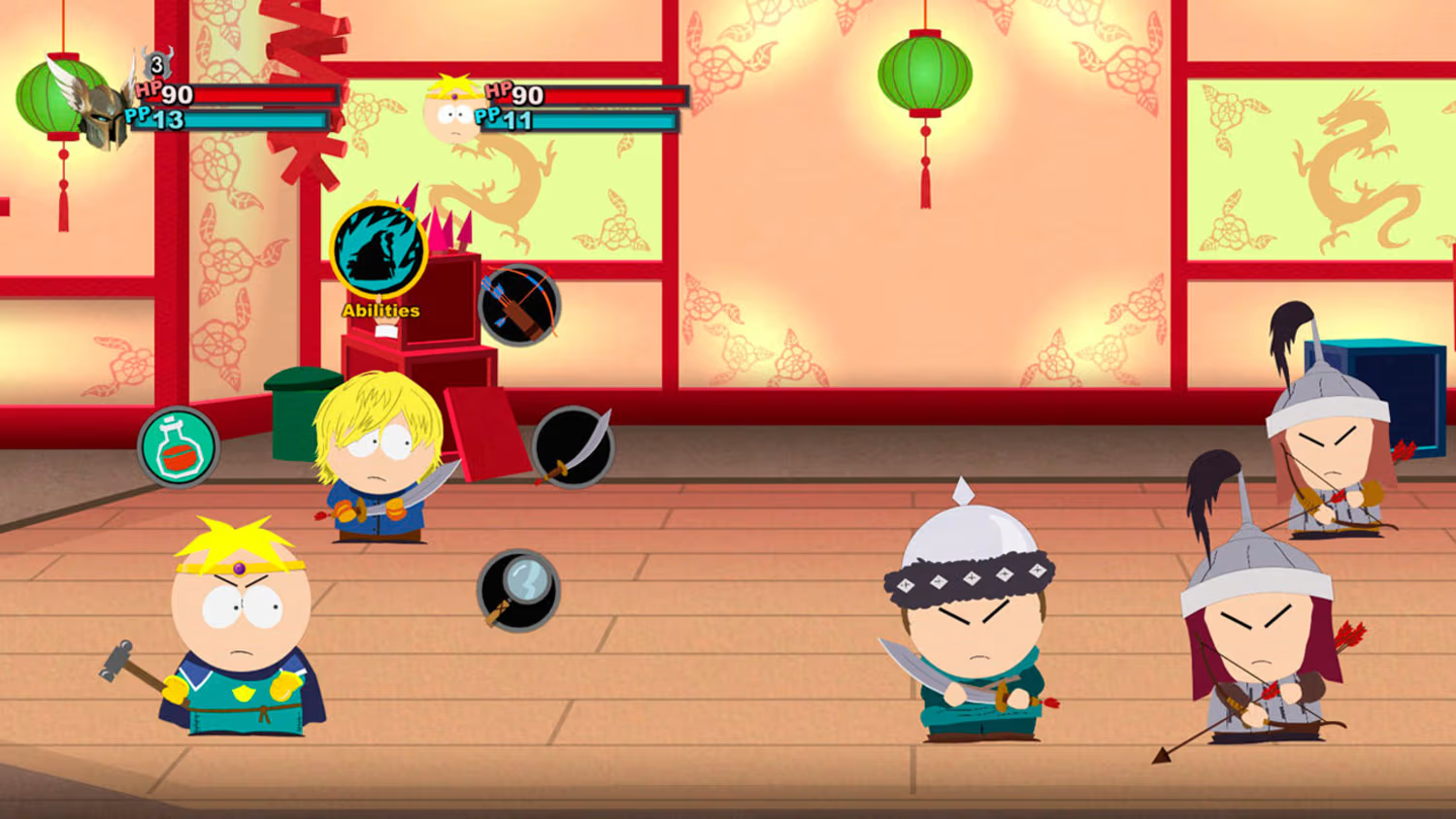
Combat uses a turn-based format, but success depends on more than selecting an attack. Fights ask players to consider abilities, timing, equipment, buffs, debuffs, and status effects. A well-chosen effect can change the direction of an encounter, especially when it weakens an enemy or improves the New Kid’s side of the battle.
The New Kid can be built around one of four classes: Fighter, Mage, Thief, or Jew. Each offers different abilities, giving character selection an immediate effect on combat style. Gear also matters, as weapons and armor contribute to battle capability while preserving the game’s exaggerated visual humor.
South Park Stick of Truth combat benefits from paying attention to what a specific fight demands instead of relying on one repeated action. Some encounters reward pressure and damage, while others call for support effects or better control of enemy advantages. The game also includes Fart spells, which can influence enemies and the environment, extending its joke-driven presentation into its mechanical design.
Buddies, Abilities, and Exploration Tools
Companions do more than provide familiar faces. Stan, Kyle, Kenny, Cartman, and other recruited characters can serve as combat buddies, bringing useful abilities into fights. Choosing the right buddy can be as important as choosing a class, particularly when an encounter favors a certain kind of support or attack.
Buddy abilities also matter outside battle. Exploration includes environmental puzzles, blocked routes, and areas that require the appropriate tool or ability to access. This gives the town a sense of gradual opening: a location that seems unreachable during an earlier visit may become available after gaining a new way to interact with the environment.
Hidden areas, collectibles, side quests, and gear reward players who examine the map carefully. That structure supports experimentation and gives the adventure more to offer beyond the direct story route. Different class abilities, equipment choices, and buddy selections provide reasons to approach encounters with a slightly different plan, even when the town and its central conflict remain familiar.
5 Practical Tips for Starting the Adventure
- Choose a class with intent. Fighter, Mage, Thief, and Jew each bring different abilities, so pick the style that sounds most appealing rather than treating the opening choice as purely cosmetic.
- Search the town carefully. Explore side paths, inspect areas thoroughly, and speak with residents when possible. Hidden spaces, collectibles, side quests, and useful gear can sit away from the main objective.
- Use status effects actively. Buffs and debuffs can swing a battle. Do not focus only on direct damage when a useful effect can improve your side or limit an opponent.
- Match the buddy to the problem. A companion’s abilities can help in combat and during environmental puzzles. If progress stalls, consider whether a different buddy ability is needed.
- Look before advancing. Before pushing the story forward, revisit accessible areas and check for rewards. Careful exploration can uncover equipment and secrets that strengthen the New Kid for later encounters.
For players drawn to a portable South Park game with a full RPG framework, South Park: The Stick of Truth Switch NSP offers a mix of town exploration, tactical battles, companion-based progression, and comedy that remains closely tied to the show’s tone. Its 5.4GB release supports English, Spanish, French, Italian, and Portuguese, with a base firmware requirement of v5.1.0 and an update requirement of v6.2.0.