CrossCode Switch NSP
Report Link Error
Select the broken download file, then submit the report.
Screenshots
About Game
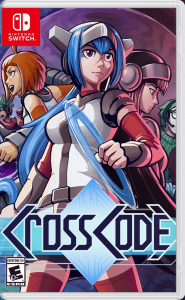
CrossCode Switch NSP brings Radical Fish Games’ futuristic, pixel-art action RPG to Nintendo Switch with a demanding mix of combat, exploration, and puzzle solving. Published by Deck 13 and released on July 09, 2020, this Region Free role-playing game places quick reactions beside careful observation, creating an adventure where progress often depends on both battle skill and a willingness to investigate the world around Lea.
CrossCode on Nintendo Switch: A Retro-Inspired Action RPG
CrossCode Nintendo Switch presents a world that looks back to detailed 2D pixel art while framing its story inside a futuristic online game. Its setting, CrossWorlds, is an MMORPG environment built around varied locations, from ancient ruins to advanced cities. That contrast gives the game much of its identity: old-looking landscapes and structures exist within a far more modern fictional framework.
As an action RPG, CrossCode divides its attention between several connected systems. Combat asks players to use ranged and melee attacks, along with special elemental skills. Exploration opens up large environments with platforming sections, secret routes, and rewards placed beyond the most obvious path. Puzzles use the same tools that matter in battle, making projectile control and environmental awareness part of the game’s central rhythm rather than isolated distractions.
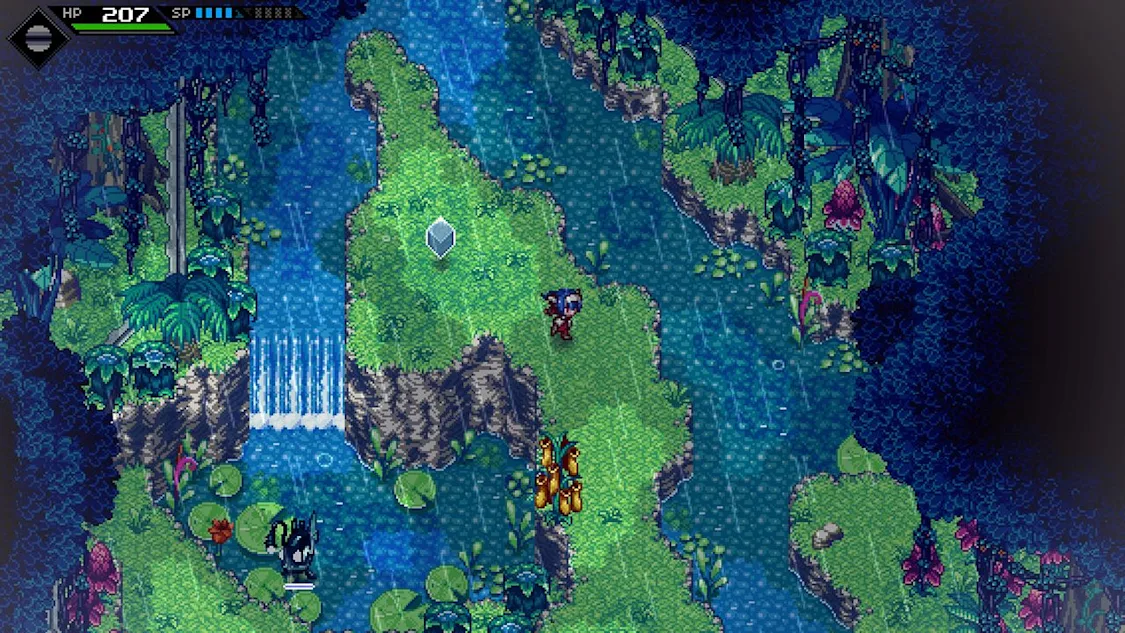
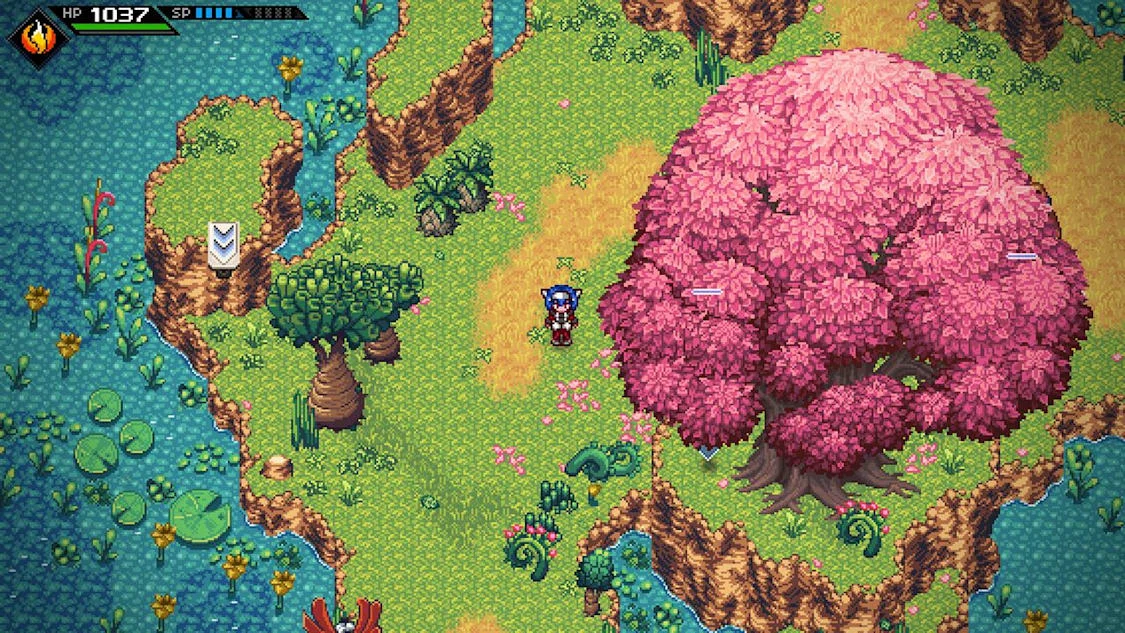
The presentation supports that design well. Bright pixel-art scenes can hold hidden passages, interactive objects, enemies, and puzzle clues in the same space. CrossWorlds is not simply a backdrop for fights; it is a place designed to be read carefully. Players who slow down may find treasures, crafting materials, gear, and new ways through an area.
The game is available with English, German, Spanish, French, Italian, and Russian language support. Its 642MB file size and .NSP ROM type are listed in the verified metadata, while the experience itself remains focused on a broad action-RPG structure built around Lea’s unusual place inside a digital world.
Lea’s Amnesia and the Mystery of CrossWorlds
The CrossCode Switch NSP story begins with Lea, a silent protagonist who awakens with amnesia in CrossWorlds. Her lack of memory is tied to a larger personal problem: she must recover both her past and her voice while trying to understand the virtual world she now inhabits.
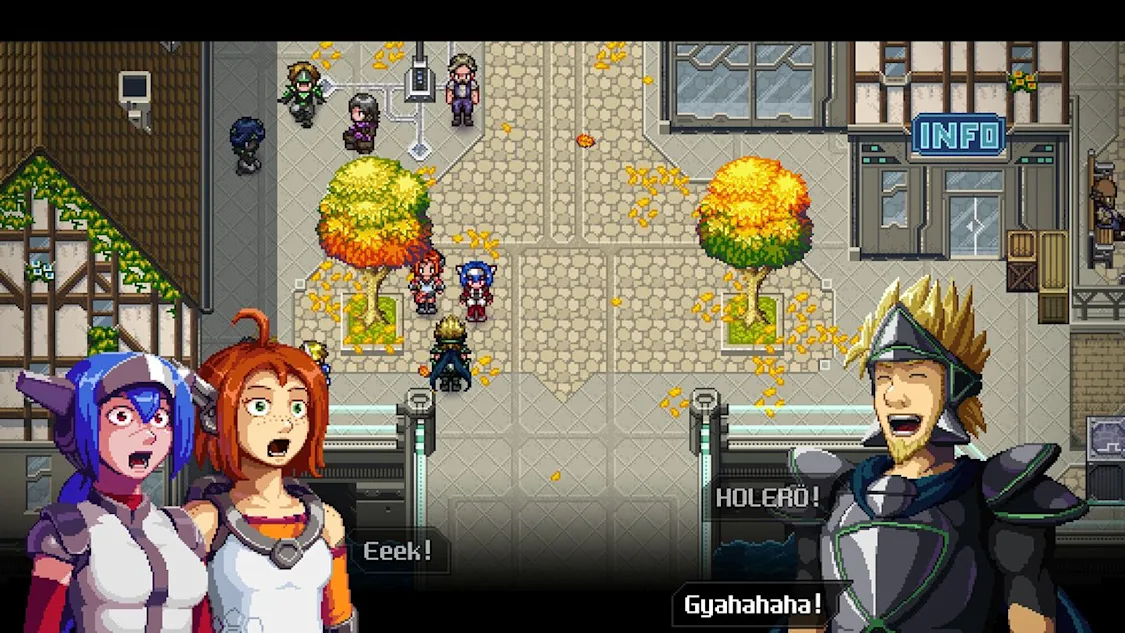
Lea CrossCode is not left alone with that mystery. Her journey brings her into contact with fellow players and NPCs, figures whose motives and secrets become part of the wider narrative. What begins as a search for identity expands into a conspiracy connected to CrossWorlds itself, giving the plot stakes beyond Lea’s immediate circumstances.
The story moves through moments of humor, drama, and more philosophical ideas about the nature of the world Lea is exploring. Cryptic messages, difficult encounters, and new discoveries continually point back toward the unanswered questions surrounding her past. Lea’s silence also gives her a distinctive role in the cast: the player follows her reactions and actions while the people around her help define the situation.
This premise gives CrossWorlds an interesting “world within a world” quality. It is an online-game setting, but one with consequences that reach beyond ordinary play. The result is a narrative that uses the language of an MMORPG while keeping its attention on one character’s search for memory and meaning.
A World Within a World: Exploring CrossWorlds
CrossCode Switch NSP gameplay relies heavily on movement through connected, richly detailed zones. Ancient ruins and futuristic cities are more than visual contrasts; they give exploration a changing sense of place as Lea travels through CrossWorlds. Each location can contain enemies, puzzle elements, characters, hidden content, and routes that are easy to miss on a first pass.
CrossWorlds exploration rewards curiosity. A path that appears decorative may lead toward a chest, while a platforming challenge may reveal a useful item or another entrance into an area. This makes the pace flexible. Players can press forward through the story, but the design also encourages returning attention to side paths and overlooked corners.
The pixel art RPG format helps keep these spaces readable while still allowing secrets to blend into the environment. Players are asked to notice ledges, gaps, switches, targets, and interactive objects. That visual attentiveness matters in combat as well, since the same world that hides rewards can also become part of a puzzle or an arena for a difficult encounter.
Characters add another layer to the journey. Fellow players and NPCs are not merely markers along a route; they are part of the mystery surrounding Lea and CrossWorlds. Exploration therefore serves both practical progression and narrative discovery.
Puzzle Design Built Around Lea’s Projectiles
CrossCode Switch puzzles are closely tied to Lea’s projectile mechanics. Throwing projectiles is not just a ranged combat option. It is a core problem-solving tool used to activate switches, interact with the environment, and manipulate objects from a distance.
Many challenges ask for more than a single accurate shot. Players may need to consider angles, timing, movement, and the order in which devices are activated. Energy-ball deflection adds another layer, turning puzzle spaces into places where positioning and precise aim can matter as much as recognizing the intended solution.
These environmental puzzles sit naturally beside the action. Combat demands quick reflexes and strategic choices, while puzzle rooms ask players to pause, observe, and test how Lea’s abilities affect the surroundings. The strongest appeal here is the connection between the two: the controls learned in battle remain useful when the game shifts into a more thoughtful challenge.
As Lea gains elemental attacks and special abilities, the game’s systems offer more options for handling enemies and navigating obstacles. This sense of expanding capability supports progression without separating character growth from the basic act of interacting with CrossWorlds.
Exploration, Hidden Paths, and Valuable Discoveries
Careful exploration is one of CrossCode’s most practical habits. Large environments contain hidden paths, secret passages, treasures, and platforming challenges, giving players reasons to look beyond the direct route. Some of the most useful discoveries come from chests tucked away in less obvious places.
Hidden chests can contain gear or crafting materials, both of which can help strengthen Lea for later encounters. Equipment customization allows players to improve her stats and shape her approach to combat, while skill trees provide further upgrade options for her abilities and fighting style. These systems make exploration feel connected to advancement rather than simply collectible hunting.
Boss fights raise the value of that preparation. Enemies and bosses can demand precision, awareness of patterns, and an understanding of weaknesses. Better gear, useful materials, and familiarity with Lea’s attacks can all matter when facing tougher opposition.
This structure makes CrossCode suitable for players who enjoy searching environments as much as clearing them. It does not treat movement between major story moments as empty travel. There is usually a reason to scan a room, test a ledge, or ask if a difficult platforming route is hiding something valuable.
5 Gameplay Priorities for New CrossCode Players
- Explore before moving on. Take time in each zone, since large areas can contain alternate routes, platforming sections, and secrets beyond the main path.
- Check for hidden chests. Chests may contain valuable gear or crafting materials that can support Lea’s progression.
- Collect useful materials. Crafting materials are worth gathering because they connect exploration with equipment and character improvement.
- Learn combat timing. Ranged and melee attacks, elemental skills, enemy patterns, and boss weaknesses all reward careful reactions rather than careless rushing.
- Experiment with puzzle interactions. Try projectile throws, switches, environmental objects, and energy-ball deflection from different positions when a solution is not immediately clear.
For players interested in a pixel-art action RPG where fighting and thinking share equal space, CrossCode offers a focused blend of fast battles, layered puzzles, character progression, and a virtual world filled with routes worth revisiting. Lea’s search through CrossWorlds gives those systems a narrative purpose, while the game’s many hidden details reward patience as much as speed.