FAST RMX Switch NSP
Report Link Error
Select the broken download file, then submit the report.
Screenshots
About Game
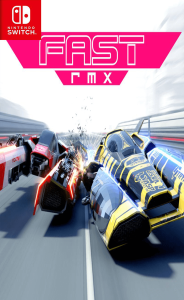
FAST RMX Switch NSP refers to Shin’en Multimedia’s action-racing game for Nintendo Switch, released on May 03, 2017. Built around anti-gravity vehicles, rapid phase changes, and fiercely competitive courses, it approaches racing as a test of reflexes and route awareness rather than a vehicle for a traditional character-driven story. The goal is simple but demanding: keep improving, win championships, and become the leading racer across its futuristic circuits.
FAST RMX on Nintendo Switch: A 2017 Anti-Gravity Racing Showcase
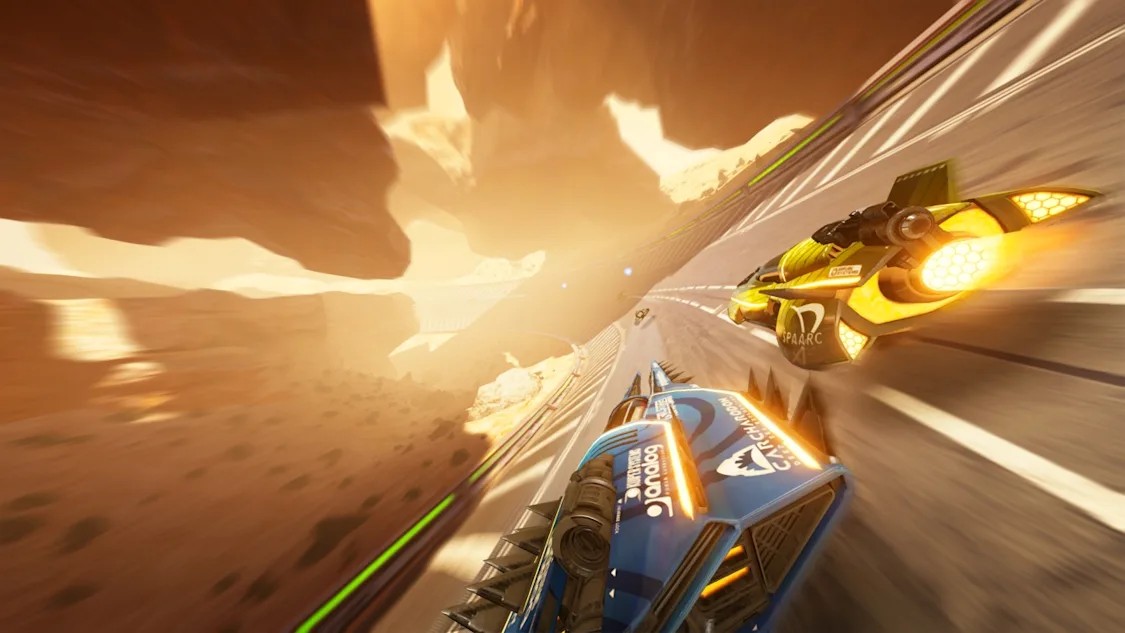
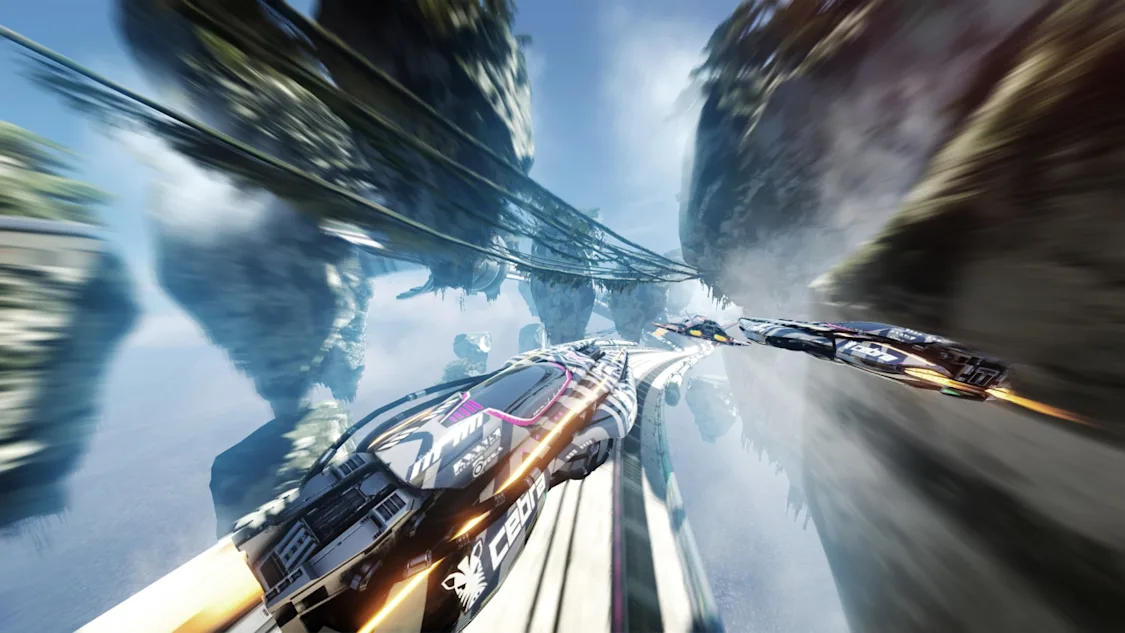
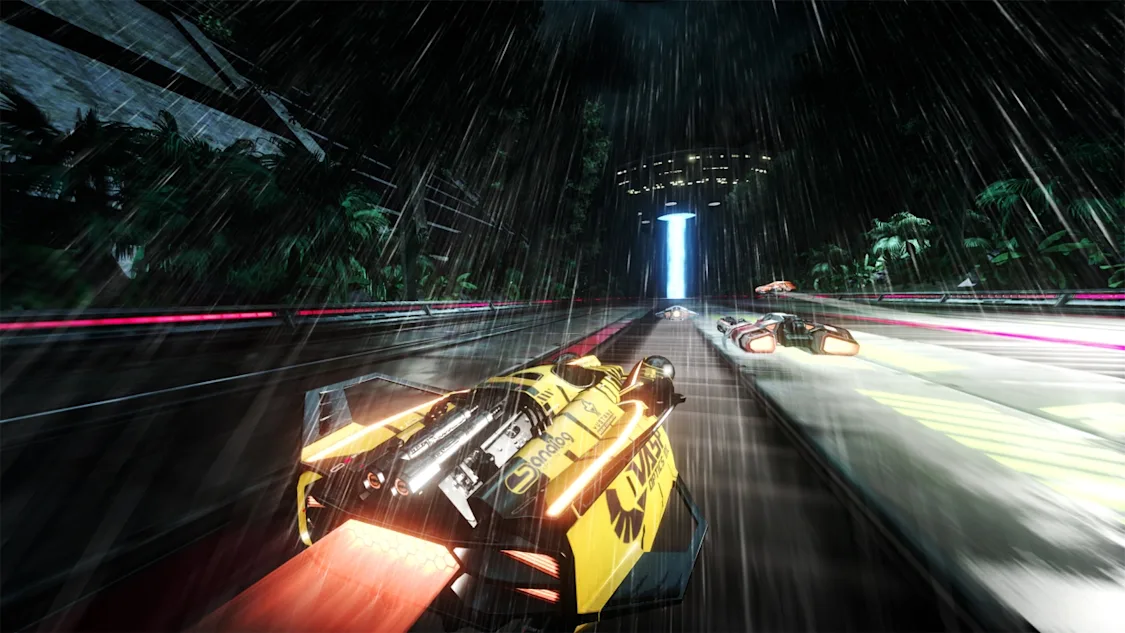
FAST RMX Nintendo Switch places players in a future of extreme-speed racing, where sleek anti-gravity machines skim above tracks set among towering cities, alien terrain, and canyon-like desert spaces. Shin’en Multimedia serves as both developer and publisher, and its game is focused on the sensation of motion: sharp turns arrive quickly, boost opportunities demand attention, and the margin for a poor decision can be very small.
There is no conventional narrative campaign built around named characters or a developing plot. Instead, the game frames its sense of advancement through competition. Success in races leads to further opportunities, and each new course becomes another setting in the pursuit of championship results. That stripped-back approach suits the game’s atmosphere. The drama comes from surviving a difficult loop, reaching a boost pad with the correct phase selected, or finding enough speed to pass a rival before the finish.
The result is a futuristic racing game that treats the track as the main event. Its environments provide visual variety, but they also reinforce the pressure of racing at high speed through places that feel built for impossible machines rather than ordinary road vehicles.
The Race to Champion: Progression Through Leagues and Cups
FAST RMX progression is structured around leagues and cups. Players race for championship success, working through events while seeking better finishes and access to more content. This is a lightweight framework, but it gives solo play a clear direction beyond repeating a single course for its own sake.
New vehicles and tracks are tied to that continued performance. More than 15 vehicles are available, each with its own statistics, allowing racers to experiment with different balances of acceleration, top speed, and handling. A machine that feels comfortable on one demanding circuit may not suit another, especially when tight tunnel sections or difficult hazards place a greater value on control.
This also adds replay value without requiring a large narrative structure. Improving a result, revisiting a cup, or testing a different vehicle can change the practical challenge of a race. Players are not merely learning how to finish; they are learning how to preserve momentum and make better decisions under pressure.
- Read the pad colors: Blue and orange boost pads reward a matching vehicle phase.
- Shift early: Preparing for an upcoming pad helps maintain speed through fast sections.
- Use boosts carefully: Temporary bursts can help with overtaking or recovering after a mistake.
- Learn the course: Knowing where jumps, loops, tunnels, and hazards appear supports cleaner racing lines.
- Try different vehicles: Distinct statistics make vehicle choice part of the racing strategy.
Track Design Built for Reflexes and Precision
FAST RMX tracks are designed to make course knowledge matter. The routes feature large jumps, loops, narrow tunnels, and hazards that can disrupt a promising run. The game asks players to keep pace with the changing layout while also watching for color-coded boost pads and the movements of nearby opponents.
The central phase-shift mechanic gives the racing a particular rhythm. Vehicles can switch between blue and orange phases. Hitting a boost pad with the matching color produces a powerful burst of speed, while taking a mismatched pad slows the racer down. In a slower game, that might be a minor inconvenience. Here, a late switch can turn a clean racing line into a costly loss of momentum.
Orbs collected during races provide another source of temporary speed. Their placement creates opportunities for racers who can judge when an extra burst is more valuable: immediately for a pass, or later when the course opens up. The best results come from combining phase changes, collected boosts, and careful positioning rather than relying on one tool alone.
That combination gives the anti-gravity racing tracks a technical feel. The courses are visually elaborate, but they are also functional spaces full of decisions. A racer needs enough awareness to anticipate the next section, enough precision to navigate it, and enough restraint not to waste speed before the most useful moment.
Hero Mode and the Solo Racing Challenge
FAST RMX Hero Mode provides the main single-player route through the game’s cups and leagues. It is the place to pursue championship progress, improve earlier results, and work toward additional vehicles and tracks. Its appeal comes from the steady demand for better execution rather than from a changing story context.
The mode suits players who enjoy practicing difficult courses and returning to them with a clearer understanding of their layouts. Each attempt can reveal a better time to shift phases, a safer approach to a tight section, or a more effective place to activate a temporary boost. Because vehicles differ in their statistics, Hero Mode also encourages comparison between machines instead of settling permanently on a single choice.
For solo racers, this creates a straightforward challenge loop. Race a cup, identify the weak points in a performance, and return with sharper timing. The game’s high speed means that improvement can be felt immediately, particularly when an entire section that once caused trouble becomes a clean sequence of boosts and controlled turns.
Local Split-Screen and Online Multiplayer Racing
FAST RMX multiplayer extends that same competitive framework beyond solo racing. Local split-screen supports up to four players, making it possible to share a circuit and compare reactions in real time. The game’s quick pace and direct mechanics are well suited to this format: racers can see the consequences of a missed phase change or a successful boost without needing a complicated rules explanation.
Online racing allows competition against players worldwide. In that setting, track familiarity and phase-shift discipline become especially important. A player who knows where the next boost pad is located has more time to prepare, while a racer who reacts too late may lose ground immediately.
The multiplayer options make FAST RMX Switch NSP appropriate for players looking for both individual improvement and direct racing competition. It is particularly suited to people who enjoy arcade-style speed, precise timing, and courses that reward repeated practice.
Visual Speed and 60 Frames-Per-Second Racing
FAST RMX 60 fps presentation supports the game’s focus on fluid movement. The racing takes place at 60 frames per second, helping its high-speed anti-gravity action read clearly as vehicles move through futuristic cities, alien landscapes, and open desert-like canyons.
The visual design is not separated from the racing challenge. Bright phase-pad colors need to be recognized quickly, while the surrounding architecture and terrain give each course its own character. A dense futuristic city can feel very different from a broad canyon route, even when both demand the same core skills of boosting, shifting, and maintaining control.
Shin’en Multimedia’s racing game remains focused on a clean proposition: learn the circuits, master blue-and-orange phase switching, choose a vehicle that fits the task, and keep moving at extraordinary speed. Its presentation gives those races a striking setting, while its leagues, cups, Hero Mode, and multiplayer modes provide reasons to keep returning to the track.
Recommended Similar Games
 River City Saga: Three Kingdoms Switch NSPView Game
 Punch Club 2: Fast Forward Switch NSPView Game
 Disney Music Parade Encore Switch NSPView Game
 NARUTO SHIPPUDEN: Ultimate Ninja STORM 2 Switch NSPView Game
 The Legend of Zelda: Skyward Sword HD Switch NSP XCIView Game
 Tales of the Shire: A The Lord of The Rings Game Switch NSPView Game
