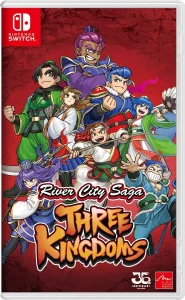
River City Saga: Three Kingdoms Switch NSP
Report Link Error
Select the broken download file, then submit the report.
Screenshots
About Game
River City Saga: Three Kingdoms Switch NSP brings the familiar rough-and-tumble energy of Kunio-kun into a comic version of ancient China. Rather than treating the Three Kingdoms period as a solemn historical drama, the game recasts its legendary figures and conflicts through River City personalities, fast side-scrolling fights, and a deliberately playful tone.
A River City Take on the Three Kingdoms Era
River City Saga: Three Kingdoms uses the Three Kingdoms era as a setting for a broad, character-driven adventure. Kunio and other recognizable faces from the River City world are assigned roles inspired by historical figures, creating a version of ancient China where famous conflicts and personalities are filtered through the series’ humor.
That contrast defines much of the game’s atmosphere. Cities, battlefields, and other locations provide the backdrop for a journey across a stylized historical world, but the focus remains on the exaggerated personalities and physical comedy associated with Kunio-kun. Familiar characters such as Riki and Misako appear in their own Three Kingdoms-inspired roles, turning a well-known period of Chinese history into a setting for unexpected interactions.
The result is less about historical simulation than reinterpretation. The campaign draws on recognizable warlords and major-era imagery while giving River City’s cast room to carry the action with its own lighter, more chaotic identity.
Kunio’s Role as Guan Yu and the Campaign Premise
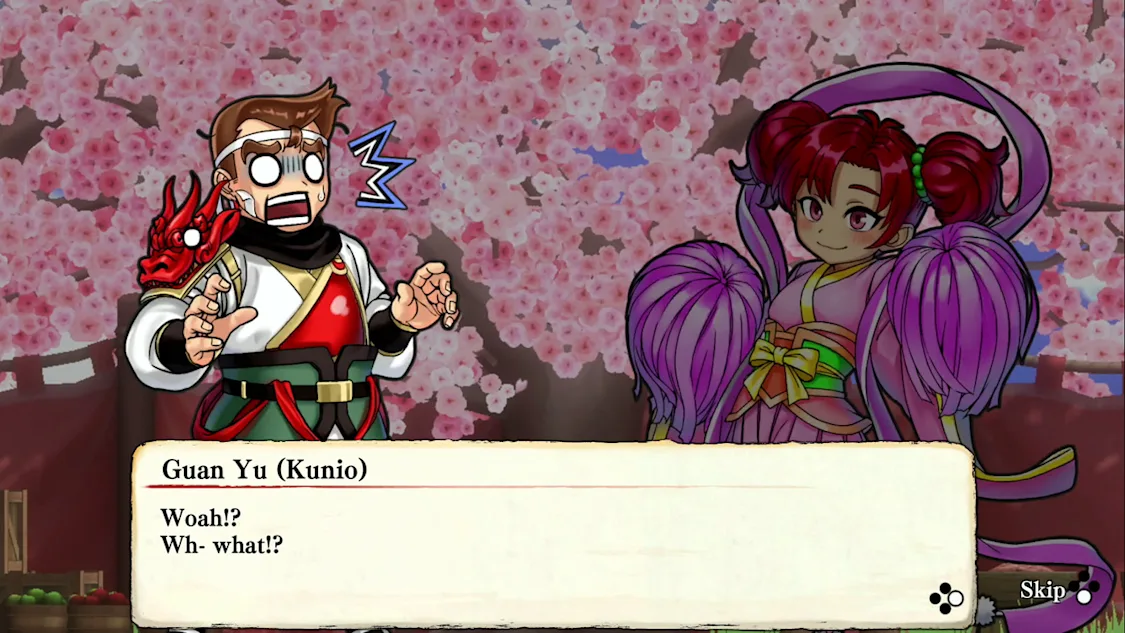
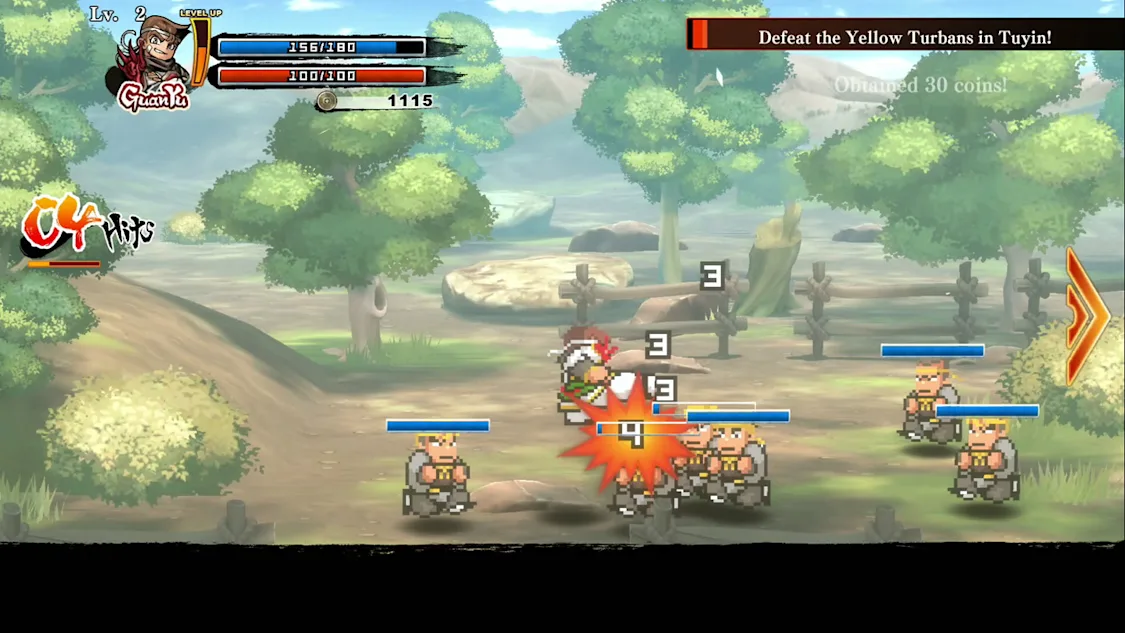
The story begins with Kunio being transported into the Three Kingdoms world. There, he assumes the role of Guan Yu, the celebrated general, and becomes involved in the conflicts surrounding the effort to unify the land. His route through the campaign brings him into confrontation with rival warlords while his friends appear as counterparts to other historical figures.
This setup gives the River City Saga campaign a clear direction without abandoning the series’ sense of absurdity. Battles are framed as part of a larger Three Kingdoms story, yet the cast is still made up of River City characters behaving in ways that suit their established comic energy. The premise lets the game move between narrative scenes, travel across ancient China, and action-heavy encounters without requiring a strict historical tone.
For players who know the period, identifying the reworked figures and conflicts is part of the appeal. For players who do not, the story still provides a straightforward adventure: Kunio fights through a divided land, meets allies, and takes on increasingly important opponents.
How Side-Scrolling Combat Drives the Adventure
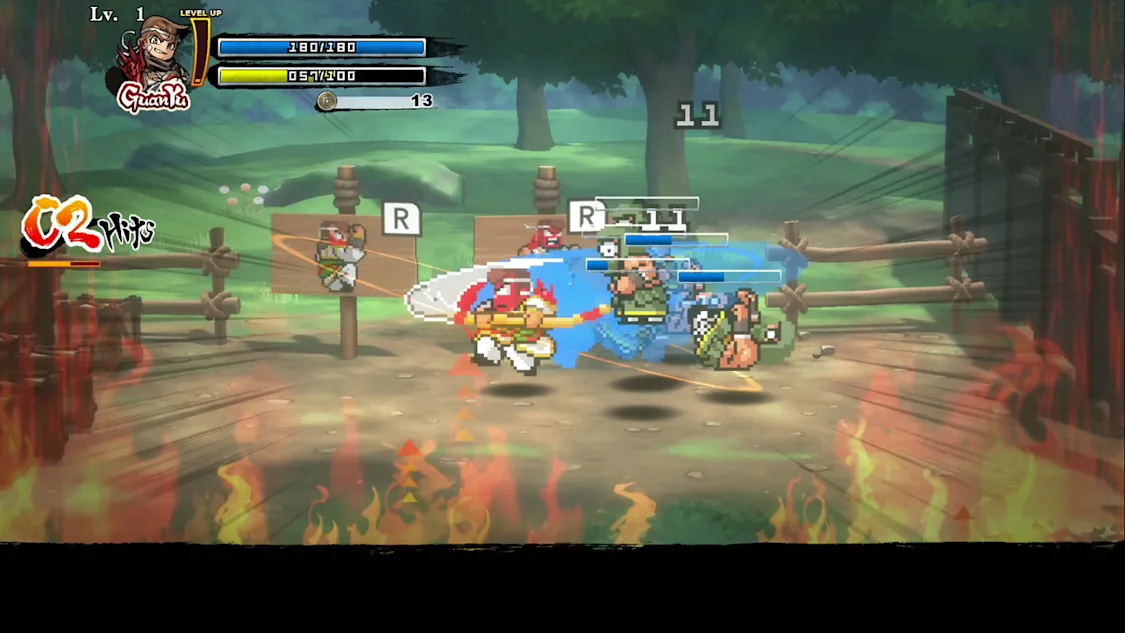
Combat is built on the classic side-scrolling beat-em-up format. Kunio and his allies face groups of enemies across horizontal stages, using direct attacks, signature techniques, combo attacks, and special moves to clear the way. The structure is immediately familiar to anyone who enjoys arcade-style brawlers: move forward, manage a crowd, and keep the pressure on before enemies can surround the party.
There is more to the action than repeatedly using a single attack. Different enemy types encourage players to adjust their approach, while the range of fighting styles, moves, weapons, and items offers options during combat. Combo attacks can help maintain momentum against groups, while special moves provide stronger tools for difficult situations.
- Control the crowd: Groups of enemies are a constant part of the side-scrolling beat-em-up flow, making positioning important during busy fights.
- Use signature attacks: Kunio’s recognizable fighting style is joined by additional moves suited to the Three Kingdoms adventure.
- Build combos: Combo attacks add force and variety when dealing with several opponents at once.
- Save special moves: Powerful abilities can be useful when standard attacks are not enough.
- Adjust to opponents: Enemy types and fighting styles reward some experimentation rather than a fixed routine.
The pace suits the game’s arcade and fighting roots. Encounters are designed around immediate action, but the wider journey gives those clashes a place within an ongoing campaign rather than presenting them as isolated stages.
Light RPG Progression Beyond Button Mashing
River City Saga: Three Kingdoms adds light RPG progression to its brawling foundation. Characters earn experience through their battles, level up over time, and gain improved stats. New abilities and powerful special moves can also be unlocked, giving the action a sense of development as the campaign advances.
That progression changes the texture of the combat without shifting the game away from its beat-em-up identity. The central pleasure remains landing attacks and overcoming enemy groups, but leveling gives players reasons to consider how they want their characters to develop. Unlocking River City Saga abilities and trying different approaches can make later encounters feel less like simple repetitions of earlier fights.
Weapons, items, allies, side quests, secrets, and mini-games further broaden the adventure around the main battles. Allies bring their own skills to the party, while collected equipment can support combat and exploration. These systems add variety to the route through the game’s map and provide extra activity beyond moving directly from one fight to the next.
Boss Battles and Historical Warlord Encounters
Boss battles give the campaign its major action checkpoints. These encounters pit the player against famous Three Kingdoms warlords, using the setting’s historical cast as a source of larger-scale challenges. After fighting through ordinary opponents, bosses place greater emphasis on the combat tools gathered through experience, leveling, items, and unlocked techniques.
The bosses also reinforce the game’s premise. A confrontation with a warlord is not presented as a detached arcade challenge; it is part of Kunio’s ongoing role in the Three Kingdoms story. That connection helps the campaign maintain a sense of progression as the stakes move from street-level scuffles and enemy groups to more notable figures from the era.
For action-focused players, these fights are a natural test of special moves and combos. For those drawn to the setting, they are a chance to see how the game’s comic reinterpretation handles its best-known historical opponents.
Local Co-op and the Game’s Switch Release Profile
Local co-op multiplayer fits naturally with River City’s party-based fighting. Teaming up with another player can make crowd battles more energetic and gives the game a social arcade character, particularly during its more demanding encounters. The mix of co-op action, character growth, alternate abilities, side activities, and boss battles also supports continued experimentation with the game’s systems.
River City Saga: Three Kingdoms Switch NSP was developed and published by Arc System Works. It released on July 21, 2022, supports English, and is listed for Europe, USA, and Asia. Its genre profile combines action, arcade, fighting, and role-playing elements, which accurately reflects its blend of side-scrolling combat and character progression.
The game is best suited to players looking for a humorous brawler with a recognizable historical theme, especially those who enjoy the River City style of exaggerated fighting and local co-op. Its Three Kingdoms framing supplies a memorable setting, while the leveling and ability systems give the journey more structure than a purely stage-based arcade beat-em-up.