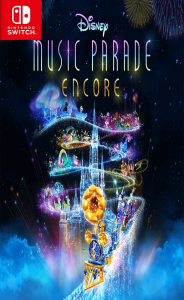
Disney Music Parade Encore Switch NSP
Report Link Error
Select the broken download file, then submit the report.
Screenshots
About Game
Disney Music Parade Encore Switch NSP brings Disney melodies into a Nintendo Switch rhythm-action format built around timing, movement, and a parade-sized sense of presentation. Its musical journey moves through Disney-themed worlds, asking players to recover scattered notes and rebuild the energy needed for a grand parade. The result is a game shaped by familiar songs, visual rhythm cues, and stages that encourage repeat attempts for stronger performances.
Disney Music Parade Encore: Release Details and Switch Profile
Disney Music Parade Encore was released on December 12, 2024, for Nintendo Switch. Published by Imagineer, it is classified in the Action and Music genres, a fitting description for a game where rhythmic precision drives progress through themed locations and song stages.
The listed region is ASIA, with support for English, Japanese, Korean, Chinese, and Traditional Chinese. Its Nintendo Switch title ID is 010025F01F066000, and the listed firmware requirement is version 18.1.0. These details place the game as a music-led Disney adventure designed for a multilingual regional audience.
The premise centers on a magical disruption: musical notes have been scattered across Disney realms, weakening the magic needed to power an enormous parade. Mickey Mouse and friends set out to restore those notes, with each completed music stage helping bring the event closer to life. That setup gives the rhythm gameplay a clear sense of forward motion rather than presenting songs as isolated selections alone.
A Rhythm Adventure Built Around Disney Melodies
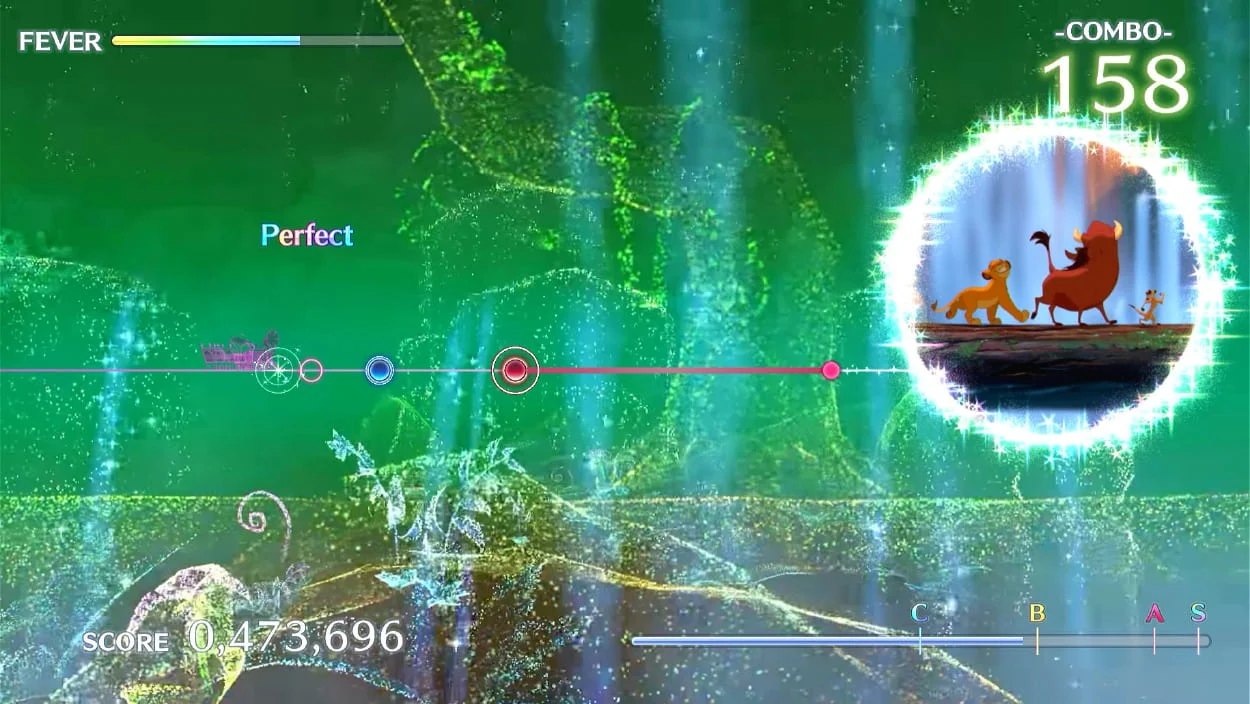
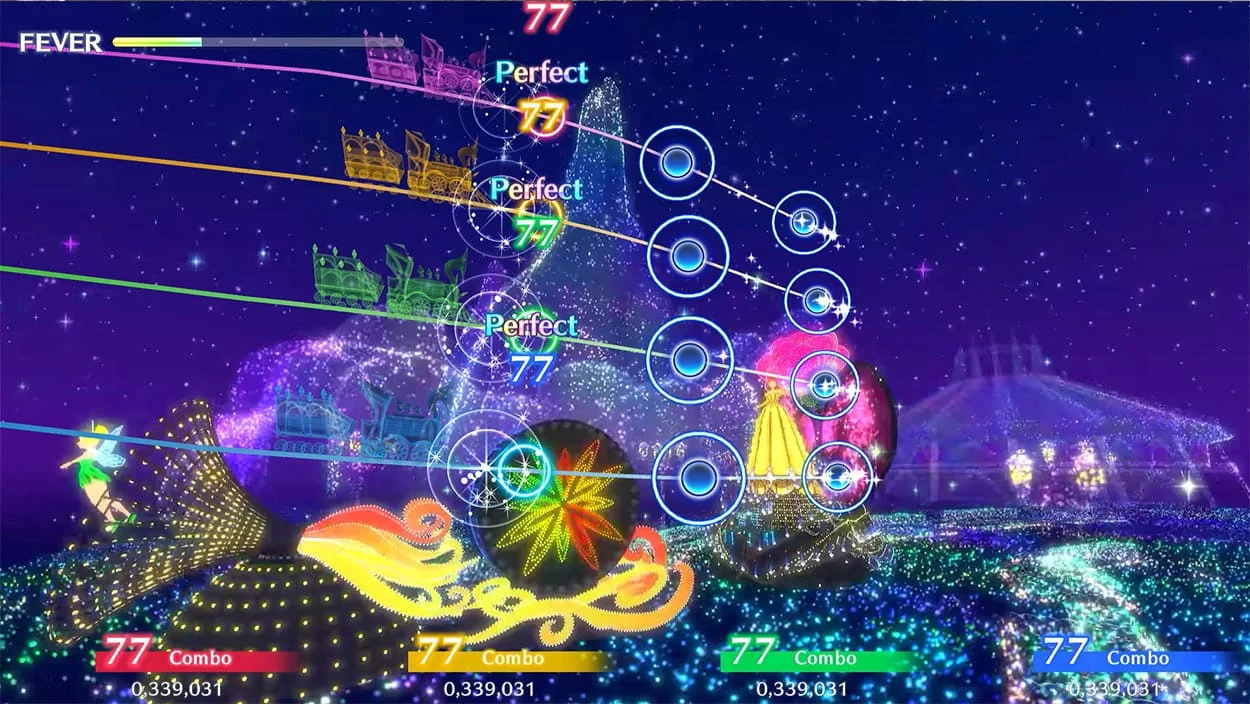
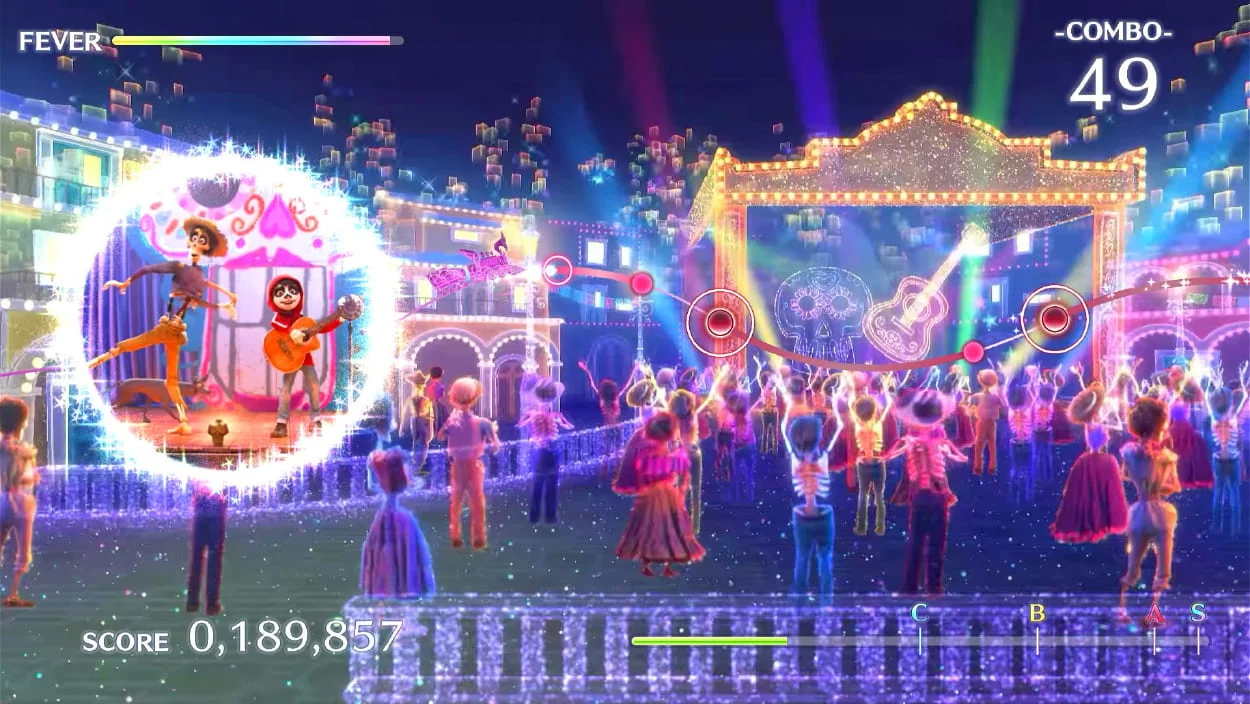
Disney Music Parade Encore gameplay combines rhythm-action play with travel through Disney-inspired worlds. Notes scroll across the screen, and players must respond in time as they move through each song. Success depends on reading what is approaching, matching the beat, and maintaining accuracy when patterns become more demanding.
The game’s progression is tied to locations drawn from Disney movie settings. Players can journey from Cinderella’s castle to Agrabah’s streets, with different worlds providing the backdrop for the quest to recover musical fragments. This structure gives each section a themed identity and allows the music, stage challenge, and setting to work together.
New mechanics are introduced as the adventure advances, helping the rhythm-action format develop beyond its earliest stages. Disney characters also join the parade, adding to the celebratory atmosphere around the central musical goal. The presentation is built to feel bright and animated, with scrolling note tracks turning well-known melodies into active performances rather than passive listening.
There is also room for personal expression through customizable parade floats and characters. Unlocking songs and collecting special items support continued play, while the variety of Disney settings helps keep the parade’s route from feeling visually fixed. For players who enjoy rhythm games with a recognizable fantasy framework, the combination of musical stages and world-based progression is a natural fit.
Tap, Hold, and Swipe: Core Rhythm Controls
The control language is direct but demands attention. Players interact with notes through taps, holds, and swipes, while button presses and joystick movements are also part of the rhythm-based input. The important challenge is not simply recognizing an instruction, but performing it at the right moment as notes move across the display.
Tap inputs reward quick reactions; held notes ask players to sustain an action through their duration; and swipes introduce a more physical sense of movement. Button and joystick inputs add further variety, making each chart a sequence of changing gestures rather than a single repeated command. The system is designed around precision and feel, asking players to stay connected to the pulse of each song.
That balance can make familiar music useful in a practical way. A player who knows a melody may be better able to anticipate its phrasing, but visual cues remain central. Looking too late can turn a simple pattern into a missed opportunity, especially when the screen fills with closely timed notes. Consistent rhythm game timing comes from reading ahead, keeping calm, and learning how a stage’s patterns relate to the music.
Disney Songs, Stage Challenges, and Score-Chasing
The song library includes Disney classics as well as more modern selections from Disney films. Examples referenced for its rhythm play include “Under the Sea” and “Circle of Life,” illustrating the range of musical moods the game can draw upon. A lively underwater-themed number and a grand, dramatic anthem naturally invite different pacing and performance demands.
Stages are tailored to their Disney themes, so challenges are linked to the worlds and songs surrounding them. This is more than a decorative choice: themed stages give individual performances a distinct identity as players continue collecting the musical pieces needed for the parade. Each cleared song contributes to the larger journey of restoring harmony across the affected kingdoms.
Score-chasing is supported by special character abilities. These unique skills can enhance a score or help clear challenging segments, giving character selection a functional role alongside its Disney appeal. Learning when and where an ability is useful can be especially valuable on difficult passages, where a strong run may depend on preserving accuracy through a demanding sequence.
Unlockable songs, collectible items, and parade customization also reinforce replay value. Returning to a stage can serve several purposes: improving timing, aiming for a better score, becoming more comfortable with a difficult chart, or simply revisiting a preferred Disney song. The game’s appeal is therefore not limited to reaching the next world; it also invites players to refine the performances they have already completed.
Local Multiplayer Options for Cooperative and Competitive Play
Disney Music Parade Encore Switch NSP includes local multiplayer play for friends who want to share its rhythm challenges in the same setting. The game supports both cooperative and competitive play, allowing the musical activity to become either a shared effort or a contest for the stronger performance.
That flexibility suits the material well. Cooperative play can frame a song as a group attempt to keep the parade moving, while competitive play puts greater focus on timing, accuracy, and scores. The local component also makes the game suitable for players who want a Disney-themed rhythm experience that can be enjoyed socially, not only as a solo progression through its worlds.
Practical Tips for Improving Rhythm Performance
- Read the cues early. Keep attention on the visual note prompts and notice what is coming next instead of waiting until the last instant.
- Anticipate the beat. Use the song’s rhythm to prepare for incoming taps, holds, swipes, button presses, and joystick movements.
- Repeat difficult passages. Practice challenging sections to improve timing, build confidence, and make unfamiliar patterns feel more natural.
- Begin at a comfortable level. Lower difficulty settings provide space to learn song patterns and understand character abilities without excessive pressure.
- Learn the song’s shape. Pay attention to recurring musical and note patterns, since familiarity can make later attempts more controlled.
- Raise the challenge gradually. Move upward in difficulty as precision improves, giving new demands a stronger foundation in practiced rhythm control.