Army of Ruin Switch NSP

Report Link Error
Select the broken download file, then submit the report.
Screenshots
About Game
Army of Ruin Switch NSP is a horde-survival rogue-lite from Milkstone Studios, released on Nintendo Switch on June 23, 2023. Listed across Europe and the USA, the action, adventure, and arcade title places fast-moving combat beside long-term character growth: a run may be about surviving the next wave, but its rewards can also improve the chances of the run that follows.
Army of Ruin on Nintendo Switch: Game Overview
Developed and published by Milkstone Studios, Army of Ruin Switch builds its action around mounting pressure. Players choose a hero, enter changing environments, and confront large groups of enemies while developing a build through skills, upgrades, and relic effects. The structure is rooted in repeat attempts rather than a single fixed route, with procedural maps changing layouts, placements, and discoveries from run to run.
The game’s genre listing—action, adventure, and arcade—fits its mix of immediate movement-focused encounters and a broader fantasy quest. Its rogue-lite design gives failure a practical role. Resources gathered during an attempt can contribute to permanent upgrades, so progress is not limited to how far a single hero reaches in one session.
A World Threatened by the Void Lord
The Army of Ruin story begins in a realm under threat from the awakened Void Lord. This ancient force commands corrupted enemies known as the Army of Ruin, pushing the world toward darkness as kingdoms fall and surviving heroes disappear.
Resistance comes from warriors drawn from different factions and connected to distinct magical energies. They are searching for a legendary artifact believed to be capable of banishing the Void Lord. That premise gives the combat a clear sense of stakes: each push through hostile territory is part of a larger attempt to stop an overwhelming force.
The lore also leaves room for individual motivation. The heroes are not presented simply as interchangeable fighters; each has a past shaped by the advancing darkness and a personal reason to join the struggle. The Void Lord’s threat supplies the grim fantasy atmosphere, while the artifact quest gives the surviving warriors a direction beyond endurance alone.
Bullet-Hell Survival Against Enemy Hordes
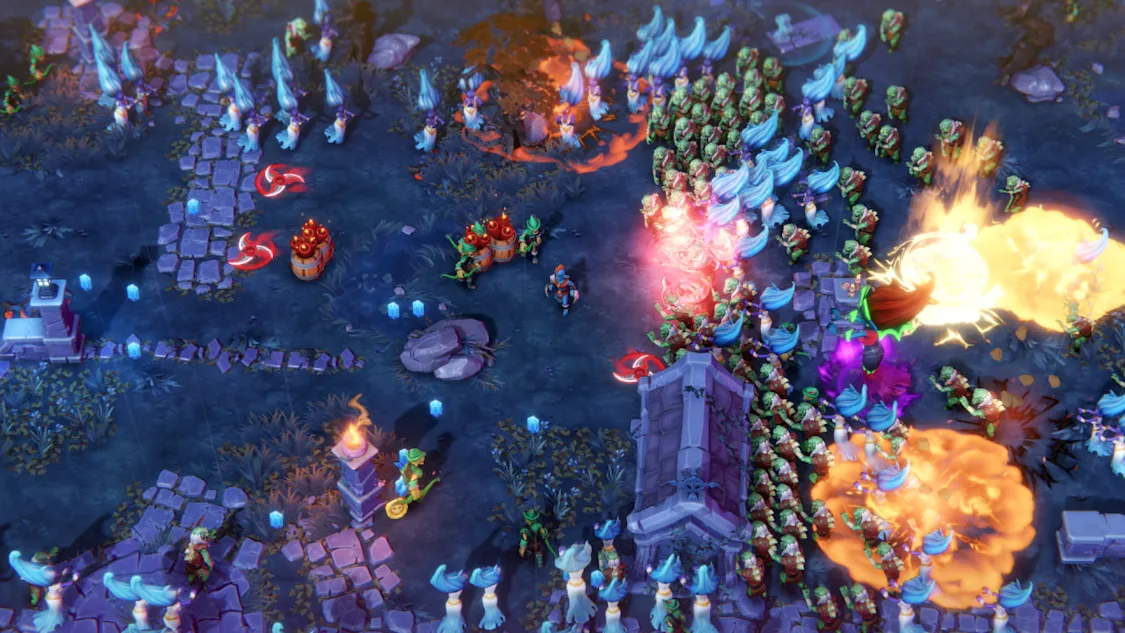
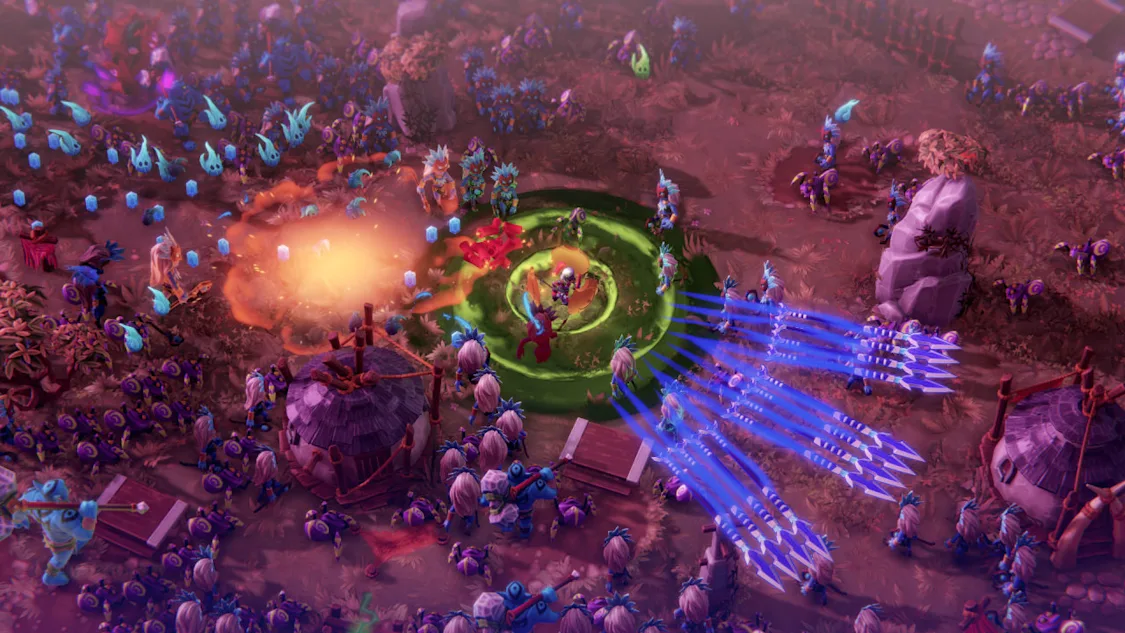
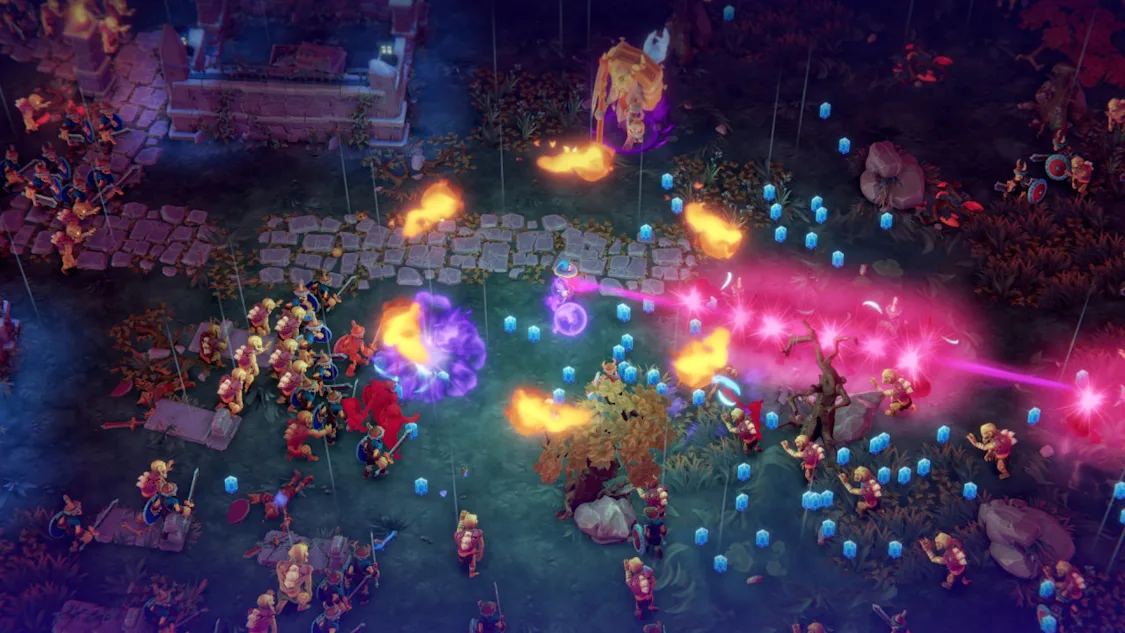
Army of Ruin gameplay asks players to manage dense enemy waves and hostile projectile patterns at the same time. Enemies differ in behavior and attacks, ranging from agile foes to larger bosses. Staying alive depends on reading what is happening around the hero, identifying space to move into, and avoiding becoming trapped by a crowd or a spread of attacks.
The bullet-hell action is not only defensive. Movement and evasive positioning need to work alongside offensive pressure, as heroes gain new skills and strengthen their attacks during a run. The result is a constant series of decisions: move to safety, keep enemies in range, collect resources, and choose improvements that suit the current situation.
Boss encounters add another point of escalation. After handling varied enemy hordes, players must account for larger threats with their own attack patterns. That structure encourages attention rather than simple repetition, especially when the procedural layouts alter where enemies and secrets appear.
Choosing Heroes and Building Around Their Abilities
The Army of Ruin heroes offer different starting points for combat. Each hero has distinct abilities and an ultimate skill, allowing players to approach the same general challenge from different angles. One build may prioritize a particular set of attacks or effects, while another can be shaped around a different hero’s strengths.
Skill choices expand that flexibility during runs. The game includes an expansive skill tree, and choosing new skills can tailor a character toward a preferred style of play. The important consideration is not merely selecting the strongest-looking option, but selecting effects that work together and remain useful against the enemy patterns currently appearing.
Relics add another layer. These items provide temporary buffs and unique effects, which can change the direction of an attempt or offer a needed advantage when waves become more demanding. Experimentation is central to the game’s variety: heroes, skills, relics, and upgrades can be combined in different ways rather than following one guaranteed route.
Rogue-Lite Progression and Persistent Upgrades
Army of Ruin upgrades connect short-term survival with longer-term development. Resources collected in a run can unlock permanent improvements for future attempts, helping players build more favorable conditions even after a difficult defeat. This persistent progression gives repeat sessions a practical purpose beyond trying for a better result.
Resource management also creates a meaningful split between immediate and future needs. Gold can be spent on upgrades during a run or saved for persistent unlocks between runs. That choice is particularly relevant when a player needs extra strength right away but also wants to invest in the next attempt.
Procedural map generation supports replay value by varying environments, enemy placements, layouts, and secrets. Combined with hero selection and build experimentation, those changes mean that repeated runs can demand different responses. For players who enjoy learning enemy behavior, testing combinations, and gradually improving their options, the loop provides a clear reason to return.
9 Things to Know Before Starting Army of Ruin on Switch
- Watch the patterns. Enemy hordes do not all attack in the same way, so learning when and where projectiles appear is essential to finding room to dodge.
- Choose with intent. Heroes have their own abilities and ultimate skills, making hero selection an early decision that can shape the rest of a run.
- Build around skills. New skill choices and the skill tree allow tailored builds; combinations matter more when enemy pressure increases.
- Use relics carefully. Arcane relics provide temporary buffs and special effects, giving a run another source of tactical flexibility.
- Expect changing maps. Procedural generation alters layouts, enemy positions, and secrets, while bosses introduce larger enemies with distinct attack patterns.
- Plan resources and settings. Gold can support in-run upgrades or persistent unlocks, and language options include English, Dutch, French, German, Italian, Japanese, Portuguese, Russian, Simplified Chinese, and Spanish.
Army of Ruin Switch NSP suits players looking for a fantasy rogue-lite built around enemy hordes, evasive bullet-hell movement, and gradual improvement across repeated attempts. Its appeal lies in the ongoing balance between quick reactions during a wave and considered choices about heroes, skills, relics, and permanent progression.