Super Robot Wars V Switch NSP XCI

Report Link Error
Select the broken download file, then submit the report.
Screenshots

About Game
Super Robot Wars V Switch NSP XCI brings a large-scale mecha crossover to Nintendo Switch with tactical missions, animated attacks, and an original storyline that joins familiar anime worlds in one conflict. Its focus is deliberate rather than action-driven: players direct robots and pilots across battle maps, make careful use of limited resources, and build a stronger force over the course of the campaign.
Super Robot Wars V on Nintendo Switch: Release and Regional Details
Super Robot Wars V released for Nintendo Switch on October 3, 2019. Bandai Namco served as both publisher and developer for this version, which was available in the Asia and Japan regions. Language support includes English, Japanese, Korean, and Chinese, making the Switch release accessible to players across several audiences in its supported territories.
The game combines Adventure, Role-Playing, and Simulation elements. Its adventure component carries the narrative between battles, while the role-playing and simulation sides shape how players develop units, select their forces, and respond to each mission’s tactical demands. The result is a format built around long-form campaign progression rather than isolated battles.
On Switch, the game’s appeal lies in the way it preserves the series’ recognizable blend of crossover storytelling and turn-based strategy. Missions ask players to think through movement, targets, defenses, pilot abilities, and available supplies. Between those missions, earned currency and experience create a steady sense of improvement for both machines and their crews.
A Unified Timeline Built Around Mecha Crossovers
The Super Robot Wars V story takes place in an original unified timeline. Earth is under pressure from multiple directions, including alien invaders and internal conflicts, creating a crisis large enough to draw heroes from separate anime properties into the same struggle.
That setup gives the game its central dramatic purpose: defending humanity while investigating the deeper mysteries connected to this altered reality. The characters are not presented as visitors passing through unrelated scenarios. Their individual narratives are woven into a larger plot, with confrontations, character developments, and continuing efforts to secure peace in a world shaped by war.
The atmosphere shifts between military urgency, interplanetary danger, and more personal moments among the pilots and crews. A mission can carry the immediate pressure of an Earth-threatening attack, while the surrounding story provides room for alliances to form and for different perspectives to meet. This unified-timeline approach is what allows the mecha crossover concept to function as a single campaign rather than a collection of disconnected appearances.
Series Represented in the Super Robot Wars V Story
Among the anime series represented in the Super Robot Wars V crossover are Mobile Suit Gundam Unicorn and Space Battleship Yamato 2199. Their presence helps establish the game’s broad scale, bringing together robot-focused conflict and spacefaring drama within the same overarching storyline.
The game uses these series as parts of its larger narrative framework. Characters and forces from the represented worlds join the defense of humanity, with their stories contributing to the new timeline’s escalating threats and unresolved questions. This gives the crossover material a narrative role beyond simply placing recognizable machines on the battlefield.
For players drawn to mecha anime, the appeal is in seeing distinct heroes, pilots, and machines operate under one command structure while retaining their own strengths and dramatic context. For players less familiar with every represented series, the original story supplies a shared situation: Earth needs defending, and a varied group of allies must confront the forces endangering it.
Grid-Based Turn-Based Tactical RPG Combat
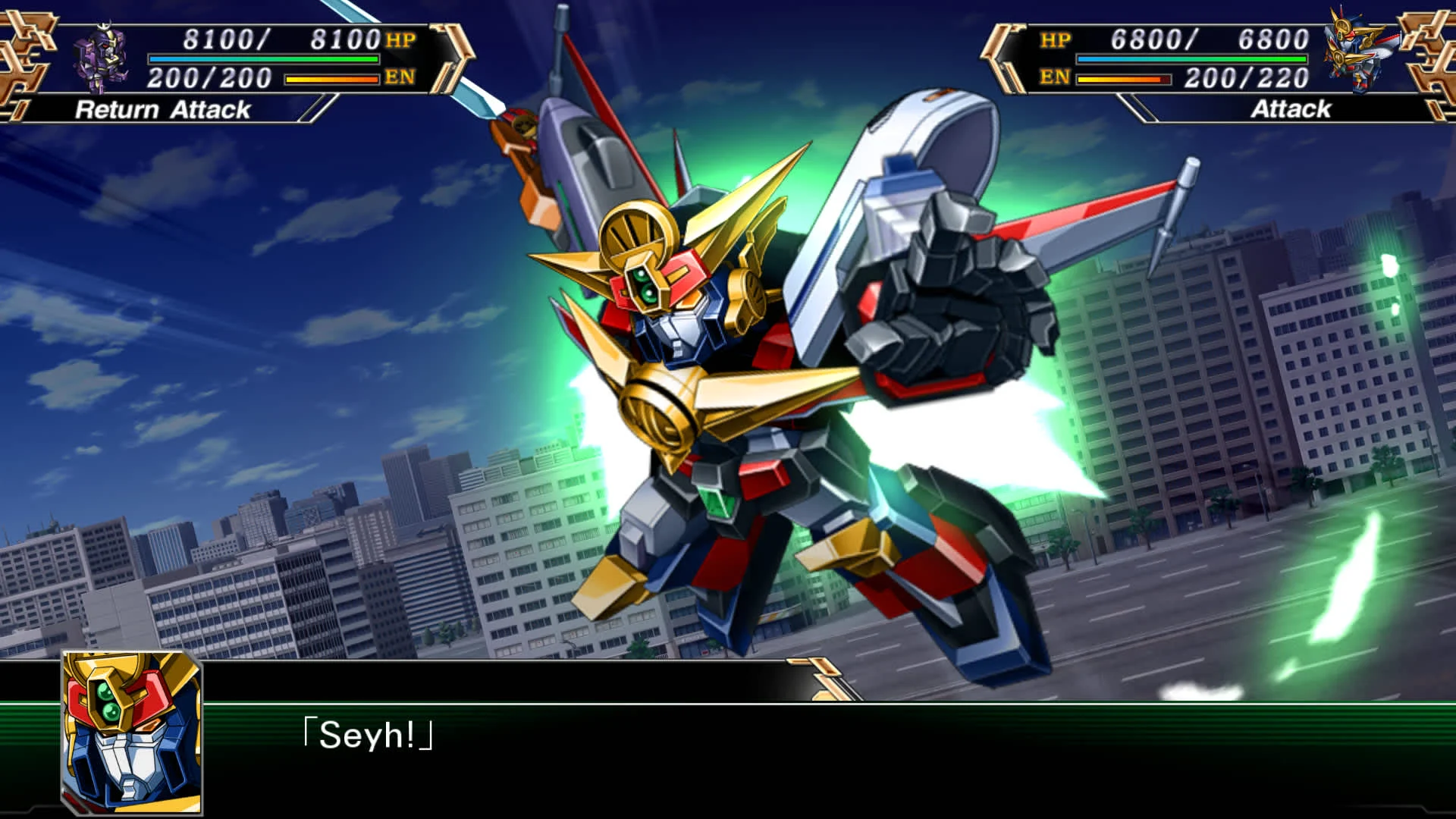
Super Robot Wars V uses turn-based tactical RPG combat on grid-based maps. Players command a squad of robots and their pilots, moving units across the field before engaging enemy forces. The system rewards attention to distance, terrain, unit placement, and the order in which attacks are made.
Positioning is central to each encounter. A powerful unit may be able to deal heavy damage, but sending it too far ahead can leave it exposed. Defensive planning matters alongside target selection, especially when enemy statistics indicate that certain attacks or units may be less effective than expected. Checking the opposition before committing to an exchange helps players choose safer and more efficient actions.
Combat also requires management of EN, ammunition, and spirit commands. EN and Ammo support stronger attacks, so using every high-cost option early can limit a unit’s choices later in the mission. Spirit commands add another tactical layer by giving pilots temporary boosts, healing options, or powerful offensive effects. Their value depends on timing: a command spent at a decisive moment can change the outcome of a difficult engagement.
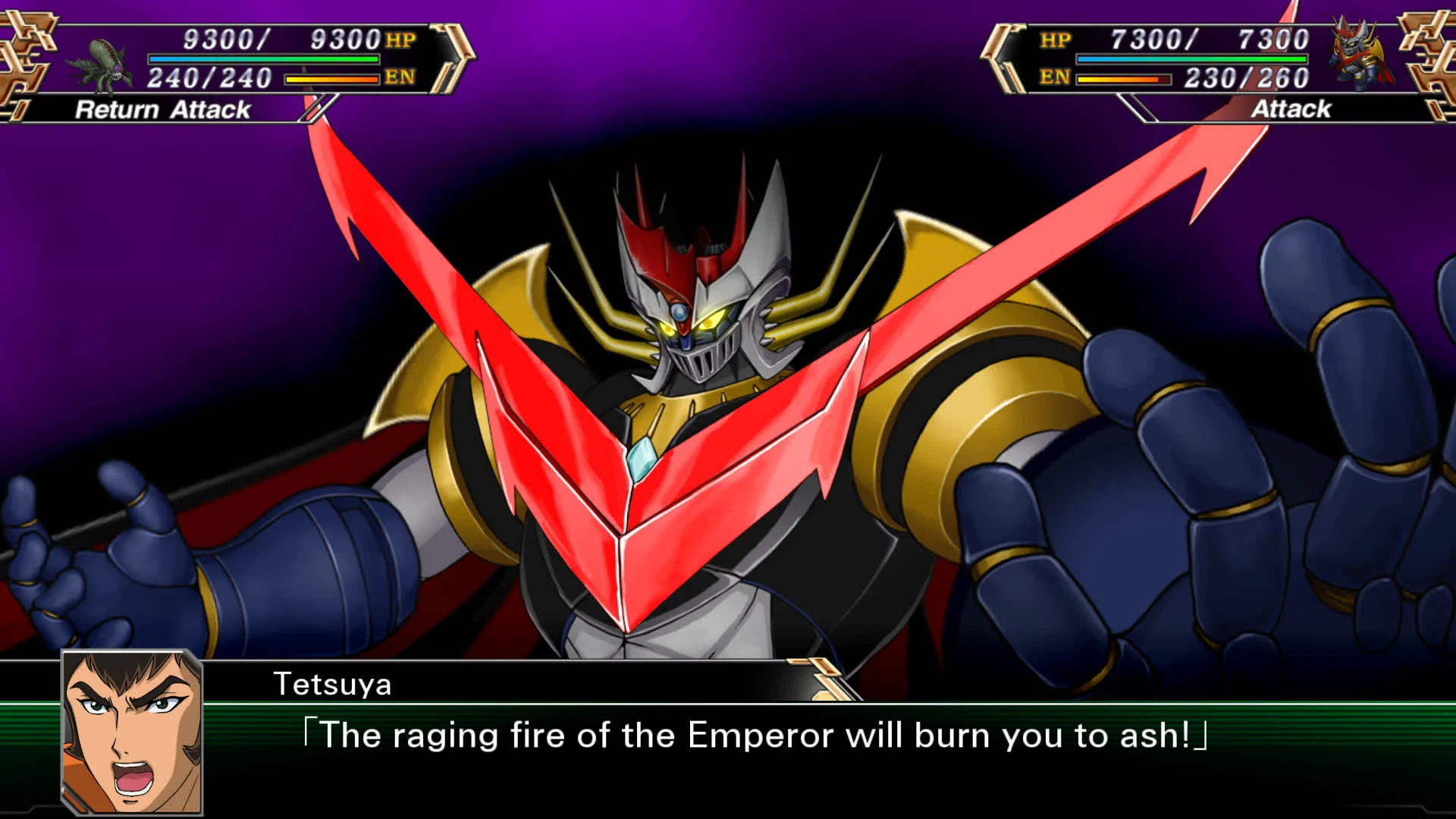
Attack sequences are presented through dynamic battle animations that highlight each robot’s signature moves and individual strengths. These scenes give successful attacks visual weight while the grid map remains the place where the strategic decisions are made. The contrast between measured planning and dramatic combat presentation is a defining part of the experience.
Robot and Pilot Growth Between Missions
Mission rewards support a continuing progression system. Currency and experience earned through battles can be used to improve robots and pilots, preparing the team for future encounters. This progression reinforces the role-playing side of the game: success is not only about surviving one map, but also about shaping a more capable force for the missions ahead.
Robot upgrades allow players to invest in the machines they rely on, while pilot upgrades strengthen the people operating them. Because the campaign features many units and pilots, these choices can influence how a player approaches later battles. A team built around particular strengths may favor direct offense, careful defense, resource efficiency, or useful pilot abilities.
The game also includes SR Skill Requirement conditions that can unlock secret units and scenarios. These conditions add a reason to revisit tactical decisions and pay closer attention to mission objectives. Rather than treating every battle as a simple route to the next chapter, players can pursue stronger results and explore outcomes connected to their battlefield performance.
Practical Tactical Priorities for Early Missions
- Read the field. Inspect enemy statistics before attacking so that target choices and defensive plans are based on the units actually in front of you.
- Know each unit. Consider the strengths and weaknesses of your robots and pilots when deciding who should lead an attack or hold a vulnerable position.
- Protect EN and Ammo. Powerful special attacks can consume valuable resources, so avoid exhausting them before a mission’s most demanding encounters.
- Position with purpose. Use the grid carefully, keeping units from becoming isolated and planning both offensive movement and defensive coverage.
- Save spirit commands. Use boosts, healing, and offensive effects when they can secure an important advantage rather than spending them without a clear need.
- Watch mission goals. SR Skill Requirement conditions can lead to secret units and scenarios, making careful objective play worthwhile.
Super Robot Wars V Switch NSP XCI is suited to players who enjoy methodical tactical RPG battles, mecha storytelling, and the satisfaction of improving a squad over time. Its crossover setting, unified conflict, resource management, and mission-based growth give each battle a place within a larger campaign for Earth’s survival.