Worms Rumble Switch NSP
Report Link Error
Select the broken download file, then submit the report.
Screenshots

About Game
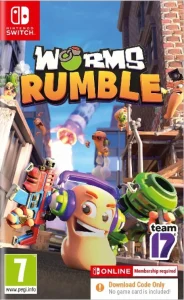
Worms Rumble Switch NSP takes a familiar series into a much faster kind of contest. Instead of waiting for a turn to line up a shot, players control a single worm in simultaneous combat, moving through arenas, avoiding incoming fire, and looking for a decisive opening. It is a Strategy and Shooter release built around brief, energetic multiplayer matches rather than a traditional story campaign.
Worms Rumble on Switch: A Real-Time Shift for the Series
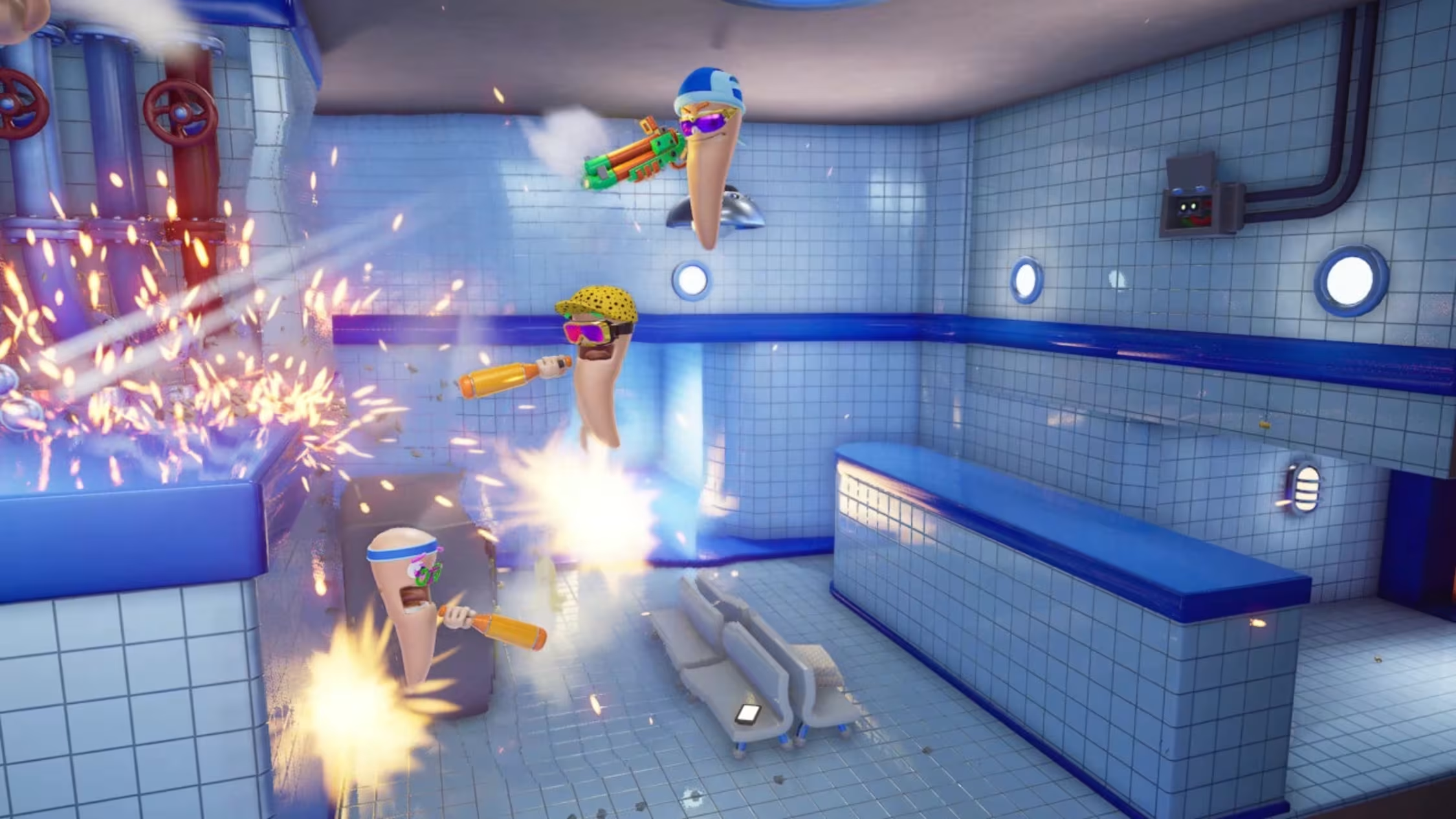
The central change in Worms Rumble Switch NSP is its real-time combat. The usual rhythm of turn-based Worms matches gives way to continuous movement and immediate reactions. Every participant can run, jump, evade, aim, and attack at the same time, so a strong plan needs to work under pressure rather than wait for a calm turn.
That shift makes this Worms strategy shooter feel more direct. Positioning remains important, but it is joined by quick aiming, awareness of nearby threats, and the ability to change direction when a fight becomes too dangerous. Players are not simply choosing an attack; they are managing space while other worms are doing exactly the same thing around them.
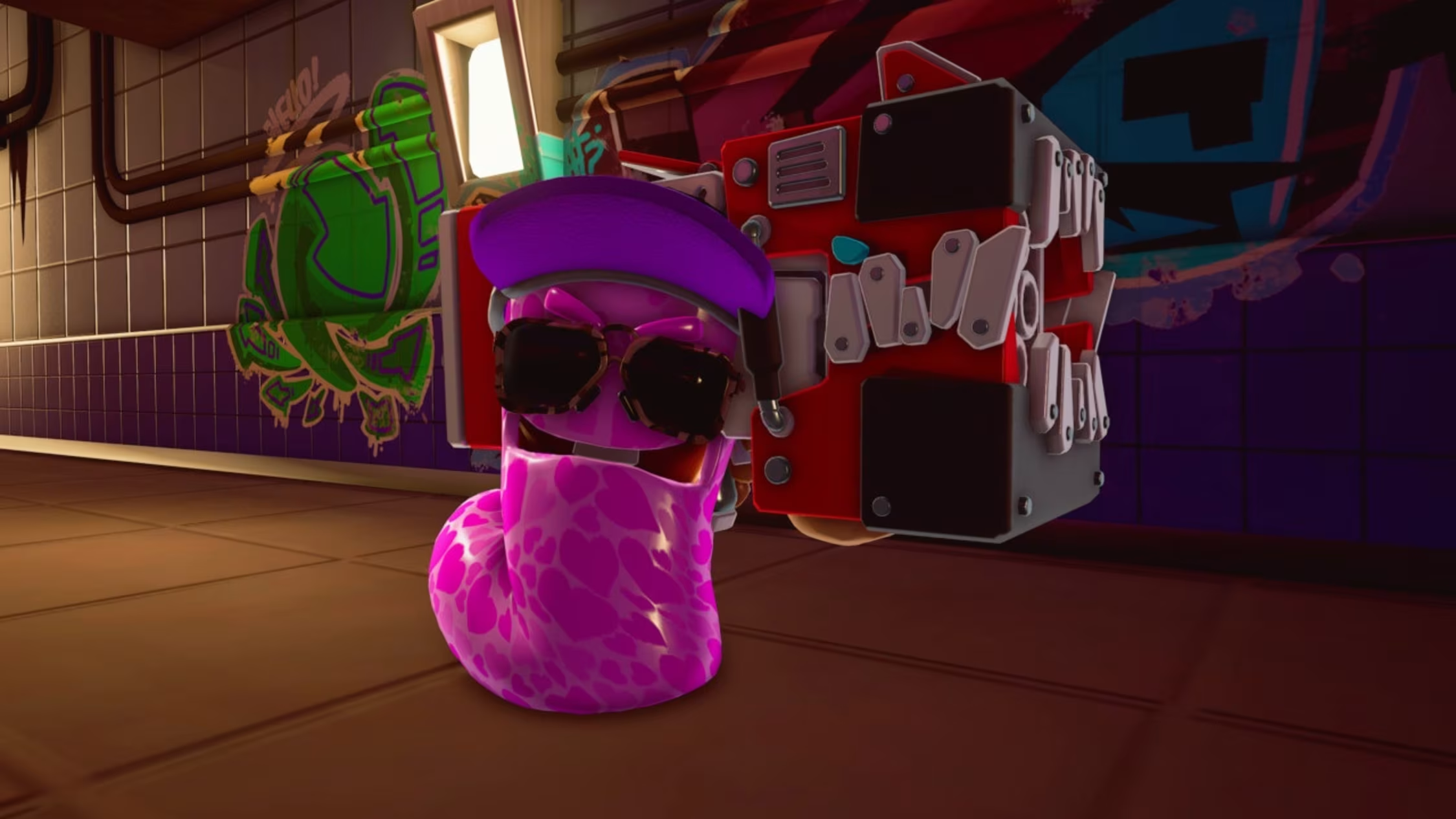
The weapons retain the series’ explosive character. The available arsenal includes the Bazooka, Holy Hand Grenade, and Sheep Launcher, giving matches a mix of aimed fire and powerful explosive threats. Their usefulness depends on timing, trajectory, and the conditions of the arena. A weapon that is effective in an open area may be riskier when opponents are close or cover is limited.
The result is a more immediate version of Worms: lively, destructive, and built around constant decisions. Its arenas are not passive backdrops, either. Destructible environments can change as a match unfolds, altering routes, cover, and the safety of familiar positions.
32-Player Arena Battles and the Goal of Survival
Worms Rumble arenas can host up to 32 players, placing one worm against as many as 31 opponents. That scale supports a battle royale-style premise in which the field gradually becomes more dangerous, then more focused, as fewer rivals remain. Survival is not a side objective; in the appropriate mode, it is the entire point.
Controlling a single worm gives each encounter a personal, unpredictable feel. An opponent may be a target one moment and a threat from another direction the next. Long-range fire can pressure players into movement, while explosive weapons can make crowded areas especially hazardous. The changing arena creates an additional layer of uncertainty, since damaged terrain may remove cover or open a new path.
There is no indicated narrative campaign driving these contests. Instead, each match creates its own small drama: an escape from a dangerous exchange, a well-placed explosive attack, or a late attempt to become the final survivor. The atmosphere comes from that compact cycle of tension and release, with bright, active arenas serving as the stage for frantic worm-on-worm combat.
Deathmatch, Last Worm Standing, and Last Squad Standing
The confirmed multiplayer modes give the game several ways to frame the same real-time foundation. Deathmatch puts the emphasis on eliminations, encouraging players to seek fights and convert weapon opportunities into points. It is the mode most closely focused on offensive momentum.
Last Worm Standing shifts the priority toward survival. Eliminations still matter because they reduce the competition, but reckless aggression can be costly when staying alive is the ultimate objective. Movement, cover, and a willingness to leave an unfavorable fight become especially valuable.
Last Squad Standing brings a team dimension to that survival goal. Competing alongside a squad changes the value of space and timing, since engagements are no longer only about an individual worm’s position. These modes create replay value through different objectives rather than through a separate story structure: one match may reward aggressive pressure, while another asks for patience and careful survival.
Why Quick Matches Suit Nintendo Switch Play
Matches typically last only a few minutes, a structure that suits Nintendo Switch play well. The game does not require a long uninterrupted session before it reaches its main action. A player can enter a fast contest, deal with a concentrated burst of combat, and finish a round without the extended setup associated with slower multiplayer formats.
That quick-match design also supports its portable multiplayer appeal. The action begins from a simple premise—move, find weapons, fight, and survive—but the surrounding circumstances are rarely identical. Different opponents, weapon encounters, and arena damage can change the pace of each round. The compact format makes repeated matches practical while leaving room for players to improve their reactions and tactical habits over time.
For the Switch audience, the fit is in the rhythm rather than in any single feature: brief rounds, readable objectives, and action that remains active from start to finish. Players looking for a slower, turn-based Worms experience should note the difference, while those interested in a rapid competitive variation have a clear reason to explore this format.
A Beginner’s Match Plan: 5 Priorities for Staying Alive
- Keep moving. Constant movement makes a worm harder to hit and helps avoid becoming an easy target during open exchanges.
- Respect cover. Use the environment to limit enemy lines of fire, but remain alert when destruction changes the arena around you.
- Learn trajectories. Weapons such as the Bazooka demand an understanding of aiming and travel paths, especially when firing across uneven terrain or toward distant opponents.
- Measure explosive space. Area-of-effect attacks can be powerful, but their danger extends beyond the exact point of impact. Give explosive weapons the room they require.
- Adapt to the arena. Routes, cover, and safe positions can change during a match. Reassess the battlefield rather than relying on one location for too long.
These Worms Rumble tips are not a guarantee of victory in a 32-player fight, but they address the game’s essential demands: mobility, awareness, weapon knowledge, and quick adjustment. Battle royale survival depends as much on avoiding poor situations as it does on winning a single exchange.
Switch Release Snapshot: Supported Languages and Game Details
Worms Rumble launched on Nintendo Switch in the USA region on June 23, 2021. It is published by Team17 and is listed in the Strategy and Shooter genres. The Switch release supports English, Spanish, French, German, Italian, Japanese, Russian, Korean, and Chinese.
Its combination of real-time combat, destructible arenas, recognizable Worms weaponry, and multiple multiplayer modes makes it best suited to players who enjoy competitive matches with short round times. Long-time series players can approach it as a marked change from the familiar turn-based format, while newcomers can treat it as a brisk arena shooter with a survival-focused Worms identity.