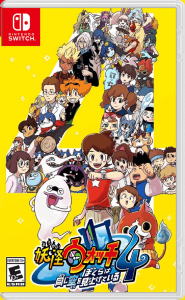
Yo-kai Watch 4: We are looking at the same sky Switch NSP
Report Link Error
Select the broken download file, then submit the report.
Screenshots
About Game
Yo-kai Watch 4: We are looking at the same sky Switch NSP brings the series into a broader, more action-focused adventure built around family, friendship, and the unseen links between different eras. Released in Japan on 20 June 2019, this Japanese-language Action Role-Playing game follows familiar and new characters as their separate paths begin to overlap.
A Three-Timeline Story Connecting Keita, Natsume, and Shin
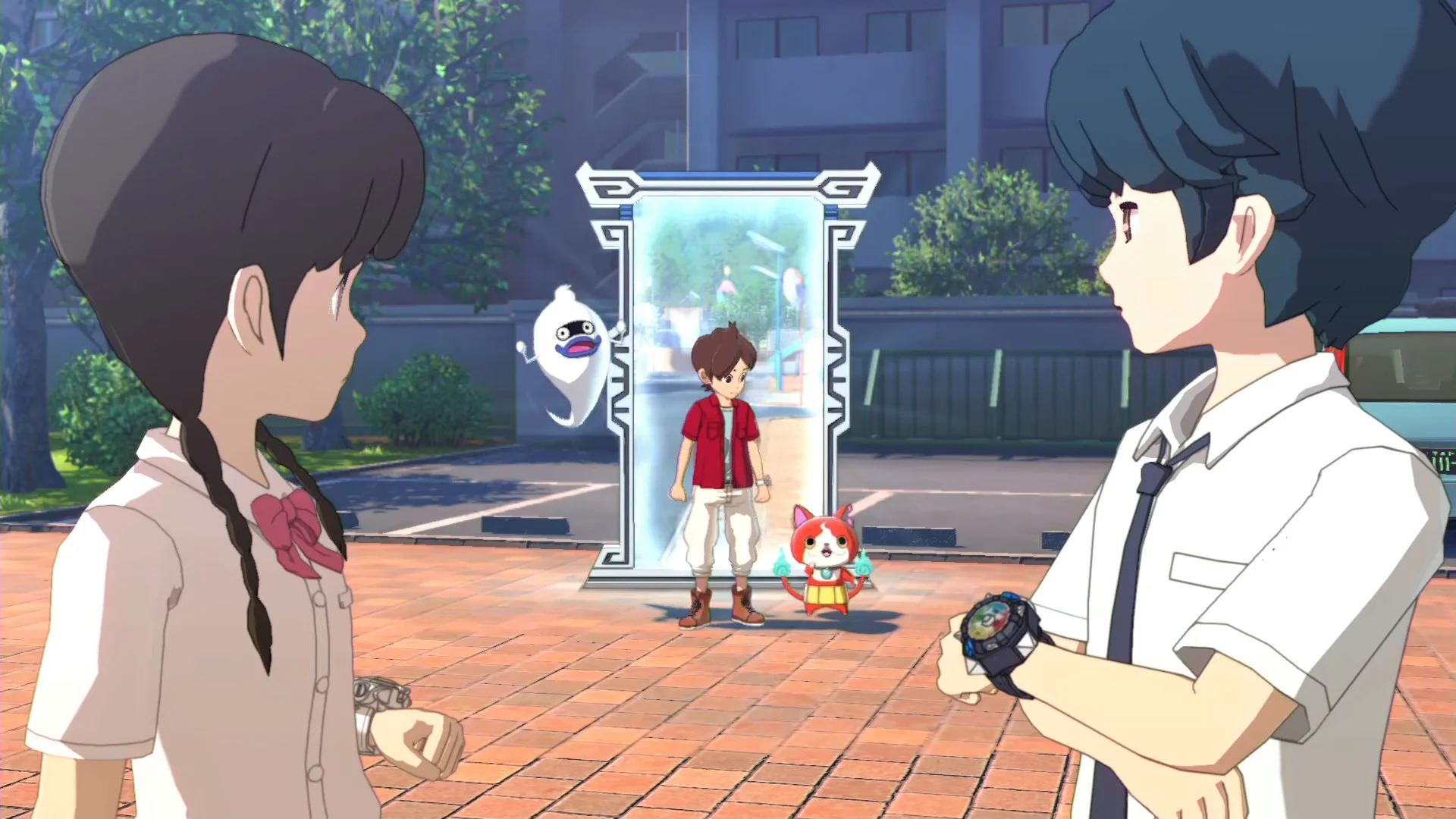
The Yo-kai Watch 4 story is structured around three protagonists: Keita, Natsume, and Shin. Each comes from a different period, giving the narrative an intergenerational shape rather than keeping the adventure tied to a single setting or hero.
Keita’s side retains a connection to the everyday world and his established Yo-kai companions. Natsume, identified as Nate’s daughter, leads a Yo-kai Detective Agency in the future. Her role brings a different perspective to the series’ human-and-Yo-kai relationships, while also extending the story beyond Keita’s era. Shin’s plotline reaches into the past, where he confronts a more traditional struggle involving powerful Yo-kai.
These three timelines do more than provide separate backdrops. Their converging journeys form the core of the conflict, gradually showing how events in one era affect the others. The setup lets the game explore family bonds across generations while giving each protagonist distinct circumstances, abilities, and allies. Keita, Natsume, and Shin are connected by more than coincidence: their individual stories become parts of one larger effort to protect both people and Yo-kai.
Soranaki and the Threat Linking the Eras
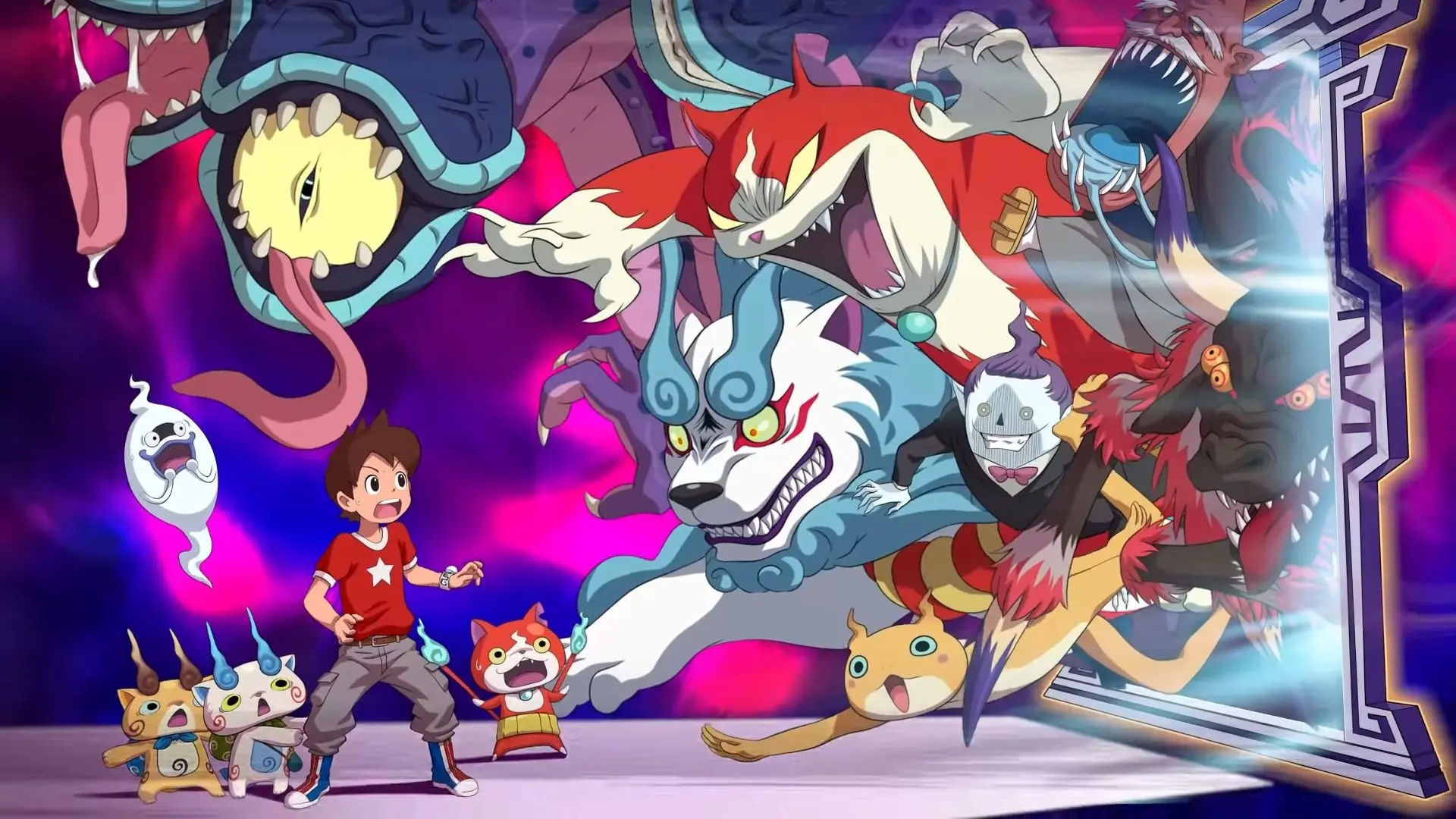
The figure drawing these threads together is Soranaki, the mysterious Yo-kai Watch 4 antagonist. Soranaki connects the separate eras and poses a danger that reaches beyond any one character’s home or time period. The threat is framed as one capable of swallowing the worlds in shadow, raising the stakes for humanity and the Yo-kai world alike.
This gives the three-timeline structure a clear dramatic purpose. Keita, Natsume, and Shin are not simply visiting different periods for variety; they are responding to a problem whose consequences cross those boundaries. Their eventual cooperation depends on combining their individual strengths and the help of their Yo-kai companions.
The conflict also supports the game’s recurring themes. Courage matters because the heroes face a danger larger than their own circumstances. Friendship matters because human characters and Yo-kai must rely on one another. Family has weight because Natsume’s future-era role places generational connections directly inside the plot. Soranaki’s presence turns those themes into an urgent shared challenge rather than leaving them as background ideas.
How Yo-kai Watch 4 Shifts Toward Action-Oriented Combat
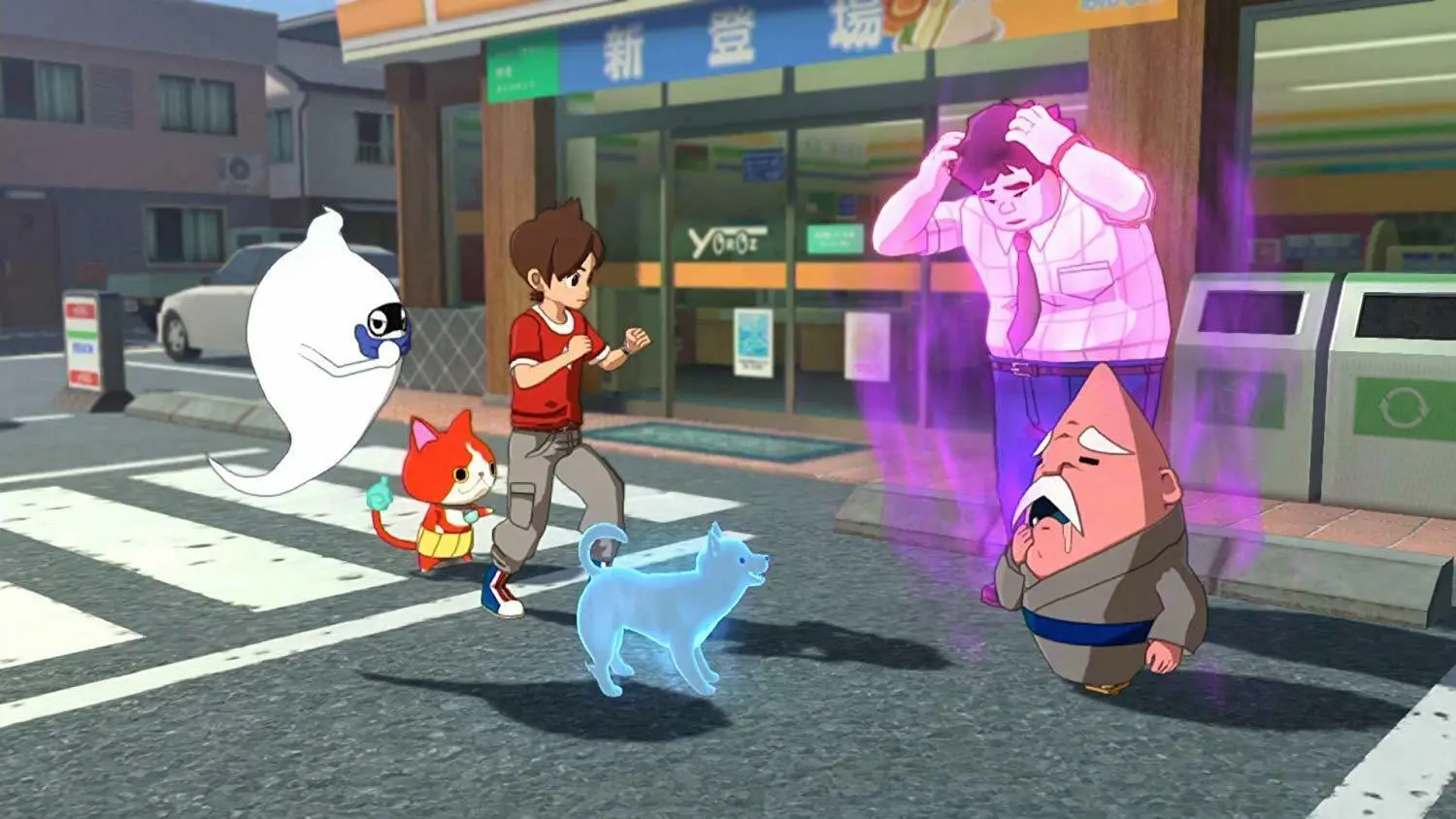
Yo-kai Watch 4: We are looking at the same sky Switch NSP shifts its battles toward a more immediate action role-playing approach. Instead of treating combat as a distant command exercise, the game allows direct control over human characters and their selected Yo-kai companions during real-time battles.
That change gives encounters a more active rhythm. Positioning, changing characters, and responding in the moment become part of the fight, while combo attacks add another reason to pay attention to who is currently under the player’s control. The series’ focus on collecting and working alongside Yo-kai remains important, but it is presented through a more dynamic battle system.
Progression is tied to more than simply finding additional allies. Defeated enemies can yield Yo-kai Souls, which may be absorbed to improve abilities or used to craft new items. Recruiting Yo-kai, developing a capable team, and preparing for stronger challenges all feed into the action-focused structure. The result is a combat system that keeps companions central while asking for more direct participation from the player.
Switching Between Humans and Yo-kai During Battles
The key tactical feature in Yo-kai Watch 4 combat is the ability to switch control between humans and Yo-kai during encounters. This human and Yo-kai control system gives battles flexibility, since the playable protagonists and their companions can contribute in different ways.
Changing characters in real time is not merely a visual novelty. It encourages players to consider which ally is best suited to the immediate situation and when to move from one approach to another. A battle can involve direct human participation, a chosen Yo-kai’s strengths, and opportunities to unleash powerful combo attacks.
That design supports experimentation as teams grow. Recruiting Yo-kai is rewarding because new companions can expand the available options, while friendship levels influence combat effectiveness and unlock special events. The Konkatsu system also allows deeper bonds with Yo-kai, improving their stats. Together, these systems make relationships with companions relevant both to the story’s tone and to practical combat strategy.
Exploring Vibrant Worlds Across Multiple Time Periods
Exploration moves across several vibrant timelines, each with its own environments, Yo-kai, quests, and discoveries. The different eras are not only story locations; they are spaces to search for hidden details and opportunities outside the main plot. That gives the world a sense of variety while keeping exploration connected to the game’s central premise.
The enhanced Yo-kai Watch functions as a useful exploration tool, helping locate hidden Yo-kai and uncover secrets. This supports a slower, more observant style of play for those who want to investigate beyond the direct route forward. Side quests and mini-games provide further diversions, with extra rewards for players who spend time away from the main narrative.
Multiple timelines also create natural replay value through unfinished quests, overlooked hidden Yo-kai, undiscovered secrets, and team-building possibilities. Players interested in the story can follow the linked journeys of Keita, Natsume, and Shin, while those drawn to progression can keep improving abilities, friendships, and Yo-kai lineups. It is a suitable fit for players who enjoy Japanese-language role-playing adventures with character-driven stories, collection systems, and real-time action.
5 Things to Prioritize While Exploring Yo-kai Watch 4
- Switch with purpose. Use Yo-kai Watch 4 character switching during real-time battles to take advantage of the different strengths available between human protagonists and Yo-kai companions.
- Search beyond the path. Use the enhanced Yo-kai Watch functions to locate hidden Yo-kai and uncover secrets throughout the different timelines.
- Follow side quests. Yo-kai Watch 4 quests and mini-games offer a break from the main story while providing additional rewards and discoveries.
- Build stronger friendships. Develop bonds through the Konkatsu system, since friendship levels improve Yo-kai stats, affect combat effectiveness, and can unlock special events.
- Make use of Yo-kai Souls. Collect Souls from defeated enemies to power up abilities or craft new items, supporting longer-term progression for tougher encounters.