Xenon Racer Switch NSP XCI
Report Link Error
Select the broken download file, then submit the report.


Screenshots
About Game
Xenon Racer Switch NSP XCI brings a futuristic arcade racing contest to Nintendo Switch, pairing fast anti-gravity competition with a career climb built around drifting, energy management, and carefully timed boosts. Its neon-heavy cities, sleek electric-powered vehicles, and local split-screen option give the game a clear focus: staying quick through demanding courses while finding the right moment to turn stored energy into a decisive burst of speed.
Xenon Racer on Nintendo Switch: Release and Game Details
Xenon Racer arrived on Nintendo Switch on March 26, 2019. Developed by 3DClouds and published by Soedesco, it is a racing game released for Europe and the USA, with English language availability.
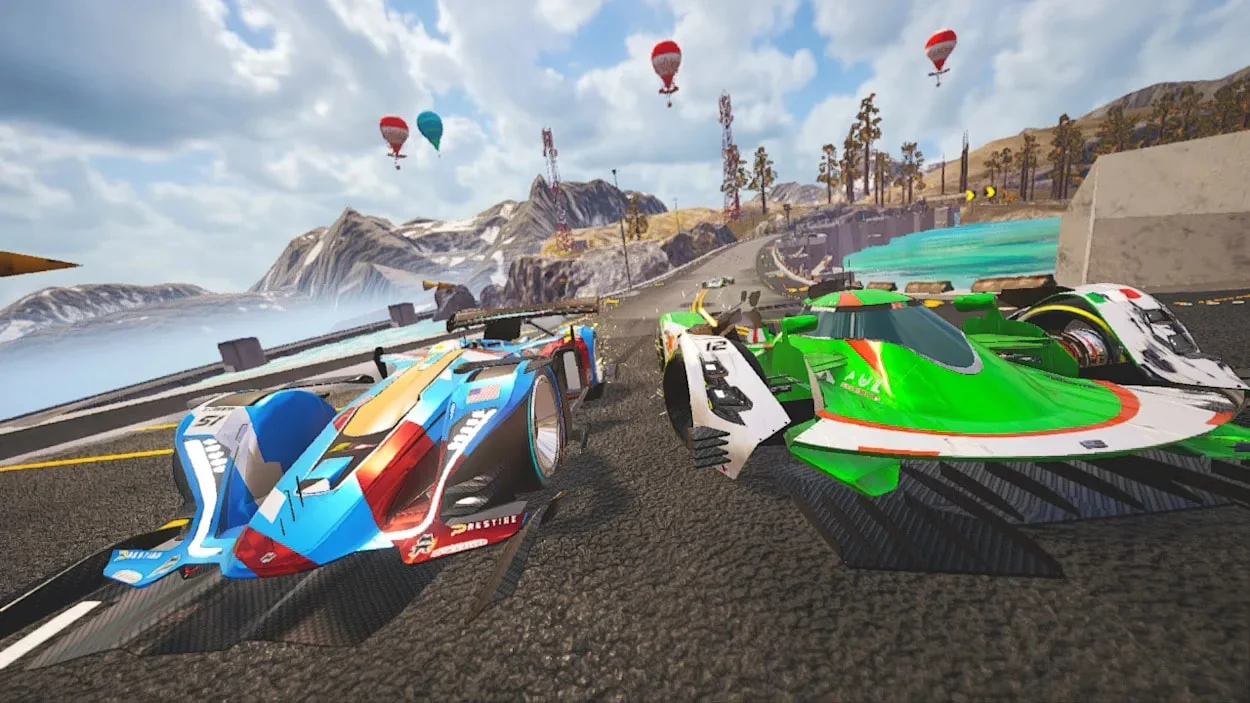
The Switch version places its competition in a future where electric-powered racing has overtaken traditional motorsport. That premise informs both the game’s look and its racing identity. Vehicles are Xenon-powered machines designed for high-speed contests, while the courses present imagined versions of global megacities through vivid, neon-lit environments.
The presentation supports an energetic arcade tone rather than a grounded motorsport simulation. Bright city backdrops, responsive racing action, and anti-gravity speed make the races feel built around momentum. The important challenge is not simply holding the racing line: drivers need to understand how each turn can feed into the next acceleration opportunity.
From Rookie Driver to Xenon Champion
The Xenon Racer storyline follows a driver entering the competitive circuit as a rookie and working toward recognition as the Xenon Champion. The Xenon Racing Federation organizes prestigious championships across major cities, where teams pursue both racing success and technological supremacy through continually refined vehicle design.
Progression is framed as a climb through a circuit already occupied by established competitors. Wins move the player closer to challenging those legends, while new tracks and advanced vehicles become available along the way. The journey gives the races a sense of direction beyond isolated events: each result contributes to a larger push for championship status.
Unlockable vehicles and upgrades also add practical reasons to keep progressing. New machinery can change how a racer approaches handling and speed, while upgrades allow more adjustment to suit an individual driving style. This makes experimentation part of the racing career rather than an optional distraction from it.
The game includes Championship, Quick Race, and Time Attack modes, offering different ways to engage with its circuits. Championship supports the career-oriented path, Quick Race provides a more immediate event, and Time Attack puts the focus on improving a lap and learning the limits of a track. Alongside circuit races, the game also includes elimination rounds, where adapting to the event’s demands matters as much as raw pace.
Drifting and Boost Management at the Core of Every Race
Xenon Racer drifting is central to the game’s arcade racing design. Controlled drifts through corners charge an energy bar, which can then be used for powerful boosts. The mechanic creates a useful tension: entering a turn well can build future speed, but poor timing can cost momentum when the course is least forgiving.
Boost management matters because the energy bar is a limited resource. A boost can help recover after a difficult section, create an advantage in a high-speed stretch, or provide the extra pace needed when rivals are close. Using it immediately is not always the strongest choice. Saving energy for a decisive straight or the final laps can be more valuable than spending it on the first available opening.
The courses ask drivers to weave through traffic, handle sharp turns, and maintain rhythm across changing sections. In this context, a drift is not merely a visual flourish. It is a route to energy, and energy is a route to speed. Learning that loop is likely to be the most important part of becoming consistently competitive.
Xenon Racer Switch NSP XCI therefore suits players looking for an arcade racer where active driving decisions shape every lap. The game’s speed boost mechanics reward attention to corners and course layout, rather than relying only on a vehicle’s top speed.
Anti-Gravity Speed Across Neon-Lit City Tracks
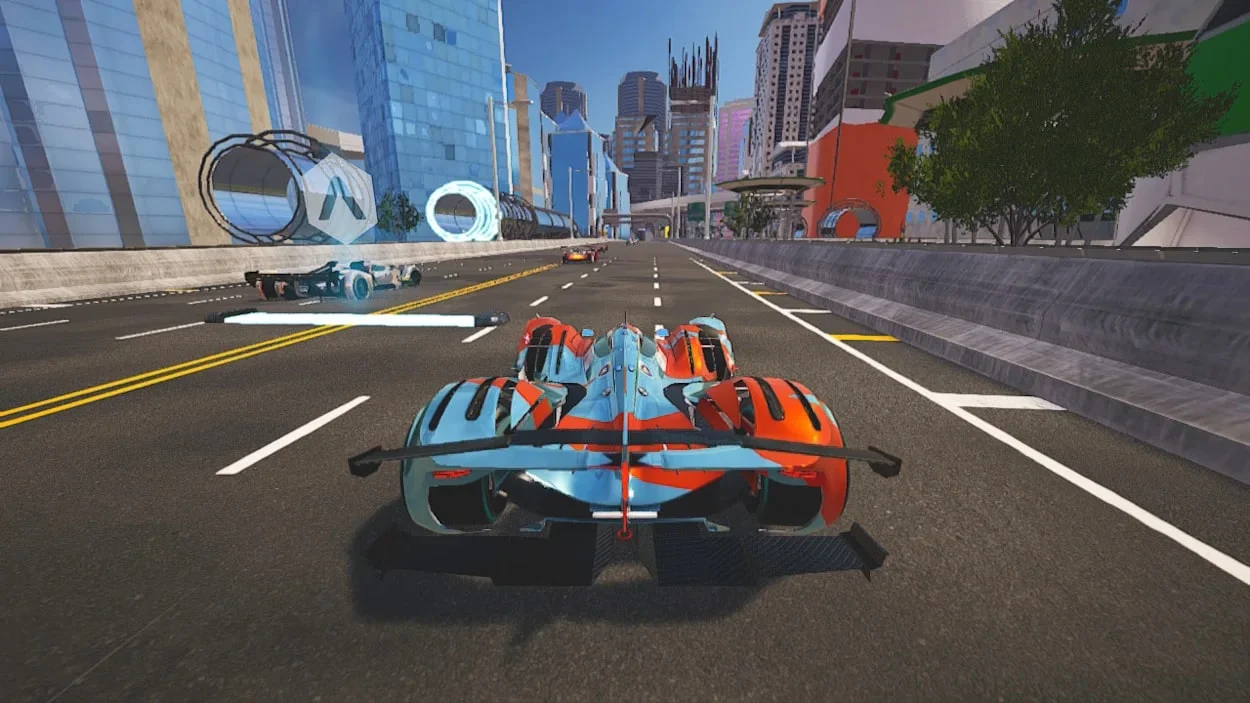
The game’s setting is 2030, when a new form of electric-powered racing has emerged as a major sporting spectacle. Its tracks travel through futuristic versions of global cities, giving the game a broad visual frame for its championship events. These are not quiet roads or traditional race venues; they are dynamic courses built for rapid anti-gravity competition.
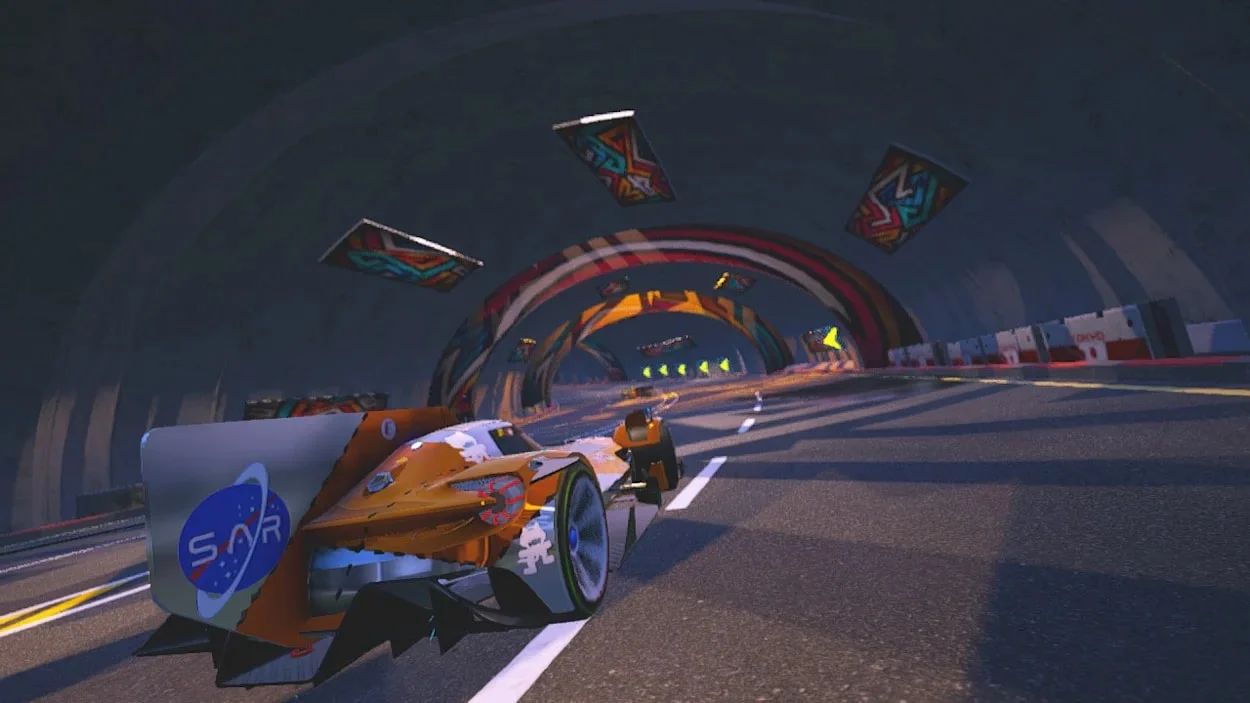
Neon-lit environments give the racing a vivid visual identity. Bright urban color, futuristic architecture, and high-speed vehicles reinforce the sense that these championships are as much a showcase of innovation as a contest of driving skill. The visual presentation fits the fiction of teams pushing vehicle technology forward while their drivers chase glory.
Track variety helps keep the racing circuit from feeling static. Different corners, traffic situations, race types, and city settings call for adjustments in drift timing and boost use. A course that rewards conserving energy through a technical sequence may demand a more aggressive approach once it opens into a fast section. That changing balance supports replay value across Championship, Quick Race, and Time Attack.
Split-Screen Multiplayer for Local Head-to-Head Racing
Xenon Racer split-screen multiplayer gives the game a local competitive option for friends sharing the same screen. Instead of measuring improvement only against course times or computer-controlled rivals, players can take their preferred vehicles directly into head-to-head racing across the futuristic circuits.
Local multiplayer complements the game’s accessible arcade structure. Drifting, charging energy, and choosing when to boost are mechanics that remain easy to see in a close race, even when the competition becomes tense. A well-timed burst near the end of a lap can quickly change the order, which makes the mode well suited to direct, repeatable challenges between players.
For a Nintendo Switch racing audience interested in quick local contests, this mode gives the track knowledge gained in solo play another use. Learning a corner in Time Attack or Championship can pay off when a friend is beside you and the next boost window matters more than a clean theoretical lap.
5 Practical Steps for Improving in Xenon Racer
- Practice tight drifts. Use sharp corners to learn how controlled drifting charges the energy bar while helping you preserve a useful racing line.
- Watch the energy bar. Treat boost energy as a resource, not an automatic reward; knowing how much is available helps prevent wasted opportunities.
- Save boosts for impact. Hold a speed boost for a high-speed section, a recovery moment, or a critical final-lap move instead of spending it without a clear advantage.
- Test different vehicles. Unlockable cars have distinct stats affecting handling and speed, so try more than one option when a course is causing trouble.
- Match upgrades to your style. Experiment with upgrades to find a setup that supports the way you prefer to approach turns, acceleration, and sustained pace.
Those habits fit the game’s larger appeal. Xenon Racer is for players drawn to fast arcade racing, futuristic city tracks, vehicle experimentation, and local head-to-head competition. Its strongest rhythm comes from turning precise drifts into stored energy, then converting that energy into speed at the moment a race is ready to swing.