Trine 4 The Nightmare Prince Switch NSP
Report Link Error
Select the broken download file, then submit the report.
Screenshots
About Game
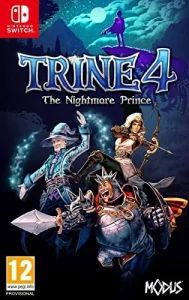
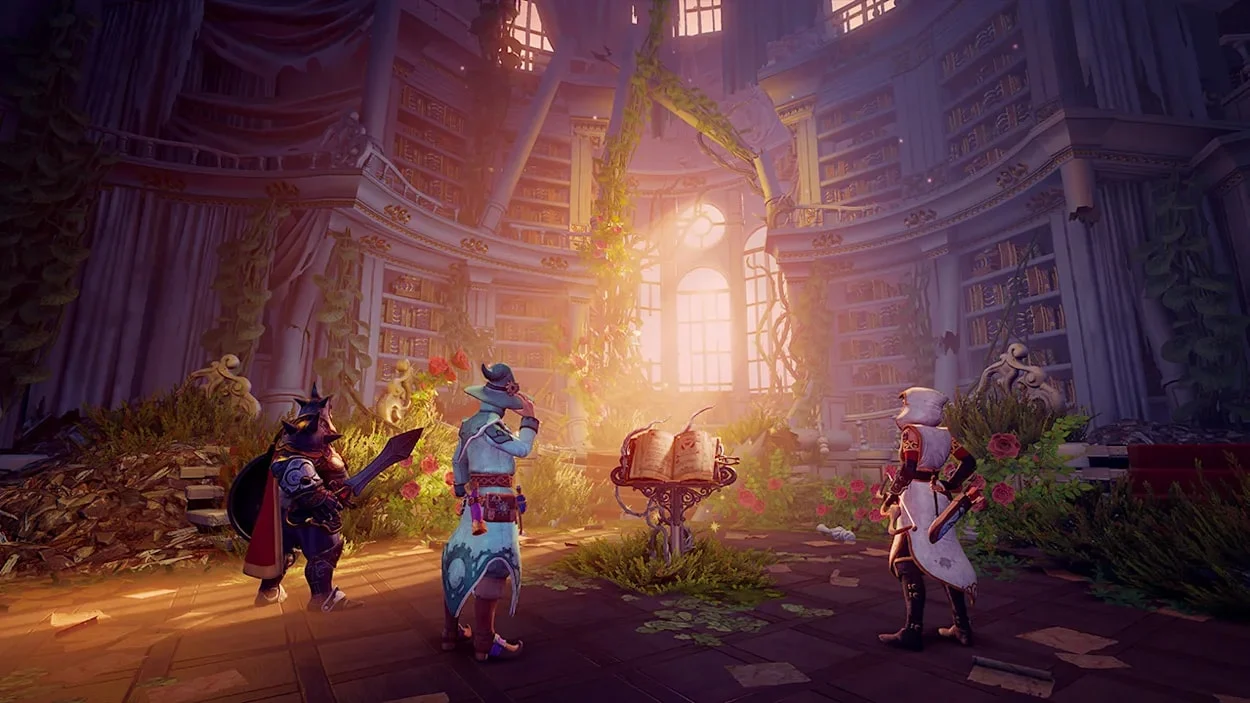
Trine 4 The Nightmare Prince Switch NSP brings Amadeus, Pontius, and Zoya back together for a fantasy adventure shaped by dreams gone wrong. Released on October 8, 2019, this Adventure and Platformer game from developer Frozenbyte and publisher Modus Games returns to the series’ 2.5D format, pairing bright fairy-tale scenery with puzzles, combat, and threats born from a young prince’s fears.
The Nightmare Prince’s Story: Why the Heroes Reunite
The central problem begins with Prince Selius, a troubled young royal whose dark magical nightmares have started to take physical form. What might have remained private fears now spills into the waking world, creating chaos that could overwhelm the realm if it is left unchecked.
That danger reunites the familiar trio of Amadeus, Pontius, and Zoya. Amadeus is the wizard who shapes useful objects from magic; Pontius is the knight equipped for direct confrontation and protection; Zoya is the thief whose bow and rope expand the group’s reach. Their journey is not simply a search for the prince. It is also an effort to understand the source of his distress and help him overcome it.
The story’s fantasy setting gives the adventure a warm, whimsical surface, while Selius’s subconscious supplies its unease. Creatures, hazards, and puzzling situations reflect the instability of his nightmares. This creates a tale concerned with dreams, fears, friendship, and support without losing sight of the group’s immediate task: restore peace before the manifestations consume more of the world.
How Trine 4 Blends 2.5D Platforming, Combat, and Puzzles
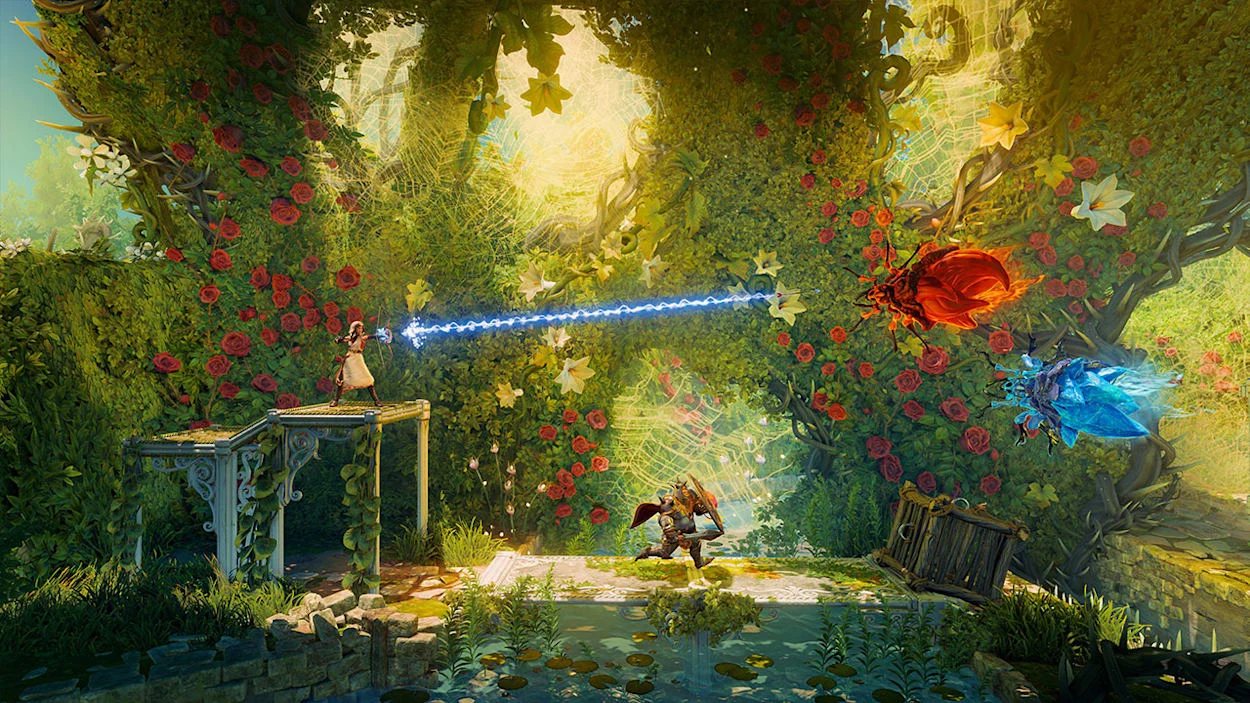
Trine 4 gameplay is built around moving through side-view environments with depth in their scenery and play spaces. The 2.5D puzzle platformer structure asks players to explore routes, navigate obstacles, solve environmental problems, and deal with hostile nightmare creatures along the way.
Its three disciplines work together rather than sitting in separate modes. A difficult stretch may involve reaching a high ledge, arranging objects to cross a gap, and responding to enemies in the same area. Physics puzzles are especially important because objects can be placed, moved, lifted, or used as parts of a larger solution. The intended route is not always a simple jump from one platform to another.
Character switching gives the game much of its momentum. Players can change heroes whenever the current challenge calls for another skill set. A combat encounter may favor Pontius, while a blocked path can point toward Amadeus’s object manipulation or Zoya’s rope. In cooperative play, combining those skills becomes particularly important. The game supports solo play as well as local or online cooperation for up to four players.
For players returning to the series formula, this structure preserves the familiar appeal of using a small team to answer each obstacle in a different way. For newcomers, the clear differences between the heroes make the puzzle logic easy to read even when the solutions themselves require experimentation.
Amadeus’s Creations and Object Manipulation
Amadeus is the group’s most direct answer to environmental problems. His abilities allow him to conjure boxes and planks, then use them to create platforms, brace a route, or alter the arrangement of an area. These simple-looking pieces can become essential tools when a path is too high, a gap is too wide, or an object needs support.
He can also levitate objects, giving players a way to reposition environmental elements instead of merely reacting to the layout as it first appears. That makes Amadeus especially useful in platform puzzle solutions where the important question is not “Where is the path?” but “How can the space be changed?”
The appeal of the Trine 4 wizard lies in that flexibility. A box may serve as a step, a weight, or part of a structure. A plank may bridge distance or create a surface where none existed. When puzzles ask for creative thinking, Amadeus often provides the materials needed to turn an uncertain possibility into a usable route.
Pontius’s Sword, Shield, and Defensive Options
Pontius gives the team its clearest close-combat role. Armed with a sword and shield, he is well suited to confronting nightmare creatures directly. His shield also provides a defensive answer to projectiles, allowing him to deflect incoming attacks rather than simply absorb pressure or retreat from it.
His movement options matter as much as his combat role. Pontius can use his shield as a glide-platform, helping him travel through sections where a normal jump may not be enough. That extra mobility means the knight is not limited to fighting; he can contribute to traversal challenges as well.
This combination makes Pontius a practical choice when a level changes from measured puzzle solving into a more immediate encounter. He can protect himself, push into close range, and take part in navigating the game’s vertical or open spaces. In a group built around distinct abilities, his defensive tools give the party a useful form of stability.
Five Smart Ways to Approach Trine 4’s Environmental Puzzles
The game’s environmental puzzles reward observation and a willingness to try different approaches. Since the heroes can be switched freely, a stalled solution often means another character has the missing tool.
- Switch early. If one hero cannot make progress, move quickly to another instead of forcing the same approach. Character switching is central to solving many challenges.
- Test the objects. Boxes, planks, and movable environmental pieces can be more than scenery. Try placing, lifting, or repositioning them to create a new route.
- Combine skills. Many physics puzzles benefit from multiple abilities working together, such as building support with Amadeus before using another hero’s movement option.
- Read the space. Look above, below, and beyond the most obvious platform. A blocked route may indicate a higher ledge, a distant anchor point, or an object that needs to be moved.
- Use movement tools. Pontius’s shield glide-platform and Zoya’s rope-based movement can help reach spaces that ordinary platforming cannot.
Zoya’s role is especially useful when distance or vertical access is the obstacle. She uses a bow for ranged attacks and a rope for grappling and creating ziplines, opening routes that would otherwise remain out of reach. Her abilities reinforce the game’s broader design: each hero changes how players see the same environment.
Whimsical Landscapes and Nightmarish Challenges on Nintendo Switch
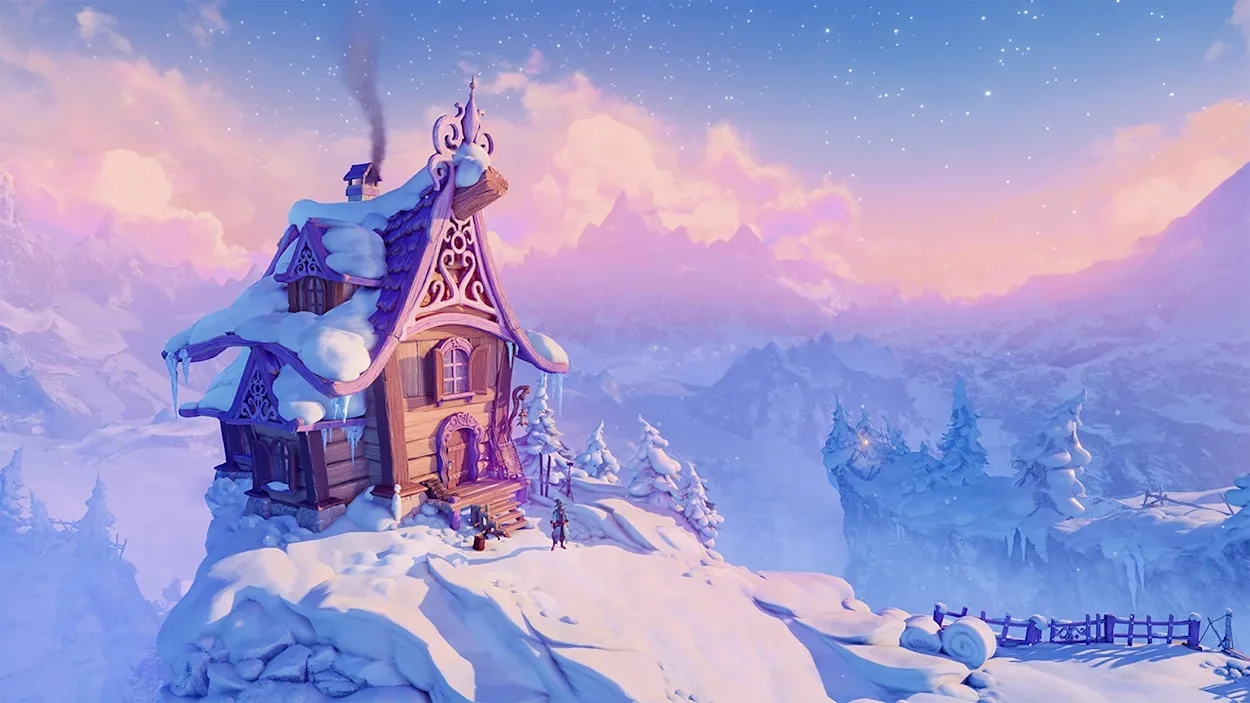
The visual contrast is a defining part of Trine 4 The Nightmare Prince Switch NSP. The heroes travel through vibrant, fantastical landscapes filled with the kind of color and detail associated with a storybook world. Yet those inviting locations are increasingly troubled by nightmare creatures and obstacles connected to Prince Selius’s disturbed subconscious.
That tension suits the adventure’s tone. The environments can feel magical and inviting while still carrying the threat of something darker underneath. Puzzles become part of the atmosphere as well as progression, because they turn each location into a place to examine, manipulate, and understand.
On Nintendo Switch, the game is available in the Europe and USA regions, with language options including English, German, French, Spanish, Italian, Portuguese, Russian, and Chinese. Its 2.5D format, character-based problem solving, and cooperative support make it a fitting choice for players who enjoy fantasy platforming with shared puzzle work, or for solo players who like switching between distinct tools and perspectives.