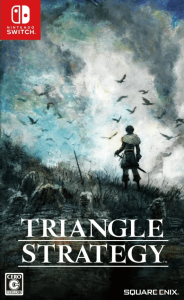
TRIANGLE STRATEGY Switch NSP XCI
Report Link Error
Select the broken download file, then submit the report.
Screenshots
About Game
TRIANGLE STRATEGY Switch NSP XCI places political pressure and battlefield planning side by side in a strategy RPG where decisions carry as much weight as a well-positioned unit. Developed by Square Enix and published by Nintendo, it follows a conflict that grows from a fragile peace into a struggle involving nations, resources, loyalty, and personal conviction.
Norzelia After the Saltiron War
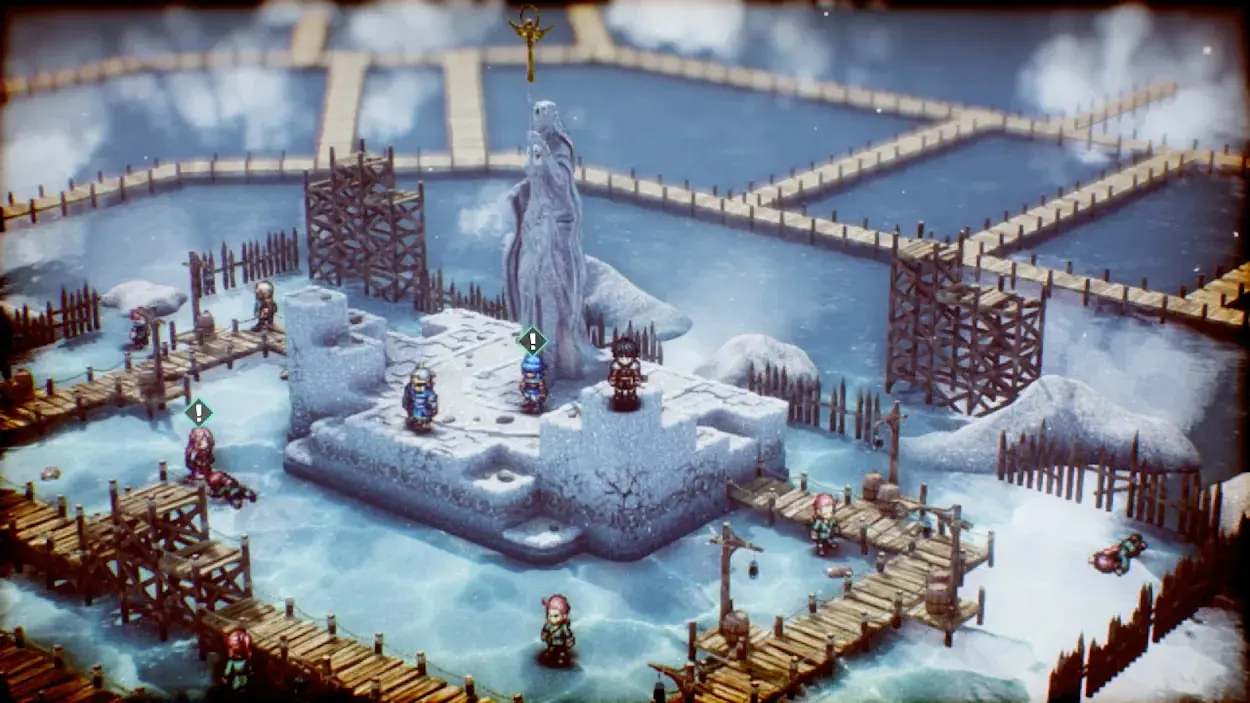
The story unfolds across Norzelia, a continent still marked by the Saltiron War. Glenbrook, Aesfrost, and Hyzante emerged from that conflict with an uneasy peace in place, but the balance between them is not secure. Political interests remain divided, and the discovery of valuable resources gives old tensions a fresh reason to surface.
Players follow Serenoa Wolffort, heir to House Wolffort of Glenbrook. His position places him close to the diplomatic and military developments affecting the continent. What begins with a mission tied to the shifting relationship among the major powers develops into a wider war, forcing Serenoa to consider the safety of his people alongside the competing demands of allies and nations.
The setting supports a serious atmosphere of uncertainty. Norzelia is not presented as a simple contest between clearly defined sides; its conflict is driven by competing priorities, political pressure, and choices that may protect one group while harming another. The game’s HD-2D presentation gives this dramatic material a distinctive visual frame, while the narrative keeps its attention on the consequences of power and allegiance.
How the Scales of Conviction Shape the Story
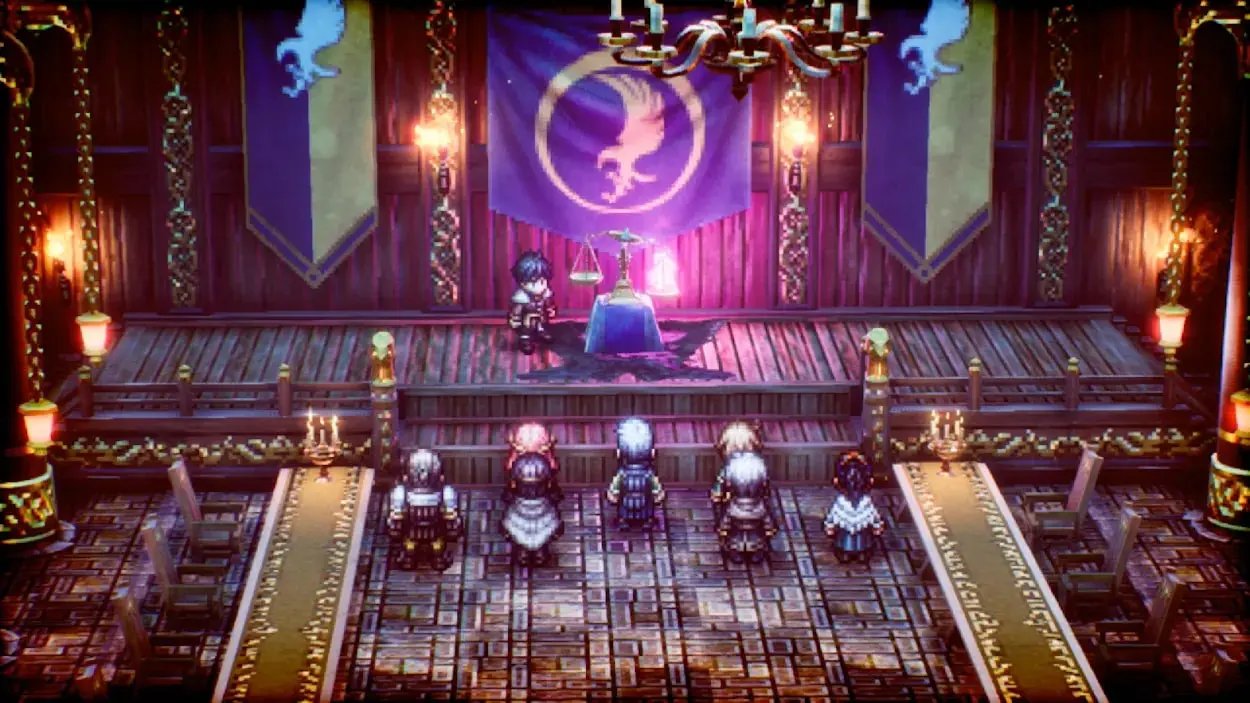
The Scales of Conviction are central to TRIANGLE STRATEGY’s branching narrative. When major decisions arise, Serenoa’s allies vote on a proposed course of action. Their choices reflect their values and perspectives, making important moments feel like group decisions rather than a command issued by a single leader.
Convictions influence the direction of the story, and dialogue choices or exploration can affect how characters view a situation. The system gives political scenes a sense of consequence: gaining support may require understanding what matters to a companion, while an unpopular decision can test an existing relationship. Friendships may be strengthened or strained as the stakes rise.
This structure also gives the game meaningful replay value. Different decisions can alter loyalties, narrative routes, and outcomes, leading to multiple endings. The appeal is not simply in choosing a different answer, but in seeing how the same crisis can develop when a different set of convictions guides the group.
Tactical Battles Built Around Positioning
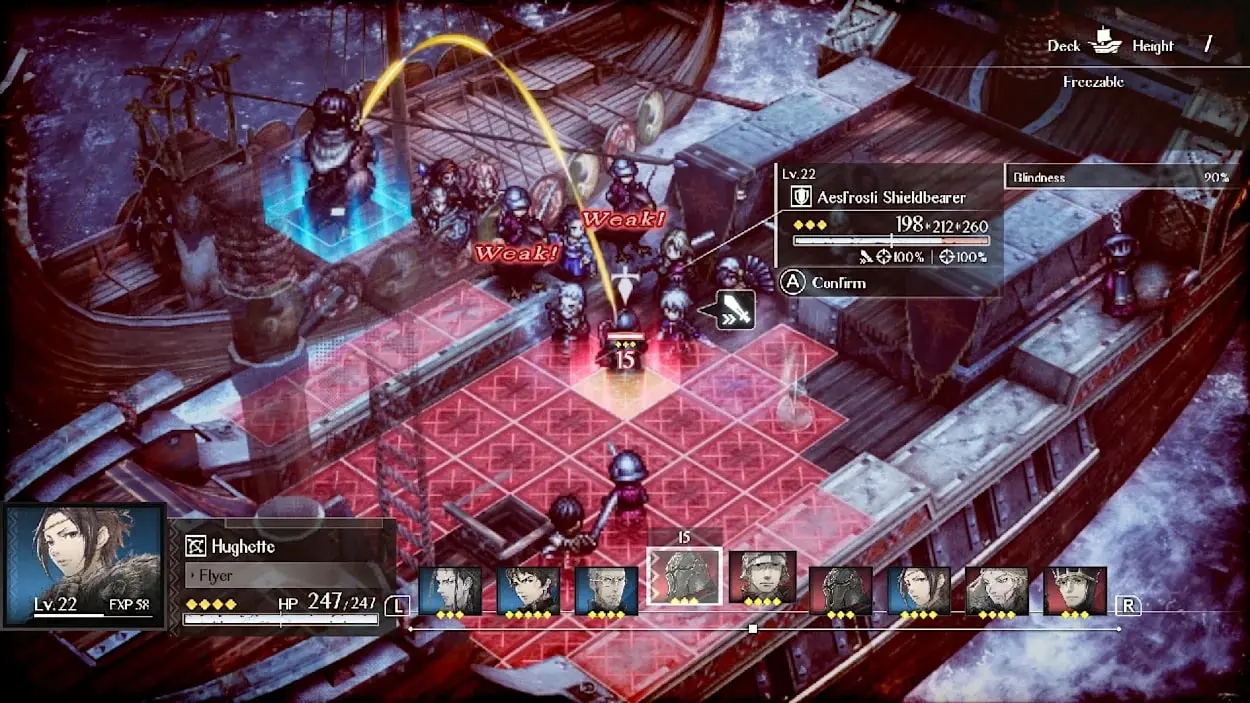
Outside its major story decisions, TRIANGLE STRATEGY is a tactical RPG built around turn-based combat on grid-based battlefields. Maps are multi-layered, so movement is about more than closing the distance to an enemy. High ground, chokepoints, hazards, and the placement of allied units can all shape the flow of an encounter.
Careful positioning matters because every character has a distinct role and set of abilities. A party works best when its units support one another rather than act as isolated attackers. Planning several moves ahead can help protect vulnerable allies, control the safest approach to an objective, or create an opening against an enemy formation.
The terrain encourages deliberate play. A useful position may offer a stronger line of attack, a defensive advantage, or a way to restrict an opponent’s movement. These maps reward patience and observation, especially when a direct advance would expose key units to danger. The result is combat that asks players to read the battlefield as closely as they read the story’s shifting alliances.
Follow-Up Attacks and Action Economy in Combat
Successful battle strategy depends on using turns efficiently. This action economy involves balancing offense, defense, movement, and ability use so that a party can respond to threats without losing momentum. Spending every turn on damage may leave an important unit exposed; focusing only on defense can allow an opposing force to control the map.
Follow-up attacks reward players who coordinate allied positions. By placing units carefully around an enemy, the party can create opportunities for bonus attacks when conditions are met. This makes formation work important even for characters that are not delivering the first strike.
Defensive planning and offensive planning are therefore connected. A unit moved into position for a follow-up attack may also help protect an ally, block a route, or hold a chokepoint. Efficient turns are not always the most dramatic ones. Often, the strongest move is the one that prepares the next several actions while denying an opponent an easy response.
7 Tactical Priorities for Difficult Battles
- Read the terrain. Study elevation, hazards, routes, and chokepoints before committing the party to an advance.
- Claim useful ground. Secure positions that offer tactical advantages, including high ground and defensible approaches.
- Manage turns carefully. Balance movement, abilities, damage, and defense so the party does not create avoidable openings.
- Build with roles in mind. Use a balanced party that takes advantage of the unique skills available to different units.
- Target weaknesses. Look for ways to leverage unit strengths and exploit enemy weaknesses rather than relying on a single approach.
- Create follow-up opportunities. Position allies to support attacks and apply pressure from more than one direction.
- Plan for promotions. Class promotions unlock stronger abilities and stats, making them an important part of long-term party development.
These priorities fit the game’s measured pace. Difficult encounters are less about brute force than about adapting to the battlefield in front of the party. A stronger formation, a more useful elevation advantage, or a well-timed supporting attack can change an otherwise difficult exchange.
Nintendo Switch Release Profile and Language Support
TRIANGLE STRATEGY Switch NSP XCI refers to the Nintendo Switch release of Square Enix’s RPG strategy game. Nintendo published the game on March 4, 2022, for Europe and the USA. Its combination of political drama, branching choices, and turn-based tactical battles makes it suited to players who enjoy story decisions with visible consequences as well as careful grid-based planning.
The Nintendo Switch release supports English, German, Spanish, French, Italian, Japanese, Korean, and Chinese. Its available language range helps make Norzelia’s political conflict and character-driven choices accessible across the listed regions.
For players drawn to strategy RPGs, the game’s main appeal lies in the connection between its two forms of planning. On the battlefield, success depends on terrain, unit roles, positioning, and action economy. In the narrative, progress depends on convictions, alliances, and difficult choices. Both sides ask the same question in different ways: what will be sacrificed to protect the future?
Recommended Similar Games
 Rune Dice Switch NSPView Game
 Taboo Trial Switch NSPView Game
 Wildagotchi: Virtual Pet Switch NSPView Game
 Tale of Immortal Switch NSPView Game
 ROMANCE OF THE THREE KINGDOMS XIV: Diplomacy and Strategy Expansion Pack Bundle Switch NSP XCIView Game
 Child of Light Ultimate Edition + Valiant Hearts: The Great War SWITCH NSPView Game
