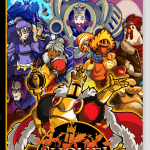
Transistor Switch NSP

Report Link Error
Select the broken download file, then submit the report.
Screenshots

About Game
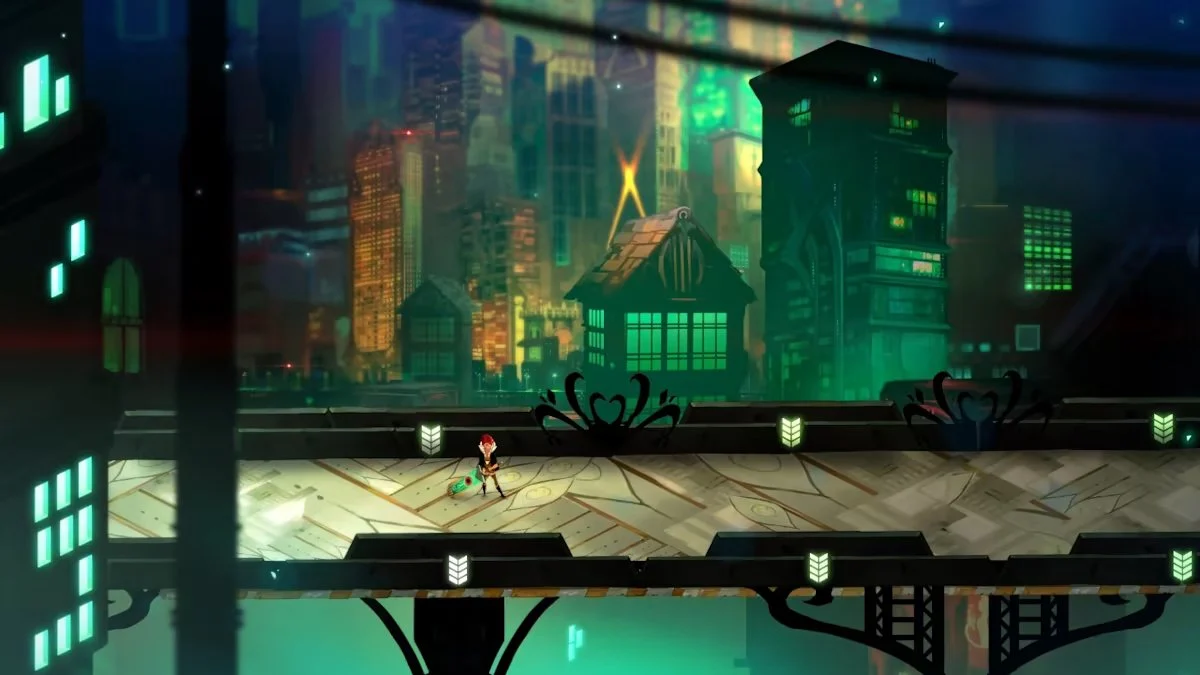
Transistor Switch NSP brings Supergiant Games’ action-focused role-playing game to Nintendo Switch with a release date of Oct. 31, 2018. Set in the futuristic city of Cloudbank, the game follows Red, a renowned singer whose voice has been taken from her. Armed with the talking Transistor, a weapon connected to her fallen lover, she moves through a city under attack from the robotic Process while uncovering memories, motives, and the shape of the disaster around her.
Transistor on Nintendo Switch: Release and Game Details
Released in the USA region on Oct. 31, 2018, Transistor Switch NSP is listed as a Role-Playing and Action title published by Supergiant Games. It is a Nintendo Switch RPG built around a striking contrast: Cloudbank is vibrant and futuristic, yet its systems are being dismantled by the Process.
Red’s journey is driven by more than combat. The loss of her voice, the Transistor’s connection to someone she loved, and the city’s gradual erasure give the adventure an intimate sense of loss and uncertainty. Fragmented memories and the Transistor’s guidance add context as she investigates who is responsible for the attacks and why Cloudbank is being targeted.
The Switch release supports English, French, German, Italian, Spanish, Russian, Japanese, Portuguese, and Chinese. Its listed file size is 3.03 GB, placing the technical profile alongside a game whose appeal comes from the meeting of responsive action, deliberate planning, and a carefully framed science-fiction atmosphere.
How Real-Time Combat and Turn() Work Together
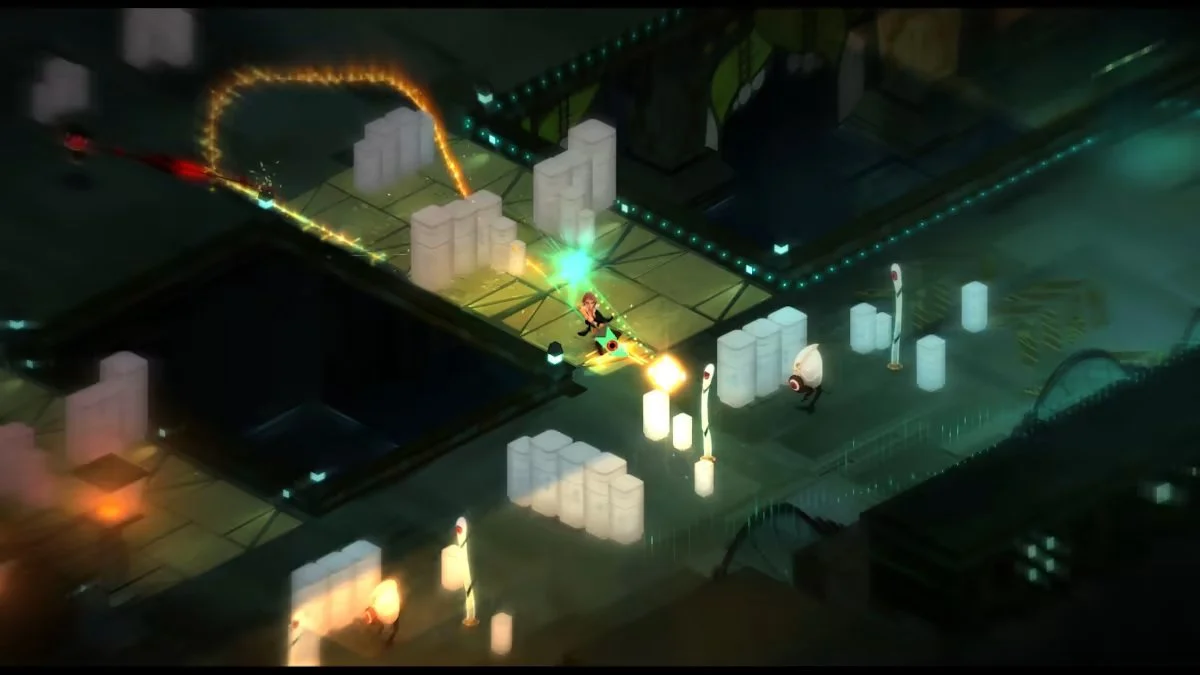
Combat does not ask players to choose strictly between speed and strategy. Red can act in real time, creating a direct and responsive feel as she wields the Transistor against robotic enemies. The key tactical layer is Turn(), a mechanic that pauses the action and allows movement and attacks to be queued before the sequence is carried out.
That pause changes the rhythm of a fight. Instead of reacting only in the moment, players can assess spacing, choose a route through the arena, line up attacks, and set a planned sequence into motion. Turn() makes room for precision when encounters become crowded or when an enemy’s behavior demands a more controlled response.
The result is a tactical action RPG structure in which planning has immediate value. Real-time combat maintains momentum, while Turn() provides the breathing room needed to consider damage, positioning, and attack order. It is especially useful because movement is not separate from offense: a well-planned route can help Red reach a better angle, avoid danger, or create the space needed for an attack sequence.
Functions: Building Red’s Combat Loadout
The Transistor’s combat options are built around Functions, equipable abilities that Red can use in battle. Each Function has a primary purpose, but the system goes beyond choosing a single preferred attack. Functions can be upgraded and combined, creating different effects and opening room for varied combat loadouts.
This makes experimentation part of the game’s progression through encounters. A combination that works well against one group of enemies may not be the strongest answer in another situation. Changing Functions can alter how an attack is used, how it supports another ability, or how a planned Turn() sequence comes together.
The important idea is flexibility rather than a fixed solution. Players are encouraged to test ability combinations, notice how they perform, and adjust the Transistor’s setup when a fight calls for a different approach. That customization supports both the action side of combat and its more measured, tactical side.
Planning Around Robotic Enemies
The Process is not presented as a single, uniform threat. Its robotic enemies require different tactical responses, which gives combat strategy a practical purpose beyond simply dealing damage as quickly as possible. Paying attention to enemy types helps determine which Functions, damage types, and status effects are likely to be more useful.
Positioning matters just as much. A planned movement path can place Red where an attack is more effective or help her avoid an unfavorable situation before the action resumes. In Turn(), it is possible to think about a whole sequence rather than treating each strike as an isolated decision.
Enemy behavior and weaknesses are therefore worth studying. If a particular foe responds better to a certain damage type or status effect, adapting the loadout can make the encounter more manageable. The game’s combat rewards that willingness to revise a plan: identify the threat, choose the right tools, and use movement and attacks as parts of the same tactical sequence.
5 Practical Combat Tips for Transistor
- Use Turn() often. Pause combat to queue movement and attacks instead of relying entirely on real-time reactions. Careful planning can improve precision and help manage difficult encounters.
- Test different Functions. Each equipable ability has its own primary use, and experimentation reveals how individual options fit Red’s combat style.
- Adapt the loadout. Function upgrades and combinations can produce different effects, so changing the setup can be more effective than repeating the same plan in every fight.
- Read enemy behavior. Robotic foes call for different approaches. Watch for weaknesses, useful damage types, and status effects that may make certain Functions more valuable.
- Plan movement with attacks. Turn() is not only for offense. Use queued movement to improve positioning, create safer routes, and support the rest of a planned attack sequence.
Language Support and Technical Profile for the Switch Release
The Nintendo Switch release is identified by Title ID 0100BE500BEA2000 and lists firmware version 6.2.0. The recorded file size is 3.03 GB.
Language support includes English, French, German, Italian, Spanish, Russian, Japanese, Portuguese, and Chinese. These options accompany a game defined by Cloudbank’s futuristic presentation, Red’s personal search for answers, and combat that asks players to balance quick action with deliberate tactical preparation.