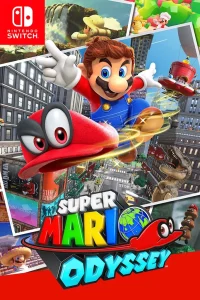
Super Mario Odyssey Switch NSP XCI
Report Link Error
Select the broken download file, then submit the report.
Screenshots
About Game
Super Mario Odyssey Switch NSP XCI centers on a fast-moving adventure in which Mario joins forces with Cappy to stop Bowser’s plan to force a wedding with Princess Peach. Bowser has also taken Tiara, Cappy’s sister, giving the journey a shared purpose for its two heroes. Released on October 27, 2017, Nintendo’s action, adventure, and platforming game builds its story around travel, discovery, and the steady hunt for the fuel needed to keep moving forward.
The Odyssey Airship and the Search for Power Moons
Mario and Cappy travel between far-flung locations aboard the Odyssey airship, a central part of the game’s progression. The ship needs Power Moons as fuel, so the Bowser pursuit is not simply a straight dash from one confrontation to the next. Progress comes from exploring each destination, completing challenges, and finding the Moons that allow the Odyssey to continue its journey.
This structure gives the adventure a clear rhythm. A kingdom is both a stop on the route and a place to investigate on its own terms. Mario can search its spaces for objectives, secrets, and opportunities to collect more Power Moons before returning to the airship. The journey’s different lands feature distinct inhabitants, challenges, and visual character, helping each new destination feel like a meaningful part of the chase rather than a brief interruption between story scenes.
The stakes remain simple and readable: Mario and Cappy are trying to reach Bowser before his plans are carried out. Yet the path is broad enough to make kingdom exploration feel important. Power Moons are tied directly to the Odyssey’s ability to travel, so the game’s collecting and platforming are naturally connected to its story progression.
How Cappy Changes Platforming Movement
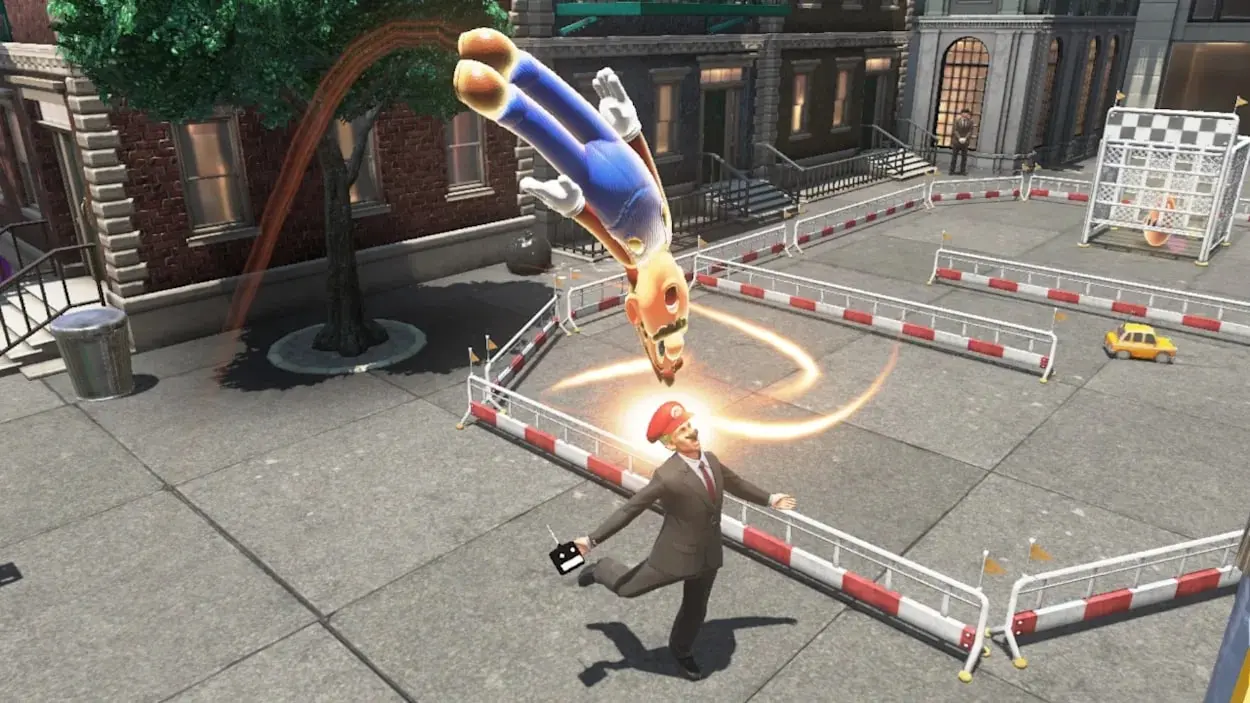
Cappy is more than Mario’s companion in the story. He changes how Mario moves through the world. The basic Cappy cap throw can be used to strike enemies, activate switches, and extend Mario’s options while moving through an area. That last role is especially significant because the throw can be part of reaching spaces that would otherwise sit beyond a normal jump.
Mario’s familiar jumping abilities remain essential, but Cappy adds another layer to their use. A cap jump gives Mario an extra movement option, creating room for inventive routes through platforms and obstacles. Instead of treating every gap as a single jump from one point to another, players can combine Mario’s movement with Cappy’s position and timing.
Switches also make the cap throw useful beyond combat. A target that seems out of reach may ask for a thrown cap rather than a direct approach, while an enemy can become an obstacle to remove or a tool to interact with. These ideas keep the platforming movement active and varied without losing the direct feel of Mario’s core controls.
Capture Abilities and Creative Problem Solving
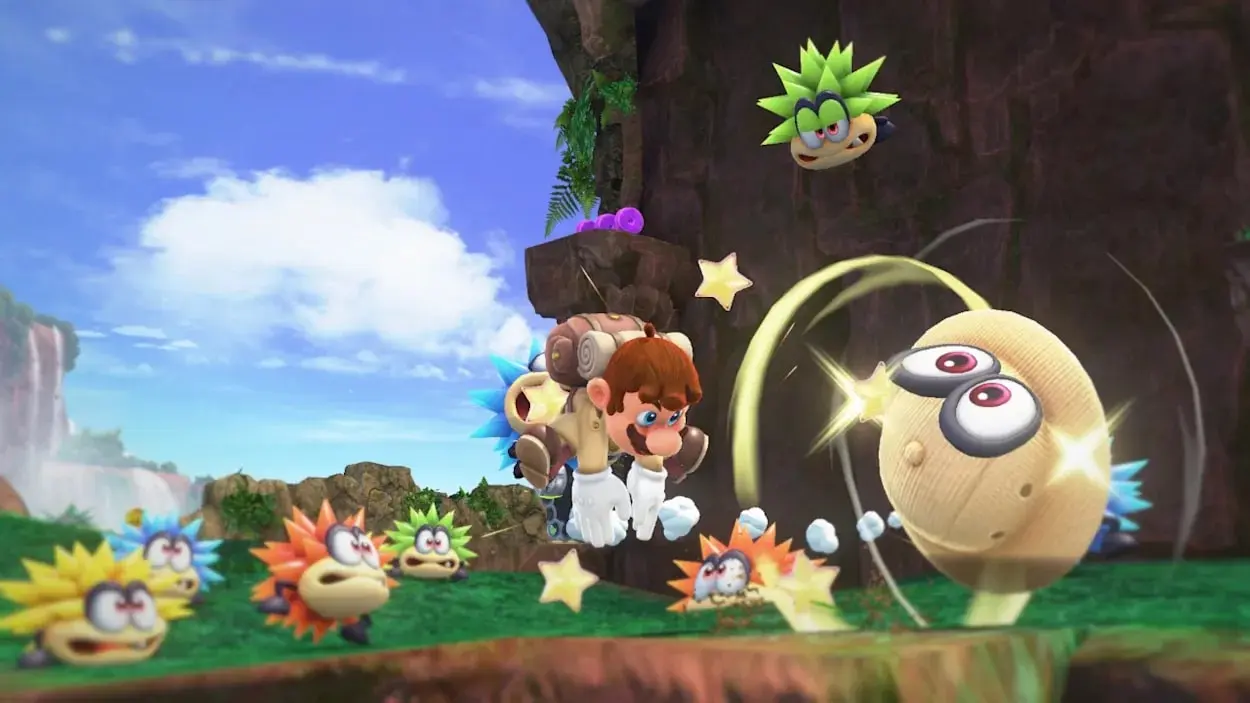
The capture mechanic is the game’s most substantial change to Mario’s usual platforming toolkit. Mario can temporarily take control of certain enemies and objects, gaining abilities that belong to the captured target. This lets the game ask different questions from one situation to the next: an obstacle might require a new way of moving, a combat encounter might call for a different attack, and a puzzle may be solved by using the right form in the right place.
Examples of capturable foes include Goombas, Hammer Bros, and T-Rexes. Their presence illustrates the range of the idea. Captures are not merely cosmetic transformations; they offer specific enemy abilities that can affect traversal, combat, and puzzle solving. A player is encouraged to look at creatures and objects as possible solutions, not just hazards to avoid.
That approach supports experimentation. When a route appears blocked, the answer may be found in a nearby capture rather than in a more difficult jump. When a puzzle presents an unusual environmental feature, a captured form may reveal how to use it. The mechanic gives the kingdoms a flexible, playful quality while still serving practical goals such as reaching new areas and collecting Power Moons.
Why Each Kingdom Encourages Exploration
The Mario kingdoms are designed as broad, sandbox-like places rather than narrow courses with only one obvious direction. Their spaces contain hidden secrets, environmental puzzles, side quests, and different groups of inhabitants. The result is an exploration-focused structure in which looking away from the main route can be as rewarding as following it.
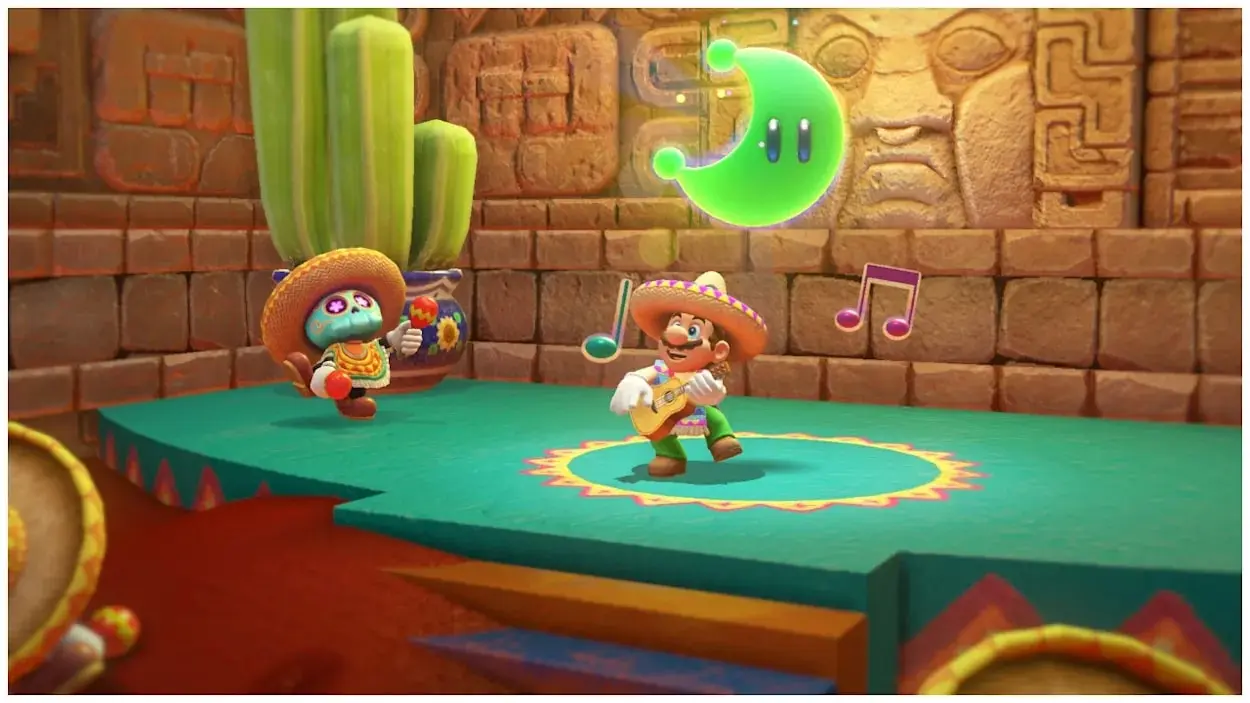
Power Moons are a major reason to search carefully, but the appeal is not limited to the collection itself. A kingdom can invite attention through its layout, its inhabitants, or a puzzle embedded in the environment. Purple coins, which are specific to individual kingdoms, provide another reason to inspect corners and side paths, as they can be used for outfits and souvenirs.
The presentation supports this sense of variety through imaginative lands that differ in challenges and atmosphere. Mario’s journey moves across locations with their own identity, while the Odyssey gives those changes a consistent frame: arrive, explore, discover what the kingdom offers, and gather enough Power Moons to maintain the pursuit.
7 Movement Techniques to Practice in Super Mario Odyssey
- Basic jumps: Start with Mario’s standard jumps, which remain the foundation for navigating platforms and obstacles.
- Wall jumps: Use walls to continue upward or redirect Mario when a direct route is not available.
- Long jumps: Practice covering wider gaps, particularly when exploration leads to areas beyond ordinary jump distance.
- Dive attacks: Add dive attacks to Mario’s movement for another way to handle momentum and approach spaces.
- Cap throws: Throw Cappy at enemies and switches, or use the throw to support more ambitious movement.
- Cap jumps: Combine Mario’s jump with Cappy to expand his reach and create additional platforming routes.
- Traversal captures: Use captured enemies or objects when their abilities provide a solution to movement challenges.
Reasons to Revisit Kingdoms After Story Progress
Returning is a meaningful part of Mario Odyssey exploration. Additional Power Moons can become available after story progression or after certain objectives have been completed, so a kingdom that seemed thoroughly explored on an earlier visit may still have more to offer later. This makes revisits a continuation of discovery rather than a simple repeat of completed content.
For players drawn to platforming, collectible hunting, environmental puzzles, and experimentation with movement, that structure provides lasting motivation. Super Mario Odyssey Switch NSP XCI is built around the idea that the route through a kingdom can change as Mario gains access to new opportunities. Revisiting familiar places with fresh objectives reinforces the game’s central pleasure: chasing Bowser while still making time to explore every promising corner of the journey.
Title ID: 0100000000010000
Publisher / Developer: Nintendo
Release Date: October 27, 2017
Genre: Action, Adventure, Platformer
Regions: Europe, USA, Asia, Japan
Languages: English, German, Spanish, French, Italian, Russian, Japan
Firmware: v6.2.0
File Size: 5.6GB