Tales of Kenzera: ZAU Switch NSP

Report Link Error
Select the broken download file, then submit the report.


Screenshots

About Game
Tales of Kenzera: ZAU Switch NSP brings a personal action-adventure to Nintendo Switch, pairing fast movement and deliberate combat with a story shaped by grief, tradition, and the afterlife. Its journey follows a young shaman through a vividly animated world where every leap, dash, and encounter supports a larger emotional purpose.
Tales of Kenzera: ZAU on Nintendo Switch: Release and Game Details
The Nintendo Switch edition of Tales of Kenzera: ZAU released on April 24, 2024. Listed as an Action and Adventure title, it is published by Electronic Arts and carries the Title ID 01005C7015D30000. The release is listed for the JPN region and supports English, Japanese, French, German, Italian, Spanish, and Portuguese.
The available Nintendo Switch listing specifies firmware 17.0.1 and a file size of 240 MB. More importantly for players approaching the game on its own terms, the release centers on a blend of movement-focused platforming, spirit battles, environmental challenges, and a story that treats loss as more than a backdrop for action.
For a game with an animated, colorful presentation, its subject matter is notably earnest. Kenzera is described through vibrant environments inspired by African art and mythology, while the plot remains close to Zau’s private sorrow. That contrast gives the adventure room for spectacle without losing sight of its emotional direction.
Zau’s Grief-Fueled Quest Through Kenzera
Zau is a shaman grieving the death of his father. In pursuit of a way to bring him back from the afterlife, he makes a pact with Kalunga, the God of Death. The agreement sends Zau across Kenzera to confront powerful spirits, turning a rescue-driven premise into a journey through mourning and difficult acceptance.
The Tales of Kenzera: ZAU Switch NSP story frames its conflict around a deeply personal goal rather than simple conquest. Zau’s determination supplies the momentum, but the quest is also concerned with what grief asks of a person: patience, courage, remembrance, and the willingness to confront painful truths.
Its cultural grounding is equally important to the atmosphere. The narrative draws inspiration from Bantu myths and connects Zau’s struggle to tradition and ancient wisdom. Kenzera is not presented merely as a succession of hostile stages; it is a spiritual setting whose enemies, lore, and landscapes carry weight within Zau’s path forward.
Three Spirits and the Stages of Grief
To fulfill his pact, Zau must face three powerful spirits. Each one represents a different stage of grief, giving the game’s central confrontations a thematic role beyond combat difficulty. These encounters place loss and healing directly inside the structure of the adventure.
That design can make progression feel more reflective than a standard march from one obstacle to the next. The spirits are formidable opponents, but they also mark points in Zau’s emotional development. As he moves through Kenzera, the story considers acceptance alongside sorrow, and personal recovery alongside heroic determination.
The result is a tale where combat and narrative are closely linked. Zau is not simply clearing threats from his route; he is confronting forces that mirror the emotional burden behind his pact with Kalunga. The game’s mythology and visual style help sustain that mood, balancing mystical scale with a character-driven focus.
Acrobatic Platforming Across Kenzera
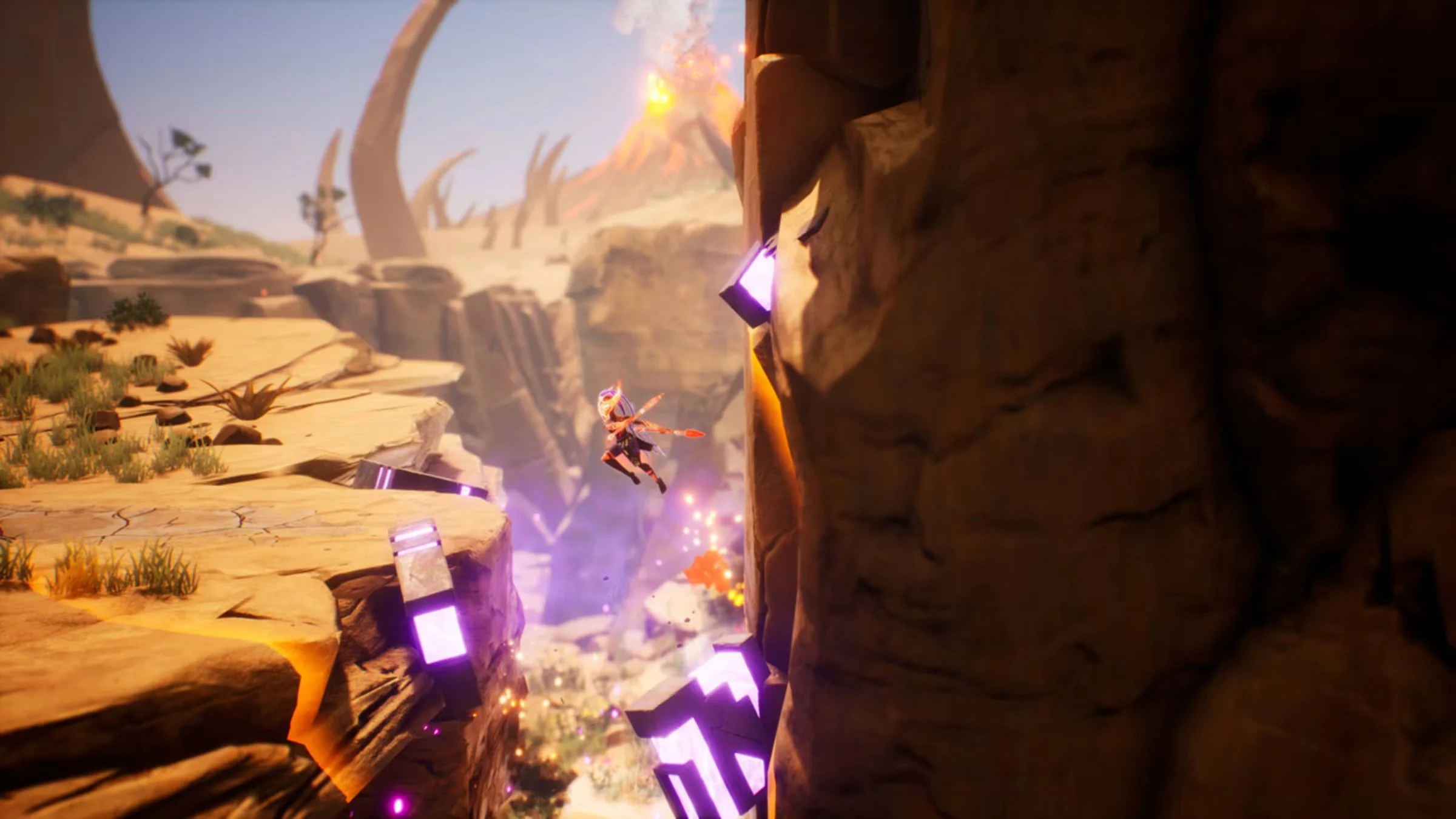
Kenzera’s traversal is built around agility. Zau can wall-run, wall-jump, double-jump, dash, and perform aerial maneuvers to cross intricate environments. These tools turn movement into an active part of exploration, particularly when routes demand careful timing or place hazards between narrow openings.
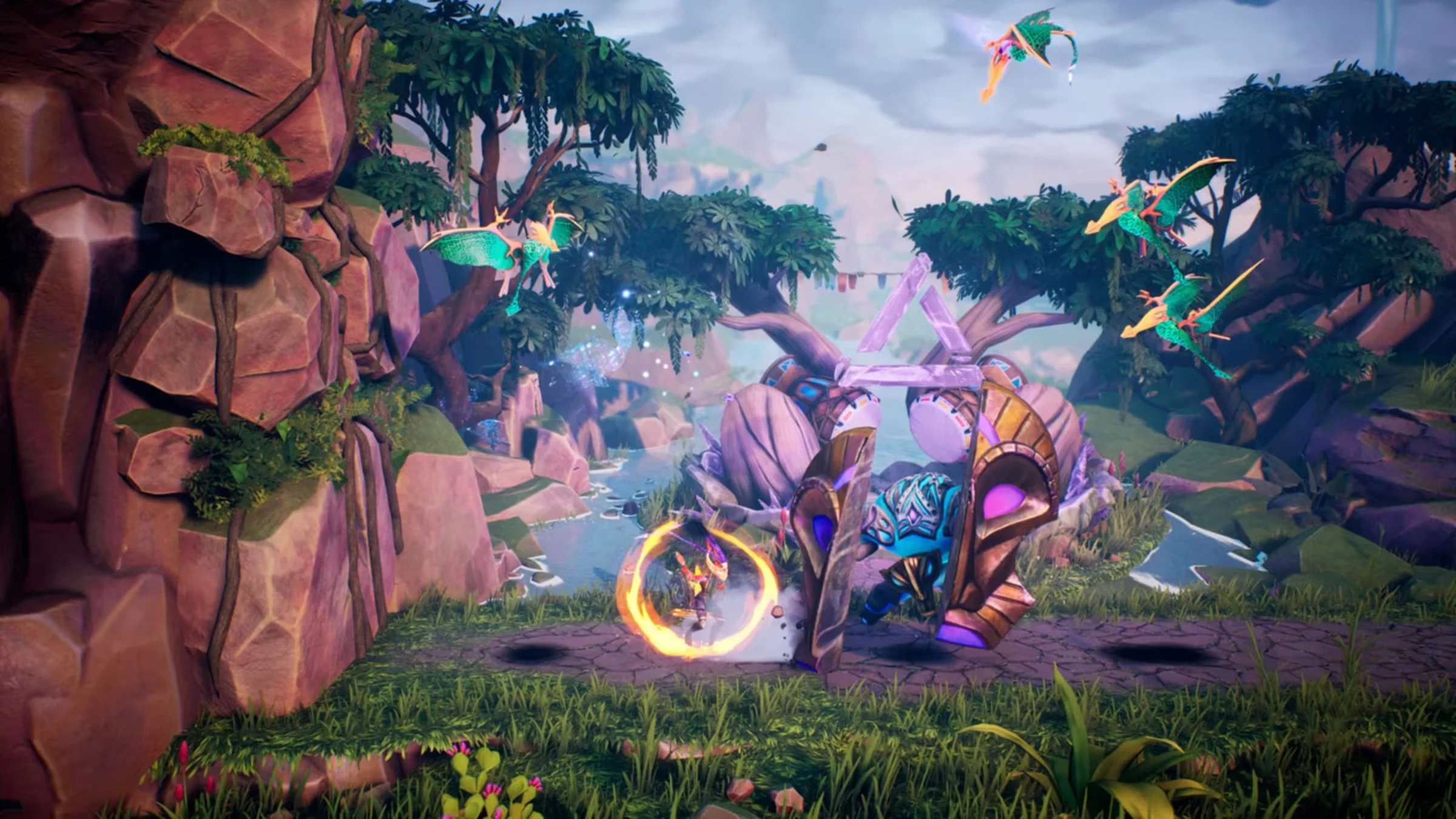
Platforming is not separated from the game’s action. Zau’s Sun and Moon masks provide different abilities for combat and traversal, encouraging players to understand how each tool fits a given situation. The Sun mask is associated with fierce melee attacks, while the Moon mask provides ranged projectiles. Switching between them matters when facing different enemy types or responding to a changing arena.
Combat asks for similarly measured play. Spiritual enemies have distinct attack patterns, and encounters reward quick reactions as well as observation. Dodges, parries, and special moves give Zau options beyond attacking relentlessly. The strongest rhythm comes from recognizing an opponent’s behavior, choosing the appropriate mask, and maintaining control while the pace of battle rises.
Hidden Paths, Collectibles, and World Lore
Exploration is rewarded throughout Kenzera. Hidden areas can contain upgrades, collectibles, and lore, giving players reasons to look beyond the most obvious route. Environmental puzzles also invite experimentation, especially once Zau has a broader set of movement and mask-based abilities available.
This approach supports the game’s sense of place. Finding lore can expand the player’s understanding of the spirits, Kenzera’s cultural narratives, and Zau’s own journey. Collectibles are not presented as distractions from the adventure’s tone; they are part of the invitation to engage more closely with the world.
The platforming toolkit makes this search feel practical rather than abstract. A wall that first appears decorative may suggest a wall-run route. A distant ledge may become reachable through a dash and double jump. A blocked passage may call for a different mask or a more careful look at the surrounding environment. Players who experiment with their abilities can uncover more of Kenzera’s secrets while sharpening the skills needed for later challenges.
5 Early Gameplay Priorities for Tales of Kenzera: ZAU
- Learn both masks. The Sun mask supports fierce melee attacks, while the Moon mask fires ranged projectiles. Understanding their different roles early makes combat and traversal choices clearer.
- Watch enemy patterns. Spiritual enemies use distinct attacks, so taking a moment to observe their timing can be more useful than rushing into every encounter.
- Use defensive options. Dodges and parries are central tools in challenging fights. Treat them as part of Zau’s regular combat rhythm rather than emergency responses.
- Practice aerial control. Wall-running, wall jumps, double jumps, dashes, and aerial maneuvers are essential to navigating Kenzera’s more demanding spaces with precision.
- Search beyond the main path. Hidden routes may lead to upgrades, collectibles, lore, and environmental puzzles, rewarding players who test the limits of their available abilities.
Tales of Kenzera: ZAU is suited to players looking for an action-platformer where mechanical skill and emotional storytelling move together. Its combat asks for timing and strategy, its traversal rewards confidence and curiosity, and its world uses mythology, color, and lore to give Zau’s grief-fueled quest a lasting sense of purpose.