Super Mario 3D All-Stars Switch NSP XCI
Report Link Error
Select the broken download file, then submit the report.
Screenshots
About Game
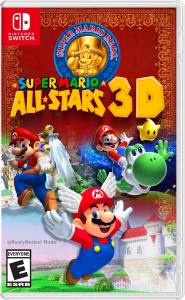
Super Mario 3D All-Stars Switch NSP XCI brings together three separate Mario adventures that helped shape 3D platforming across different eras. Published and developed by Nintendo, the Nintendo Switch collection places Super Mario 64, Super Mario Sunshine, and Super Mario Galaxy side by side, letting their contrasting worlds, movement systems, and collectible goals speak for themselves.
What Super Mario 3D All-Stars Includes on Nintendo Switch
Super Mario 3D All-Stars Switch is a compilation rather than one continuous new Mario story. Each included game has its own setting, structure, and mood. Super Mario 64 begins in the familiar halls of Peach’s castle before opening into painting worlds full of platforms, secrets, enemies, and Power Stars. Its castle acts as a hub, encouraging players to revisit rooms and gradually reach new paintings.
Super Mario Sunshine moves the action to Isle Delfino, a sunny island whose beaches, plazas, and waterways are covered in graffiti. Mario’s water-powered F.L.U.D.D. device changes the rhythm of platforming, giving him tools for cleaning surfaces, hovering through gaps, and interacting with the environment.
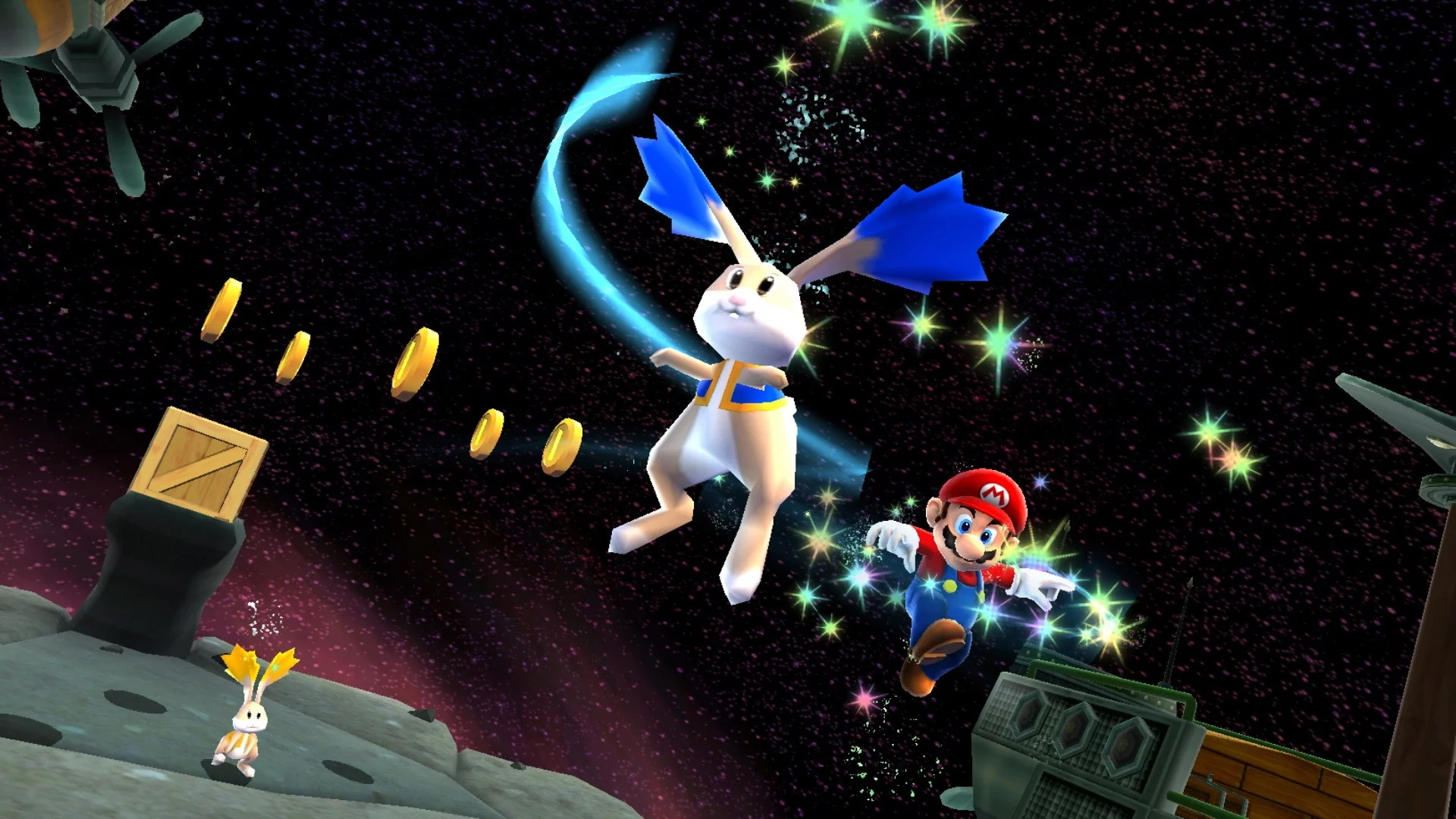
Super Mario Galaxy takes Mario beyond the Mushroom Kingdom into a series of galaxies. Small planets, shifting gravity, and space-bound courses create a more cosmic sense of scale. The collection’s strength is not that these games feel identical, but that each one approaches Mario’s jumping, exploration, and rescue-mission structure from a different direction.
Three Mario Adventures, Three Different Rescue Missions
The Super Mario 3D All-Stars story changes from game to game, even if Bowser and Princess Peach remain central figures. In Super Mario 64, Bowser kidnaps Princess Peach and traps the inhabitants of Peach’s castle within paintings. Mario enters the worlds hidden behind those paintings, gathering Power Stars as he works toward Peach’s rescue.
Super Mario Sunshine starts with a vacation that goes wrong. Mario arrives on Isle Delfino only to be blamed for graffiti left by Shadow Mario. His task is not simply to defeat enemies or reach a final destination; he must clean the island and restore its Shine Sprites while clearing his name. The premise gives the game a distinctive atmosphere, balancing bright holiday scenery with a sense that the island needs repair.
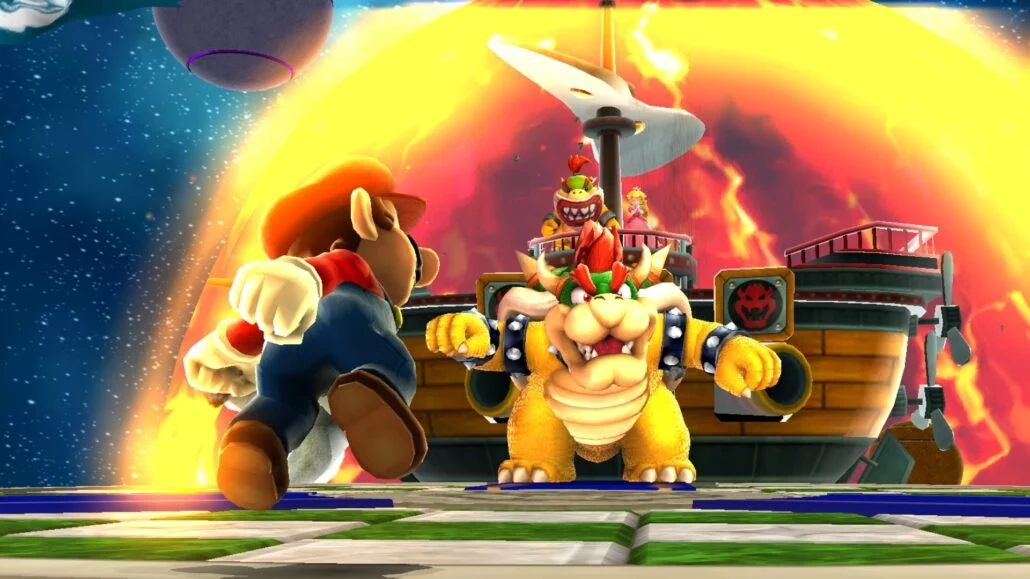
In Super Mario Galaxy, Bowser attacks the Mushroom Kingdom and abducts Peach. Mario travels through space with help from Rosalina and the Lumas, collecting Grand Stars across a wide range of galaxies. The rescue mission remains recognizably Mario, but the setting broadens the journey from castle grounds and island plazas to planets with their own rules of gravity.
How Super Mario 64 Defined 3D Exploration
Super Mario 64 places movement at the center of its design. Peach’s castle is more than a backdrop: it is the route into painting worlds and the place where progression becomes visible. As Mario collects Power Stars, he can access more areas, turning exploration into a steady search for new paths, hidden objectives, and tougher platforming tests.
The game’s 3D platforming challenges depend on reading space as well as timing a jump. Mario runs across narrow ledges, swims through water, climbs, leaps between platforms, and searches for stars that may require a different approach from one attempt to the next. The appeal comes from the directness of the movement. A difficult route can often be retried immediately, while a previously visited world may still contain another Power Star to uncover.
That structure also supports replay value. A level is not always finished after a single success, because its separate objectives encourage players to return with better familiarity and stronger control of Mario’s moves.
3 Core Skills to Practice Across the Collection
- Build momentum: In Super Mario 64, practice the Triple Jump, careful landings, and the Wall Jump. The game rewards players who learn how Mario’s speed and direction affect each leap.
- Use water with purpose: Super Mario Sunshine makes F.L.U.D.D. controls part of both traversal and cleanup. Water can clear graffiti, assist Mario in the air, and help him manage tricky spaces around Isle Delfino.
- Watch the ground: In Super Mario Galaxy, gravity awareness matters as much as forward movement. Mario may run around the surface of a small planet before jumping toward another route.
- Time the Spin Attack: The Spin Attack is a key part of Super Mario Galaxy’s action and movement. Learning when to use it helps Mario deal with enemies and respond to the changing demands of galaxy courses.
Stars, Shines, and Grand Stars: How Progression Changes Between Games
The collection gives each adventure a separate progression language. In Super Mario 64, Power Stars mark Mario’s advancement through Peach’s castle and its painting worlds. Finding them opens the way toward additional areas and brings him closer to confronting Bowser.
Super Mario Sunshine uses Shine Sprites. Because Mario’s work on Isle Delfino involves removing graffiti and restoring the island, the Shines fit naturally into its setting. Progress is tied to returning brightness and order to a place that has been disrupted.
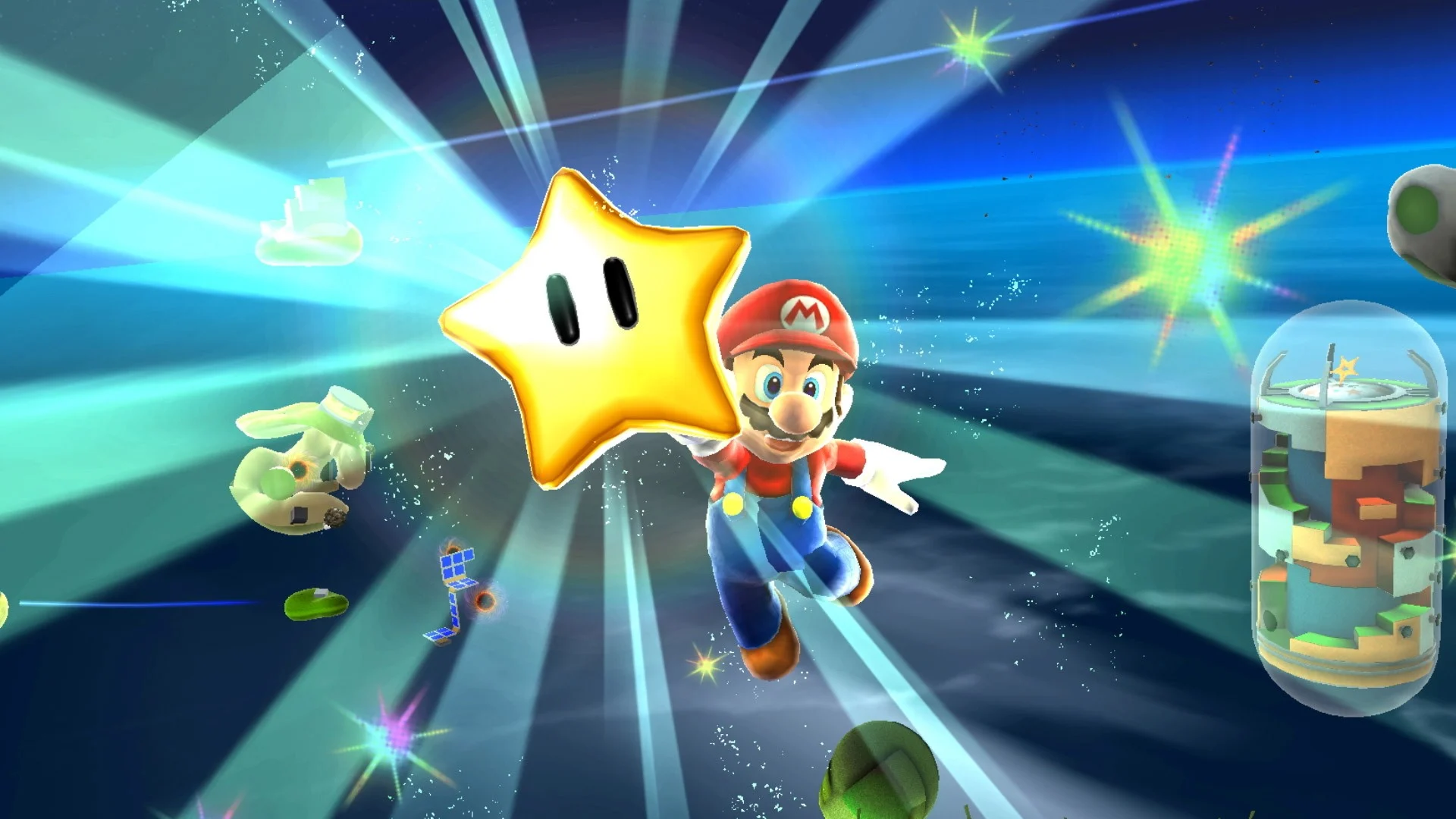
Super Mario Galaxy centers its journey on Grand Stars. Mario gathers them while traveling through galaxies with Rosalina and the Lumas, and the objective suits a game built around space, unusual planets, and gravity-defying routes.
This changing structure keeps Super Mario 3D All-Stars progression from feeling repetitive. The broad goal is always to move forward through Mario’s adventure, but the route differs: castle exploration in one game, island restoration in another, and galaxy-hopping in the third.
Super Mario 3D All-Stars Switch Release and Game Details
Super Mario 3D All-Stars Switch NSP XCI was released on September 18, 2020. Nintendo is listed as both publisher and developer. Its genres are Adventure, Action, and Platformer, a fitting description for a collection that combines exploration, enemy encounters, jumping challenges, collectible objectives, and boss battles.
- Release date: September 18, 2020
- Publisher and developer: Nintendo
- Genres: Adventure, Action, Platformer
- Regions: Europe, USA, Asia, Japan
- Languages: English, German, French, Japanese
The collection suits players interested in Mario’s different approaches to 3D platforming: the exploratory castle worlds of Super Mario 64, the F.L.U.D.D.-driven island challenges of Super Mario Sunshine, and the planetary movement of Super Mario Galaxy. Together, the three games offer distinct settings and mechanics while keeping Mario’s precision jumping and search for collectible goals in focus.
Recommended Similar Games
 2weistein – The Curse of the Red Dragon 3 – Ronger Pirates – V2 Switch NSPView Game
 The Testament of Sherlock Holmes Switch NSPView Game
 Ori and the Blind Forest Definitive Edition Switch NSP XCIView Game
 Monster Energy Supercross – The Official Videogame 3 Switch NSPView Game
 Danganronpa 2: Goodbye Despair Anniversary Edition Switch NSPView Game
 Anime Tank Blitz: Warbound Legends Switch NSPView Game
