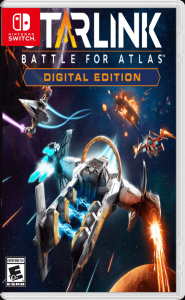
Starlink: Battle For Atlas Switch NSP XCI
Report Link Error
Select the broken download file, then submit the report.
Screenshots
About Game
Starlink: Battle For Atlas Switch NSP XCI places a customizable starship adventure inside the Atlas star system, where exploration, combat, and modular loadouts shape the journey. Released on October 16, 2018, Ubisoft Toronto’s adventure blends RPG and arcade elements as players fly between alien planets, confront an invading force, and search for answers among ancient technology.
Atlas System at a Glance: The Setting and Central Conflict
The Atlas star system is the game’s broad frontier: a collection of distinct worlds connected by open travel and threatened by a common enemy. The Equinox serves as the crew’s mobile base, carrying an interstellar initiative into a region rich with unusual ecosystems, hidden ruins, and long-buried secrets.
Much of that mystery begins with Professor St. Grand’s research. His work focuses on ancient alien technology, a subject that becomes dangerous when Grax and the Forgotten Legion arrive in Atlas. Grax seeks to exploit these old secrets for his own ends, turning the system’s history into a present-day crisis. The conflict is not limited to a single battlefield; its effects spread across planetary surfaces and the surrounding reaches of space.
This setup gives Starlink: Battle For Atlas a sense of movement. The Equinox is not simply a background location, but the center of a campaign that asks players to travel, prepare, collect resources, and respond to threats wherever they appear. Atlas feels like a system under pressure, with exploration and defense closely connected.
The Quest to Rescue Professor St. Grand
The Starlink story gains urgency when Grax captures Professor St. Grand. With the professor taken and his research exposed to the Forgotten Legion, the Equinox crew must work alongside local allies to protect Atlas. Their task combines a rescue mission with a wider effort to prevent Grax from gaining control over the system’s ancient power.
As the crew pushes back against the Legion, the Wardens become increasingly important. These ancient beings are tied to Atlas’s survival, and uncovering their significance helps frame the larger stakes behind the professor’s disappearance. The search for St. Grand is therefore more than a direct pursuit of Grax. It is also an investigation into what the Wardens represent and why the old technology of Atlas matters so much.
The premise supports a straightforward but expansive rhythm: pursue the main danger, meet challenges across the system, and gradually learn how the past shapes the conflict in the present. Grax remains the force driving the immediate threat, while the Wardens give the journey a deeper layer of discovery.
Exploring Seven Planets Across Atlas
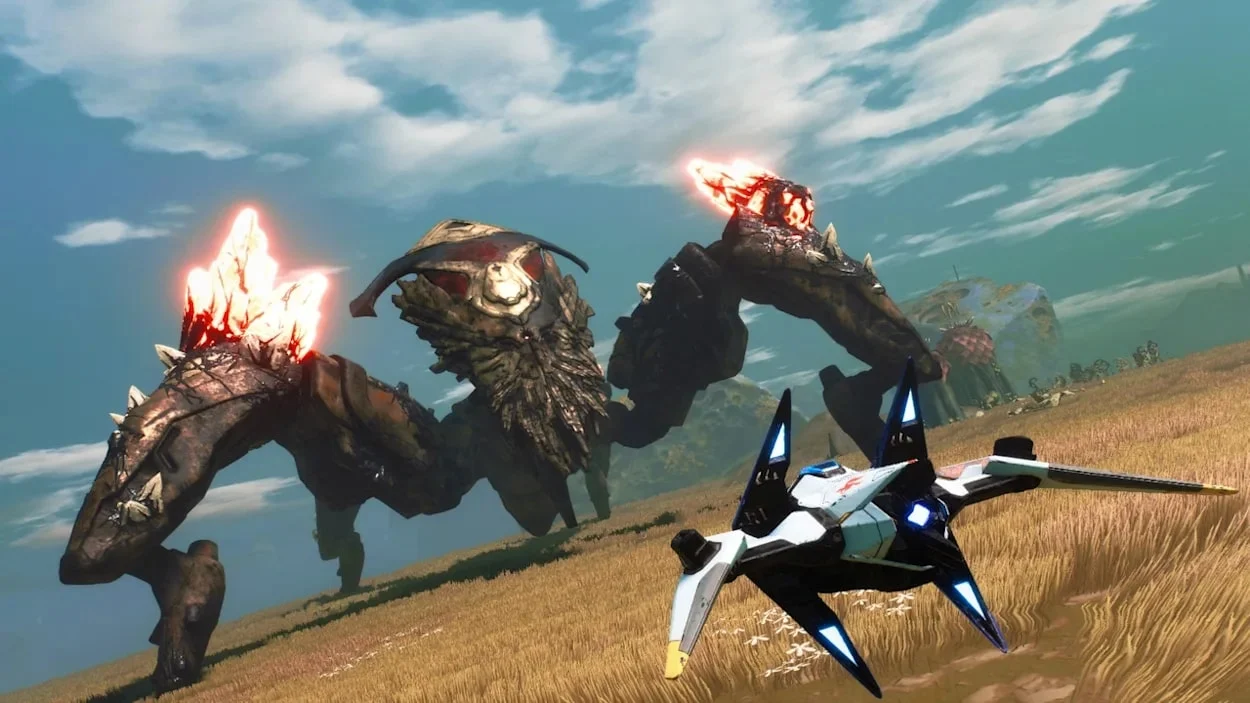
Starlink exploration is built around seven planets, each offering a different ecosystem and set of challenges. Moving between these alien worlds gives the game its changing atmosphere. A new planet can mean different enemies, missions, environmental character, and opportunities to search beyond the main path.
The worlds of Atlas are not only places to fight. Ancient ruins invite investigation, puzzles interrupt the pace of combat, and hidden lore rewards players who take time to look around. This makes discovery part of progression rather than a separate activity. Exploration can lead to materials for upgrades, new encounters, and a clearer view of the star system’s history.
That variety also helps the open-world structure maintain momentum. Instead of staying in one kind of activity, players can move from a mission on a planetary surface to a search through ruins, then head back into space for another objective. The seven planets give the campaign room to feel broader than a sequence of isolated levels.
Space Dogfights and Ground Combat
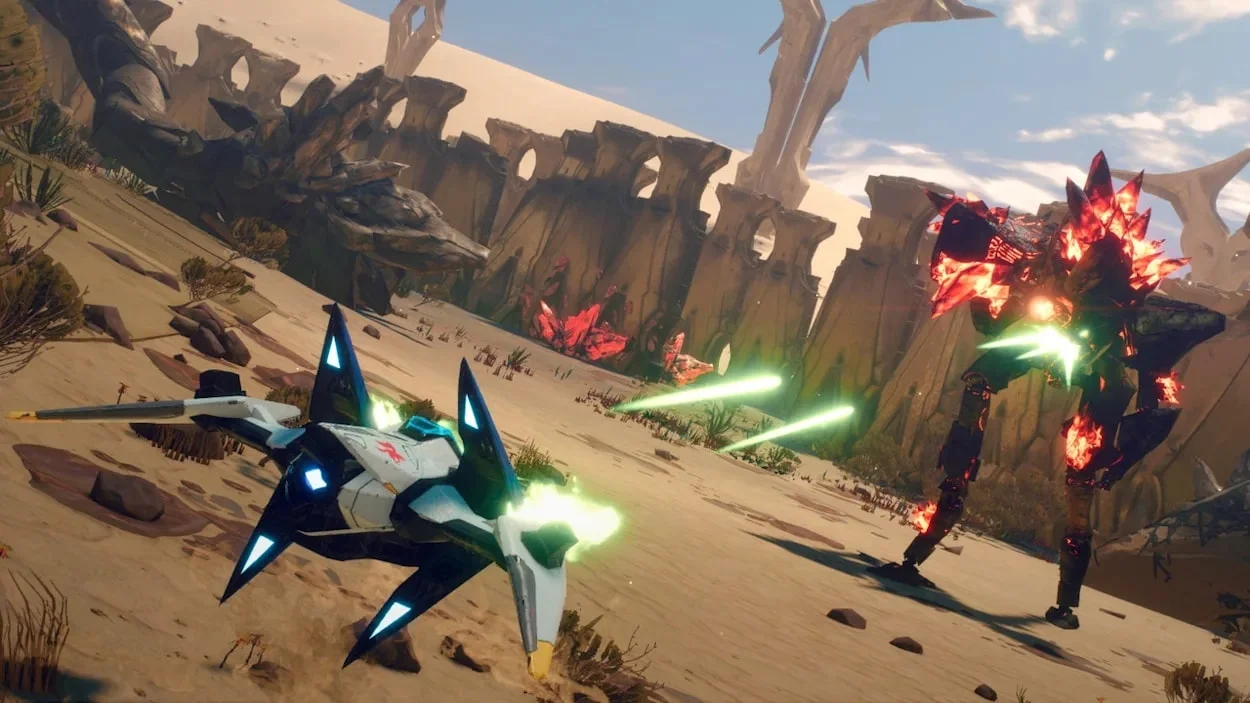
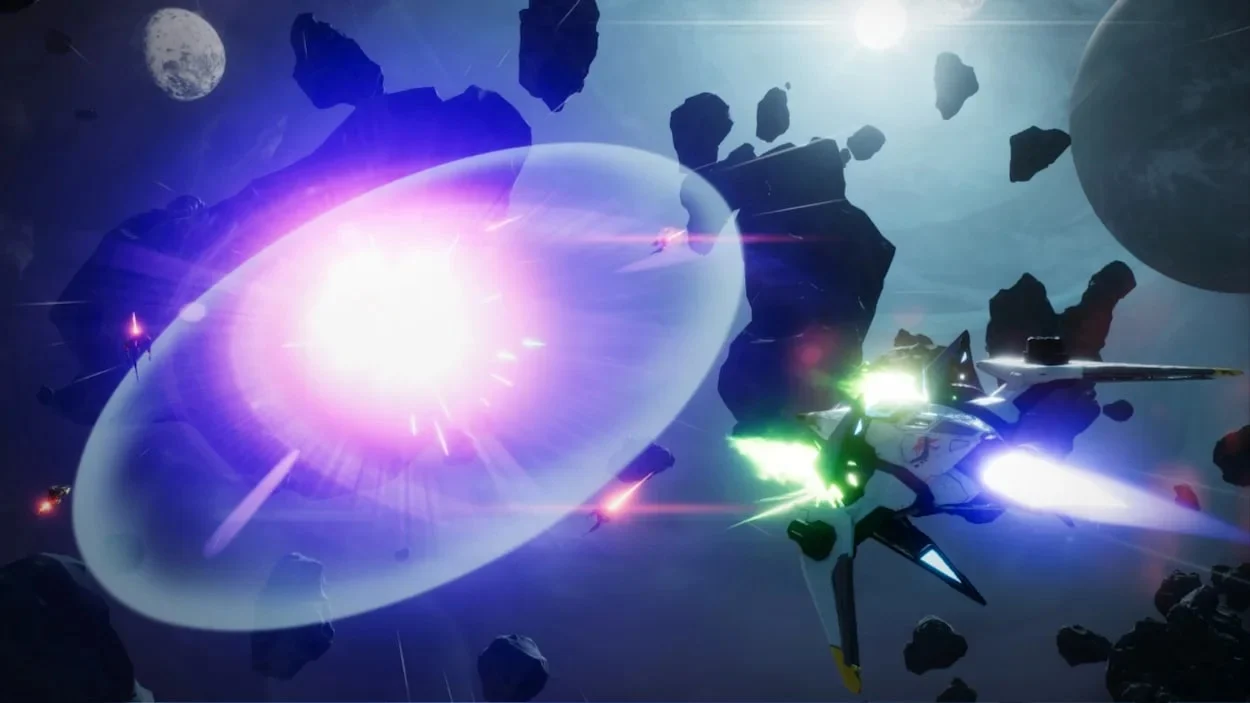
Combat in Atlas shifts between aerial encounters and battles on the ground. In space, pilots engage in dogfights against hostile forces, using their starship’s weapons and mobility to deal with danger beyond a planet’s atmosphere. On the surface, combat becomes more immediate as Forgotten Legion forces occupy territory and challenge exploration routes.
This split gives the action an arcade-like energy while leaving room for tactical preparation. A ship setup that feels useful in one encounter may need adjustment for another, especially when enemies have different weaknesses. The need to respond to threats across the system keeps combat from being only about reflexes.
Large-scale fortress sieges add another layer. These battles focus on reclaiming territory from the Forgotten Legion, turning the wider conflict into a visible objective. They reinforce the idea that the crew is not merely passing through Atlas; it is actively trying to restore control of areas threatened by Grax’s forces.
Elemental Weapons and Tactical Loadouts
Elemental weapons are central to tactical combat. Different enemies have different weaknesses, so matching a weapon type to the threat can create an advantage. The system encourages players to pay attention rather than rely on a single configuration for every fight.
Starlink loadouts can be changed by combining modular ship components, weapons, and pilots. Physical starship pieces can be attached to the controller, with the changes appearing in the game. This creates a direct connection between customization and action: swapping a part is not cosmetic alone, but a way to alter how a ship approaches a challenge.
Pilots contribute their own abilities as well. Activating the right skill during a difficult encounter can shift the balance, while weapon combinations can be tested against specific enemy types. Resource gathering supports this progression by providing materials to upgrade starships, weapons, and the Equinox base.
The result is a game with replay value rooted in experimentation. Players can revisit encounters with different combinations, try alternate pilot abilities, pursue materials, and approach fortress battles with a revised plan. Starlink: Battle For Atlas Switch NSP XCI is especially suited to players who enjoy adapting a build as much as flying it.
5 Priorities for Building an Effective Atlas Loadout
- Test combinations first. Mix weapons and ship components to learn which pairings feel effective for your preferred combat style and the challenges ahead.
- Read enemy weaknesses. Elemental weapons matter, so adjust your equipment when a particular threat calls for a more suitable damage type.
- Choose a pilot with purpose. Each pilot has a unique ability; select one whose skill can help during the encounters you expect to face.
- Gather upgrade materials. Explore planets, complete activities, and collect resources to improve starships, weapons, and the Equinox base over time.
- Prepare for fortress sieges. Before confronting major Forgotten Legion positions, review your setup and make changes that support a longer, more demanding battle.
With English, German, French, Spanish, Dutch, Italian, Portuguese, and Chinese language options, the adventure is positioned for a broad audience. Its mix of accessible space action, planet-by-planet discovery, local co-op play, and loadout experimentation makes it a natural fit for players who want both immediate combat and a reason to keep refining their approach across Atlas.