Stardew Valley Switch NSP
Report Link Error
Select the broken download file, then submit the report.
Screenshots
About Game
Stardew Valley Switch NSP begins with a change of pace: an office routine is left behind, and a neglected property in Pelican Town becomes the setting for a new rural life. The premise is simple, but it opens into a flexible simulation game built around work, discovery, community, and the small satisfaction of improving a place one day at a time.
A Fresh Start on an Inherited Pelican Town Farm
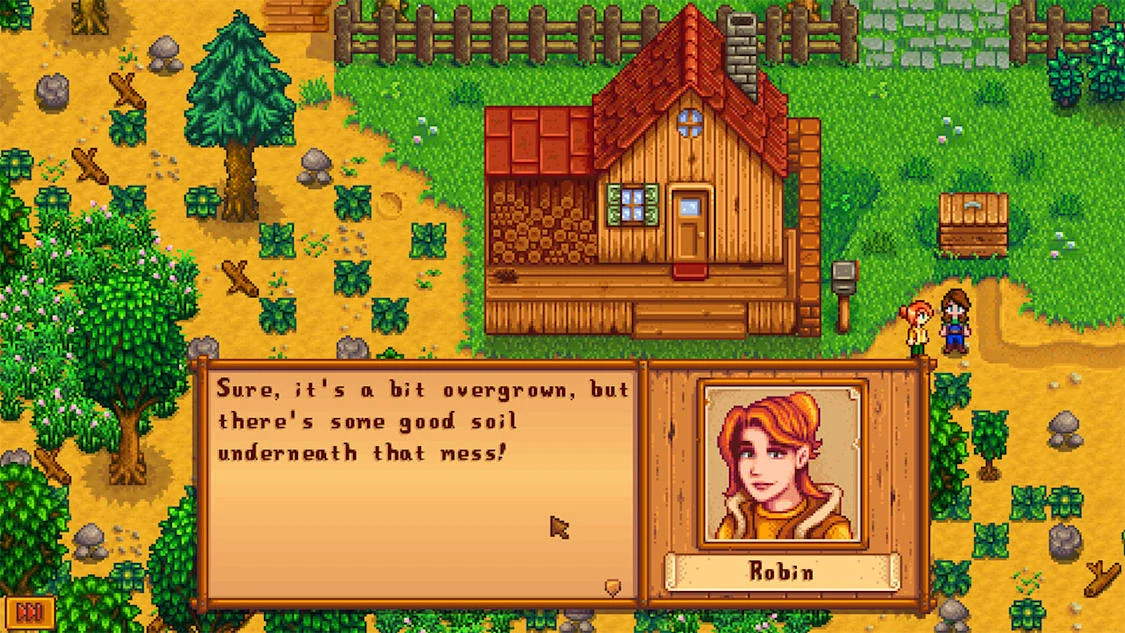
The player arrives at an inherited farm once owned by their grandfather. It is overgrown and in need of attention, making the first stages of the game feel practical rather than grand. Clearing space, deciding where to plant, and slowly turning an untidy plot into a productive home gives the Pelican Town farm its central appeal.
That setting also provides a deliberate contrast to the office life left behind. Stardew Valley does not treat rural life as a single task to complete. Instead, the farm becomes a base for many routines: growing crops, caring for animals, making useful items, visiting town, or heading out to explore. The inherited farm is both a personal project and a way into Pelican Town’s wider community.
Residents, festivals, relationships, and the damaged community center all add context to the daily work. By collecting items for community center bundles, players can contribute to its restoration. There are also town secrets, artifacts to uncover, gifts to give, and the possibility of romance. These elements make the valley feel inhabited without taking control away from the player’s own schedule.
Build a Farm Around Your Own Daily Priorities
Stardew Valley gameplay is driven by choice. A day can be organized around crop profits and farm chores, but it can just as easily be spent fishing by the water, gathering resources, crafting equipment, talking with villagers, or exploring the mines. The game supports busy, goal-focused routines as well as a quieter rhythm of tending land and watching the seasons change.
This flexibility gives the farm simulation much of its replay value. One player may place most of their energy into a field of seasonal crops, while another may prioritize livestock, mine resources, fish, or social connections. None of these activities exists in isolation. Materials gathered from exploration can support crafting, farm products can be sold or used in recipes, and improved tools can make larger projects easier to manage.
The progression is gradual and tangible. A clearer field, a fuller storage of materials, a new machine, or a deeper mine level all reflect time spent on daily activities. The game is suitable for players who enjoy open-ended routines, planning around seasons, and deciding for themselves what counts as a productive day.
Seasonal Crops, Land Clearing, and Harvest Planning
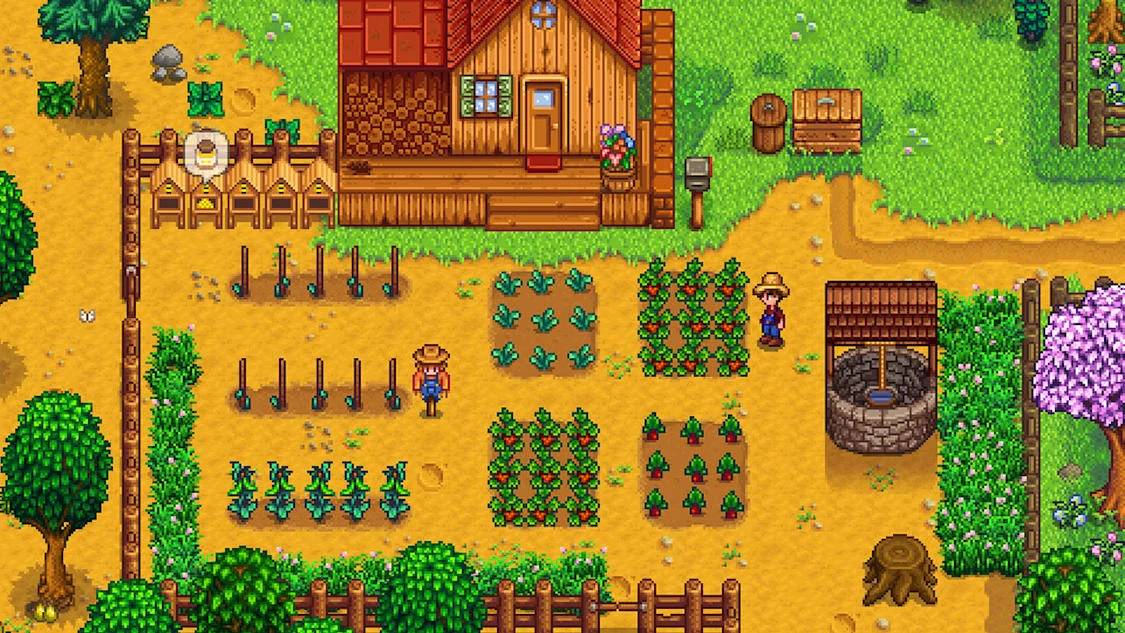
Farming begins with the basic work of reclaiming the land. The inherited farm contains overgrowth that must be cleared before it can become a useful growing area. Once space is available, crops can be planted, watered daily, and harvested for profit. That loop is straightforward, though its decisions become more interesting as the farm expands.
Seasonal crops shape those decisions. Available crops change with the seasons, so harvest planning requires attention to what can be grown at a given time. A productive field is not simply a matter of planting once and waiting; it depends on organizing the land, maintaining daily watering, and adapting to the current season’s possibilities.
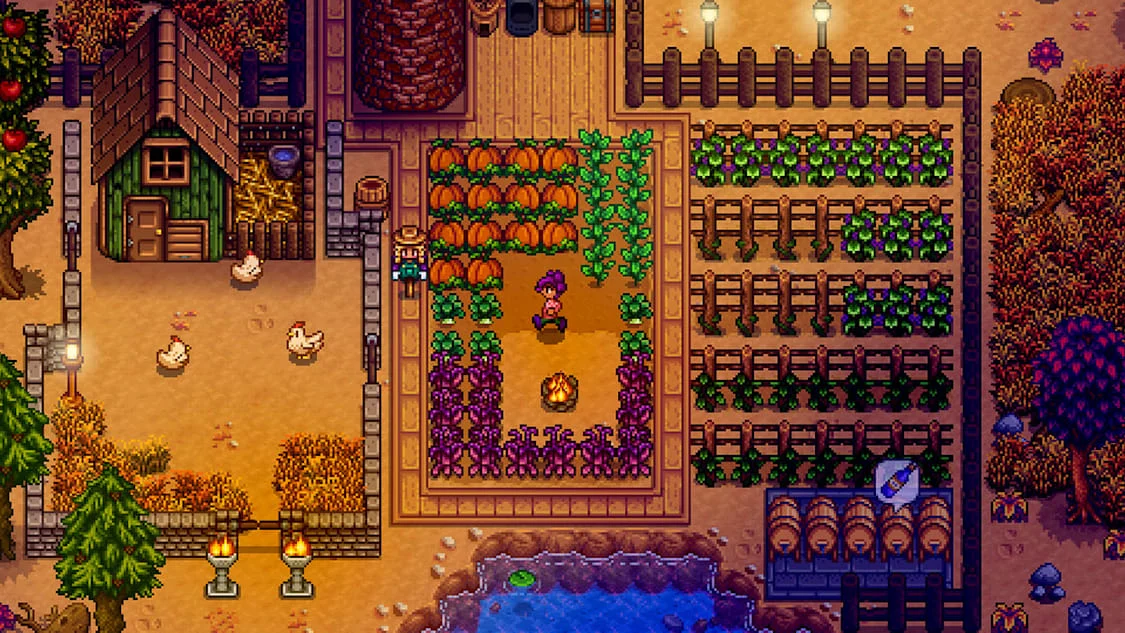
The visual transformation is an important part of the experience. An initially barren, cluttered farm can become a working agricultural space with crops, crafted objects, animals, and a personalized farmhouse. The presentation supports the game’s calm rural atmosphere, while the changing availability of crops keeps farm work from becoming completely static.
Raising Animals for Useful Farm Products
Animal husbandry offers another route for developing the farm. Chickens, cows, goats, sheep, and pigs can be raised as part of a broader agricultural routine. Their products provide useful resources that can be sold or incorporated into recipes, giving the player reasons to balance livestock care with crop work.
Eggs, milk, and wool are among the farm products that come from these animals. The system reinforces the game’s wider emphasis on steady upkeep: a farm can be shaped around fields, animals, or a mixture of both. For players who prefer a more domestic daily routine, tending livestock provides a different rhythm from clearing land or descending into dangerous caves.
These choices also make the farm feel personal. There is no requirement to make every available activity the center of play. Livestock can be a major source of attention or one part of a varied farm plan, alongside crops, fishing, foraging, crafting, and exploration.
Five Ways the Mines Expand the Farming Routine
The mines bring danger and resource gathering into a game otherwise rooted in rural work. They provide a contrast to the farm’s familiar routines, with caves to explore, monsters to face, and materials that can help support later projects. In Stardew Valley Switch NSP, this side of the game broadens the meaning of a productive day beyond planting and harvesting.
- Cave exploration: The mines give players a series of underground areas to investigate, creating a more adventurous break from life on the farm.
- Monster encounters: Slimes, bats, and other creatures inhabit the caves, adding combat to the process of gathering resources.
- Useful ores: Mining produces valuable ores that can contribute to the player’s wider crafting and tool-related goals.
- Rare gems: Gems found in the mines add another kind of valuable discovery to the underground routine.
- Pickaxe upgrades: Improving the pickaxe supports further mining progress and helps open the way to tougher work below ground.
- Deeper levels: Reaching farther into the mines creates a clear sense of advancement, with new risks and rewards beyond the earlier cave areas.
Mining is therefore not a detached side activity. It links combat, exploration, crafting resources, and progression to the same player-led structure that governs the farm. A day spent underground may not produce a harvest, but it can still move the broader project forward.
Nintendo Switch Version Overview: Release, Languages, and Regions
The Nintendo Switch release of Stardew Valley is dated October 05, 2017. It is a simulation game published and developed by ConcernedApe. The listed regions are USA, Europe, and Japan, and the available languages are English, Japanese, French, German, Italian, Spanish, Korean, Portuguese, Russian, and Chinese.
For the provided version information, the base firmware is listed as v3.0.2, while the update firmware is listed as v12.0.3. The recorded file size is 905MB, and the Title ID is 0100e65002bb8000.
Those details sit alongside a game whose enduring structure comes from its range of connected pursuits. Farming can be the focus, but fishing, foraging, crafting, socializing, combat, home decoration, community center restoration, and exploration all give Pelican Town room to support different kinds of players and different daily priorities.