RollerCoaster Tycoon 3 Complete Edition Switch NSP XCI
Report Link Error
Select the broken download file, then submit the report.
Screenshots
About Game
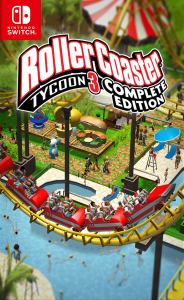
RollerCoaster Tycoon 3 Complete Edition Switch NSP XCI brings Frontier Developments’ long-running theme-park simulation to Nintendo Switch in a release dated September 24, 2020. Published by FRONTIER, this Region Free edition supports English, French, German, Italian, Spanish, and Dutch. Its appeal is rooted in a familiar but flexible premise: build a park, run its day-to-day operations, respond to guests, and shape an attraction-filled space that reflects your own ideas.
RollerCoaster Tycoon 3 Complete Edition on Nintendo Switch: Game Overview
RollerCoaster Tycoon 3 Complete Edition is a simulation game centered on the practical and creative sides of theme-park management. Players lay out paths, place rides, organize facilities, hire staff, set prices, and monitor the reactions of visitors. The aim is not simply to fill a map with large attractions. A successful park needs a sensible layout, enough services for its guests, and a balance between spectacle and financial control.
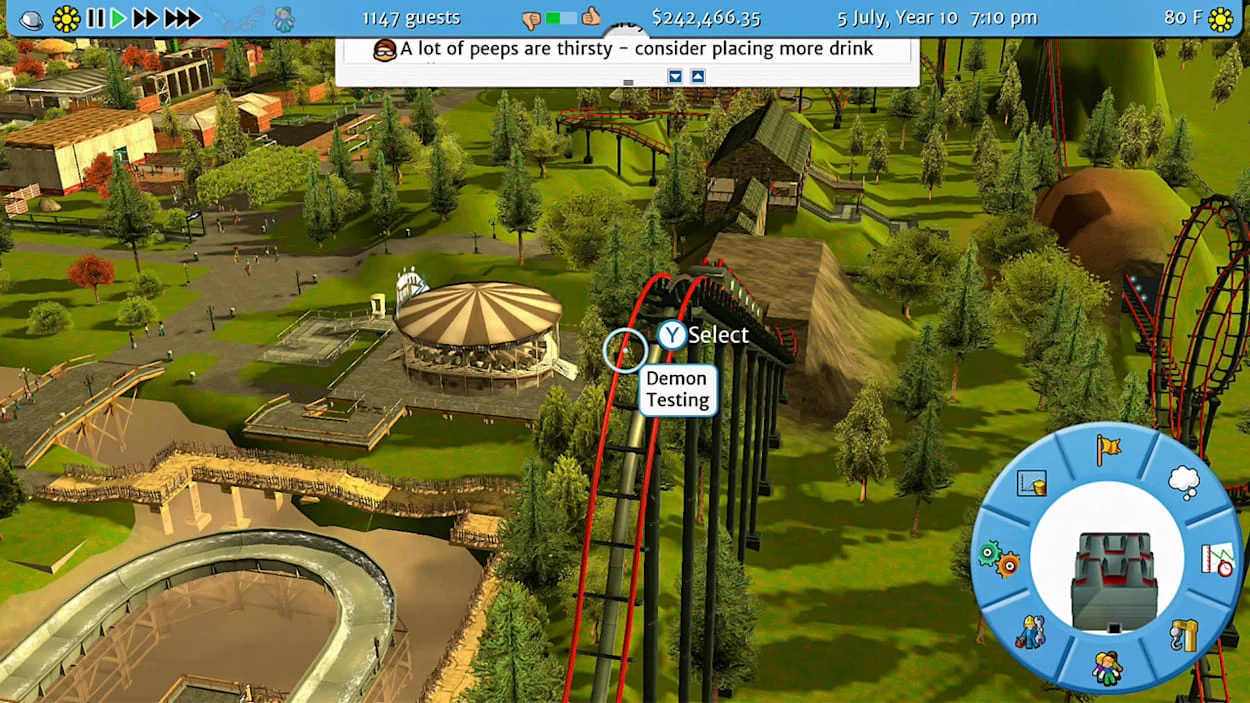
The Switch release frames that work with a colorful 3D presentation. Parks gradually become busy spaces, with guests moving between rides, food stalls, and other attractions while their thoughts and feelings provide useful feedback. Those reactions make management less abstract. A ride may look impressive from above, but guest satisfaction, park value, and practical access all influence how well the park performs.
The Complete Edition includes the Soaked! and Wild! expansions, broadening the types of parks and attractions available. That additional content gives the game a wider range of settings and construction choices without changing its central focus: creating an entertaining destination and keeping it running effectively.
Career Scenarios Instead of a Fixed Storyline
There is no conventional hero, campaign plot, or fixed narrative arc in RollerCoaster Tycoon 3 Complete Edition Switch NSP XCI. Its sense of progression comes through Career Mode, which presents a sequence of park management scenarios. Each one supplies a setting and a set of objectives, turning the player’s own decisions into the closest thing the game has to a story.
Those goals can involve reaching a target park value, improving guest satisfaction, or creating coasters with a required excitement level. The structure gives each scenario a clear purpose while leaving room for different solutions. One player may prioritize a carefully planned ride network, while another may build outward quickly and solve problems as the crowds arrive.
Career Mode also encourages attention to the quieter parts of management. Finances, research, ticket prices, staffing, and guest needs matter alongside the major attractions. A large coaster is only one piece of a functioning park. If queues are poorly managed or visitors cannot easily find food, facilities, and rides, the park’s ratings can suffer.
- Read the crowd: Guest thoughts and feelings can reveal what the park needs most.
- Plan the flow: Paths and attraction placement affect how easily visitors move through the park.
- Watch the budget: Ticket pricing, staffing, and new construction all contribute to profitability.
- Build with purpose: Career objectives may require park value, satisfaction, or coaster excitement targets.
- Keep expanding: Research opens new attractions and helps refresh a growing park.
Build Coasters and Experience Them with CoasterCam
Roller coasters remain the natural centerpiece of the experience. The game’s flexible track editor allows players to create custom coaster tracks rather than relying only on prebuilt designs. Hills, turns, drops, and longer layouts can be shaped to suit the available terrain and the intended mood of a park section.
That construction process is not solely about appearance. Coaster excitement is part of the game’s management language, particularly in Career Mode objectives, so design choices have consequences beyond visual flair. A coaster can function as a landmark, a crowd-puller, or a specific answer to a scenario requirement.
CoasterCam gives completed rides a first-person perspective. It provides a direct view from the track instead of the standard management camera, making the finished design easier to appreciate as an experience rather than a collection of pieces on a map. The feature supports the game’s playful side: after planning routes and watching costs, players can ride through the result of their work.
Creative Park Design Beyond the Rides
The park is more than its tallest coaster. Landscaping, decorative objects, and themed layouts let players give distinct areas their own character. A park can be arranged around winding paths and scenery, or built as a more compact venue where attractions sit close together. Neither approach is presented as the only correct one; the important part is how the design serves guests and supports the player’s goals.
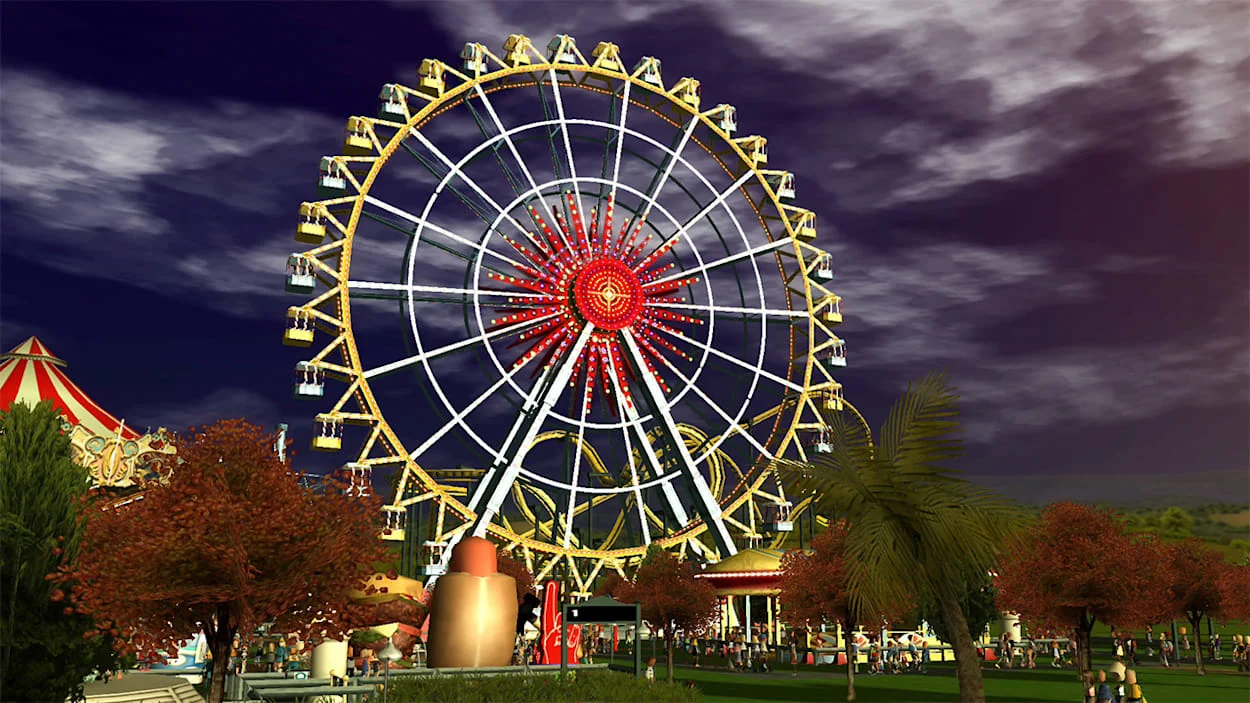
Food stalls, gentle attractions, thrill rides, and larger ride types offer different reasons for guests to explore. Carousels and other mild rides can sit alongside drop towers and coasters, helping a park cater to different tastes. Decorative choices add atmosphere, while fireworks displays offer another way to make a developed park feel more like a staged entertainment space than a simple set of management tools.
This is where the game’s replay value becomes especially clear. Even when two parks use similar attractions, their layouts, scenery, and priorities can be very different. One might concentrate on efficient guest movement and revenue; another might devote more space to visual design and a particular theme.
Soaked! Expansion: Water Parks and Marine Attractions
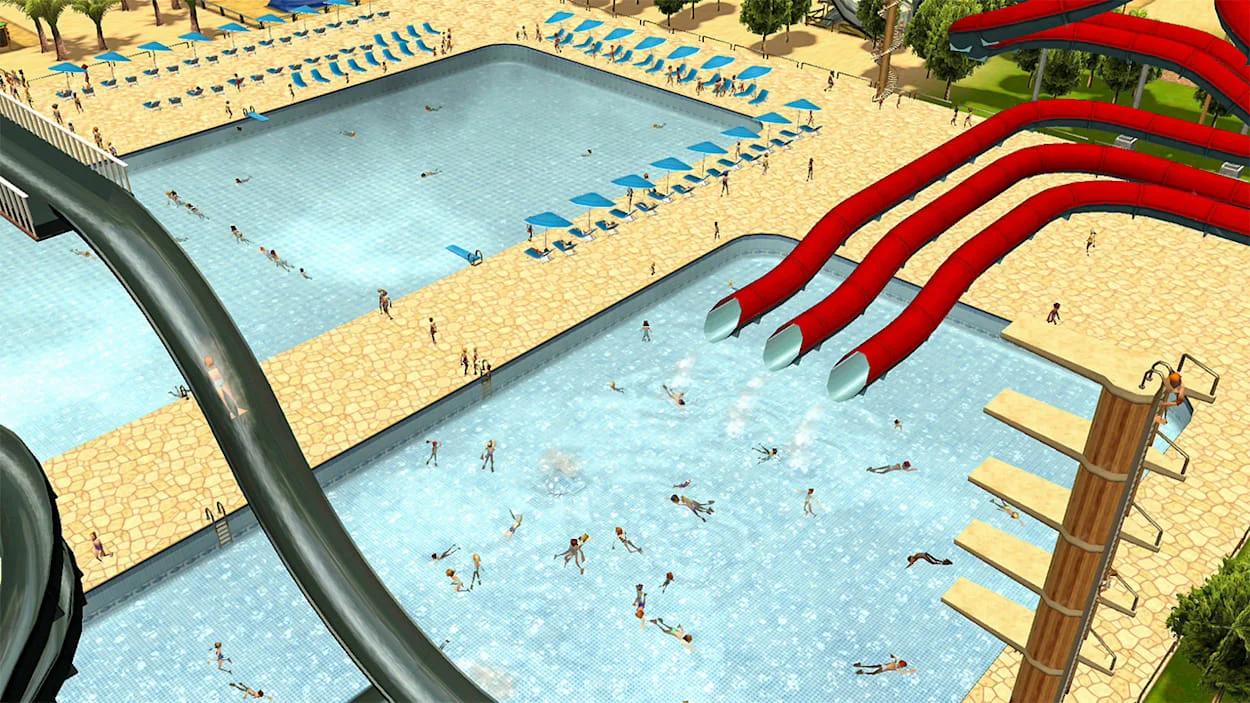
The Soaked! content expands the available construction options with water-park features. Swimming pools and water slides introduce a different kind of attraction design, giving players opportunities to build areas that contrast with conventional ride zones. Water parks can be incorporated into a broader theme park or treated as a major focus of a scenario or sandbox project.
Soaked! also adds marine animal shows. These attractions extend the Complete Edition beyond the standard collection of rides, stalls, scenery, and coasters. Combined with the Wild! expansion’s safari parks, exotic animals, and animal encounters, the included content supports parks with more varied identities and environments.
The additional options are meaningful because they widen the creative vocabulary available to the player. Instead of repeatedly solving every map with the same coaster-first approach, a park can develop around pools, slides, animal attractions, or a mixture of them all.
Career Mode or Sandbox Mode: Choosing Your Park-Building Style
Career Mode and sandbox mode serve different moods. Career Mode is best suited to players who enjoy park management scenarios with defined targets. It supplies direction, asks for efficient planning, and makes ratings, finances, and guest satisfaction central to progress.
Sandbox mode shifts the emphasis toward open-ended creative construction. Without the same objective-driven pressure, players can spend more time refining a layout, testing custom coaster tracks, building elaborate scenery, or combining rides with water-park and animal attractions. It is the more relaxed option for anyone drawn primarily to design.
That split makes the game suitable for players with different interests in the simulation genre. Managers can pursue structured challenges and measurable goals, while builders can treat the park as a space for experimentation. The Switch version’s varied attractions, custom coaster tools, CoasterCam view, and included expansion content give both approaches plenty to work with.