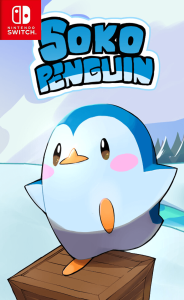
SokoPenguin Switch NSP
Report Link Error
Select the broken download file, then submit the report.
Screenshots
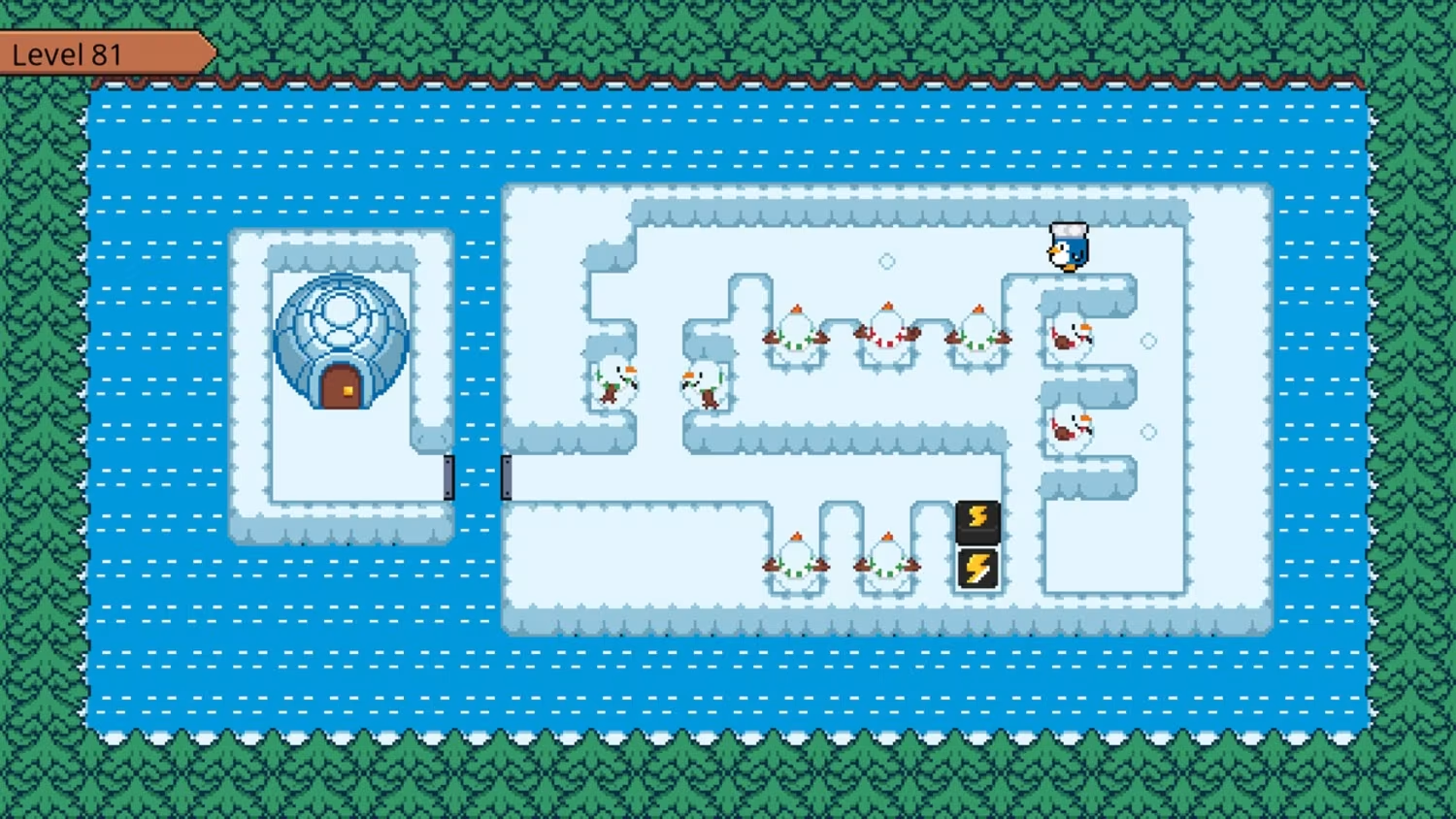
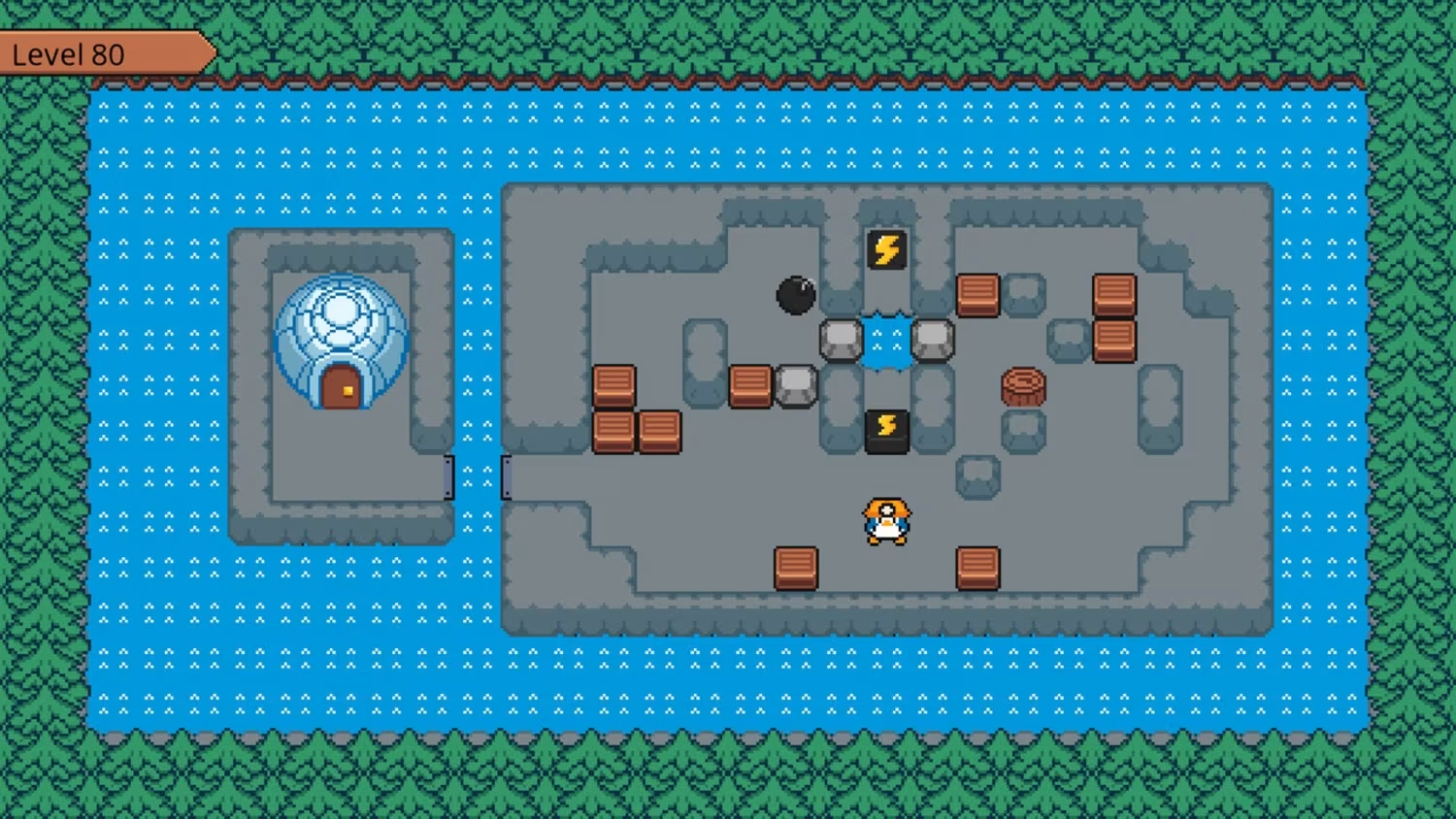
About Game
SokoPenguin Switch NSP brings a classic block-pushing puzzle format to a snowy setting, asking players to guide a small penguin through icy layouts while recovering supplies for its colony. The premise is light, but the challenge is methodical: each push can change the board, close off a route, or create the solution needed to continue.
SokoPenguin’s Icy Rescue Premise
The adventure takes place in a cold home of ice and snow, where a group of mischievous polar bears has scattered the colony’s fish and crystals across the terrain. Those lost resources give the game’s puzzle work a clear purpose. The penguin is not simply shifting objects around a grid; it is trying to return important supplies to its community.
That framing fits the game’s approachable presentation. The central character is an adorable penguin navigating frosty spaces, while the objectives are tied to recovering fish and crystals from the surrounding icy mazes. There is a gentle sense of rescue behind every completed stage, even as the layouts demand increasingly careful decisions.
As a penguin puzzle adventure, SokoPenguin uses its wintry setting to support the action rather than distract from it. Snow, ice, obstacles, and narrow passages all reinforce the idea that this is a difficult journey across a frozen home. The colony’s needs supply the motivation; the puzzle boards provide the real test.
How the Sokoban-Style Block Puzzles Work
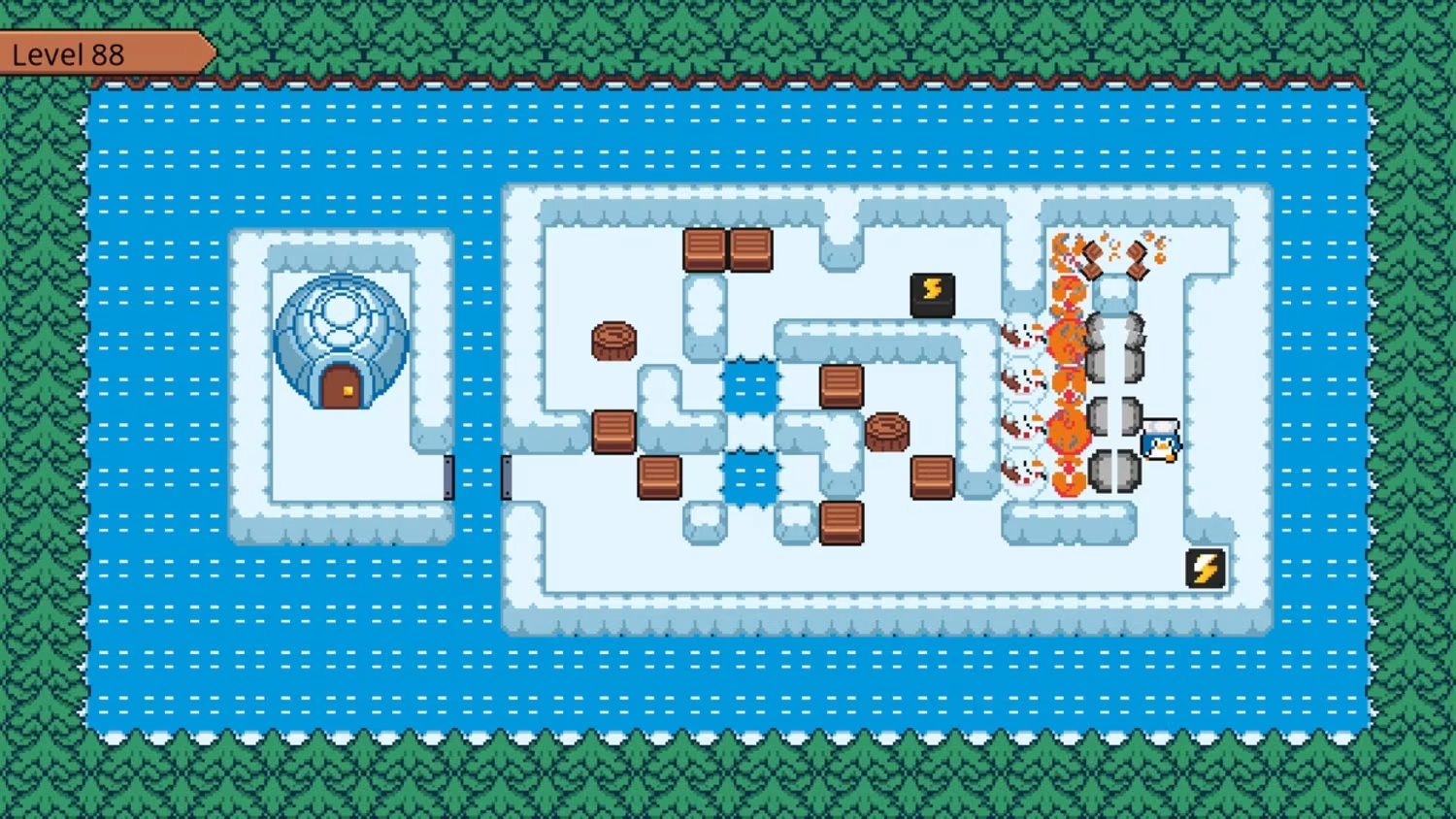
The core of SokoPenguin Switch NSP follows the familiar Sokoban puzzle structure. Players move the penguin around each level and push ice blocks toward designated target squares. A stage is solved when the required blocks have been placed correctly.
The crucial limitation is simple: blocks can be pushed, but they cannot be pulled back. That single rule gives every layout its tension. Walking around an open area is usually easy enough, but positioning a block requires considering where the penguin can stand, where the block will end up, and whether another route will remain open afterwards.
Walls and other obstacles shape the available paths, while environmental elements add variety to the block-pushing action. Slippery ice and teleporters are among the elements introduced through the game’s puzzles, creating situations where movement and placement need to be read with extra care. The goal remains clear, but the route to it can become surprisingly involved.
Why Every Push Requires Planning
In a Sokoban puzzle, a bad push can be more damaging than a wrong turn. A block moved against a wall may become impossible to reposition unless that wall is also part of its intended destination. A block pushed into a corner can be lost to the puzzle completely. Since there is no way to pull it back, the game rewards restraint over quick reactions.
This makes block-pushing strategy the heart of SokoPenguin gameplay. Before moving a block, it helps to consider its final target and the direction from which it must be pushed. Some targets can only be approached from one side, and some corridors are too narrow to revisit after a block has passed through them.
Pathways matter just as much as targets. The penguin needs room to get behind each ice block, so a seemingly useful move can fail if it seals off the only route around the board. Planning ahead is less about predicting every movement at once than avoiding positions that cannot be corrected later. A careful player keeps options available for as long as possible.
A Stage-by-Stage Increase in Challenge
SokoPenguin progresses through numerous distinct puzzle stages, each built around its own layout. Early puzzles establish the basic relationship between blocks, targets, and movement space. Later stages become more demanding by introducing new mechanics and environmental elements alongside more complicated arrangements of walls and routes.
The increase in difficulty comes from how these pieces interact. A target square may appear easy to reach until another block blocks the necessary approach. A useful corridor may have to stay open until several other moves are completed. Slippery surfaces and teleporters can further change how a player reads the board, asking for more than a straightforward series of pushes.
This progression gives the game a steady puzzle-solving rhythm. Each completed board teaches a practical lesson about space, sequence, or positioning, then asks the player to apply that lesson in a new configuration. The result suits players who enjoy taking time with individual levels rather than relying on speed or action-heavy reflexes.
Five Steps to Read a Puzzle Before Moving
- Survey the board. Look over the full layout before making a move. Note the target squares, walls, narrow passages, ice blocks, and the spaces where the penguin can move freely.
- Identify restricted blocks. Pay close attention to blocks near corners, walls, or confined routes. These are often the pieces most likely to become unusable if pushed in the wrong direction.
- Protect open routes. Avoid filling a corridor too soon. The penguin may need that route later to reach the opposite side of another block.
- Think beyond one push. Before moving an ice block, consider where it will go next and where the penguin will stand for the following push. A move is only helpful if it preserves a workable sequence.
- Reset when a route is lost. If a block is stranded or a necessary path has been closed, restarting the level can be more useful than forcing further moves. A fresh look often reveals a better order.
These puzzle-solving steps reflect the patient pace of the game. The most effective approach is often to pause, read the shape of the stage, and then make purposeful movements. A solution can look obvious after it is found, but reaching it depends on recognizing which pushes must wait.
Release and Nintendo Switch Game Details
SokoPenguin release date information places the game on Nintendo Switch in the USA region on August 28, 2024. It is a Puzzle title developed and published by eastasiasoft, with English and Portuguese language support.
The game is listed as version 1.0, with a 66MB file size. Its focused setup—an icy rescue story, a penguin protagonist, and steadily more involved Sokoban-style boards—makes it a natural fit for players looking for compact, deliberate puzzle sessions. The appeal lies in reading each layout carefully, learning from mistakes, and turning a difficult board into a clean sequence of well-planned pushes.