SNK VS. CAPCOM SVC CHAOS Switch NSP
Report Link Error
Select the broken download file, then submit the report.
Screenshots
About Game
SNK VS. CAPCOM SVC CHAOS Switch NSP brings SNK and Capcom fighters into the same Nintendo Switch arena, built around an unexplained disturbance that pulls characters from parallel universes into conflict. Released on July 22, 2024, this Arcade and Fighting title from SNK treats the crossover as a setting for dream confrontations, where heroes and villains enter the tournament for their own reasons and meet rivals from the other side.
SNK VS. CAPCOM SVC CHAOS on Nintendo Switch: The Crossover Premise
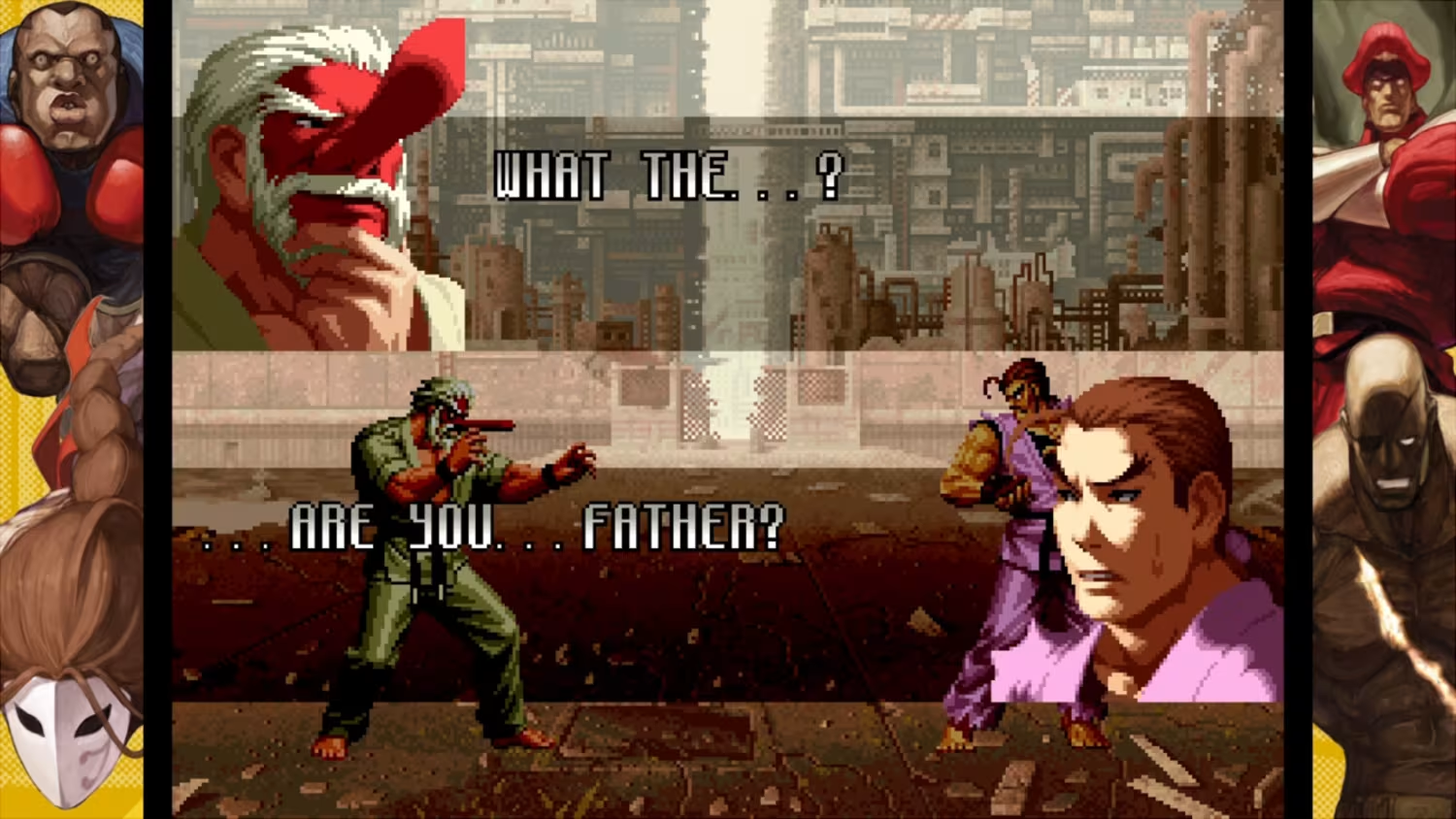
The appeal of this SNK crossover fighting game begins with its premise: a mysterious interdimensional event has disrupted two separate worlds and placed their fighters on a shared stage. Rather than building around a dense narrative campaign, the setup leaves room for the match-ups themselves. Characters can seek answers, prove their strength, or simply challenge an opponent they would not normally encounter.
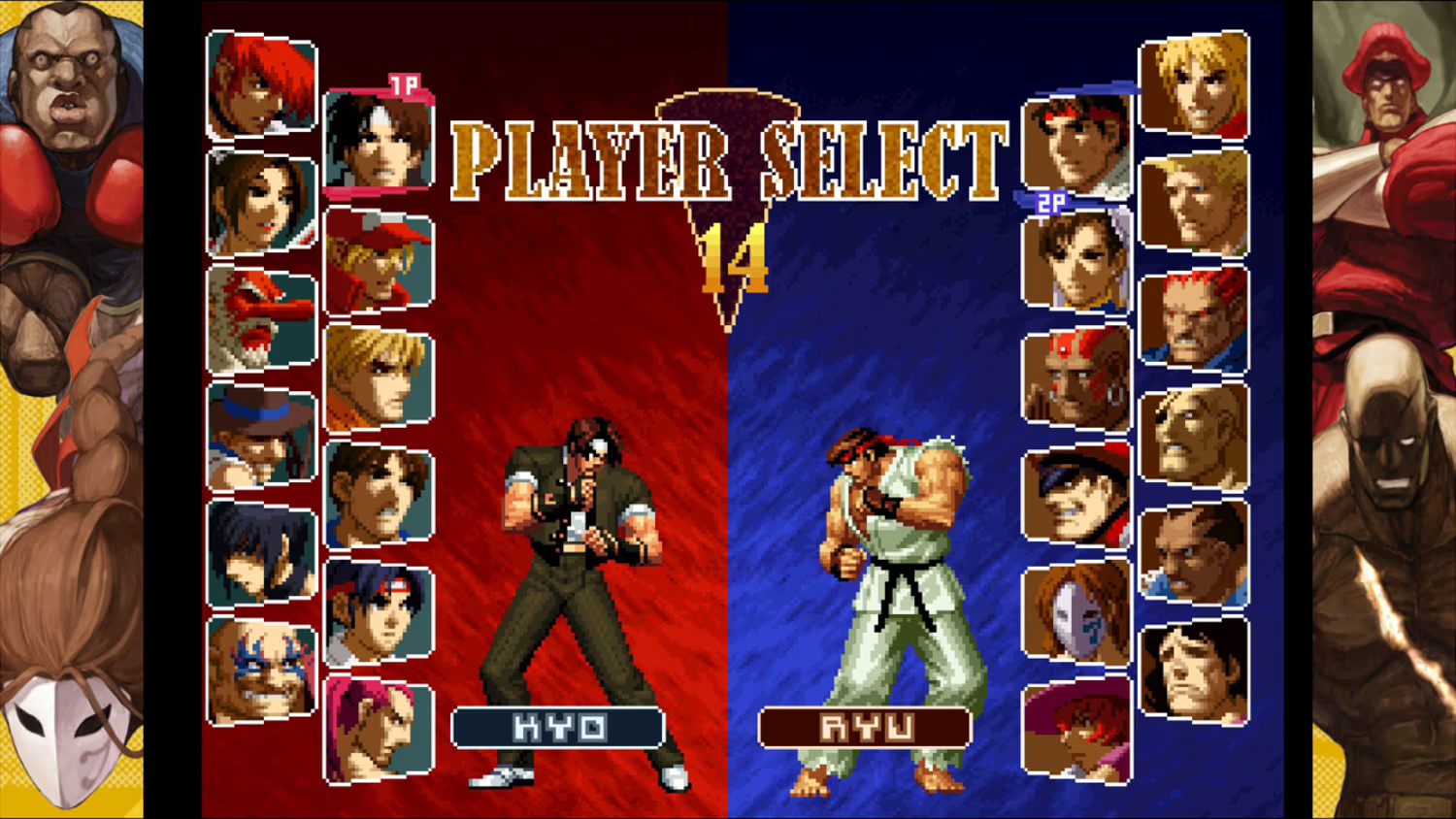
That focus suits an arcade fighting game. The story provides a reason for the collision, but the real emphasis remains on the clashes that follow. With more than 36 characters drawn from the SNK and Capcom universes, the roster is designed to support a wide range of encounters and repeat play. Different movesets, special attacks, and fighting styles encourage players to explore more than a single favorite combatant.
Published and developed by SNK, the Nintendo Switch release is available across Europe, USA, Asia, and Japan. It supports English, Japanese, and Spanish, allowing the crossover’s central idea to remain straightforward: familiar fighters have been brought together under unusual circumstances, and the tournament gives them a place to settle the question of who is stronger.
The 2D Arcade Fighting Foundation
SNK VS. CAPCOM SVC CHAOS gameplay is rooted in fast-paced 2D arcade fighting. Its control approach is described as responsive and intuitive, while the systems beneath those controls leave room for more committed practice. Basic combos and special moves establish the first layer of play; learning the particulars of each fighter creates the next one.
The game balances aggressive offense with strategic defense. A player who presses forward may create pressure and openings, but an opponent who reads that pressure can respond with a counterattack. That exchange gives matches an unpredictable rhythm. The goal is not simply to use powerful moves whenever they are available, but to understand when an opponent is vulnerable and when a commitment may be punished.
For newcomers, familiar controls and a direct arcade format provide an approachable starting point. For experienced fighting-game players, character-specific techniques, super-meter decisions, counters, and resource use offer reasons to keep refining a strategy. The game’s presentation is therefore less about a long narrative arc than the immediate drama of a close round, a successful combo, or a special move used at the right moment.
- Learn the basics: Practice a chosen character’s standard combos and special moves before relying on more advanced decisions.
- Test Grooves: Compare Groove options to find a super-meter approach that matches a preferred fighting style.
- Save Exceed: Treat the one-time Exceed move as a match-changing resource rather than an automatic option.
- Watch for openings: Use well-timed counterattacks when an opponent leaves a clear gap.
- Plan the pair: In tag-team battles, consider how character switching changes the situation.
Groove Selection and Playstyle Choices
The SNK VS. CAPCOM SVC CHAOS Groove system gives players a way to shape their approach before and during a fight. Groove selection influences super-meter behavior and abilities, meaning it can affect both how a player builds resources and how those resources are spent. This is a meaningful choice because the same character can support different priorities depending on the selected Groove.
One player may prefer a style that supports a more active, offense-driven plan, while another may value a meter approach that better suits patience and defense. The important point is experimentation. Since Grooves alter the relationship between combat actions and super-meter management, they ask players to think beyond a character’s move list.
This system also strengthens replay value. Trying a new fighter already changes the available attacks and combinations; trying a different Groove can change the strategic rhythm around that fighter. For players drawn to fighting game playstyles that reward adjustment, the system provides another reason to revisit familiar match-ups.
Exceed Moves, Counter Attacks, and Momentum Swings
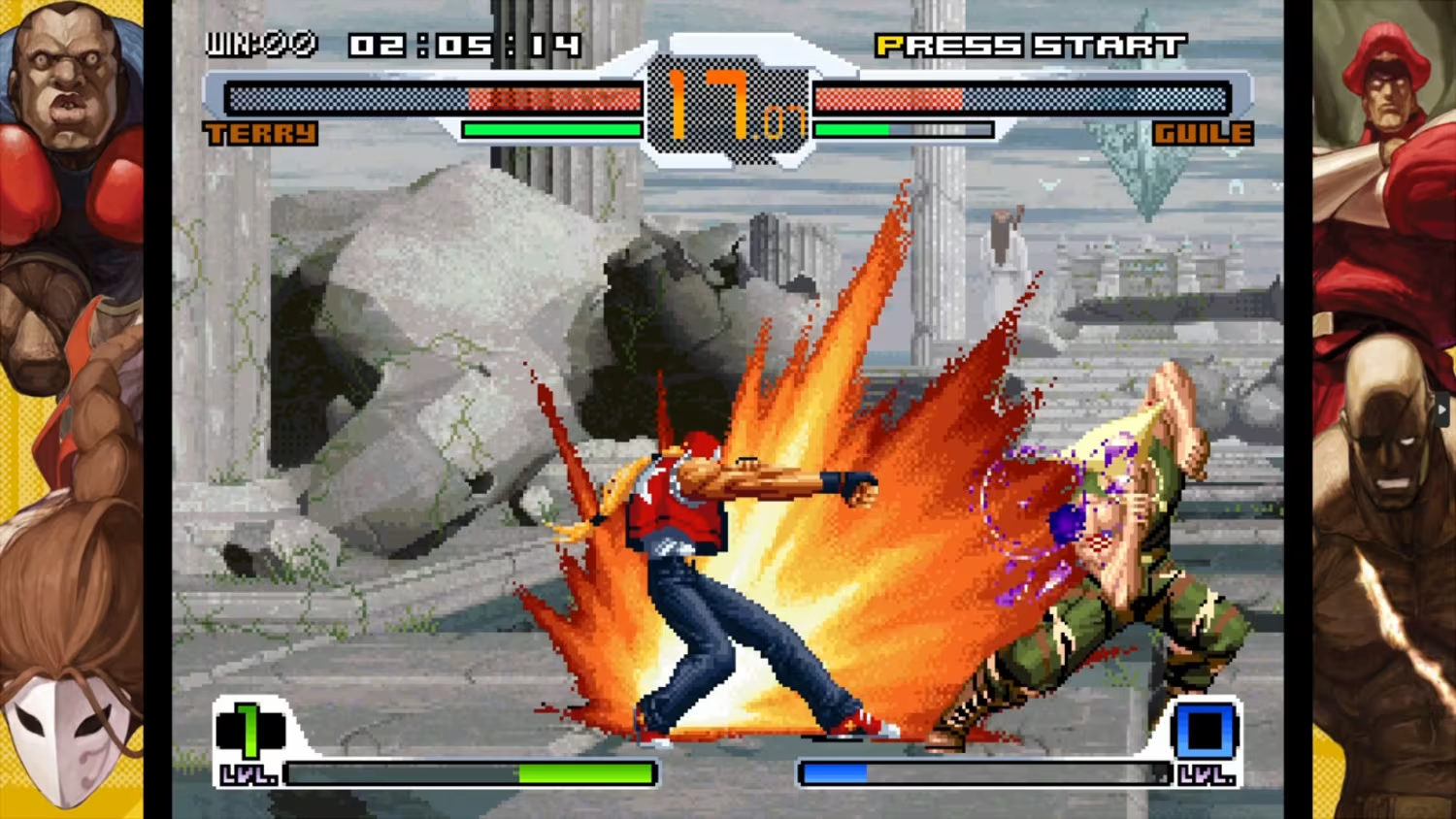
The SNK VS. CAPCOM SVC CHAOS Exceed system centers on a powerful move that may be used once per match. Because it is limited, it carries more weight than an ordinary attack. An Exceed can produce massive damage, but its value depends on timing. Spending it too early, without a reliable opening, can waste a rare opportunity; holding it too long can mean never using it when the match turns dangerous.
Counter attacks offer a different kind of momentum swing. They reward players who recognize an opponent’s opening and answer with precision. In a fast 2D arcade fighting match, that capacity to shift from defense to offense can change the pace immediately. The strongest decisions are often the most measured ones: identify the gap, choose the response, and avoid committing a powerful attack without a clear chance of success.
These systems make individual rounds feel consequential. A player may be under pressure, find a moment to counter, and suddenly force the opponent to respect a new threat. The result is a fighting game strategy built around awareness as much as execution.
The Art-of-Fighting Gauge and Resource Management
A separate Art-of-Fighting Gauge adds another combat resource to monitor. It is used for special moves, creating a second management concern alongside the super meter affected by Groove selection. Players must therefore consider not only which attacks can connect, but also which resources are available when an exchange becomes intense.
This additional gauge supports the game’s deeper strategic side without changing its arcade identity. Special moves can be important tools, but their use is tied to a dedicated resource. Managing that gauge carefully can matter during competitive exchanges, particularly when a player is deciding between immediate pressure and preserving options for a later opening.
For players who enjoy studying systems, the Art-of-Fighting Gauge gives practice sessions a practical focus. Character knowledge remains important, but resource awareness becomes part of the larger plan.
Tag-Team Battles and Character Switching Strategy
SNK VS. CAPCOM SVC CHAOS Switch NSP also includes two-on-two tag-team battles. These matches expand the tactical possibilities by placing paired fighters on each side and allowing strategic character switching. Instead of relying on one combatant alone, players can think about how two distinct movesets fit together across a match.
Switching creates decisions beyond simple character preference. A fighter may be changed to alter the immediate matchup, bring in a different set of special attacks, or adjust the flow of the battle. The pair itself becomes part of the strategy, making tag play a suitable option for players who enjoy planning around multiple fighting styles.
With its crossover roster, Groove choices, limited Exceed attacks, counter opportunities, separate special-move gauge, and tag battles, the game is aimed at players who want a direct arcade fighting experience with room to learn. It can welcome those looking for recognizable crossover confrontations while giving dedicated competitors several systems to explore over repeated matches.
Recommended Similar Games
 Teenage Mutant Ninja Turtles: Mutants Unleashed Switch NSPView Game
 The Rumble Fish 2 Switch NSPView Game
 Rune Dice Switch NSPView Game
 Police Car Driver: City Parking Simulator Switch NSPView Game
 Them’s Fightin’ Herds Switch NSPView Game
 Godzilla: Destroy All Monsters Melee Remastered Switch NSPView Game
