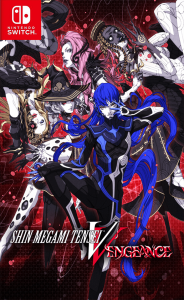
Shin Megami Tensei V: Vengeance Switch NSP
Report Link Error
Select the broken download file, then submit the report.


Screenshots
About Game
Shin Megami Tensei V: Vengeance Switch NSP places a seemingly ordinary high school student in a Tokyo that has become something far more hostile and unfamiliar. The result is a role-playing adventure shaped by desolate vistas, demon encounters, difficult decisions, and a battle system that rewards careful reading of every opponent. Its Vengeance content expands the journey with a separate narrative path, fresh mysteries, and new challenges within the ruined world of Da’at.
A Nahobino’s Descent into Demon-Infested Da’at
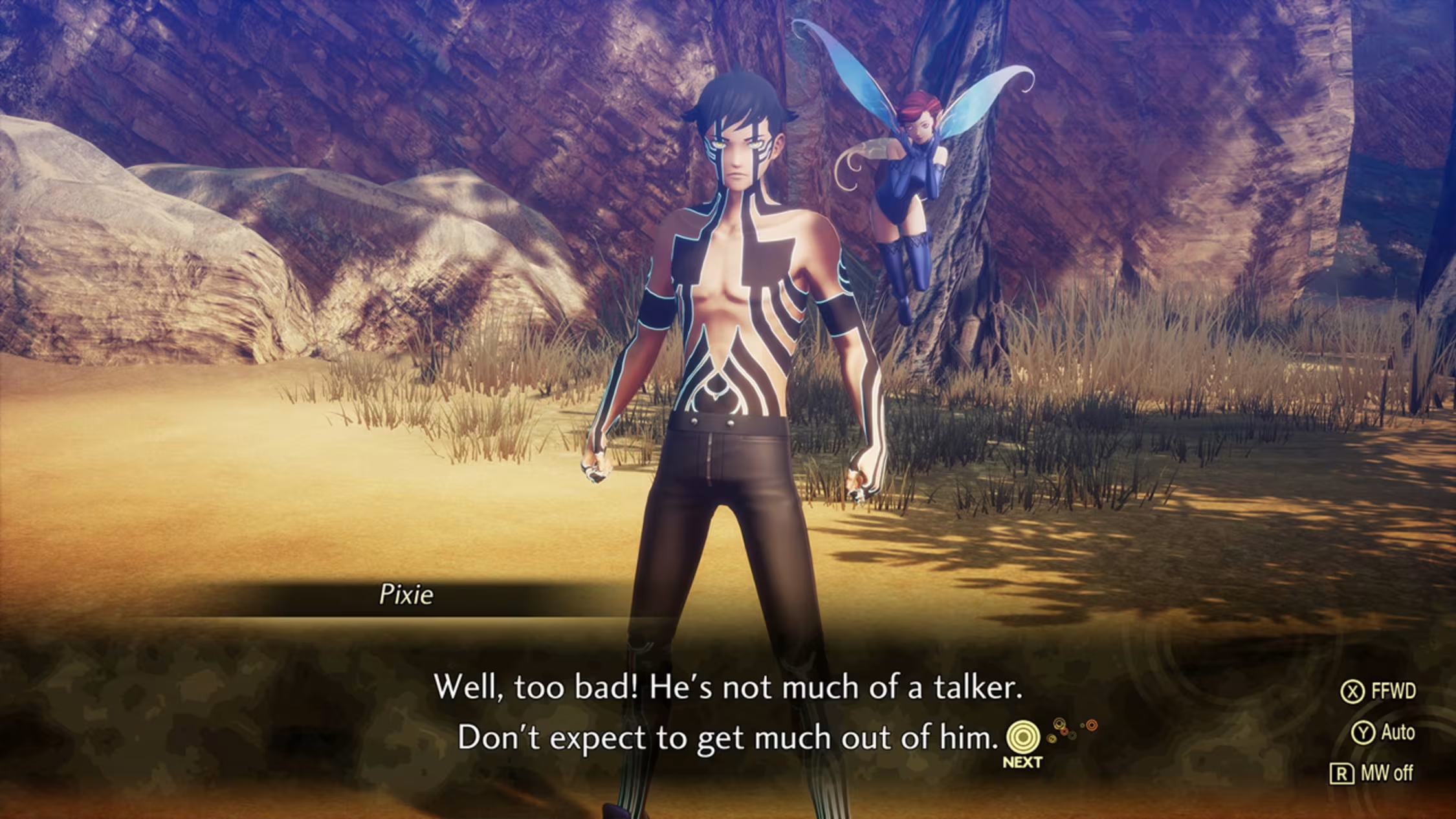
The story begins with a student cast into Da’at, an apocalyptic alternate version of Tokyo populated by powerful demons. Survival changes the protagonist in a literal sense: he fuses with the mysterious Aogami and becomes the Nahobino, gaining the power needed to confront the chaos around him.
That transformation gives the journey its distinctive tension. The Nahobino is not simply passing through a ruined city; he is caught in a conflict involving humanity and the demonic realm, with angels and demons continuing their struggle around him. Da’at supplies the setting’s bleak atmosphere, but it also becomes a place of discovery, where every new route or encounter can suggest another side of the larger conflict.
The Vengeance route, known as the Canon of Vengeance, offers a path separate from the original Canon of Creation. New characters, altered moral questions, and themes involving revenge, sacrifice, and justice give this storyline its own direction. Decisions carry consequences for both humanity and demons, lending weight to the narrative’s philosophical tensions.
Exploring the Ruined Landscapes of Da’at
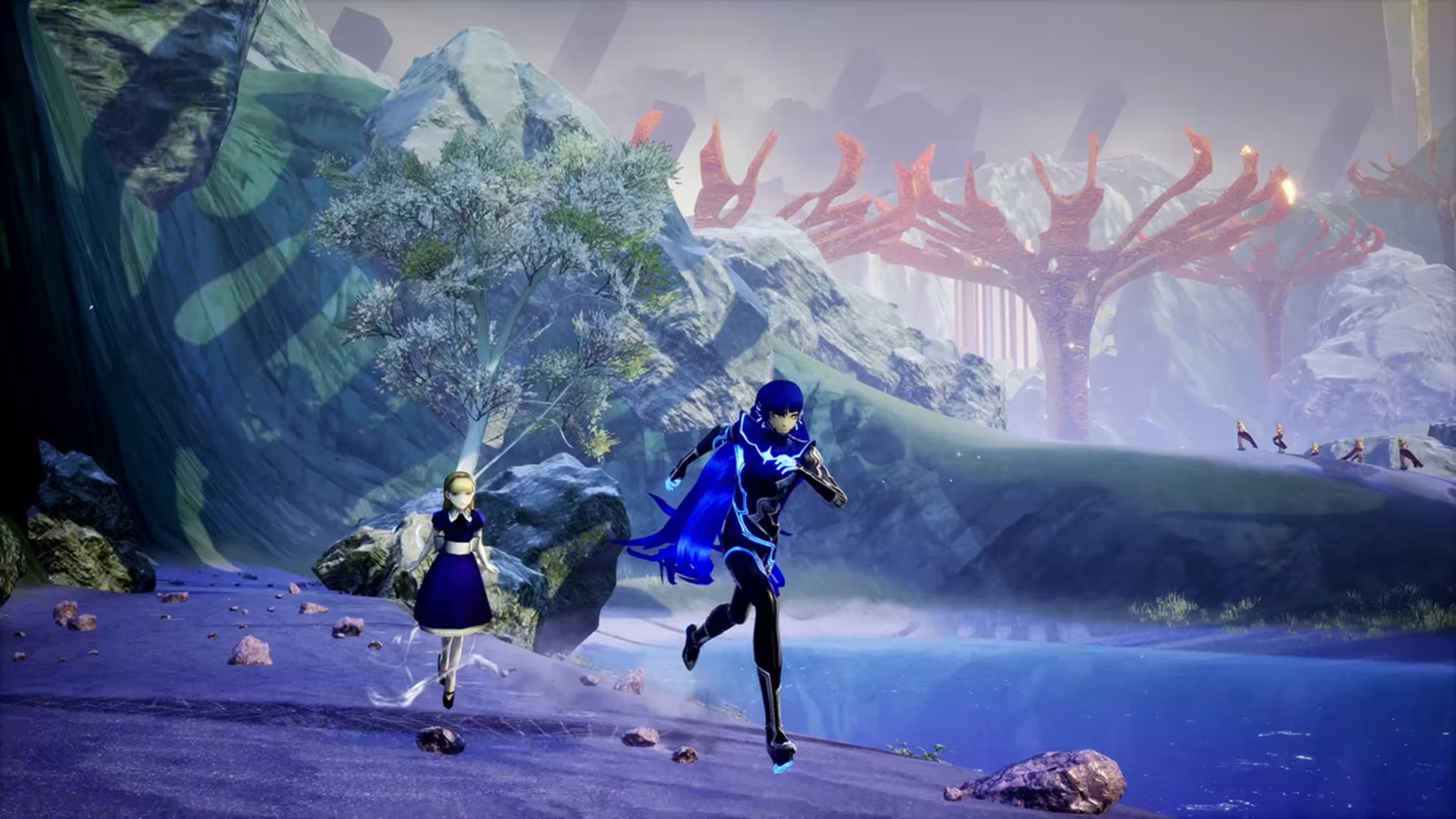
Da’at exploration is built around expansive, open-ended areas rather than a straightforward march from one event to the next. The wrecked version of Tokyo has an imposing presence: familiar urban space has been overtaken by sand, destruction, demons, and uncertainty. It is a setting that encourages players to look beyond the most obvious path.
Hidden pathways, secrets, and valuable resources make exploration part of progression rather than a pause between battles. Moving through these areas can lead to practical gains while also making Da’at feel less like a backdrop and more like an environment that must be understood. The world’s hostile scale helps sustain the sense that the Nahobino is navigating a place where danger can emerge from any direction.
The presentation supports that mood through enhanced graphics and performance, while the refined interface is intended to make the game’s systems smoother to navigate. These touches matter in a game where exploration, party management, and repeated combat decisions are closely connected.
Press Turn Combat: Turning Enemy Weaknesses into Momentum
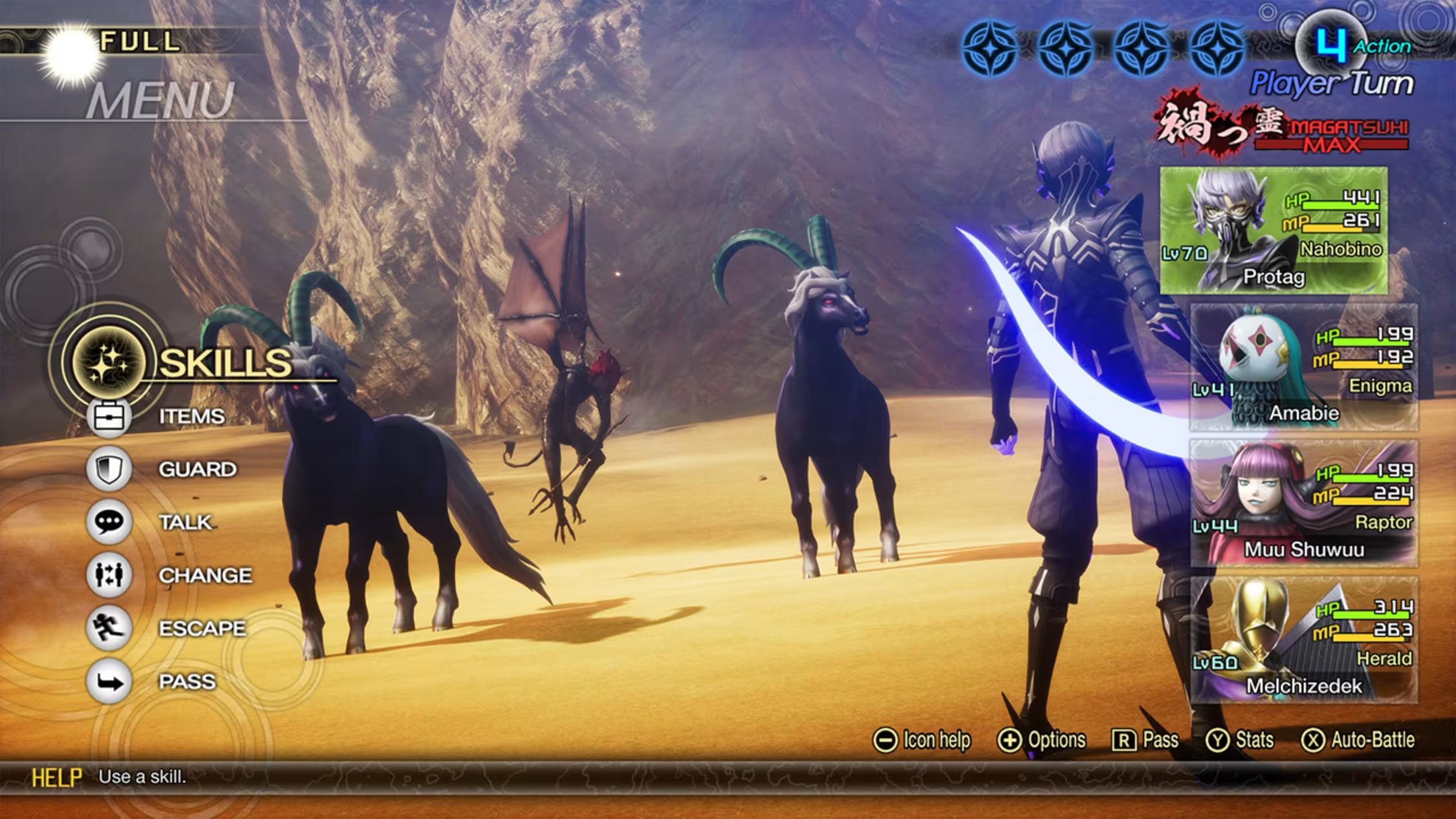
The strategic center of the game is its turn-based Press Turn system. Battles are not only about dealing the most damage possible. Identifying enemy weaknesses and targeting them effectively can create extra turns, allowing a successful decision to build momentum for the entire party.
That structure makes enemy weaknesses a key part of battle planning. A party with varied options is better prepared to respond when one approach is ineffective, while an ill-suited group can lose momentum quickly. The system gives each encounter a tactical rhythm: assess the opponent, choose an appropriate attack, and use the advantage to press forward.
Party planning therefore reaches beyond raw strength. Demons bring different abilities and combat options, and the Nahobino’s build can be adapted to meet changing enemy types and challenges. The game’s action, adventure, and role-playing elements meet most clearly in these encounters, where preparation and improvisation work together.
Demon Fusion in the World of Shadows
Demon negotiation provides one route to building a capable group. Demons can be persuaded to join the party, although their personalities and demands differ. Recruiting them expands the available pool of allies, but the deeper process comes through the World of Shadows.
There, demon fusion creates stronger demons from existing allies. Fusion also allows inherited skills, giving players room to shape a demon around a particular role or combat need. A useful ability does not have to disappear simply because the original demon is no longer the best fit for the party.
This makes party building an ongoing process rather than a fixed roster decision. Players can experiment with stronger demons, inherited skills, and different combinations as Da’at presents new threats. The system complements Press Turn combat especially well, since a broader set of skills can make it easier to exploit weaknesses and maintain an advantage.
New Quests, Areas, and Boss Battles in Vengeance
The Vengeance storyline adds more than a different narrative perspective. It includes new quests, new areas, boss battles, characters, abilities, and demons tied to its expanded path. These additions reinforce the idea that the Canon of Vengeance is a distinct route through the game’s world and conflicts.
Its narrative mysteries are closely tied to the consequences of choice. The route introduces different dilemmas and motivations while asking the player to consider revenge, sacrifice, and justice from another angle. For players interested in seeing more than one outcome from the conflict surrounding Da’at, the separate storyline gives replay value a clear narrative foundation.
The new boss encounters and locations also keep progression connected to discovery. They are not detached extras; they fit into a version of the journey that broadens both the world and the decisions made within it. Mentioned again in context, Shin Megami Tensei V: Vengeance Switch NSP is best suited to players comfortable with demanding turn-based strategy and a dark, demon-filled setting.
7 Strategic Priorities for Surviving Da’at
- Read weaknesses first. Enemy weaknesses are central to efficient combat, so identifying them should guide attack choices.
- Protect your momentum. Use Press Turn advantages to gain extra turns and keep the party’s offensive opportunities active.
- Negotiate for options. Recruiting demons through negotiation expands the party and creates more possible responses in battle.
- Fuse with a purpose. Use the World of Shadows to create stronger demons suited to the challenges currently ahead.
- Keep useful skills alive. Inherited skills let fusion support a preferred combat role instead of forcing every new ally into the same shape.
- Search beyond the direct route. Hidden pathways, secrets, and resources make careful Da’at survival more rewarding.
- Adapt the Nahobino. Customize the Nahobino’s abilities and build to address different enemies and evolving combat demands.
Recommended Similar Games
 METAL GEAR SOLID 4: Guns of the Patriots – Master Collection Version Switch NSPView Game
 Yacht Haven Tycoon: Marina Port Parking Simulator Switch NSPView Game
 MIO: Memories in Orbit Switch NSPView Game
 Cupid Parasite: Sweet and Spicy Darling Switch NSPView Game
 Valiant Hearts: Coming Home Switch NSPView Game
 Peppa Pig World Adventures Switch NSPView Game