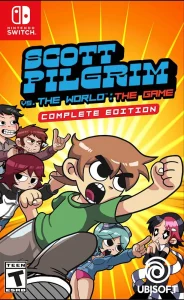
Scott Pilgrim vs. The World: The Game – Complete Edition Switch NSP
Report Link Error
Select the broken download file, then submit the report.
Screenshots
About Game
Scott Pilgrim vs. The World: The Game – Complete Edition Switch NSP arrived on Nintendo Switch in 2021 as a return to the fast, colorful arcade action associated with Scott Pilgrim’s graphic-novel world. Its appeal is not built on realism or elaborate simulation. Instead, it leans into Toronto pixel art, brisk brawling, comic-book humor, and a progression system that gives its retro-styled fights a little more staying power.
A Complete Edition Return to Scott Pilgrim’s Toronto
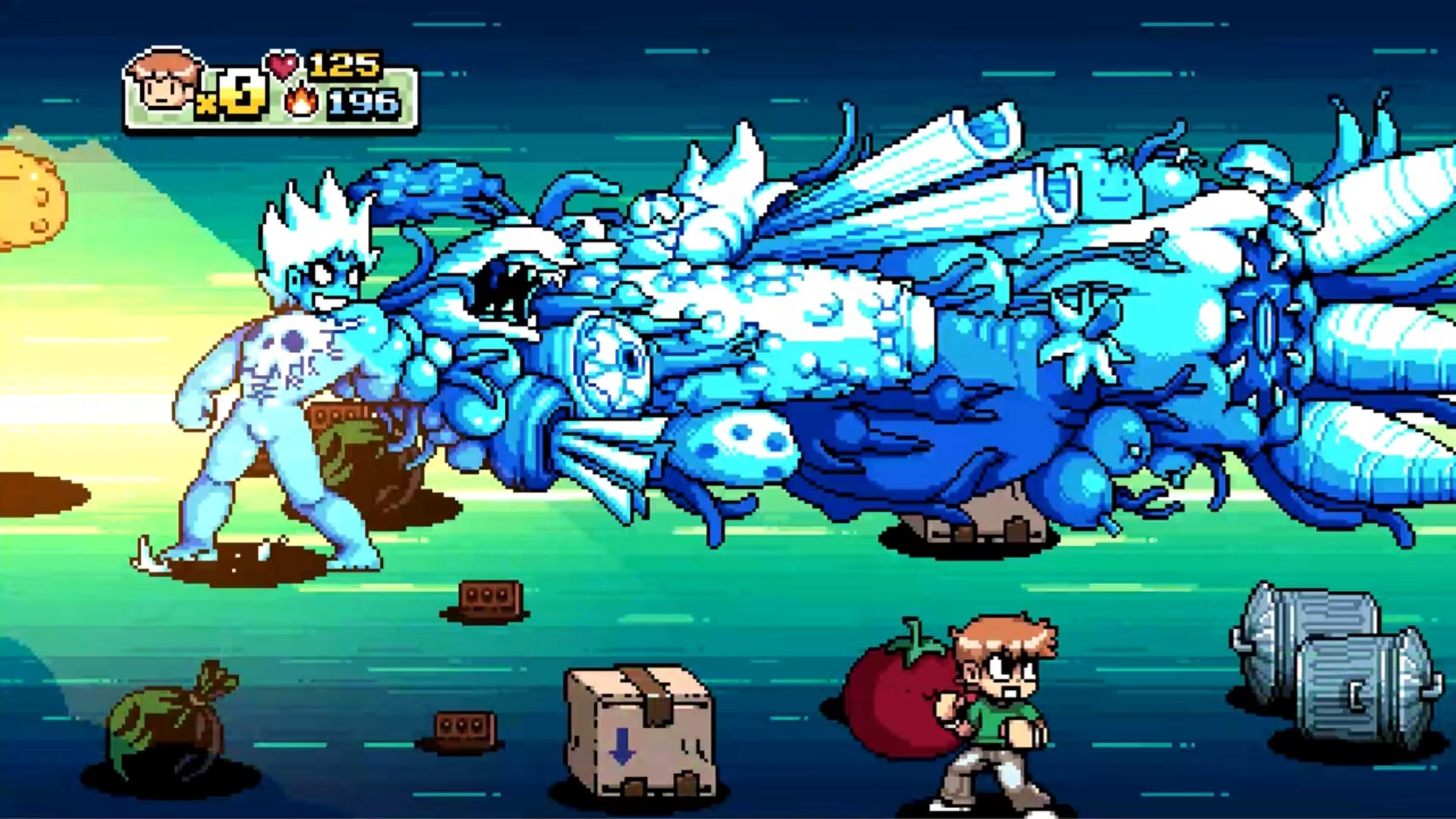
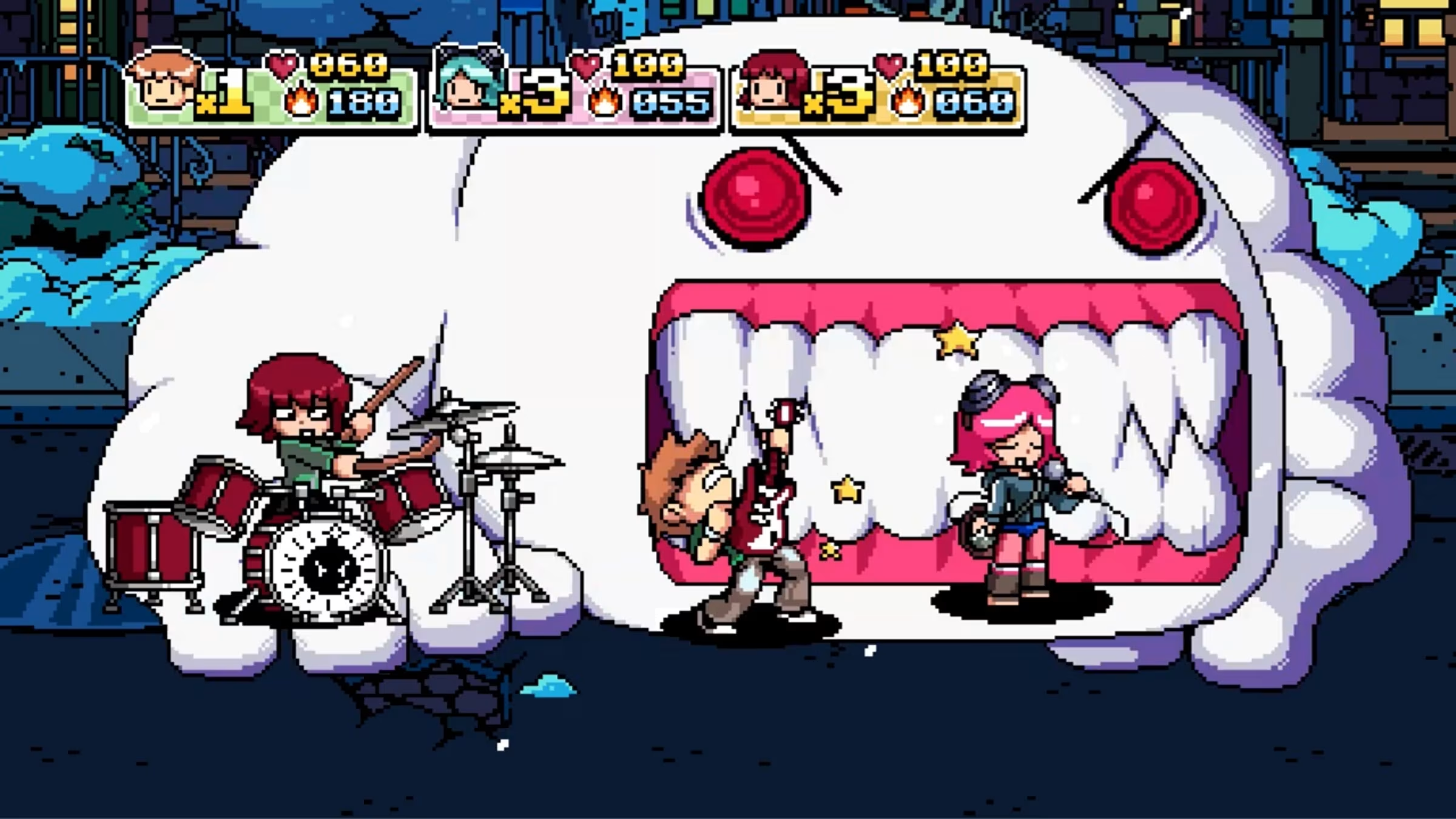
The Complete Edition frames Scott Pilgrim’s world as a bright 2D arcade adventure, with Toronto transformed into a stylized series of streets, venues, shops, and more unusual locations. The presentation draws from the graphic novels, pairing pixel-art environments with a deliberately retro game feel. It is a setting where a band rehearsal, a neighborhood storefront, and a showdown with a larger-than-life rival can all fit within the same exaggerated universe.
This version includes the original DLC, expanding the available content and bringing additional characters into the package. The result is a fuller version of the side-scrolling beat ’em up rather than a stripped-back throwback. Its action is direct and accessible, but the game also layers in experience, stat growth, shops, and unlockable moves that reward returning to earlier stages.
That mix gives the game an identity beyond simple nostalgia. Toronto is not presented as a realistic city map; it is a lively pixel-art backdrop for a story about romance, band life, rivalries, and increasingly chaotic fights. The visual tone remains playful even when the enemy crowds become demanding.
Scott Pilgrim’s Quest to Defeat Ramona Flowers’ Seven Evil Exes
Scott Pilgrim is the bassist for Sex Bob-omb, and his life changes when he falls for Ramona Flowers. Winning her affection comes with an unusual condition: he must defeat her seven evil exes. That premise drives the adventure from one confrontation to the next, with each former partner serving as a distinct boss encounter.
Ramona Flowers is central to the story, but the journey also involves Scott’s friends and bandmates. Kim Pine and Stephen Stills join the larger cast, while the game’s locations keep moving through a version of Toronto shaped by graphic-novel style and pop-culture energy. There are humorous exchanges and strange turns along the way, including the shift from ordinary city spaces to subspace highways.
The story’s structure suits an arcade brawler well. Stages build toward confrontations with Ramona’s exes, allowing the game to alternate between clearing out groups of enemies and facing a more focused challenge. Scott’s pursuit gives the action a clear purpose without overwhelming the game’s light, cartoonish tone.
The Beat ’Em Up Combat Behind the Graphic-Novel Charm
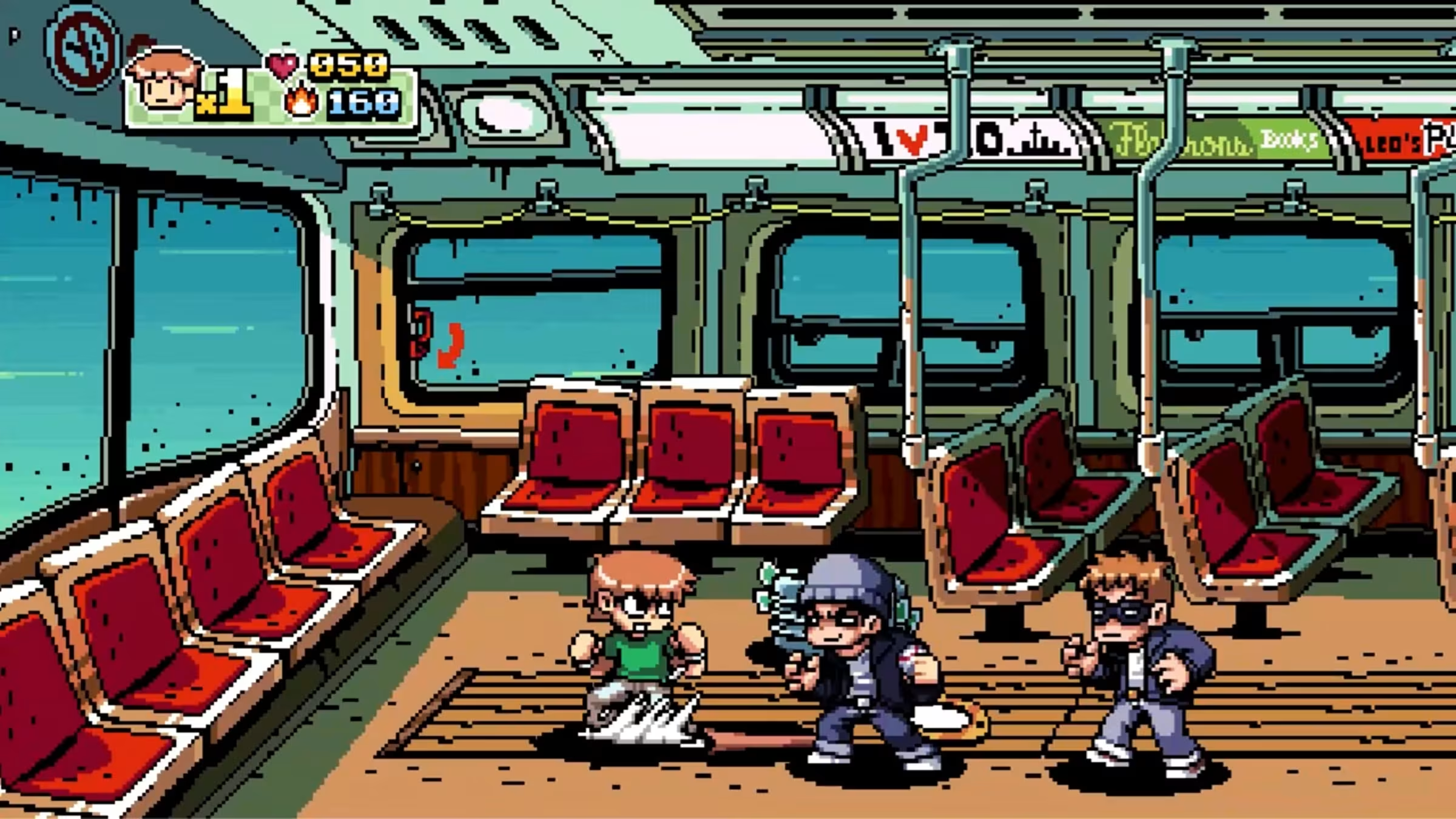
Under the pixel-art style is a classic 2D beat ’em up built around side-scrolling action. Fighters punch, kick, and use special moves while working through groups of enemies. Encounters can become crowded, which encourages players to pay attention to positioning rather than relying only on repeated attacks.
Objects in the environment can be picked up and thrown, adding another option when enemies begin to surround the player. Coins collected during the adventure feed into the game’s progression systems, while experience helps characters level up. As fighters grow stronger, they can improve their stats and learn more powerful techniques.
Boss battles against the seven evil exes give the combat its major peaks. These encounters are designed as more concentrated tests than ordinary enemy groups, asking players to apply the moves and upgrades they have gathered along the way. The game does not abandon its arcade roots, but its light RPG elements make a difference: stronger stats, better moves, and well-chosen shop purchases can make later fights more manageable.
Local and online co-op for up to four players also changes the rhythm of the action. A crowded screen can be more chaotic with friends, yet teamwork creates practical advantages during difficult stages and boss fights.
Playable Fighters and Distinct Fighting Styles
The playable lineup includes Scott, Ramona, Kim Pine, Stephen Stills, and Knives Chau. Each fighter has unique abilities and moves, giving players reasons to experiment rather than treating every character as a cosmetic alternative. Scott Pilgrim’s central role makes him the natural starting point for the story, but the wider group supports different approaches to the game’s brawling.
Kim Pine, Stephen Stills, and Knives Chau broaden the roster around Scott and Ramona, while the Complete Edition’s bundled DLC contributes to the expanded selection of characters and content. Because fighters can gain experience, improve stats, and unlock skills, a character’s development matters as much as their initial fighting style.
This helps replay value in a straightforward way. Revisiting stages with another character means engaging with a different move set while continuing to use the same core systems of leveling, shops, objects, and co-op coordination. Players who enjoy arcade combat with visible character growth have more to work with than a single run through the story.
5 Practical Ways to Build a Stronger Fighter
- Throw what you find. Pick up available objects and hurl them at enemies for extra damage when standard punches and kicks are not enough.
- Coordinate in co-op. Work with other players to cover busy areas, use team-up attacks, and avoid leaving one fighter isolated in a crowd.
- Revive allies quickly. A fallen teammate does not have to stay out of the action; helping allies recover keeps the group stronger during hard encounters.
- Revisit earlier stages. Returning to previous levels can provide more money and experience when a later stage or boss proves difficult.
- Favor permanent upgrades. Shops offer food, stat-boosting items, and combat training, but permanent upgrades should take priority when building long-term power.
These systems make persistence useful rather than repetitive. Earlier areas are not merely places left behind after completion; they can become training grounds for earning resources, improving a favorite fighter, and preparing for a tougher fight ahead.
Switch Release Details for Complete Edition
For players drawn to retro presentation, cooperative brawling, and graphic-novel-inspired humor, the Switch release combines a simple arcade foundation with enough leveling and shop progression to encourage repeat visits to Toronto’s pixelated streets.