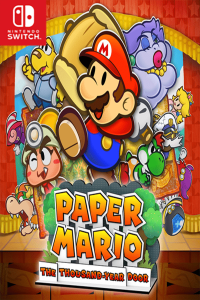
Paper Mario: The Thousand-Year Door Switch NSP XCI
Report Link Error
Select the broken download file, then submit the report.
Screenshots
About Game
Paper Mario: The Thousand-Year Door Switch NSP XCI brings Mario back to a distinctive role-playing adventure built around paper-crafted places, theatrical battles, and a mystery that begins in Rogueport. Released for Nintendo Switch on May 23, 2024, this USA-region RPG and adventure title from Nintendo gives the journey a new setting for players who want humor, exploration, and a steadily unfolding quest for ancient treasure.
A Return to Rogueport and the Thousand-Year Door
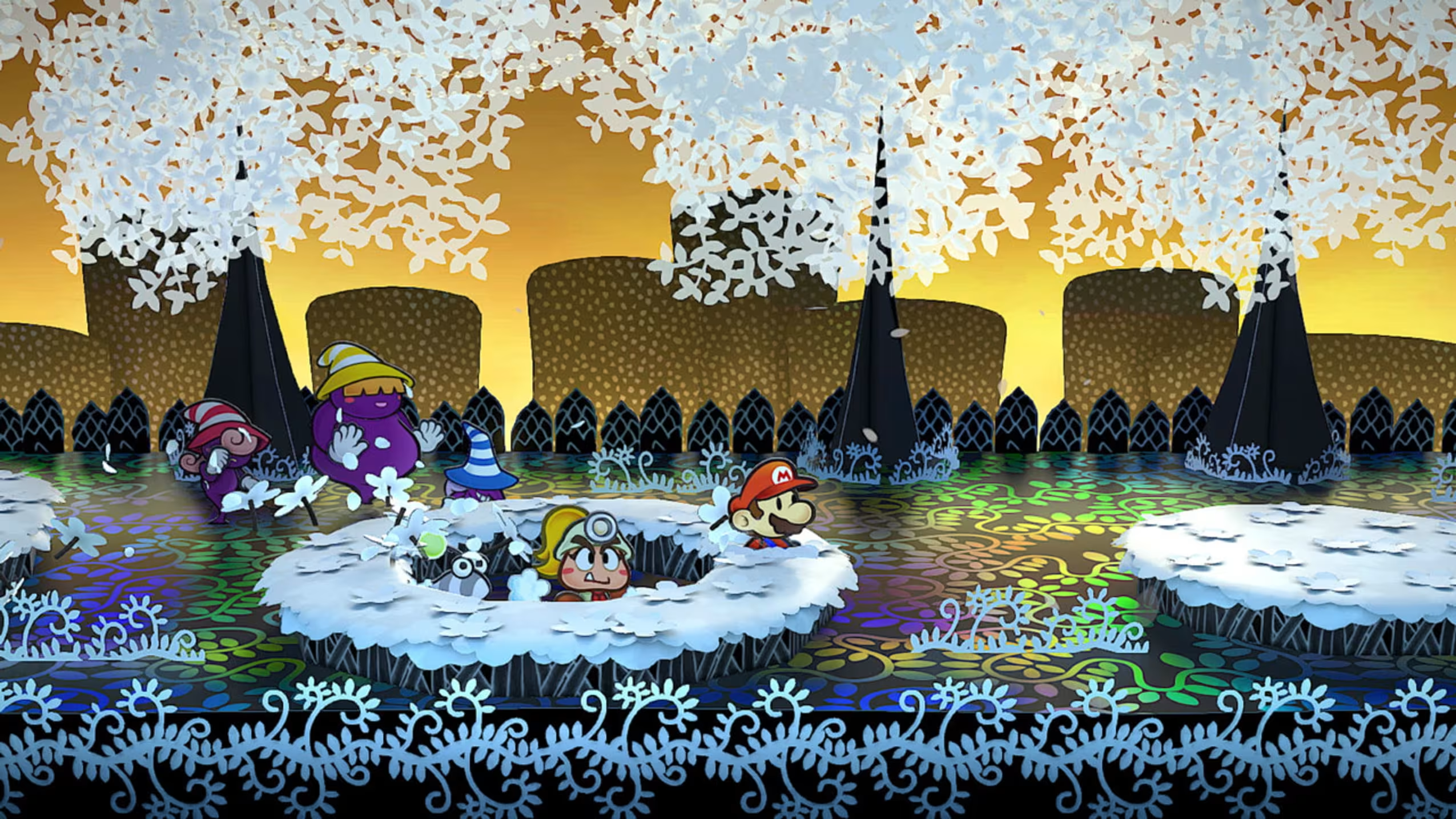
Rogueport is an appropriately unusual place for this story to begin. It is dark, pirate-infested, and closely tied to the rumor of immense riches hidden beyond the legendary Thousand-Year Door. The town gives the adventure an atmosphere that is more curious than comfortable: a place where old secrets, strange characters, and larger ambitions are never far apart.
The quest gradually expands outward from Rogueport into a range of vibrant worlds, but the ancient door remains its central pull. It is more than a distant landmark. The door represents the unanswered question that drives the journey, with its secrets linked to prophecy, hidden power, and an evil known as the Shadow Queen. That mix of playful presentation and ancient danger gives the adventure room for comedy, surprises, and more dramatic turns.
The 2024 Switch release preserves an adventure whose appeal lies in the way its paper style informs the entire experience. Environments resemble crafted stages, characters move with a deliberately flat charm, and battles are presented as performances for a live crowd. The result is a role-playing game with a strong sense of place rather than a simple sequence of fights and destinations.
Mario’s Quest Begins with Peach’s Treasure Map
Mario’s mission starts when Princess Peach finds a mysterious treasure map in Rogueport. The map points toward the Thousand-Year Door and the wealth said to lie beyond it. Before the mystery can be properly explored, Peach disappears, leaving Mario with two connected goals: find the door’s hidden riches and rescue her.
The search leads to seven Crystal Stars. Each is protected by formidable opponents and located in a different world, making their collection the main structure of Mario’s quest. The Stars are not merely collectibles; they are needed to reveal the ancient door’s secrets. Their importance also puts Mario in conflict with the X-Nauts, an organization led by Lord Crump and pursuing the same source of power.
This setup gives the story a useful momentum. Treasure, rescue, rival factions, and a sealed evil all move together, while the journey keeps room for memorable characters and unexpected developments. The map launches the adventure, but the growing truth behind the door gives it a larger purpose.
Partners That Change Exploration and Battles
Mario does not face Rogueport’s mysteries alone. His colorful partners are essential to both the game’s personality and its progression. Each one brings distinct field abilities that help Mario interact with the world, solve obstacles, and reach places that would otherwise remain inaccessible.
Those skills matter because exploration is not treated as downtime between major events. Hidden areas, environmental challenges, and routes through the game’s varied locations often depend on recognizing which partner ability fits the problem in front of Mario. This makes recruitment feel meaningful: a new companion is also a new way to read the environment.
Partners also bring individual battle skills to turn-based encounters. Their presence broadens the tactical choices available to the player, especially when combined with Mario’s own actions, badges, and special moves. The game’s role-playing systems remain approachable, but they reward attention to how a party’s abilities can be used in different situations.
How the Audience System Shapes Each Fight
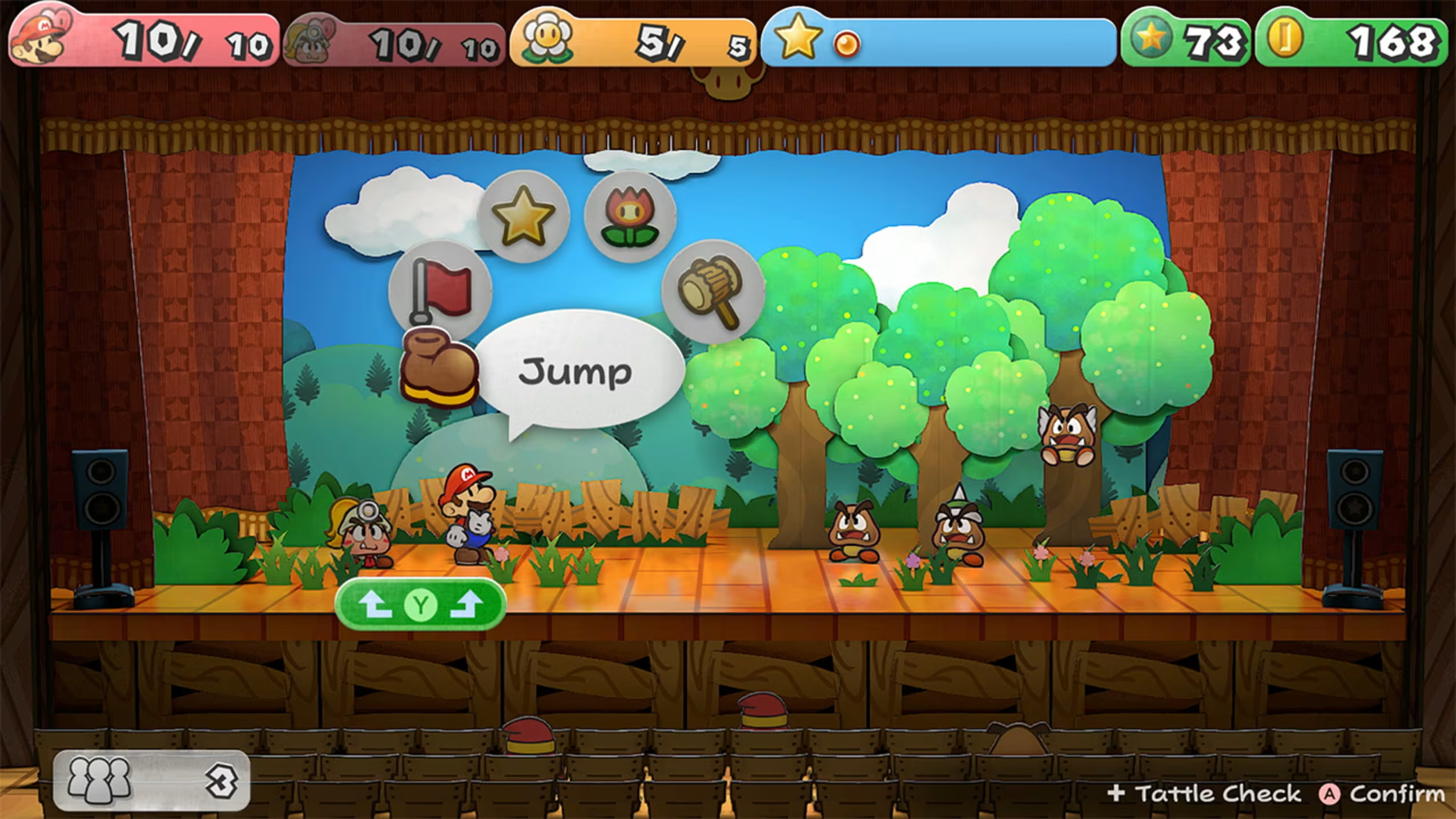
Paper Mario battles are staged like live theater. Turn-based combat is joined by action commands, which ask for timely button presses to improve attacks or strengthen defense. This adds a small but important physical element to each choice: selecting a move is only part of the task, while executing it well can affect the result.
The audience system reinforces the performance theme. Spectators react to what happens in battle, offering cheers when Mario performs well or boos when he does not. Their reactions make combat feel less isolated from the world’s playful stage presentation and give each encounter an extra layer of pressure and personality.
Badges and special moves add strategic flexibility. Collecting badges lets players adjust Mario’s abilities and stats, while careful use of moves can help in tougher battles. For players who enjoy role-playing games that ask for both planning and timing, the blend of command selection, action inputs, and audience response provides a lively rhythm.
Paper Transformations and Environmental Puzzles
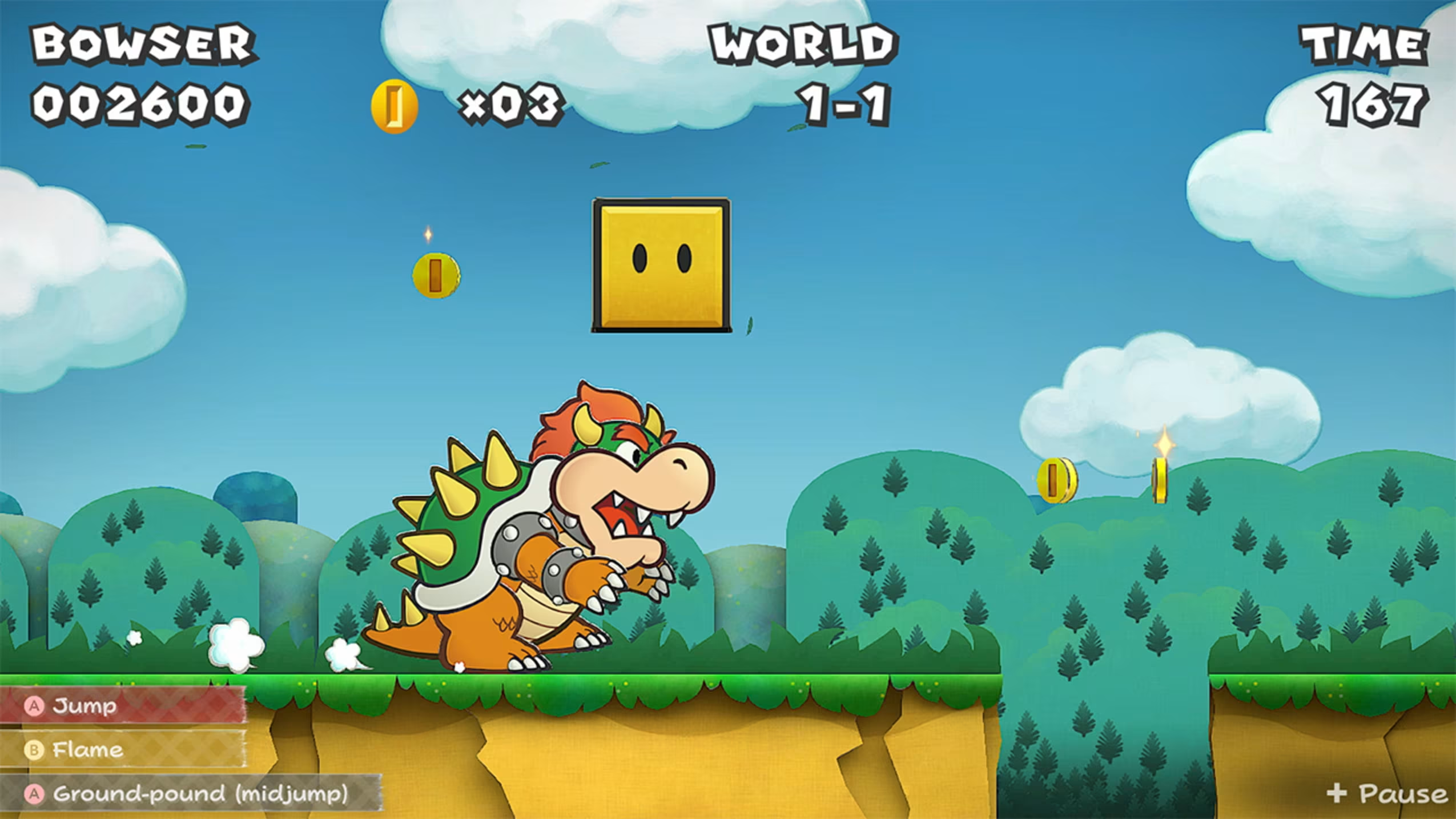
The paper aesthetic is also a practical part of the adventure. Mario can take on paper-themed forms, including a paper airplane, a paper boat, and a rolling form. These transformations are used to access new areas and work through environmental puzzles, turning the visual concept into a tool for exploration.
That connection between appearance and function is one of the game’s clearest strengths. Mario does not simply travel through paper-crafted scenery; he interacts with it according to the flexible, folded logic of the world. A transformation can open a route, cross a barrier, or reveal a hidden possibility that is not obvious at first glance.
The combination of partner abilities and paper forms supports steady progression while encouraging players to look around closely. Secrets are part of the appeal, and returning attention to the environment can be rewarding when a new ability suggests a fresh solution. Paper Mario: The Thousand-Year Door Switch NSP XCI is therefore suited to players who like their role-playing adventures to include puzzle-solving and exploratory curiosity alongside combat.
7 Things to Prioritize During the Adventure
- Recruit partners early. New companions bring personality to the journey, but their distinct field and battle abilities are also important tools for progress.
- Use field abilities thoughtfully. When a path, object, or obstacle seems unusual, a partner’s skill may provide the answer or uncover a route forward.
- Practice action commands. Timely button presses can increase damage or improve defense, making them valuable in the game’s turn-based fights.
- Explore for secrets. The world contains hidden areas and rewards, and careful exploration works naturally with the game’s puzzle-focused design.
- Collect badges. Badges can customize Mario’s abilities and stats, offering more options when shaping a battle approach.
- Test paper forms on obstacles. Airplane, boat, and rolling transformations are central to reaching areas and solving environmental puzzles.
- Keep pursuing the Crystal Stars. The seven Stars are the key to the Thousand-Year Door’s secrets and the main objective linking the adventure’s worlds together.
With English, Japanese, Spanish, French, German, Italian, Dutch, Korean, Chinese, and Traditional Chinese language options, the game supports a broad range of players. Its mix of accessible paper charm, action-command combat, partner-driven exploration, and collectible customization makes it a fitting choice for audiences who enjoy RPG progression without losing the pleasure of a humorous, theatrical adventure.
Recommended Similar Games
 New Tales from the Borderlands Switch NSPView Game
 Braid Anniversary Edition Switch NSPView Game
 Agatha Christie – Hercule Poirot: The First Cases Switch NSPView Game
 Plan B from Outer Space: A Bavarian Odyssey Switch NSPView Game
 Sesame Street: Friends and Fun Switch NSPView Game
 Trine Series 1-2-3 Switch NSPView Game
