Overcooked 2 Switch NSP XCI
Report Link Error
Select the broken download file, then submit the report.
Screenshots
About Game
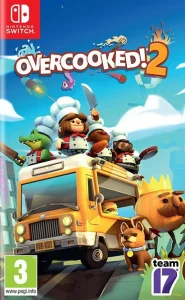
Overcooked 2 Switch NSP XCI is a fast-moving cooking game built around one deceptively simple idea: a kitchen only works when its chefs work together. Released on August 7, 2018, this Team 17-published, Ghost Town-developed party, strategy, and simulation game turns chopping, frying, plating, and washing dishes into a demanding shared exercise. The Nintendo Switch setting suits its quick sessions, local co-op energy, and frantic attempts to keep orders moving before the kitchen falls apart.
Overcooked 2 on Nintendo Switch: A Culinary Teamwork Challenge
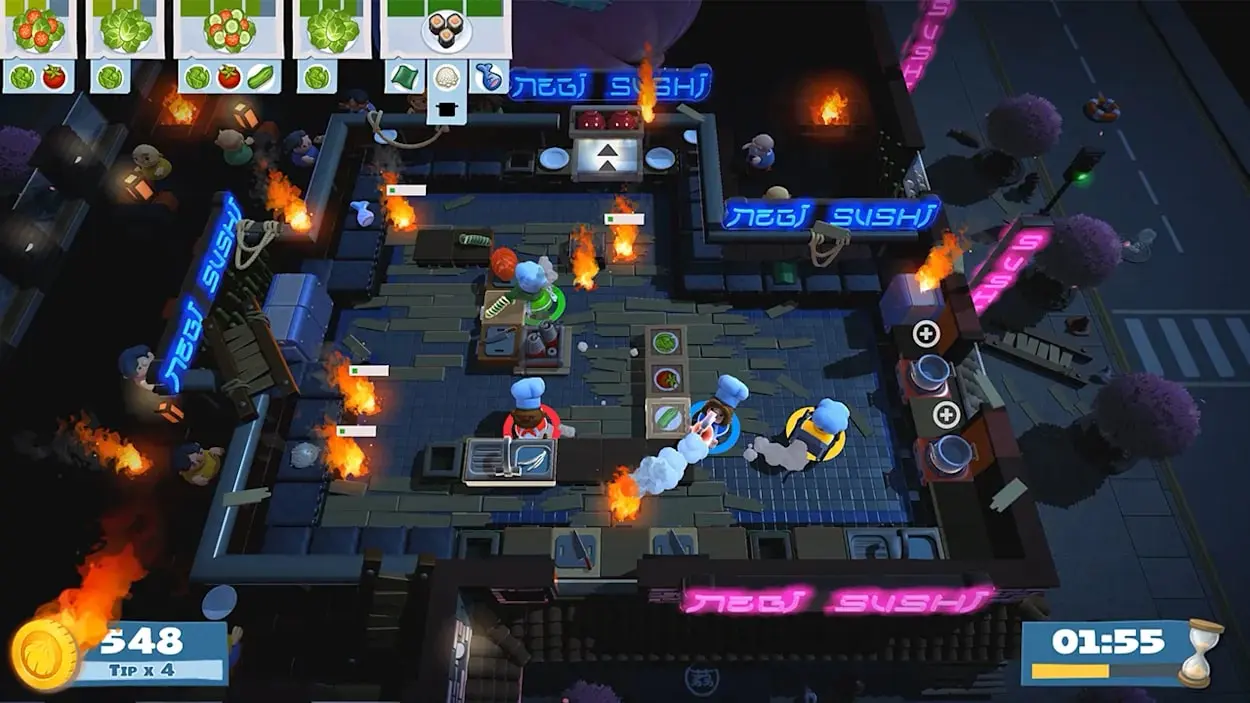
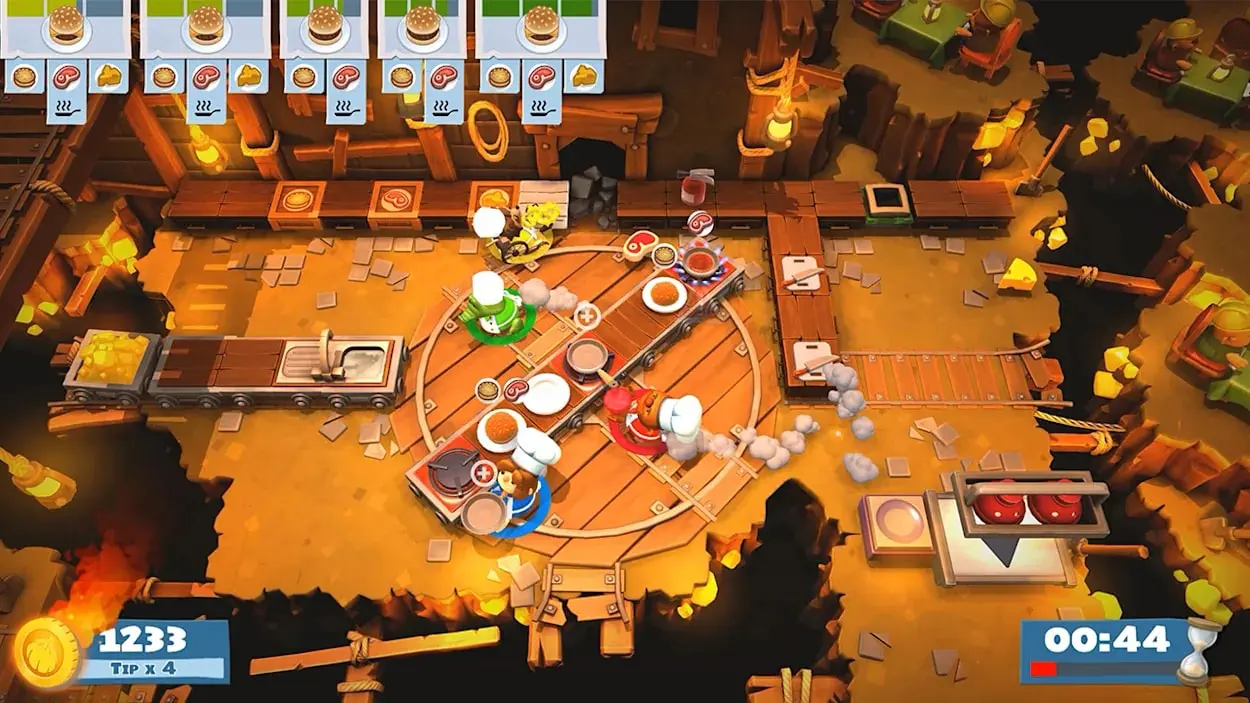
Cooking in Overcooked 2 is not a quiet, methodical pastime. Orders arrive under time pressure, ingredients must be prepared in the correct sequence, and finished dishes need to reach their destination without unnecessary delay. A team may be chopping vegetables, cooking food, assembling plates, and cleaning dishes all at once. The work is straightforward in isolation, but kitchens are designed to make coordination difficult.
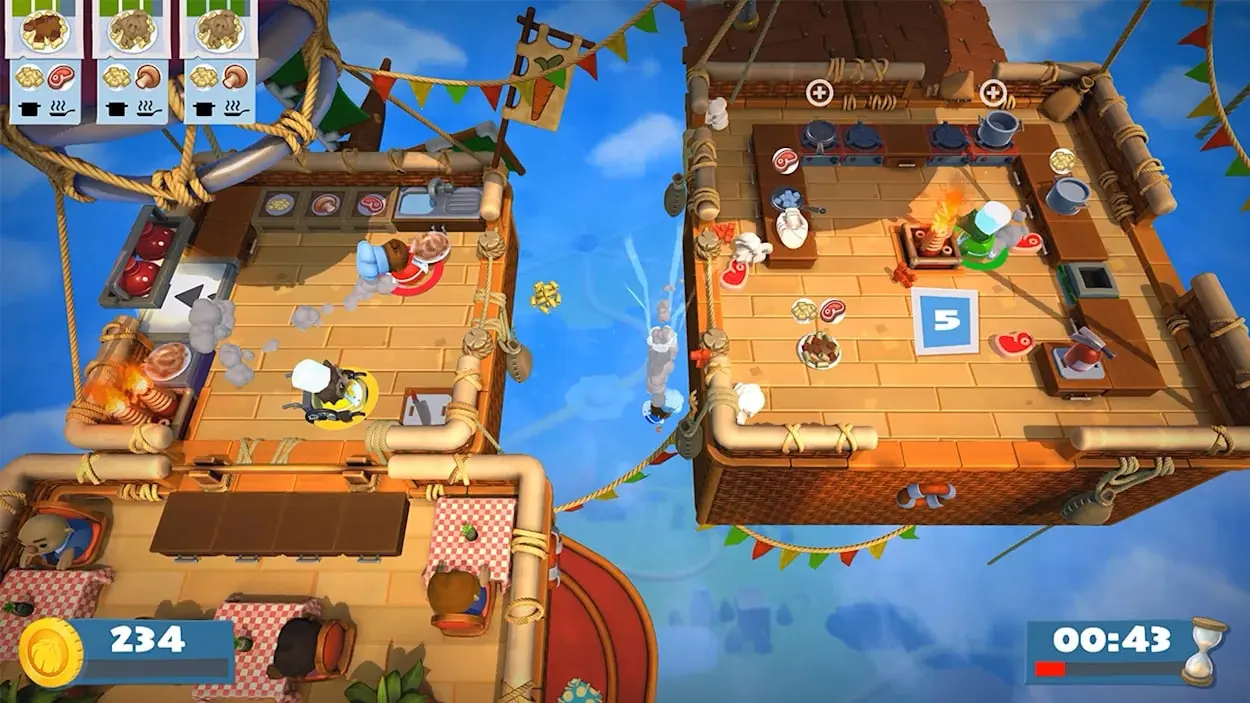
That is where its party-game character takes shape. Moving platforms, changing layouts, gaps between workstations, and hazards such as fire can interrupt an otherwise sensible plan. A route that was clear seconds earlier may no longer be useful. Players have to react, reorganize, and keep service going rather than wait for ideal conditions.
The result is a cooking teamwork game with an intentionally lively rhythm. It can be played solo, but its central strengths are clearest when several chefs share a kitchen and try to solve problems in real time. The game supports up to four players in couch co-op and online multiplayer, making it a practical Nintendo Switch party game for groups that enjoy talking through tasks, improvising under pressure, and laughing at avoidable mistakes.
The Onion Kingdom Faces the Return of the Unbread
The campaign’s premise keeps the tone light. The Onion Kingdom is threatened by the returning Unbread, an army of zombie bread. The Onion King and his dog Kevin call on the chefs to respond, sending them across the land to develop their cooking abilities and confront the ravenous threat.
It is a deliberately playful Overcooked 2 story, less concerned with dramatic detail than with giving the journey a cheerful sense of purpose. Whimsical characters and changing kitchen environments support that mood. The threat may involve zombie bread, but the game’s personality remains bright and silly rather than grim.
Progression also gives the campaign a reason to keep moving forward. New chefs and vibrant kitchen environments can be unlocked as players advance, while fresh layouts and recipes ask teams to revise habits that worked in earlier stages. The Onion Kingdom is not simply a backdrop; it is a setting for a series of increasingly awkward culinary workplaces.
Why Communication Matters in Four-Chef Kitchens
Four-player co-op can turn a kitchen into a carefully managed production line, or into a traffic jam. The difference is often communication. A quick call that tomatoes are needed, that rice is ready, or that the sink is full can prevent several players from chasing the same task while another crucial job goes untouched.
In Overcooked 2 multiplayer, useful communication is usually brief and specific. Teams benefit from announcing intentions as well as requests: who is taking dishes, who is cooking, and who is preparing the next ingredients. That clarity matters when multiple orders are active and the room itself is changing around the players.
Role division helps, but it should not become rigid. One chef may focus on chopping while another manages cooking stations, yet a sudden shortage of clean plates can require everyone to adjust. Strong four player co-op groups balance responsibility with awareness. They know their assigned job, but they also notice when the kitchen needs help elsewhere.
The Throw Mechanic: Faster Ingredient Passing Across the Kitchen
The ability to throw ingredients is one of the clearest additions to a team’s workflow. Instead of carrying an item around a long route, a chef can send it across a gap or toward a teammate on the other side of the kitchen. Used well, the Overcooked 2 throw mechanic reduces travel time and keeps stations supplied.
Ingredient passing is especially valuable when a kitchen separates preparation areas from cooking or plating areas. A player can continue chopping while another catches the ingredient and moves directly into the next step. This creates a more continuous chain of work, which is vital when orders are stacking up.
Throwing is not a replacement for awareness. Teammates need to be ready for the pass, and the team still has to account for where items are needed next. Still, it is an efficient co-op strategy when distance, moving platforms, or divided rooms threaten to slow the kitchen down. A well-timed throw can save more than a few steps.
From Sushi to Pizza: Recipe Variety in Overcooked 2
Recipe variety keeps the kitchens from becoming routine. Overcooked 2 includes dishes such as sushi, pizza, smoothies, and steamed buns, each bringing different preparation requirements. Teams need to learn which ingredients must be chopped, cooked, fried, assembled, or placed on a plate before an order can be served.
That variety changes how a group organizes itself. Sushi may place emphasis on preparing and combining ingredients efficiently, while pizza can demand attention to a different sequence of preparation and cooking. Smoothies and steamed buns further shift the workflow. The point is not simply to work faster; it is to recognize the steps that each recipe requires and build a system around them.
As new recipes and kitchen designs appear, players are encouraged to revisit familiar principles in new situations. Good communication, clean dishes, and smart movement remain important, but the details change. That ongoing adjustment gives repeat sessions a practical appeal, particularly for groups looking to improve a previous performance or develop smoother routines together.
7 Practical Overcooked 2 Strategies for Smoother Service
- Keep talking: Call out needed ingredients, active tasks, and changes in plan. Short, clear messages help the team respond before an order becomes a problem.
- Divide the work: Assign responsibilities such as chopping, cooking, plating, or washing dishes, then adjust those roles when the kitchen’s needs change.
- Prepare ahead: Pre-chop ingredients when there is room and time to do so. A ready supply can prevent delays when several orders arrive close together.
- Watch the orders: Prioritize dishes that are close to expiring rather than treating every request as equally urgent.
- Wash immediately: Clean plates are part of the service chain. Leaving dishes in the sink for too long can stop completed food from being served.
- Use the throw: Send ingredients to teammates across gaps or long routes to reduce wasted movement and maintain a steady workflow.
- Plan the route: Learn a kitchen’s layout quickly, identify likely bottlenecks, and avoid colliding with teammates when space is limited.
For players who enjoy cooperative challenges, Overcooked 2 Switch NSP XCI offers a colorful, demanding setting where successful service depends on shared attention. Its appeal lies in the constant negotiation between speed and organization: the team must move quickly, but it must also move with purpose.