Moving Out Switch NSP
Report Link Error
Select the broken download file, then submit the report.
Screenshots
About Game
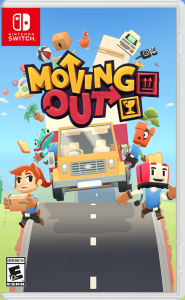
Moving Out Switch NSP turns a familiar task into a fast, deliberately unruly game of planning, lifting, and improvisation. Set around the moving jobs of Packmore, it casts players as Furniture Arrangement & Relocation Technicians tasked with getting household belongings into a truck before time runs out. The premise is light and comic, but the work can become surprisingly demanding when large furniture, awkward layouts, hazards, and an unpredictable physics system collide.
Physics-Based Moving That Turns Chores Into Chaos
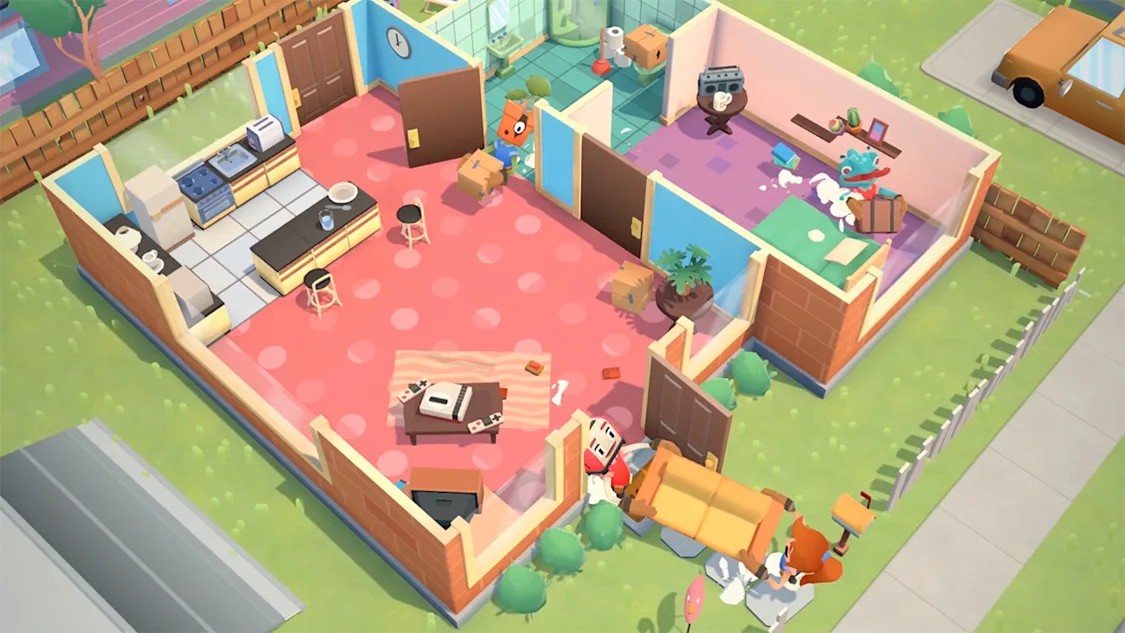
The basic routine in Moving Out is easy to understand: pick up an item, carry it through the level, and load it onto the moving truck. What complicates that simple goal is the game’s physical comedy. Furniture can be grabbed, dragged, thrown, bumped into walls, or sent through a route that looked sensible until a tight corner or staircase proved otherwise.
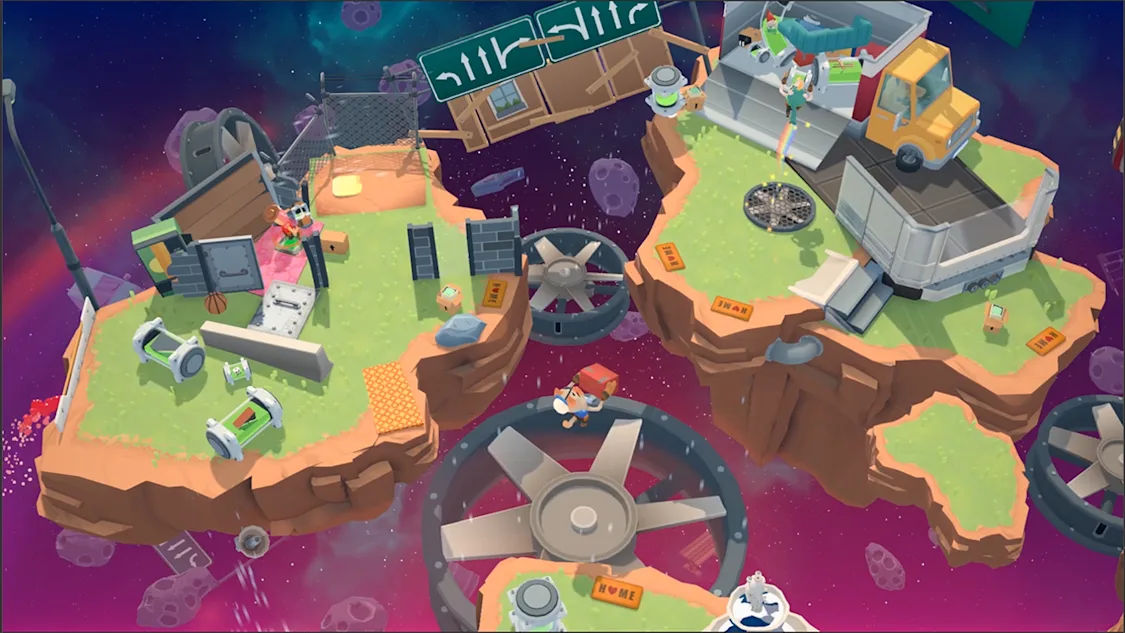
These physics-based puzzles make ordinary objects feel like moving problems rather than passive cargo. A small box may be quick to carry, while a couch, bed, or other large item can demand more room, better positioning, and a clearer route. Narrow doorways, stairs, fire, ice, and other obstacles make each job less about simply following a straight path and more about adapting to the space in front of the team.
The atmosphere is intentionally playful rather than realistic. A move can begin with a careful attempt to preserve a clean route, then dissolve into thrown furniture and hurried recoveries when the clock becomes a concern. That tension between organized work and comic disorder gives furniture moving its game-like energy. The goal remains clear, but the journey to the truck rarely stays neat for long.
How Cooperative Play Changes Every Moving Job
Moving Out supports local multiplayer for up to four players, and cooperative gameplay changes the character of every job. One person can focus on light items while others handle a bulky object, but success depends on everyone sharing an understanding of where items need to go and which route is open.
Some furniture requires two people to carry, turning positioning into a shared task. Players need to move at the same pace, line up around corners, and avoid blocking each other at doors or stairways. A rushed attempt can leave a large item stuck, while a clear call between partners can get it outside quickly. This is where co-op coordination becomes more important than individual speed.
Four-player couch co-op also gives the game much of its comic appeal. One player may be clearing a path, another may be delivering boxes, and two more may be trying to wrestle a larger object through an inconvenient room. The resulting confusion is part of the experience, especially when a sensible plan is replaced by an emergency throw through a window. Solo play still keeps the core challenge intact, but local multiplayer makes each moving job feel more like a shared scramble.
Creative Routes: Windows, Levers, and Environmental Solutions
The game encourages players to question the obvious route. A door may look like the intended exit, but it is not always the fastest or most practical option. Windows can provide a direct way out, and tossing an item across a gap can be more useful than carrying it around a longer path. These choices give Moving Out a loose, experimental rhythm.
Environmental puzzles add another layer to that approach. Players can activate levers and use the level itself to create better routes or overcome obstacles. The important skill is not memorizing one perfect solution; it is recognizing that a difficult item may need an unconventional answer. If a passage is too restrictive, a different opening may be available. If a route is dangerous or slow, a throw may save time.
This freedom helps the game avoid feeling like a series of identical delivery tasks. Each new location can ask players to read its layout, assess its hazards, and decide how much order they can afford. Creative solutions may look chaotic, but they can be the most effective form of Moving Out strategy.
A 6-Step Plan for Loading the Truck Efficiently
- Inspect first: Before carrying anything, look over the layout for doorways, stairs, hazards, windows, and possible shortcuts.
- Spot difficult cargo: Identify large or awkward furniture early, especially pieces that may need two players or a wider route.
- Assign roles: In cooperative play, let players divide light-item deliveries, path clearing, and shared carrying tasks instead of crowding the same space.
- Clear the route: Move smaller objects and avoid leaving furniture in narrow passages where it can block the team.
- Use shortcuts: Break away from the most obvious path when windows, throws, levers, or other environmental solutions offer a faster option.
- Load before time expires: Keep the truck in mind throughout the job; every item still needs to reach it before the timer ends.
These Moving Out tips are practical because they work with the game’s design rather than against it. Careful preparation helps, but players should remain ready to change plans when a route becomes clogged or a throw solves a problem more quickly than a careful carry.
Hidden Objectives and Bonus Challenges in Each Job
Completing a move is not the only reason to return to a level. Moving Out includes hidden objectives and bonus challenges within its jobs, giving players extra targets beyond getting the required items loaded. That structure adds replay value for groups who want to improve their performance, search more thoroughly, or approach a familiar layout in a different way.
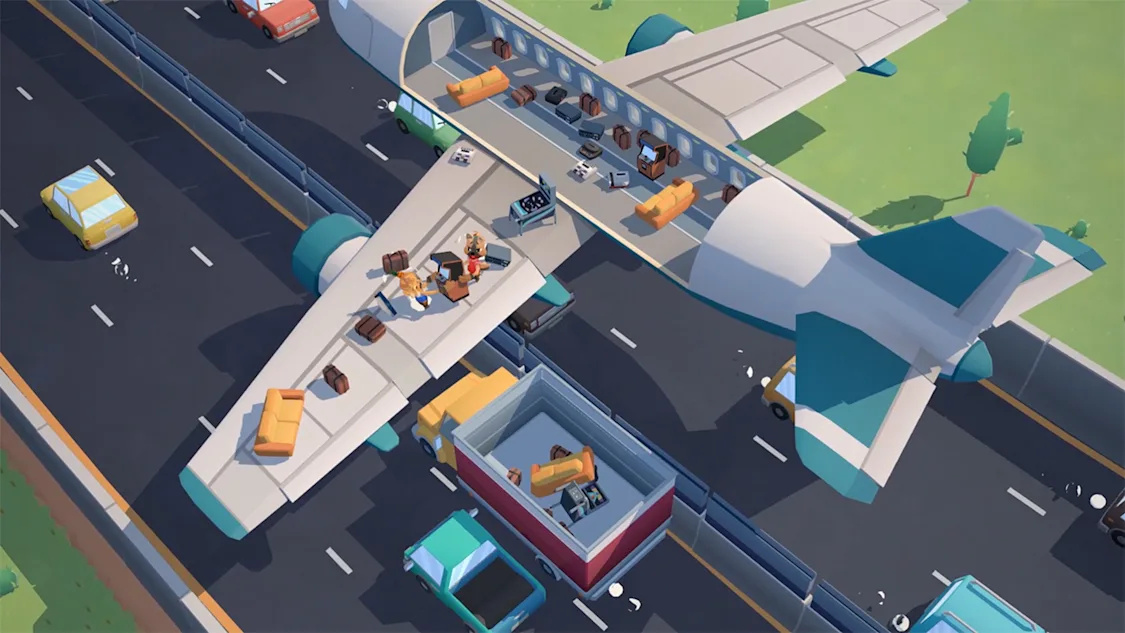
The game’s environments also support revisits because they are built around unusual situations rather than one repeated household setting. Jobs can involve locations with pools, dangerous animals, ghosts, or moving vehicles. Those ideas keep the presentation lively and reinforce the humorous tone of Packmore’s moving business.
Progression also includes new playable characters and appearance customization. Combined with additional objectives, this gives players reasons to continue after the first successful move. It is a suitable fit for players who enjoy cooperative games, quick problem-solving, and the kind of friendly disorder that comes from trying to complete a simple task under pressure.
Moving Out Switch Release and Technical Details
Moving Out Switch NSP refers to the Nintendo Switch release of Moving Out, a Strategy Game developed by SMG Studio and published by Team17. It released on April 28, 2020. The release is Region Free and supports English, German, Spanish, French, Italian, and Russian.
Its compact moving-job structure, accessible lift-and-carry mechanics, and local multiplayer focus make it well suited to short shared sessions as well as repeated attempts at better results. Beneath the cartoonish chaos is a straightforward challenge: assess the room, move the furniture, find a workable route, and get the truck loaded in time.