Mega Man X Legacy Collection Switch NSP

Report Link Error
Select the broken download file, then submit the report.
Screenshots
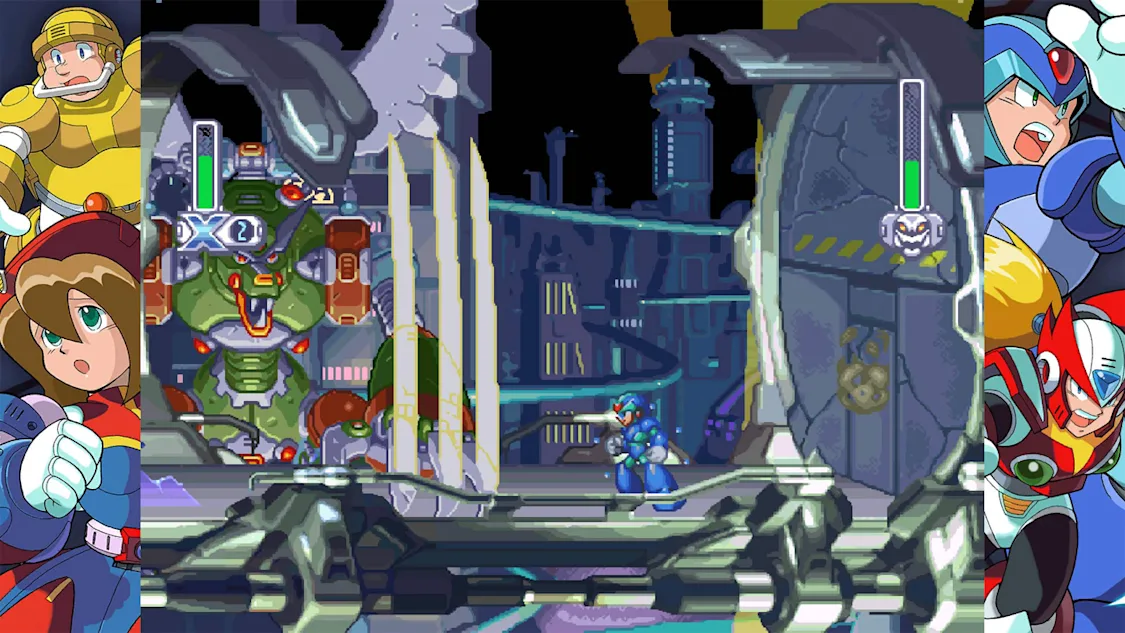
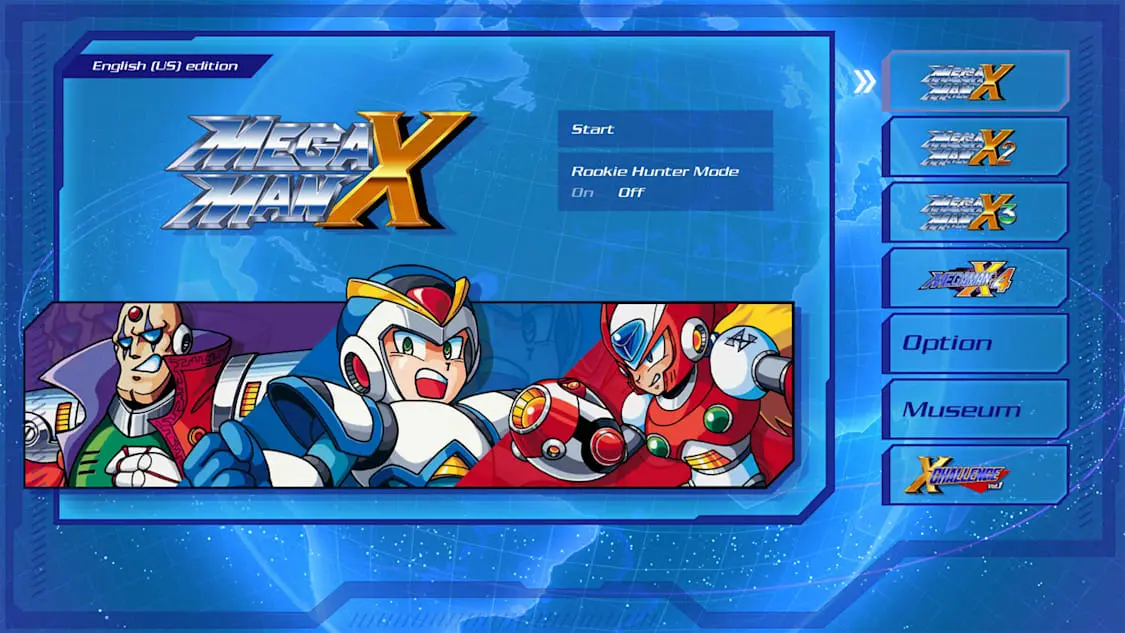
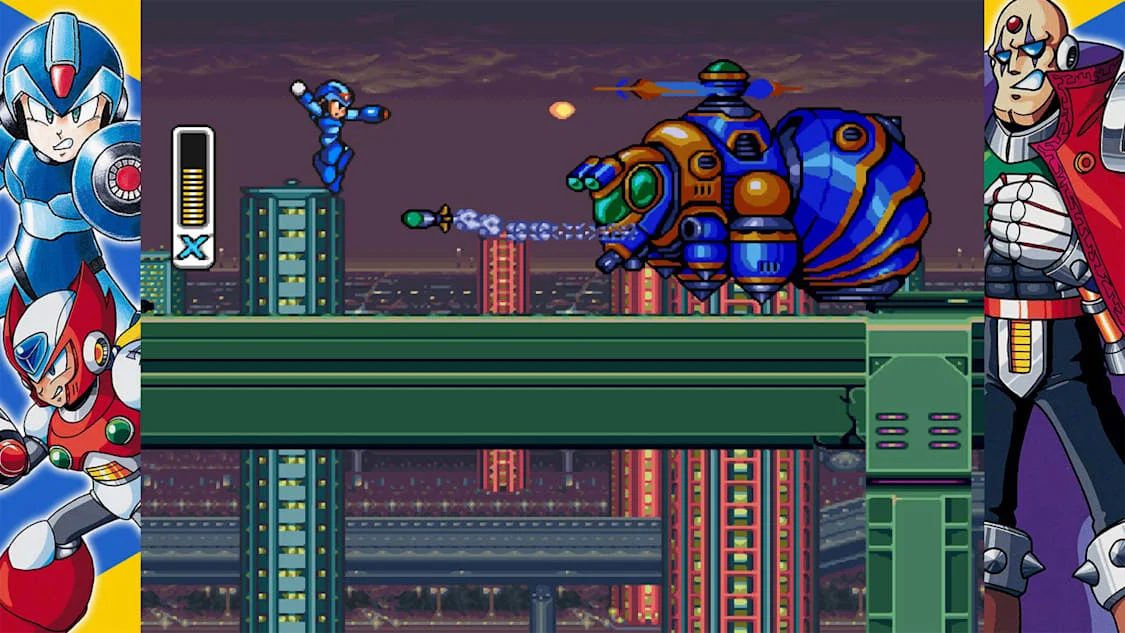
About Game
Mega Man X Legacy Collection Switch NSP refers to Capcom’s action collection for Nintendo Switch, released in the USA on July 24, 2018. Presented in English, it returns to the fast, demanding style associated with the Mega Man X series: hazardous stages, mechanical enemies, precise movement, and boss encounters that reward patience as much as reflexes. The collection also includes Challenge Mode and Museum material, giving its classic action a broader context beyond a single run through the stages.
Mega Man X Legacy Collection on Nintendo Switch: The Essential Overview
Capcom’s 2018 Nintendo Switch release is built around the defining ingredients of classic Mega Man X action. Players guide X through side-scrolling environments filled with enemy fire, gaps, traps, platforms, and powerful Maverick opponents. The pace can be quick, but the games do not simply ask for speed. They ask players to read a room, understand a hazard, and make smart use of the abilities collected along the way.
As a Capcom action collection, it carries a deliberately arcade-like sense of pressure. A difficult section may require repeated attempts, while a boss can become much more manageable once its attack rhythm is understood. That combination of immediate controls and measured learning is central to the Mega Man X identity. The Switch version gives players a way to revisit that formula in a collection that also includes dedicated challenge and historical content.
The atmosphere is futuristic but uneasy. Bright mechanical stages and energetic combat sit beside a story about artificial beings, corruption, and the cost of protecting others. It is an action-focused experience, yet its setting gives the conflict more weight than a simple series of robot battles.
A Future Shaped by Reploids and the Maverick Virus
The Mega Man X Legacy Collection story is set in a future roughly a century after the original Mega Man era. Humans live alongside Reploids, advanced robots capable of free will. That freedom is important to the setting: Reploids are not merely machines following fixed commands, but individuals able to make choices and build lives alongside humanity.
The stability of that world is threatened by the Maverick Virus. The virus causes some Reploids to become violent and destructive, turning a technological promise into a spreading crisis. Those affected become Mavericks, and their actions place both humans and innocent Reploids in danger.
This premise gives the series its distinctive tension. The conflict is not framed only as people fighting robots. It is a struggle within a society where robots possess agency, and where the Maverick threat can corrupt former allies. Themes of identity, sacrifice, and responsibility run beneath the gunfire and platforming, while the growing danger gives each mission a sense of urgency.
X and Zero’s Fight to Protect Humanity
In the center of the conflict are X and Zero. X is an advanced Reploid created by Dr. Light, while Zero is his formidable partner in the battle against Mavericks. Together, they are associated with the Maverick Hunters, the force formed to confront rogue Reploids and contain the violence caused by the virus.
The mission is direct but never trivial: stop the expanding Maverick threat, restore peace, and protect innocent lives. X faces increasingly dangerous opponents across the collection, including enemies who were once allies before corruption changed them. That detail gives the battles a more personal edge. The enemy roster is not simply a line of obstacles; it reflects the damage the virus has done to the world.
For players following the Mega Man X Legacy Collection X and Zero conflict, the appeal comes from that blend of heroic action and escalating stakes. X’s resolve and Zero’s presence help anchor a futuristic struggle that can feel larger than any individual stage, even when the immediate concern is surviving the next platforming sequence.
Why Side-Scrolling Action Still Defines the Mega Man X Experience
The collection’s action platforming remains built on clear, responsive movement. X can run, jump, dash, and wall jump, and those tools are vital rather than decorative. A dash can create the distance needed to escape an attack. A wall jump can turn a vertical obstacle into a route forward. A carefully timed leap can be the difference between reaching safety and falling into a hazard.
Stages test these mechanics through complex environments, perilous gaps, enemy placements, and sustained combat encounters. The familiar Mega Buster supports the series’ run-and-gun foundation, but the gameplay gains another layer after Maverick bosses are defeated. Their special weapons can be acquired, and certain weapons are especially effective against particular enemies. Progression is therefore tied to experimentation as well as execution.
Hidden armor parts and upgrades add another reason to explore. They can strengthen X’s abilities and defenses, helping turn a difficult stretch into a more manageable one. This creates a useful rhythm: push through a challenging level, locate an upgrade or earn a weapon, then return to earlier stages with a better understanding of the available tools. The side-scrolling action stays immediate, but it is supported by choices that reward curiosity and replay.
6 Practical Tips for Tackling Tough Stages and Boss Battles
These games can be demanding, especially when a stage combines narrow platforms, heavy enemy pressure, and environmental hazards. A disciplined approach can make difficult sections less intimidating without removing the need for careful play.
- Watch first. Study enemy attack patterns and stage layouts before rushing forward; repeated movement often reveals the safest opening.
- Practice the hard parts. Treat a difficult jump or hazard sequence as a skill check, and use repeated attempts to improve timing.
- Explore thoroughly. Search stages for hidden power-ups and armor upgrades that can improve X’s options later.
- Build durability. Prioritize health and defensive improvements early when they are available, particularly before demanding encounters.
- Test special weapons. Defeated Mavericks provide new abilities, and learning a boss’s weakness can make a major difference.
- Move with purpose. Use the dash and wall jump for evasion as well as navigation, then replay stages to pursue secrets or better completion times.
Challenge Mode and Museum Features in the Collection
Beyond the main action, Challenge Mode gives players another way to engage with demanding encounters. It is a natural fit for a series where boss battles test reflexes, timing, movement, and weapon choices. Players who enjoy refining their performance can revisit these kinds of tests with a more focused goal than simply progressing through a stage.
The Museum provides a different kind of replay value. Packed with series-related history, it offers space to explore material connected to the Mega Man X world and its legacy. That feature complements the action rather than interrupting it: one side of the collection emphasizes tense platforming and Maverick battles, while the other invites players to spend time with the series’ history.
Mega Man X Legacy Collection Switch NSP is therefore best suited to players who appreciate classic action platforming with a firm challenge curve. Its responsive movement, collectible upgrades, weapon-based strategy, repeatable stages, and added Challenge Mode make it especially rewarding for those willing to learn patterns and return stronger.