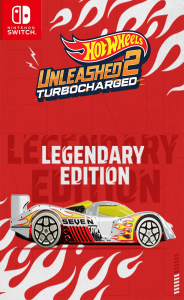
Hot Wheels Unleashed 2: Turbocharged Switch NSP XCI
Report Link Error
Select the broken download file, then submit the report.
Screenshots
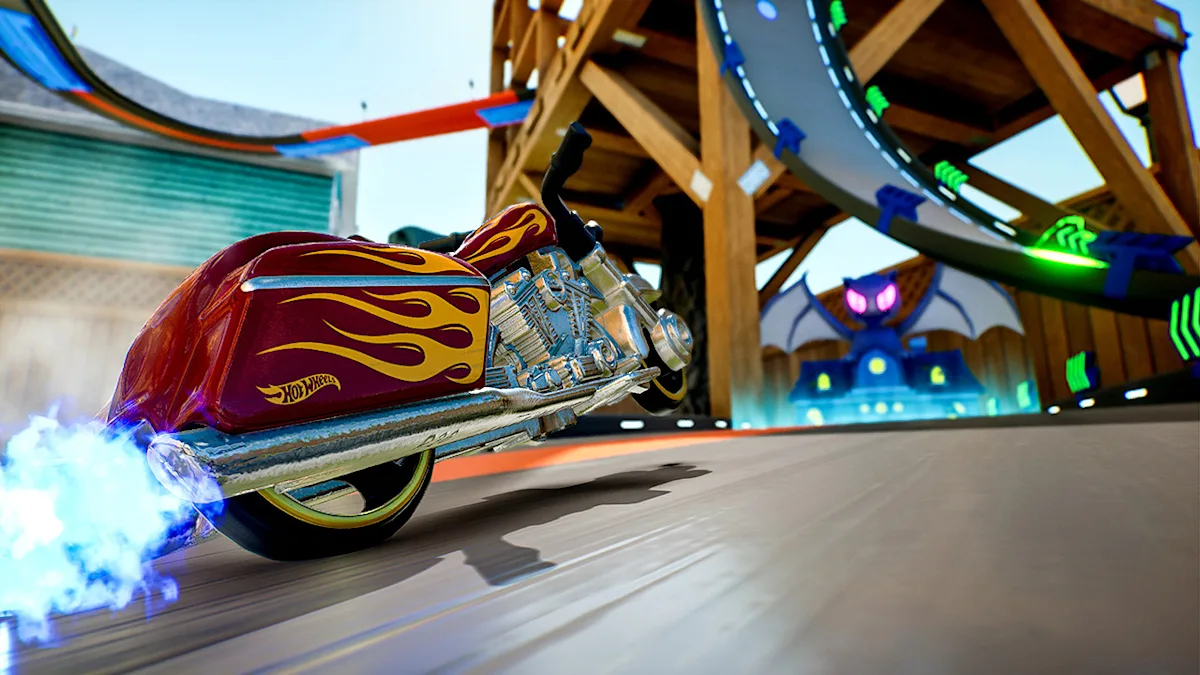
About Game
Hot Wheels Unleashed 2: Turbocharged Switch NSP XCI arrived on Nintendo Switch on October 19, 2023, bringing Milestone’s arcade racing sequel to players in Asia and Japan. Developed and published by Milestone, it is built around small-scale vehicles, oversized environments, stunt-focused routes, and fast competitive racing. Its language selection includes English, French, German, Italian, Japanese, Portuguese, Simplified Chinese, Spanish, and Traditional Chinese.
Hot Wheels Unleashed 2: Turbocharged on Nintendo Switch: Key Game Details
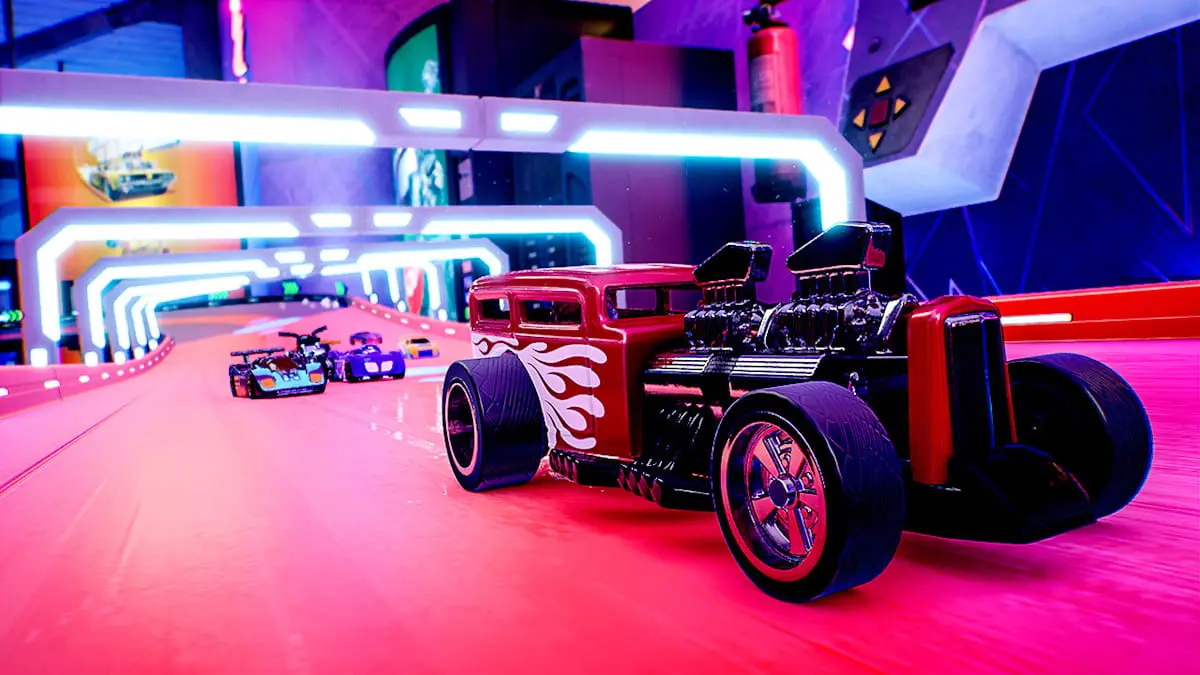
Hot Wheels Unleashed 2 Turbocharged is an arcade racing game rather than a simulation-focused racer. The emphasis is on speed, drifts, boosts, jumps, and dramatic track layouts, with recognizable Hot Wheels vehicles racing through places that turn ordinary spaces into enormous playgrounds.
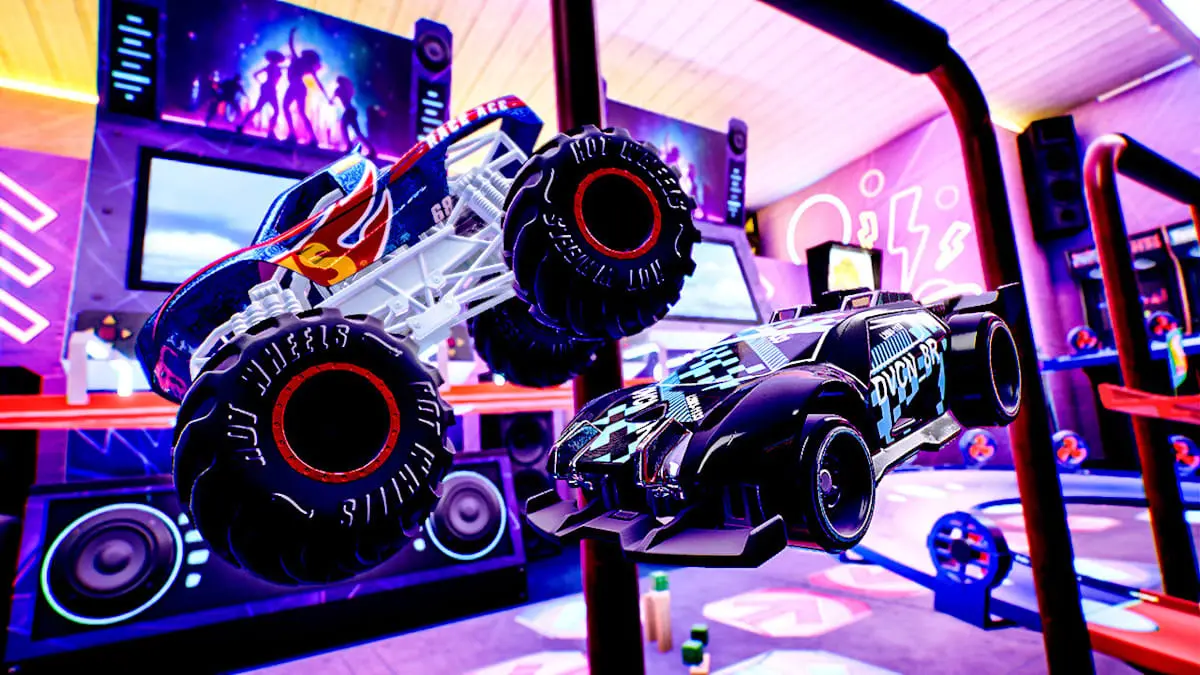
Milestone handles both development and publishing, continuing the series’ focus on accessible but energetic races. More than 130 Hot Wheels vehicles are included, with motorcycles and ATVs joining the vehicle selection. Cars can also be customized through skills and perks, allowing players to shape their preferred approach to handling and racing performance.
The Nintendo Switch version supports a broad set of languages across its listed regions. That matters for a game with both a story-driven route and multiplayer options: menus, racing objectives, and progression can be approached in the language setting that best suits the player.
A Career Story Built Around Speed, Rivalry, and Chaos
The Hot Wheels Unleashed 2 story mode gives its races a light narrative purpose. Robert and Darla are drawn into an investigation involving mischievous creatures that are creating disorder. Their search moves forward through races, challenges, and encounters with boss opponents.
This is not presented as a heavy dramatic campaign. Instead, the premise supplies a playful frame for the competition, matching the exaggerated scale of the vehicles and courses. Each event is part of a broader effort to uncover what is behind the strange creatures and restore order.
Boss battles add a different kind of test to the racing flow. Alongside standard events, they reinforce the idea that progression is more than simply moving from one finish line to the next. The story’s characters and chaos-driven setup suit a game whose central appeal remains quick reactions, vehicle control, and imaginative racing spaces.
Jump and Dash: The New Racing Tools to Master
The sequel introduces two key abilities: Jump and Dash. These tools expand the possibilities beyond steering, drifting, and maintaining speed. A well-timed jump can support aerial maneuvers, help a vehicle recover from an awkward situation, or open a route toward a better landing. It can also be useful when a shortcut calls for more than a clean turn.
Dash serves a different purpose. It offers a rapid response when rivals are close or when a driver needs to avoid trouble. Used carefully, it can help create space in a crowded race and support a stronger line through a difficult section of track.
The useful part of these mechanics is their tactical flexibility. Jump is not only for spectacle, and Dash is not simply a burst to use without thought. Their value depends on timing, track awareness, and the ability to read the movement of nearby opponents. Combined with drifting and boost-building, they make each race more active than a straight contest of acceleration.
5 Practical Tips for Using Jump, Dash, and Drift
- Time the jump. Practice using Jump before a difficult landing or a possible shortcut. A rushed input may cost momentum, while a controlled one can turn a troublesome section into a cleaner recovery.
- Save Dash for pressure. Dash is especially useful when rivals crowd the racing line or when an immediate evasive move is needed. Avoid spending it without a clear reason.
- Make drifting routine. Drifts are central to the game’s racing rhythm. Repeated practice through corners helps build familiarity with how the vehicle behaves while also contributing to the boost meter.
- Manage the boost meter. Stunts and drifts fill the meter for speed bursts. Treat boost as a resource: use it when a straight, a recovery, or a decisive push through a section can make the most difference.
- Read each environment. Track hazards, unusual surfaces, turns, and shortcuts demand adaptation. Learn where a jump helps, where drifting is safer, and where a direct route may be less reliable than a controlled line.
From Mini-Golf Courses to Dinosaur Museums: Track Environments
The game’s locations are a major part of its atmosphere. A mini-golf course becomes a racing setting, while a dinosaur museum turns displays and oversized surroundings into the backdrop for high-speed competition. There are also wild backyard-style environments, continuing the series’ fascination with everyday places viewed from a toy vehicle’s perspective.
These racing environments do more than provide visual variety. Their layouts create different demands for driving, stunts, and route selection. A course built around giant objects, steep sections, or awkward turns changes how players approach a race. The setting can influence when to drift, when to seek a jump, and when to hold back a boost for a more useful moment.
That imaginative scale gives the racing a playful presentation without changing its competitive focus. Cars remain small, but the tracks make every route feel larger than life. The result is a setting where museum displays, backyard spaces, and miniature leisure areas can all become arenas for rivalries and fast finishes.
Competitive Racing With Split-Screen, Online Play, and Track Building
Hot Wheels Unleashed 2: Turbocharged Switch NSP XCI supports both local split-screen racing and online multiplayer. Local split-screen suits shared sessions on one system, while online play offers another way to take the racing beyond the campaign and compete against other players.
Those modes strengthen replay value because the game’s mechanics reward improvement. Learning a route, refining a drift, finding a more dependable jump, or using Dash at a better moment can change the outcome of a close race. The vehicle selection, skills, and perks add further room for players to experiment with different setups.
The track builder extends that creative side. Players can make custom race courses and turn their own ideas into wild routes for competition. For players drawn to arcade racing’s speed and stunts, for groups interested in split-screen sessions, and for creators who want to shape courses themselves, the game offers several ways to keep the wheels moving.