Hello Engineer Switch NSP

Report Link Error
Select the broken download file, then submit the report.
Screenshots

About Game
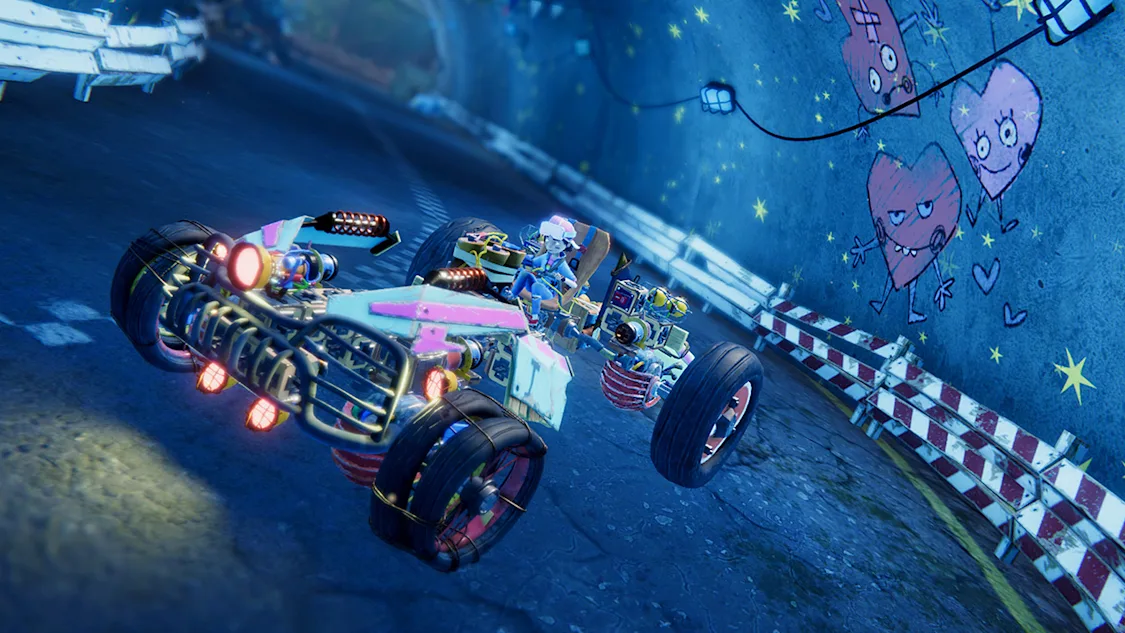
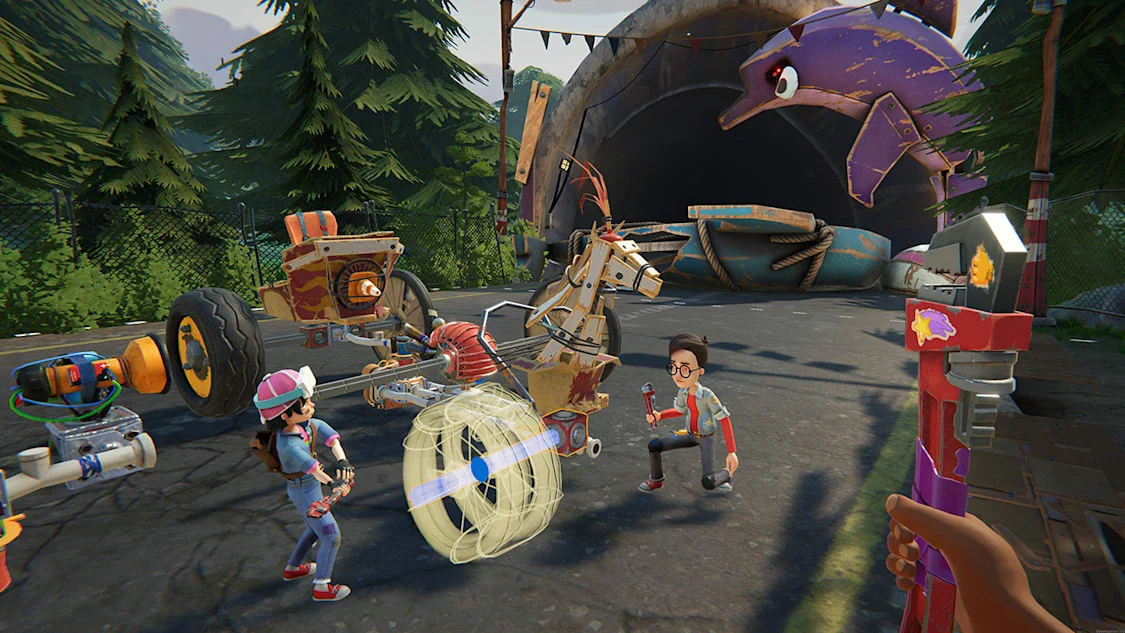
Hello Engineer Switch NSP places inventive construction inside an amusement park that has become as threatening as it is strange. Golden Apple Park is not presented as a simple backdrop for mechanical experimentation: it is a hazardous space of unstable attractions, hostile animatronics, hidden areas, and route-blocking challenges. Progress depends on scavenging parts, turning them into useful machines, and finding a workable path out of the park.
Golden Apple Park: The Setting Behind Hello Engineer
Golden Apple Park gives the game its uneasy atmosphere. The setting is an amusement park, but its familiar promise of rides and entertainment has been replaced by disorder. Different zones contain their own obstacles, environmental dangers, secrets, and strange inhabitants, encouraging players to keep moving while paying attention to the park’s larger mystery.
The escape goal provides a practical reason for every construction project. A new vehicle, a defensive structure, or a more stable contraption is not simply a creative exercise; it can be the tool required to reach another area, survive an encounter, or solve a problem that the existing design cannot handle. The park’s dark secrets unfold through exploration and continued progress rather than through building in isolation.
This combination of mystery and mechanical improvisation makes the setting relevant to play. Golden Apple Park asks players to read hazards, collect what is available, and make something functional from scattered materials. Its chaos supports an atmosphere in which even an apparently straightforward route may demand another design revision.
Physics-Driven Problem Solving and Experimentation
Hello Engineer physics gives construction real consequences. Players gather scrap materials and components that include wheels, engines, gyroscopes, and other parts, then connect them into vehicles and contraptions. The building system supports a broad range of combinations, but a machine’s usefulness depends on how it behaves when it meets tracks, obstacles, enemies, and the environment.
That makes creative problem solving more important than finding one permanent answer. A design that performs well in a race may be poorly suited to a complicated park puzzle. A compact vehicle may be easier to guide through a tight route, while another task may call for a sturdier build or a machine with a different way of moving. Experimentation is part of the intended rhythm, not a detour from it.
- Scavenge first: Collect scrap and components to keep repairs and new builds possible.
- Build for the task: Match a contraption’s design to the current obstacle instead of relying on a single vehicle.
- Test the movement: Wheels, engines, and gyroscopes can be combined in ways that change how a machine handles.
- Revise without hesitation: A failed attempt can reveal where a design needs a different balance, shape, or function.
- Expand the toolkit: New blueprints and parts add further construction options as progress continues.
The result is an engineering-puzzle structure where failure can be informative. The game’s systems invite players to reconsider an approach, rebuild, and try again with a better understanding of the challenge ahead.
Races, Puzzles, and Park Challenges
The park does not test creations in only one way. Vehicle races ask machines to move effectively through their courses, while elaborate puzzles demand more deliberate solutions. Elsewhere, enemies and environmental hazards put pressure on custom vehicles and make durability as important as speed.
These varied objectives help prevent building from becoming detached from exploration. A machine must do something in the park: navigate, withstand danger, overcome a route, or support a puzzle solution. The changing demands also give the available parts a continuing purpose. As new blueprints and components are uncovered, players can revisit their assumptions about what their current builds should be capable of.
For players who enjoy making and remaking mechanisms, the replay value lies in the number of possible approaches. The source material emphasizes a deep, physics-based system and wide freedom to connect parts, so the same obstacle can encourage experimentation with different vehicle ideas rather than a single fixed construction.
How Cooperative Multiplayer Changes the Build Process
Solo play supports a self-directed pace of scavenging, building, testing, and exploring. Cooperative multiplayer, however, allows a group of up to three friends to join the adventure. That four-player teamwork can make the construction process more collaborative, particularly when the group is gathering components or confronting a difficult task.
Hello Engineer multiplayer is relevant because the game’s challenges are built around flexible machines and changing conditions. One player can focus on finding useful materials while others help shape a contraption or manage the immediate dangers around it. Cooperation also changes the practical side of trial and error: a group can discuss a new design, test it in the park, and respond together when the first attempt falls short.
The appeal is not limited to players seeking competitive races. Co-op construction gives friends a shared project, while the park’s puzzles, hazards, and enemies provide reasons to coordinate. Players who prefer to experiment independently can still work through the same adventure alone.
Dynamic Destruction and Defending Your Creations
Custom vehicles are not protected from the world around them. Dynamic destruction means creations interact with both foes and the environment, and damage can become part of the challenge. A machine built only for movement may not be prepared for hostile animatronics or dangerous terrain.
Defensive structures widen the building possibilities beyond simple transport. Players can assemble contraptions intended to endure threats as well as vehicles intended to travel. Because resources are also needed for repairs and fresh construction, careful scavenging remains important when a challenge damages an otherwise promising design.
This pressure gives the building system a useful tension. The most elaborate machine is not automatically the best one if it cannot cope with the hazards it encounters. Players are encouraged to consider protection, function, and adaptability together, then accept that destruction may require another trip back to the work of rebuilding.
Hello Engineer on Nintendo Switch: Release and Game Details
| Title | Hello Engineer Switch NSP |
|---|---|
| Title ID | 0100160017A80000 |
| Release date | August 17, 2023 |
| Genre | Puzzle |
| Publisher | tinyBuild Games |
| Developer | tinyBuild Games |
| Regions | Europe, USA, Asia, Japan |
| Languages | English, French, German, Italian, Japanese, Korean, Russian, Simplified Chinese, Spanish, Traditional Chinese |
| Firmware | Base – v16.0.3 | Update – v16.0.3 |
| File size | 3.4GB |
With its Puzzle classification and construction-led challenges, the game is suited to players drawn to experimentation, physics-driven vehicles, cooperative problem solving, and an amusement-park mystery where every useful machine has to be built from the materials on hand.