Gunvolt Chronicles Luminous Avenger iX Switch NSP

Report Link Error
Select the broken download file, then submit the report.
Screenshots
About Game
Gunvolt Chronicles Luminous Avenger iX Switch NSP is a 2019 action release from Inti Creates Co., bringing a swift, stage-driven side-scrolling adventure to Nintendo Switch. Released on September 26, 2019, it was made available across Europe, the USA, Asia, and Japan, with language support that includes English, Japanese, French, German, Italian, Spanish, Korean, Chinese, and Portuguese. Its premise is grim, but its play is built for speed: Copen crosses a divided future with his robotic partner Lola, using agile movement and targeted attacks to fight back against Sumeragi.
Gunvolt Chronicles: Luminous Avenger iX on Nintendo Switch at a Glance
Developed and published by Inti Creates Co., this Nintendo Switch action game centers on Copen, a scientist and robot pilot known as the Luminous Avenger. He lives in a dystopian world divided between Adepts, people with supernatural powers, and ordinary humans known as Motifs. The governing organization Sumeragi hunts the Motifs, giving Copen’s missions a clear purpose: rescue those being pursued and challenge the force behind their oppression.
Copen’s outlook is severe. He sees Adepts as a danger to humanity’s future and has committed himself to eliminating them. That conviction shapes the atmosphere around the game, which presents a world marked by fear, prejudice, and conflict rather than a simple heroic adventure. Lola softens the isolation of that role. Her presence makes the campaign feel like the story of a partnership, even as Copen moves through dangerous missions at a rapid pace.
The action format suits the Nintendo Switch well: stages emphasize immediate control, quick reactions, and repeated attempts at difficult encounters. Rather than slowing down for lengthy detours, the game repeatedly directs attention back to Copen’s mobility, his weapons, and the threats ahead. The result is a compact, energetic presentation with a strong emphasis on momentum.
Lola’s Role as Copen’s Robotic Partner
Lola is more than a companion who follows Copen through the narrative. As Copen’s robotic partner, she is tied directly to the game’s central recovery system through her Anthem ability. When Copen is defeated, Anthem can bring him back into the fight, turning what might have been a final mistake into another opportunity to finish the encounter.
That second chance has narrative weight because Lola is already part of Copen’s effort to protect Motifs and expose Sumeragi’s actions. Her support does not feel detached from the conflict; it reinforces the idea that Copen is not undertaking these missions alone. The system also gives difficult fights an extra layer of tension. A player may survive a dangerous stretch through skillful dodging, or may need Lola’s intervention after an enemy attack finally connects.
Anthem becomes more valuable as performance improves. Building the resources connected to it requires stylish, controlled play, so Lola’s help is not merely a passive safety net. It is tied to how confidently Copen handles the action before defeat occurs.
High-Speed Side-Scrolling Built Around Aerial Mobility
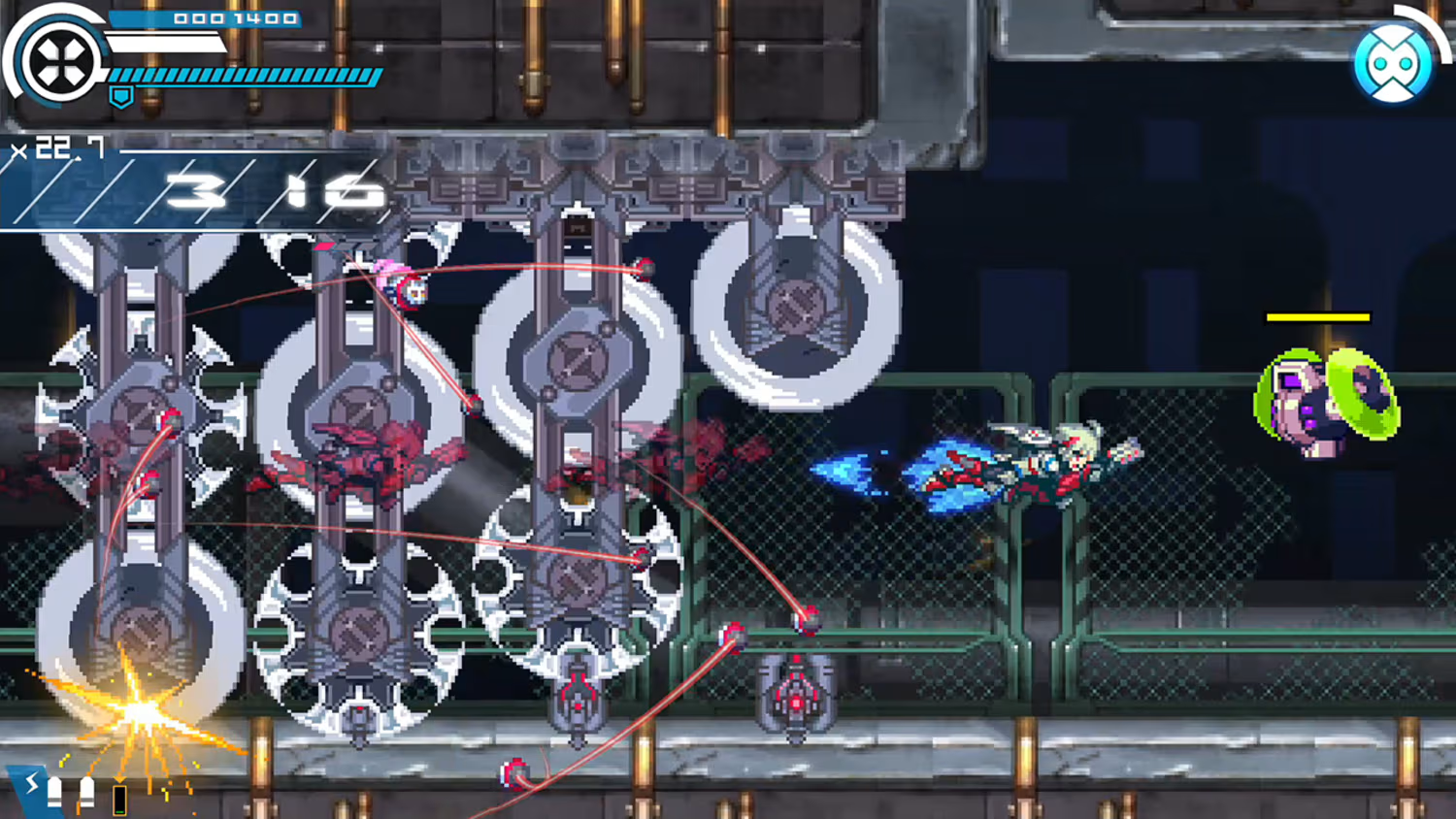
The heart of Gunvolt Chronicles Luminous Avenger iX Switch NSP is high-speed platforming. Copen is designed to stay active in the air, using aerial dashes to cross space, avoid hazards, and maintain favorable positioning around enemies. The stages ask players to think in motion: where Copen will land matters, but so does where he can dash next.
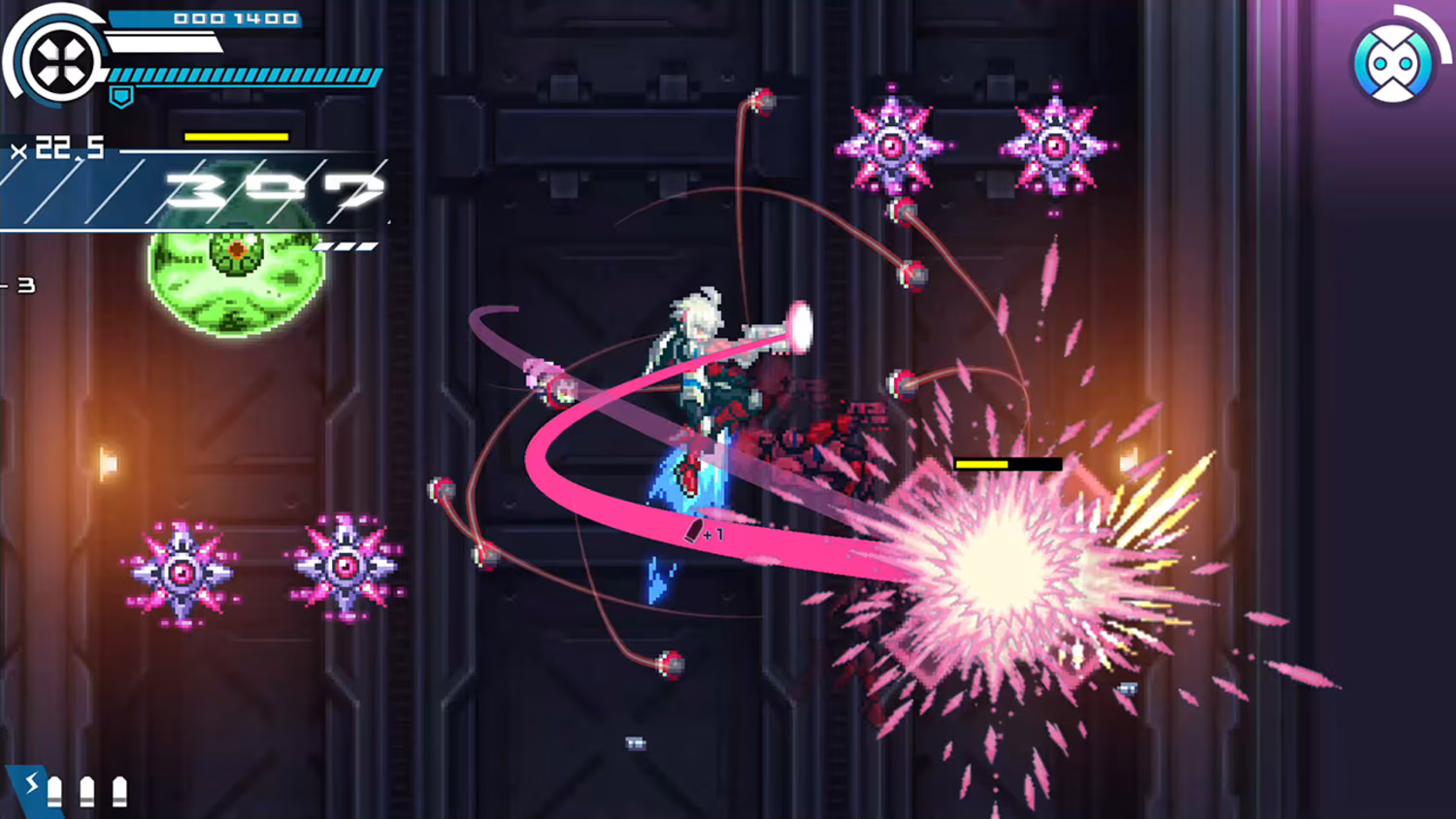
His combat tools complement that mobility. Copen can lock onto multiple enemies before releasing Blaze shots, allowing him to clear groups quickly once targets are marked. This creates a useful rhythm between movement and offense. Instead of treating every opponent as a stop-and-shoot obstacle, players can move into position, establish locks, and fire while continuing through the stage.
The Flashfield ability is especially important to that rhythm. It lets Copen dash through enemies, damaging them while gaining temporary invincibility. Used well, Flashfield is both an offensive option and an escape route. It can cut through a crowded threat, prevent a hit during a dangerous moment, or help preserve momentum when stopping would leave Copen exposed.
This is why mastery of movement matters so much. Aerial dashes are not only a way to reach platforms. They are part of combat decision-making, enemy avoidance, and the fast visual style of the game. Players who learn to treat the air as a space for both travel and attack will get more from its responsive side-scrolling action.
Why Boss Battles Demand Observation and Adaptation
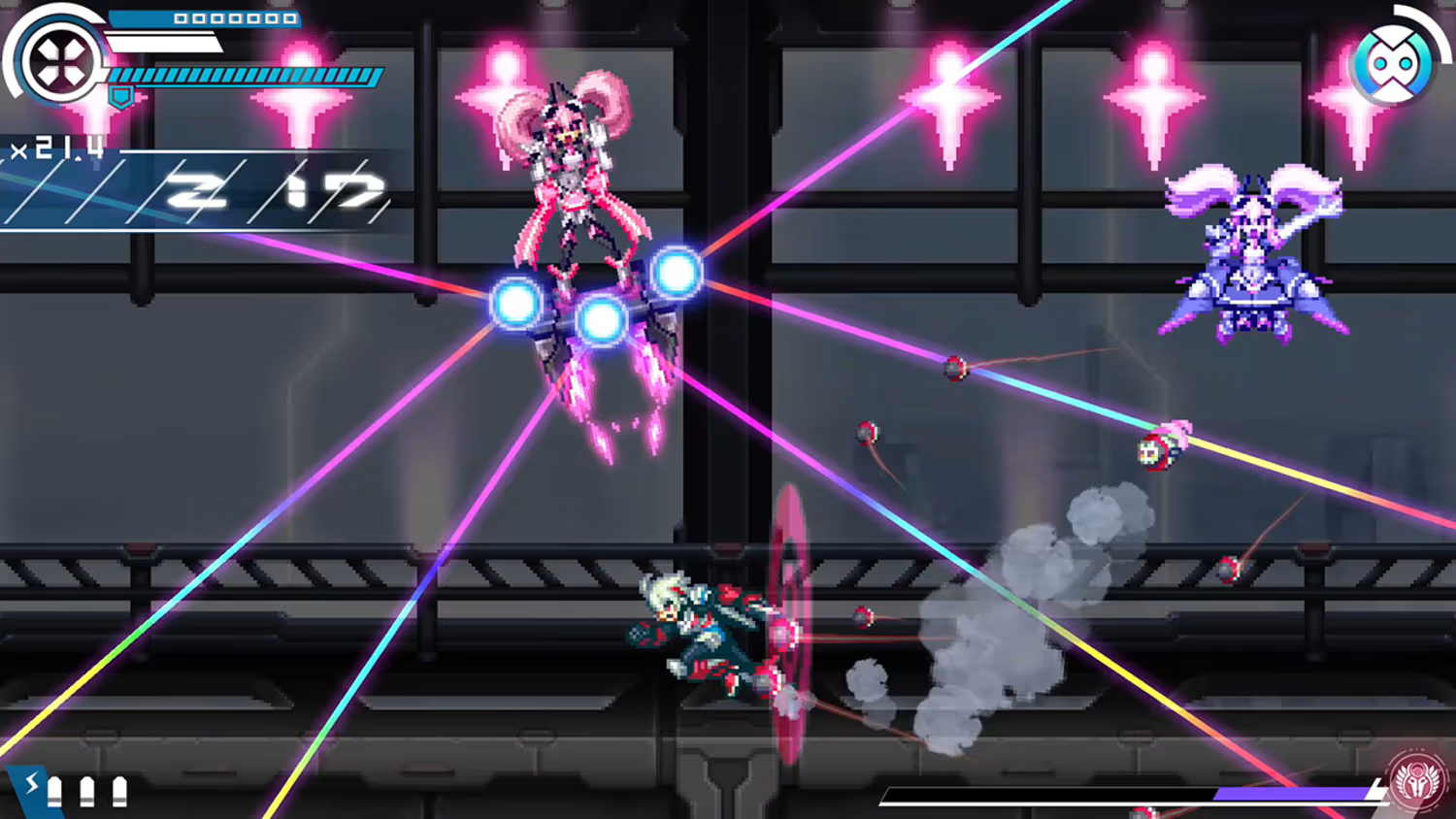
Boss battles provide the clearest test of Copen’s full toolkit. These encounters feature creative opponents with challenging attack patterns, making observation essential. A quick reaction helps, but recognizing an enemy’s sequence and anticipating the next danger is more reliable than trying to force an opening through constant aggression.
Dodging is only half the task. Copen must also choose when to lock on, when to fire Blaze shots, and when Flashfield can safely carry him through an attack. The temporary invincibility attached to that dash creates room for bold decisions, though careless use can leave him poorly positioned for whatever follows.
Defeated bosses grant EX Weapons, expanding Copen’s combat options. Each EX Weapon has its own properties and uses, so progression is not limited to higher numbers or simple upgrades. New weapons invite players to reconsider how they approach later challenges, particularly when an enemy pattern calls for a different answer than Copen’s standard attacks.
That design supports replay value in a practical way. Returning to difficult confrontations with better knowledge of their patterns, a stronger command of aerial movement, or a newly acquired weapon can change the feel of a fight. The challenge remains, but the player’s options become broader.
Kudos, Stylish Play, and the Anthem Comeback System
Kudos rewards players for avoiding damage and performing stylish actions. It is both a score system and an encouragement to engage with Copen’s abilities deliberately. A straightforward clear may be enough to advance, but cleaner movement, successful evasions, and controlled attacks build a better performance.
The link between Kudos and Lola’s Anthem makes that score-focused play meaningful beyond the final total. Building Kudos boosts Anthem, increasing the importance of keeping control when the pace grows hectic. The game therefore connects stylish gameplay to resilience: strong play improves scoring while also strengthening the comeback system that may matter most in a hard boss battle.
Upgrades purchased with in-game currency add another route for shaping Copen’s performance. Players can customize his abilities and statistics, allowing some adjustment to personal preferences. Alongside EX Weapons, these upgrades make progression feel connected to the demands of combat rather than separate from it.
5 Practical Steps for Learning Copen’s Combat Rhythm
- Practice aerial movement. Use Copen’s aerial dashes often enough to understand how they affect distance, landing position, and escape routes during fast encounters.
- Lock on before firing. Against groups, mark multiple enemies and use Blaze shots to remove threats efficiently instead of addressing each target in isolation.
- Use Flashfield with purpose. Dash through enemies when an offensive move can also create safety, taking advantage of its damage and temporary invincibility.
- Study boss patterns. Watch attack sequences before committing to a response. Recognizing repeated behavior makes dodges and counterattacks more dependable.
- Match tools to the fight. Consider upgrades and EX Weapons in relation to the immediate challenge, rather than relying on one approach for every stage or boss.
This approach makes the game best suited to players who enjoy demanding action, quick platforming decisions, and the satisfaction of improving a run through better timing. Copen’s speed, Lola’s support, and the pressure to earn Kudos give each encounter a connected purpose: move cleanly, fight smartly, and keep enough control for the next threat.
Recommended Similar Games
 I Hate This Place Switch NSPView Game
 METAL GEAR SOLID 2 Sons of Liberty Master Collection Version eShop Switch NSPView Game
 Master Detective Archives: RAIN CODE – Digital Deluxe Edition Switch NSP XCIView Game
 Fitness Boxing Fist of the North Star Switch NSPView Game
 Army of Ruin Switch NSPView Game
 DOOM 3 Switch NSPView Game
