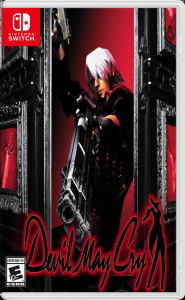
Devil May Cry Switch NSP
Report Link Error
Select the broken download file, then submit the report.
Screenshots
About Game
Devil May Cry Switch NSP brings Dante’s first demon-hunting journey to Nintendo Switch in a portable edition released on June 25, 2019. Developed and published by Capcom, this Adventure/Action release centers on fast combat, ominous exploration, and a gothic supernatural story built around the threat of a returning demon lord.
Devil May Cry on Nintendo Switch: A 2019 Portable Action Release
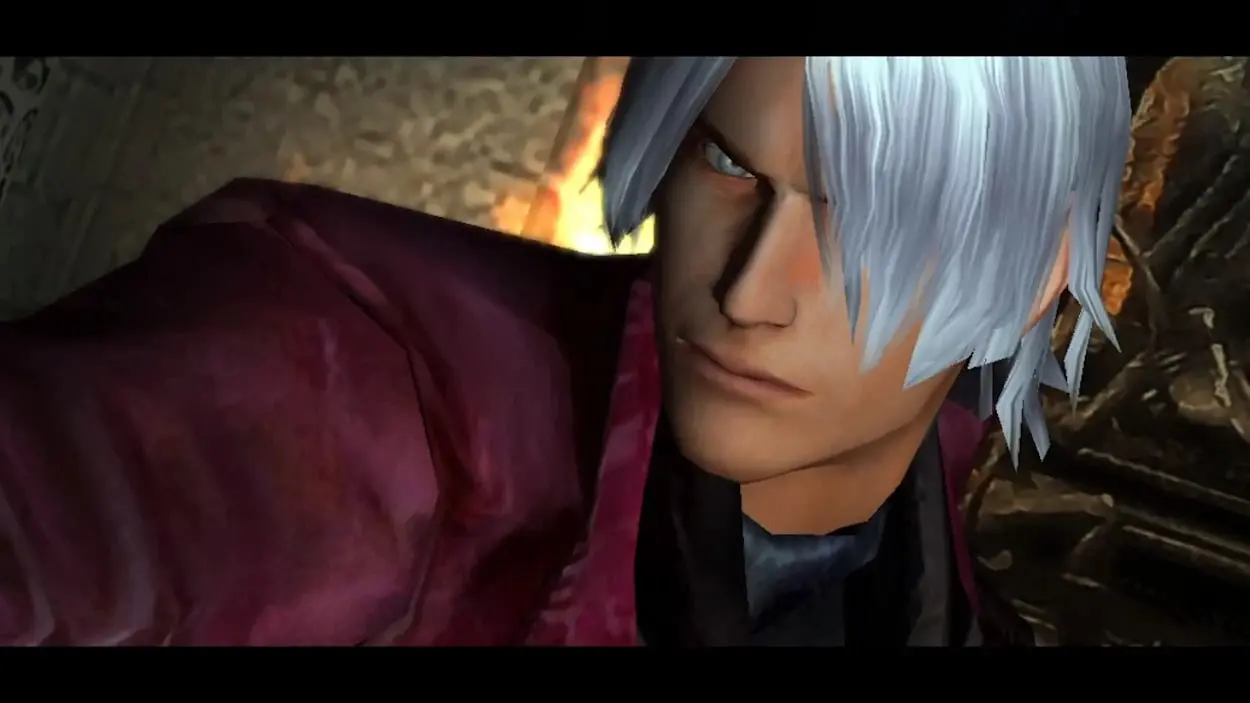
Capcom’s 2019 Nintendo Switch release puts the original Devil May Cry experience on a hybrid platform without changing its essential identity: a tense, stylish action adventure led by Dante, a paranormal private investigator with a half-human, half-demon heritage. His agency shares the game’s name, but his routine is interrupted when a mysterious woman named Trish arrives with a dangerous request.
Trish warns Dante about Mundus, a demon lord whose return could place the human world under demonic rule. The mission takes him away from familiar surroundings and toward Mallet Island, where the game’s mix of exploration and combat begins to take shape. The Switch format suits the game’s chapter-by-chapter encounters, allowing its demanding fights and moody locations to be approached in a portable setting.
This is a Capcom action game with an adventurous structure rather than a sequence of disconnected battles. Combat is central, but so is moving through hostile territory, finding routes through elaborate spaces, and uncovering details that connect the island’s dangers to Dante’s past.
The Gothic Setting and Demonic Threat of Mallet Island
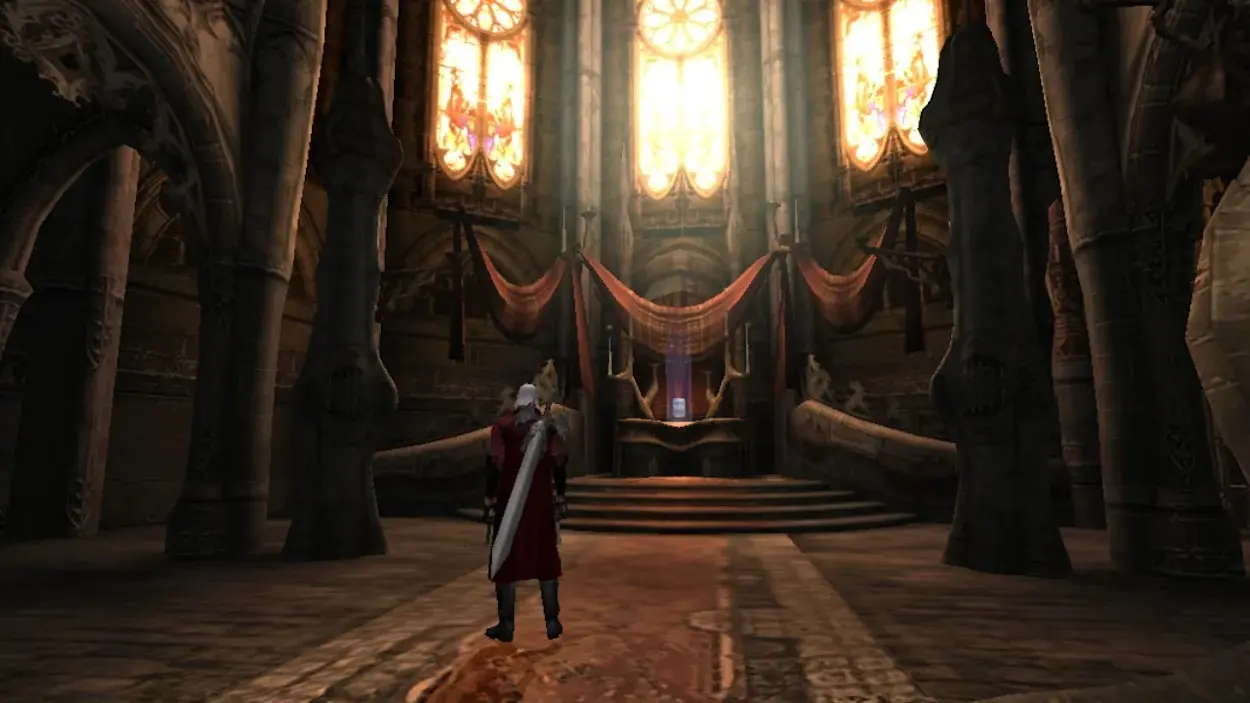
Mallet Island gives the adventure its defining atmosphere. Isolated from the ordinary world, it is a place of gothic environments, castle-like interiors, dark secrets, and demonic strongholds. Dante’s path leads through eerie spaces where architecture and threat work together: hidden pathways suggest a larger, more dangerous place beyond the next room, while hostile creatures make every route feel contested.
The island is not simply a backdrop for fighting. Its locations support the game’s sense of discovery, asking players to navigate intricate areas and search beyond the most obvious path. That emphasis on Mallet Island exploration gives the action a measured rhythm. A difficult encounter may be followed by a quieter stretch of navigation, then another discovery or sudden clash with demonic enemies.
The story also gives the setting personal weight. As Dante advances, he learns more about the island’s secrets, Trish’s mission, and connections to his own history, including his twin brother Vergil. Mundus’s lieutenants stand between Dante and the larger conflict, turning the island into a chain of increasingly serious confrontations. The result is a supernatural adventure where its looming castle spaces and grotesque inhabitants reinforce the stakes of the journey.
Stylish Sword-and-Gun Combat at the Core
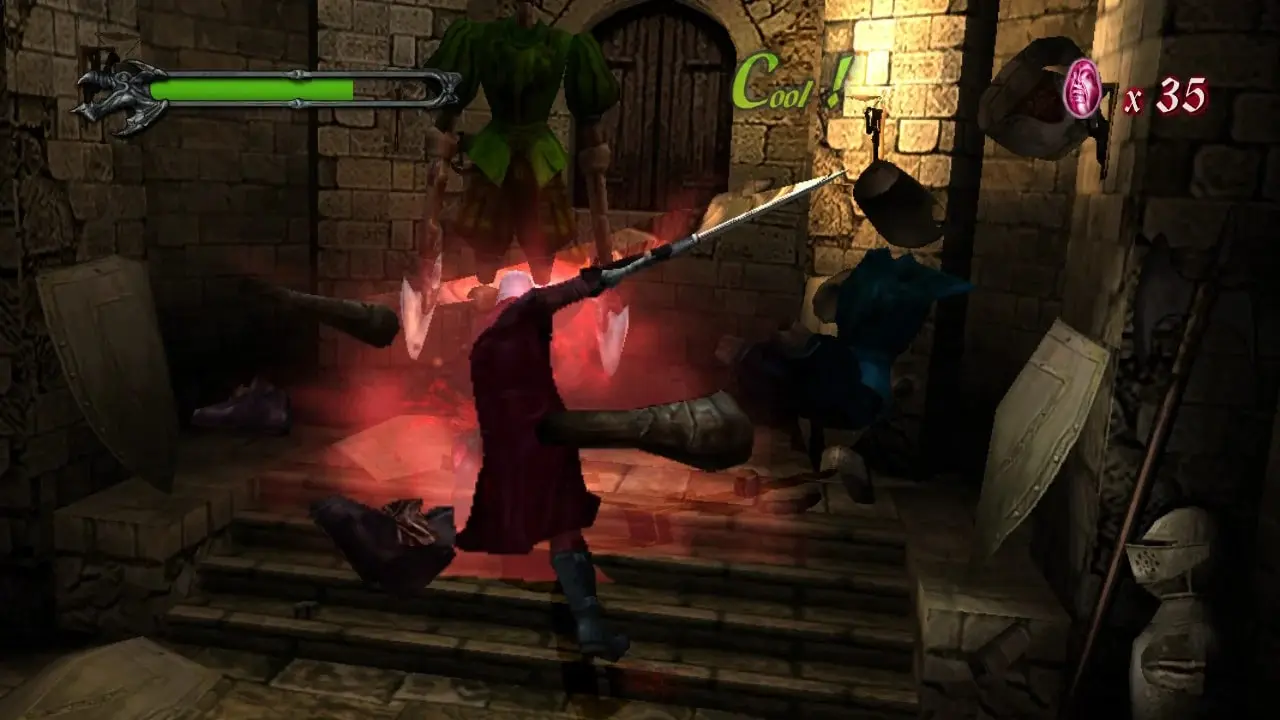
Devil May Cry’s action depends on motion. Dante is expected to attack, reposition, dodge, and continue pressing forward rather than remain planted in front of an enemy. Swordplay and gunplay are designed to work together, allowing close-range strikes and firearm attacks to become parts of the same offensive rhythm.
The goal is not merely to clear an encounter. The game rewards stylish combat through performance ranks that range from D through S, with speed, damage taken, and style all contributing to the result. Chaining attacks effectively can raise a mission’s sense of flair, while careless hits or slow play can undermine that performance.
This creates a useful tension in the Devil May Cry combos system. Aggression can build momentum, but reckless aggression leaves Dante vulnerable. Players need to recognize when to stay near an opponent, when to create distance with firearms, and when to dodge instead of extending a sequence. The game’s demons have distinct attack patterns and weaknesses, so a successful approach is not always the same from one battle to the next.
That demand for timing gives repeat play a practical purpose. Missions can be revisited in the spirit of improving ranks, taking less damage, moving faster, or finding a more confident chain of attacks. The appeal lies in learning the flow of an encounter and making Dante’s combat look controlled rather than accidental.
Dante’s Key Tools: Rebellion, Ebony & Ivory, and Devil Trigger
Dante’s signature equipment provides the foundation for his varied offense. Rebellion, his sword, supports forceful close-range attacks and forms the backbone of his melee approach. It is the direct answer when demons crowd the space around him or when a player wants to maintain pressure at close quarters.
His dual pistols, Ebony & Ivory, give him a different option. They extend Dante’s ability to attack while keeping a degree of separation from a threat, and they complement the sword rather than replacing it. Weapon switching encourages players to move between these tools as the situation changes, combining attacks instead of relying on a single response.
Devil Trigger is the major power shift in Dante’s kit. Activating it transforms him into a more powerful demonic form with increased damage, greater speed, and health regeneration. Used well, it can change the pace of a dangerous battle, helping Dante sustain an offensive push or recover during a demanding encounter. Alongside the weapons and special abilities that can be unlocked, it gives the action room for experimentation without losing its focus on quick decisions.
5 Combat Priorities for Facing Demons and Bosses
- Keep moving. Constant movement helps Dante avoid becoming an easy target and creates better angles for melee attacks, firearm use, and repositioning.
- Dodge with purpose. Dodging is more than a defensive reset; it is a way to preserve momentum when an enemy interrupts a combo or closes in with a dangerous attack.
- Chain attacks carefully. Mix swordplay and gunplay to build stylish sequences, while remembering that a longer combo is only useful if Dante can stay safe long enough to complete it.
- Read enemy behavior. Demonic enemies have their own patterns and weaknesses. Watching their attacks before committing to an approach can prevent unnecessary damage.
- Adapt for boss fights. Major bosses demand quick reflexes and strategic thinking. A tactic that works against regular demons may need to change when facing a larger, more punishing opponent.
Nintendo Switch Edition Technical Profile
The Nintendo Switch edition is listed as Region Free and supports eight language options: English, German, Spanish, French, Italian, Japanese, and Chinese. Its listed firmware requirement is Nintendo Switch firmware version 7.0.1, and its listed file size is 9.2GB.
For players searching the exact term Devil May Cry Switch NSP, the more meaningful picture is the game behind the label: Capcom’s gothic action adventure, built around Dante’s battle against Mundus on Mallet Island. Its strongest fit is for players interested in demanding sword-and-gun action, mission performance ranks, hidden routes, demonic enemies with learnable behavior, and boss encounters that reward patience as much as speed.
The game’s presentation remains closely tied to its setting and combat language. Dark island corridors, imposing castle spaces, supernatural adversaries, and Dante’s shifting arsenal all point in the same direction: a focused action adventure where style is measured not only by what is defeated, but by how the fight is handled.