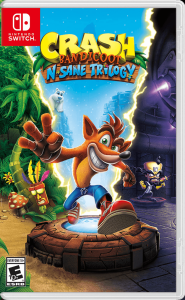
Crash Bandicoot N. Sane Trilogy Switch NSP XCI
Report Link Error
Select the broken download file, then submit the report.
Screenshots
About Game
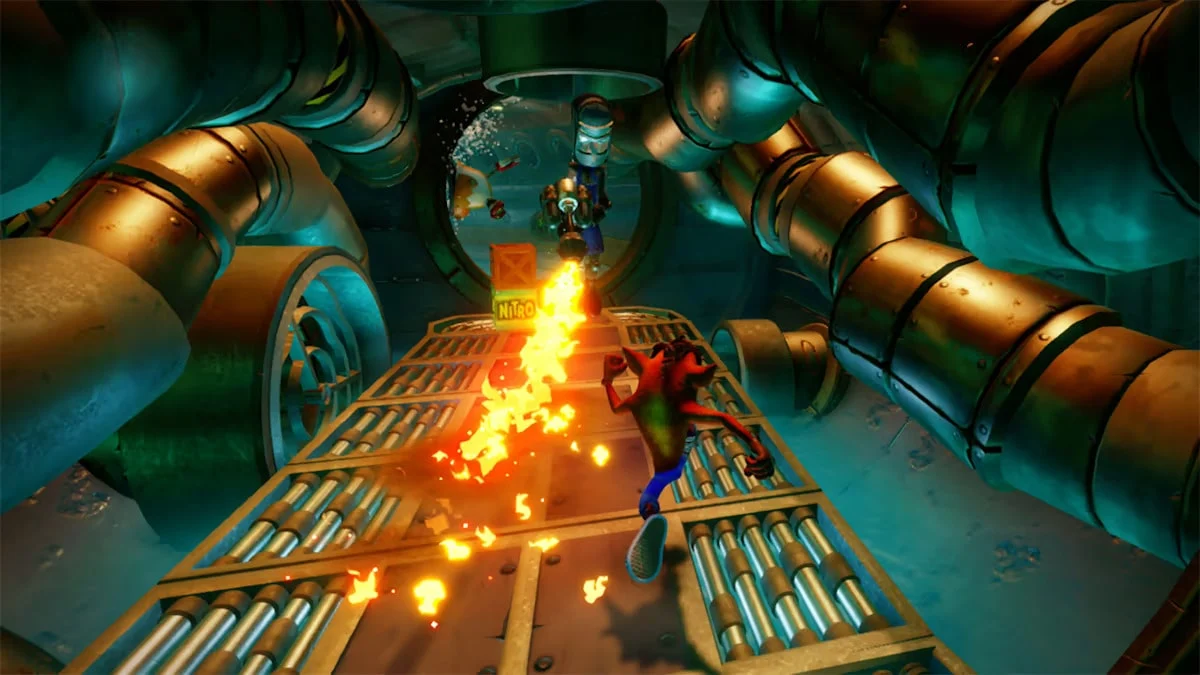
Crash Bandicoot N. Sane Trilogy Switch NSP XCI brings three classic adventures together for Nintendo Switch: Crash Bandicoot, Crash Bandicoot 2: Cortex Strikes Back, and Crash Bandicoot 3: Warped. Released on June 29, 2018, this action-platformer collection from Activision and Toys For Bob pairs remastered presentation with the demanding crate-smashing, hazard-dodging design that defines Crash’s early games.
A Three-Game Platforming Collection on Nintendo Switch
Crash Bandicoot N. Sane Trilogy is built around direct, focused platforming. Each game sends players through colourful but dangerous stages filled with narrow ledges, enemy encounters, collapsing routes, traps, moving obstacles, and the ever-present promise of another crate just out of reach. The basic structure is easy to understand, but completing levels cleanly can demand concentration and repeated attempts.
On Nintendo Switch, the collection’s portable format suits its stage-based rhythm. A short session can mean tackling a single difficult route, returning to a previously cleared area for missed crates, or taking another run at a time trial. The remastered visuals give the trilogy a refreshed look while preserving the familiar identity of Crash’s island environments, icy paths, ruins, laboratories, and more unusual historical settings.
The three games also offer a clear sense of progression. The original establishes Crash’s conflict with Cortex, the second game complicates that relationship through the search for Crystals, and the third expands the scope into time travel. Across the collection, players can pursue ordinary completion, hidden collectibles, Gems, Relics, bonus rounds, and full crate totals. That layered structure gives the platforming a long life beyond simply reaching each exit.
Crash Bandicoot: Saving Tawna on Wumpa Island
The first Crash Bandicoot begins with a simple rescue mission. Crash sets out across Wumpa Island to save Tawna from Dr. Neo Cortex, the scientist whose scheme involves mutating animals into an army. The story provides a clear reason for the journey, but the game’s character comes from the obstacles placed between Crash and his goal.
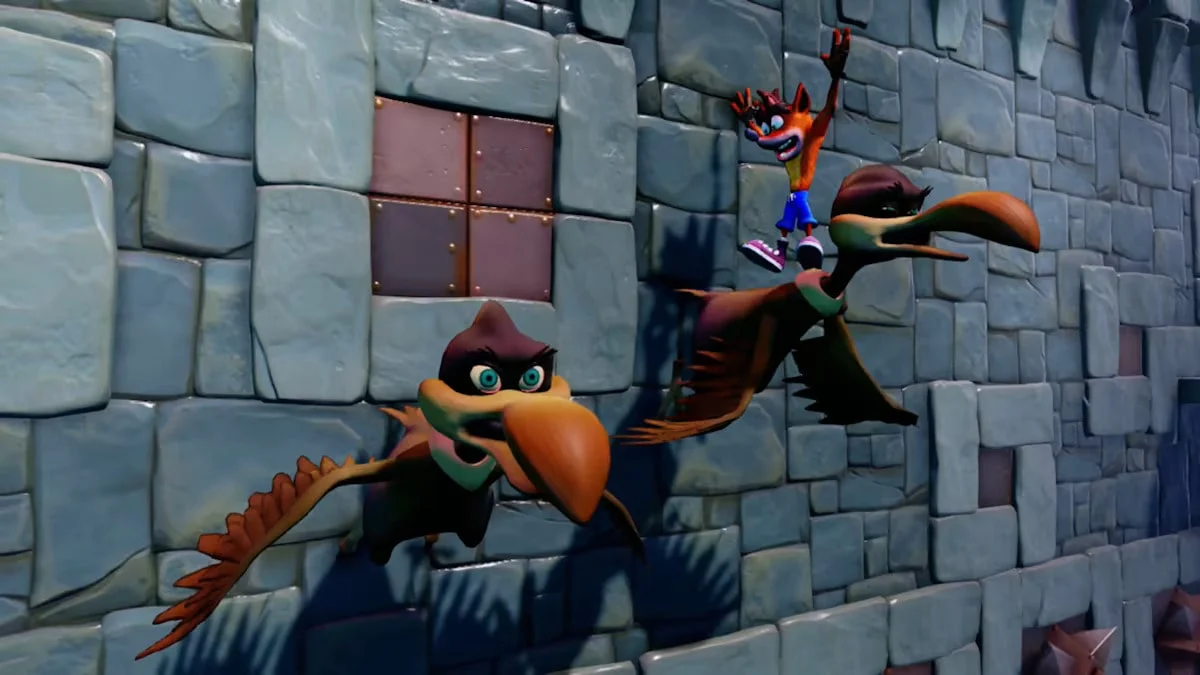
Wumpa Island is not presented as a safe cartoon playground. Its bright colour and expressive characters sit alongside dangerous pathways, hostile animals, and tightly arranged traps. That contrast gives the original game a distinctive atmosphere: playful on the surface, yet often unforgiving when a jump is mistimed.
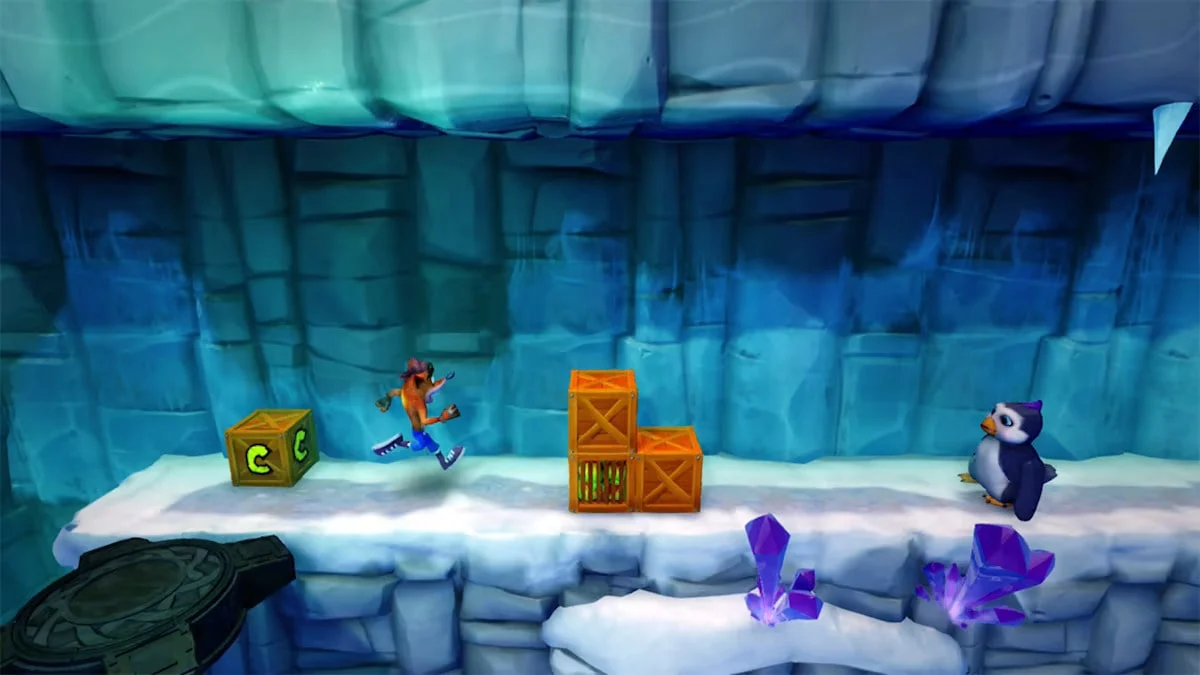
The early adventure establishes many of the trilogy’s recurring habits. Crates reward curiosity and precision; Wumpa Fruit can build toward extra lives; and routes that initially seem straightforward may hide bonus areas or demand a better approach on a second visit. Dr. Neo Cortex remains the central threat, while Crash’s wordless physical comedy keeps the action lively even when a level asks for serious patience.
Warped Brings Time-Traveling Platforming Challenges
Crash Bandicoot 3 Warped broadens the formula by sending Crash and Coco across historical eras. Uka Uka and Dr. Cortex are pursuing powerful Crystals through time, and the heroes must stop them before the villains complete their plan. The time-travel setup gives the third game a wider range of settings and a more adventurous sense of movement from one stage to the next.
Its appeal lies in variety without losing the collection’s central platforming focus. Different eras frame different hazards and level concepts, while boss battles punctuate the chase. The pursuit of Crystals remains important, but the game also encourages players to return for hidden routes, Gems, and Relics earned through time trials.
That replay structure is particularly useful for players who enjoy mastering familiar spaces. A first clear may be about survival; a later attempt may focus on every crate; another may be about maintaining speed and efficiency. In this way, Crash Bandicoot N. Sane Trilogy Switch NSP XCI supports both a straightforward adventure and a more exacting completion challenge.
The Core Moves: Spin, Jump, and Belly Flop
The trilogy’s controls are rooted in a small set of actions that carry a great deal of responsibility. Crash’s spin attack is the primary answer to many enemies and breakable crates. It is quick and satisfying, but it also needs to be used with awareness of spacing, especially near ledges or hazards.
The jump is equally essential. Platforming levels regularly ask players to judge distance, timing, and direction as they cross gaps or land on narrow surfaces. Moving platforms complicate that calculation, while enemies can turn a simple leap into a risk. The belly flop adds another useful option for smashing crates and dealing with obstacles below Crash.
These moves make the games approachable in concept but demanding in practice. A player may understand exactly what needs to happen and still need several attempts to execute it cleanly. Aku Aku masks can reduce that pressure: one can absorb a hit, while collecting three grants temporary invincibility. They do not remove every danger, but they can transform a tense stretch of platforming into a brief opportunity to push forward.
9 Practical Tips for Tough N. Sane Trilogy Levels
- Measure your jumps. Take a moment to read gaps, enemy positions, and landing spaces before committing. Precise timing matters more than rushing ahead.
- Use the spin deliberately. The spin attack defeats enemies and breaks crates, but swinging too early or too close to an edge can create a new problem.
- Respect moving platforms. Watch their rhythm, wait for a stable opening, and avoid treating every platform as if it moves at the same pace.
- Protect Aku Aku masks. A single mask can shield Crash from one hit, while three provide temporary invincibility. Save that advantage for difficult stretches when possible.
- Learn boss patterns. Boss battles reward observation. Patience can reveal when it is safe to attack and when it is better to stay out of danger.
- Retry and search carefully. Replaying stages helps refine routes, uncover hidden paths and bonus rounds, and catch crates that were missed during an earlier run.
Crate totals deserve special attention. Breaking every crate in a level can earn a Gem, and missed boxes may be tucked into routes that are easy to overlook. Wumpa Fruit also matters: collecting 100 grants an extra life, which can be valuable when a particularly difficult stage is still being learned. Relics, meanwhile, ask for a faster and more efficient approach through time trials.
Switching Between Crash and Coco
Crash is the collection’s central figure, but Coco is playable in certain levels. Her presence helps reinforce the trilogy’s broader adventure, particularly as the later game expands the story’s scale and sends the heroes across different eras. Both characters take part in the same lively world of crates, enemies, collectibles, and demanding platforming routes.
For players who enjoy action platformers with clear goals and a strong replay loop, the collection offers plenty to work toward. It can be welcoming in short bursts because levels are easy to revisit, yet its later challenges are best suited to people willing to practice timing and repeat difficult sections. The result is a three-game package driven by simple moves, memorable hazards, and the satisfying pursuit of a cleaner run.