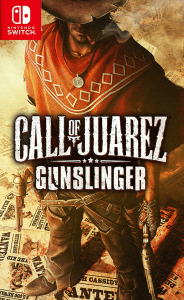
Call of Juarez: Gunslinger Switch NSP
Report Link Error
Select the broken download file, then submit the report.
Screenshots
About Game
Call of Juarez: Gunslinger Switch NSP brings a stylized Old West tale to Nintendo Switch, pairing first-person action with the yarn-spinning voice of bounty hunter Silas Greaves. Released in the USA on December 10, 2019, this Techland-published action game frames its frontier violence through stories told in a smoky saloon, where memory, bravado, and revenge can reshape the events being described.
Call of Juarez: Gunslinger on Nintendo Switch: Release Details and Game Profile
On Nintendo Switch, Call of Juarez: Gunslinger is categorized as an Action, First Person release. Its USA release date is December 10, 2019, and Techland is listed as the publisher. The game supports English, Spanish, French, German, Italian, Portuguese, Russian, and Japanese, allowing Silas Greaves’s account of the West to reach players across several language options.
The Switch version places a compact, gunfight-driven Western on a platform built around flexible play. Its 2.35 GB file size and Title ID, 0100B4700BFC6000, identify this particular release, while the listed firmware requirement is 9.0.1. More importantly for the game itself, the format suits a focused first-person campaign built around shootouts, duels, skill upgrades, and a narrator whose version of history is not always fixed.
The presentation leans into the mythology of the American frontier rather than treating it as a strictly sober historical account. Saloon storytelling gives the journey a deliberately performative atmosphere: Silas recounts his exploits as a legendary bounty hunter, and the tale can shift when his recollection changes. That unreliable perspective gives the action a lively sense of exaggeration without losing the personal drive behind the story.
Legendary Outlaws in Call of Juarez: Gunslinger
Silas Greaves does not tell a quiet story. His account carries him through encounters with legendary outlaws, including Billy the Kid and Jesse James. These figures are part of the larger Wild West legend that the game filters through Silas’s weathered, self-serving narration.
That framing matters. The focus is not simply on checking famous names off a historical list; it is on hearing how Silas chooses to remember them. His saloon tale can alter as he revises details, making the narrative feel less like a settled record and more like a gunslinger’s embellished confession. Revenge, bounty hunting, justice, and a dark past all shape the path he describes.
For players drawn to Western fiction, this approach gives the setting its character. Iconic locations and historical events are presented through a narrator who may be persuasive, evasive, or plainly unreliable. Billy the Kid and Jesse James become part of Silas’s version of the frontier, where reputation is as important as the truth.
Fast First-Person Gunfights Built for the Frontier
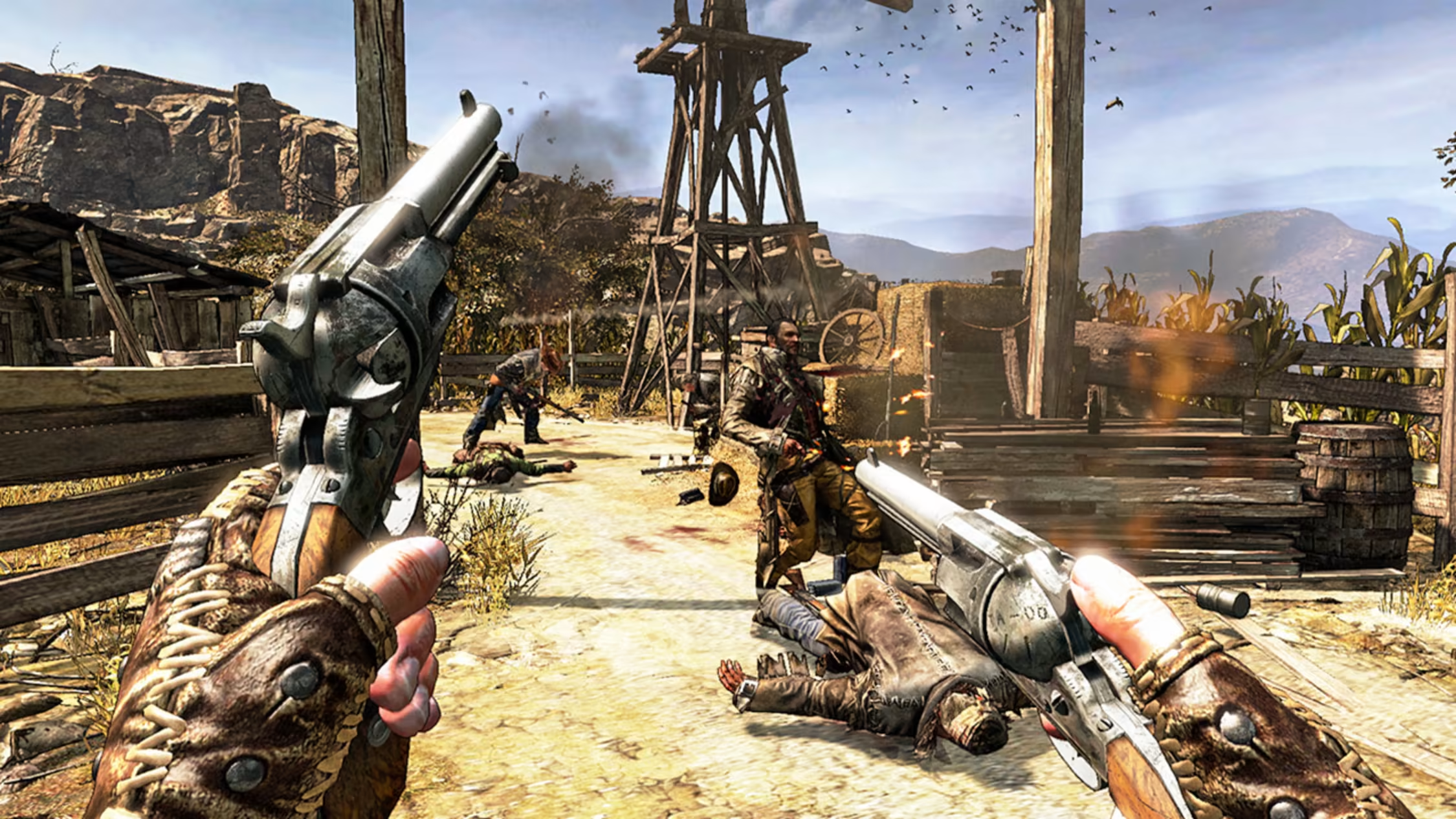
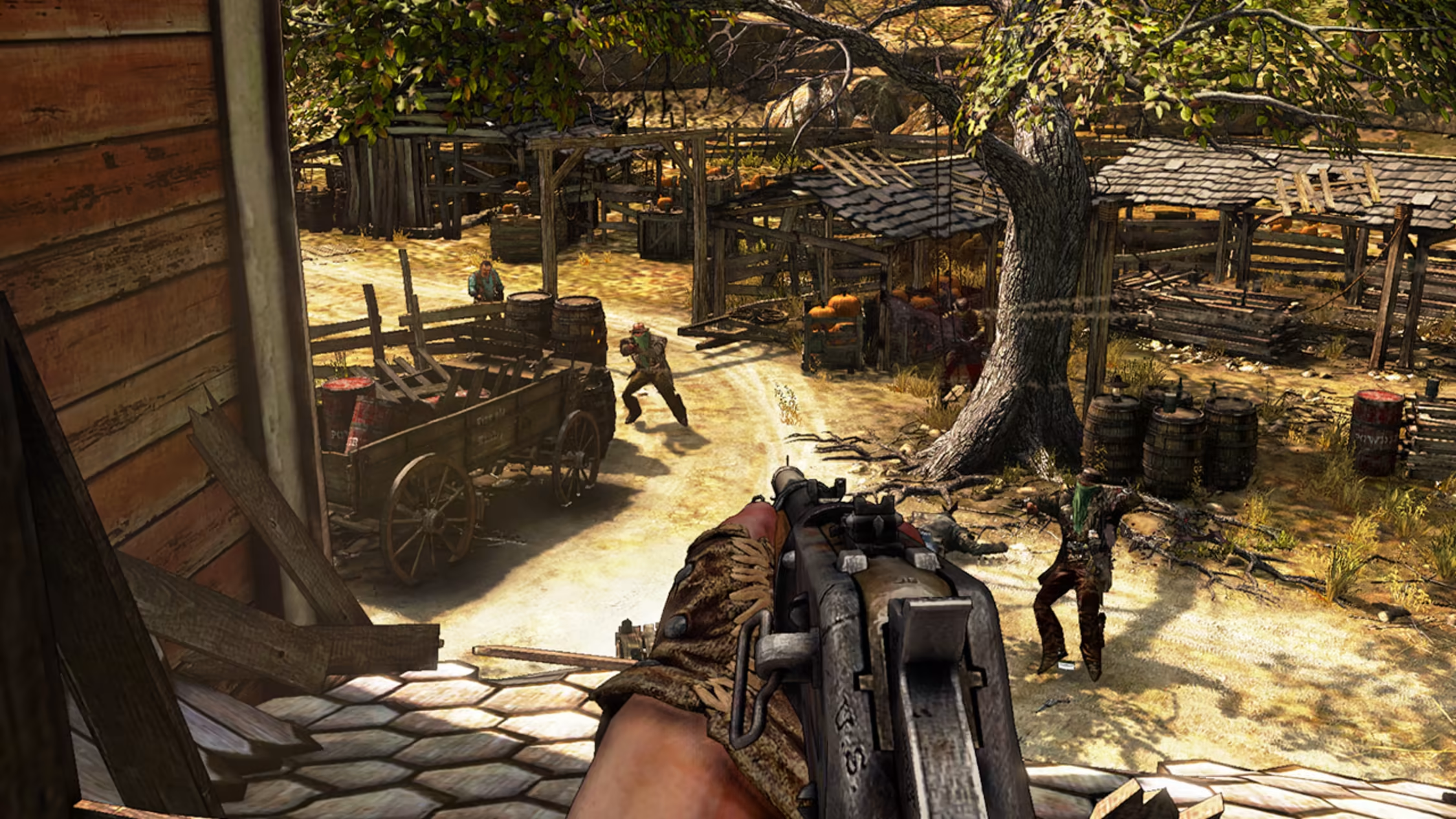
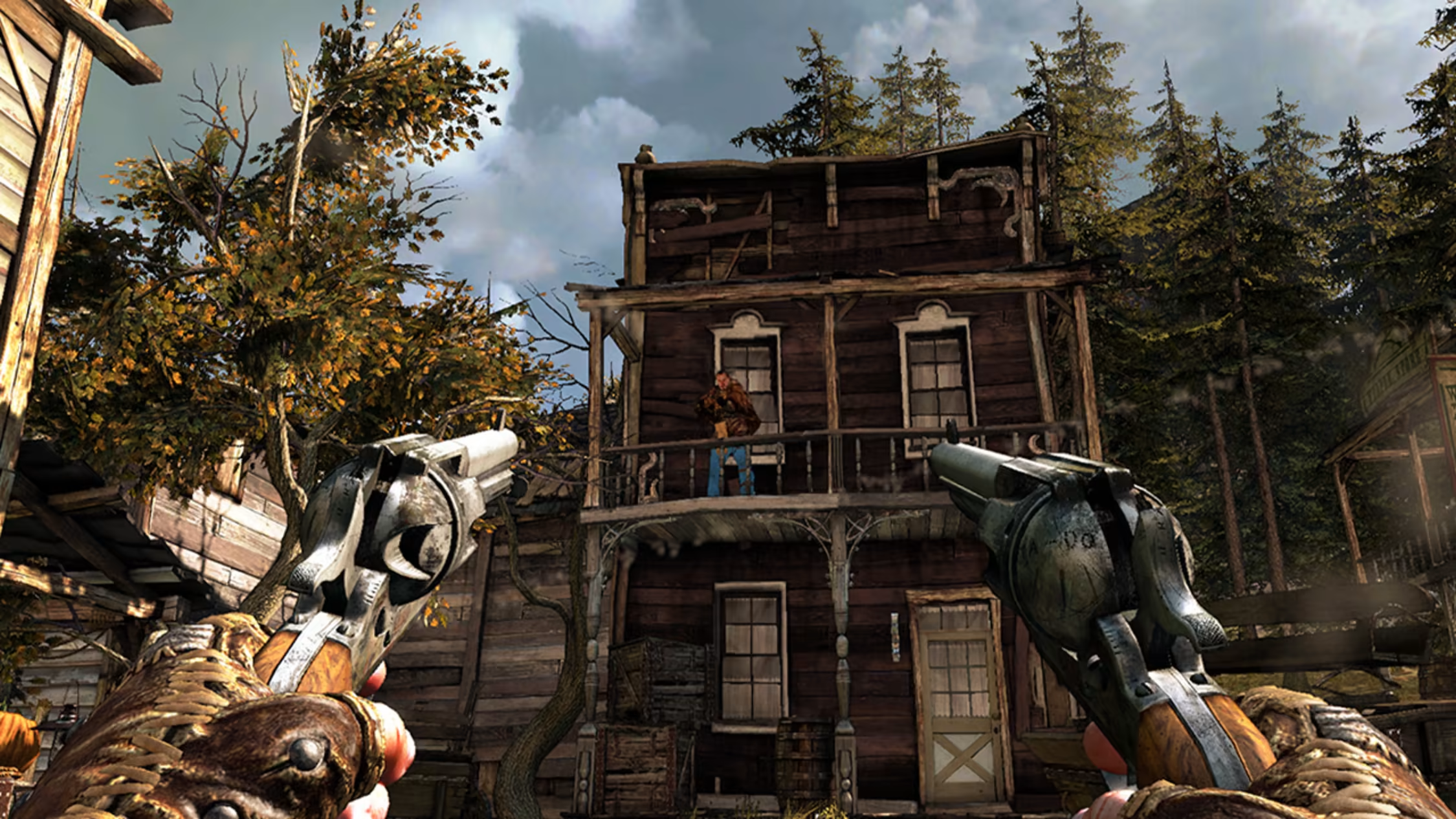
Call of Juarez: Gunslinger is a first-person shooter centered on rapid exchanges of fire. Its Wild West gunfights demand alert reactions, controlled aim, and a willingness to adapt when enemies crowd the scene. Revolvers, shotguns, and other Old West firearms support different approaches, encouraging players to experiment rather than settle immediately into one rhythm.
The action is not limited to ordinary firefights. Missions include bounty hunting, train robberies, and desperate last stands, each fitting the larger frontier fantasy. The game’s combat asks players to keep moving through intense situations while looking for clean shots. Precision is valuable, particularly because stylish eliminations earn experience points and headshots can quickly remove threats.
This makes the gunplay accessible in premise but demanding in execution. Reflexes matter, yet so does restraint. Charging ahead without reading the environment can leave Silas exposed, while a measured approach creates room to line up accurate attacks. The tone is dramatic and energetic, built for players who enjoy a cinematic Western shooter with frequent confrontations.
How Concentration Mode Changes a Gunfight
Concentration Mode is the game’s defining combat tool. By slowing time, it gives Silas an opportunity to aim more precisely during hectic encounters. When several opponents are pressing in, that brief reduction in speed can turn a confused exchange into a controlled sequence of shots.
The mechanic is particularly useful for building effective attacks against multiple foes. Instead of relying entirely on raw reflexes, players can use slow-motion aiming to identify targets, place shots, and make a difficult moment more manageable. In a game that often emphasizes speed and flair, Concentration adds a tactical pause without abandoning the pace of a gunslinger fantasy.
Its value grows in tougher firefights and against powerful adversaries. Used at the right time, it supports the stylish defeats that feed experience progression. Used carelessly, it is simply a missed chance to regain control. That balance gives gunslinger combat a small but meaningful layer of decision-making.
Quick-Draw Duels and the Art of Precision
Few Western ideas are more immediate than the quick draw, and the game turns that image into tense duels against outlaw opponents. These confrontations emphasize reaction speed, accurate aim, and the nerve to act at the correct instant. A duel is less about sustained firefight tactics and more about delivering a decisive response under pressure.
The result is a distinct change of pace from larger combat encounters. Where Concentration Mode can help manage groups, quick-draw duels focus attention on a single opponent and a narrow window for precision. They reinforce Silas’s image as a feared gunslinger while giving the game’s broader shooting action a more personal, theatrical edge.
For players returning to improve their performance, duels and combat encounters both offer reasons to refine technique. Different weapons, skill choices, and a stronger grasp of timing can change how confidently a player handles the next confrontation. That progression supports replay value through mastery rather than through a promise of identical outcomes.
5 Combat Priorities for Call of Juarez: Gunslinger
- Read the ground. Assess surroundings before rushing into a gunfight. A brief look at the battlefield can help shape a safer approach.
- Favor headshots. Accurate headshots quickly dispatch foes and grant bonus experience, making precision useful for both survival and progression.
- Save Concentration for pressure. Use Concentration Mode when enemy groups become overwhelming or when a powerful opponent demands more careful aiming.
- Test the arsenal. Experiment with the available Old West firearms, including revolvers and shotguns, to find weapons that fit the situation and personal preference.
- Build a specialty. Spend earned experience in a preferred path among the Gunslinger, Ranger, and Trapper skill trees, shaping Silas around the combat style you enjoy.
Call of Juarez: Gunslinger Switch NSP is best suited to players looking for brisk first-person shooting, heightened Western storytelling, and duels that reward composure. Its saloon-born narrative, historical outlaw encounters, skill-tree progression, and slow-motion gunplay make it a focused trip through a frontier remembered by a man who knows how to make every shot sound legendary.
Recommended Similar Games
 GetsuFumaDen: Undying Moon Digital Deluxe Edition Switch NSPView Game
 GUNDAM BREAKER 4 Ultimate Edition Switch NSP XCIView Game
 River City Saga Three Kingdoms Next Switch NSPView Game
 Power Rangers: Battle for the Grid Switch NSPView Game
 Shin Megami Tensei V: Vengeance Switch NSPView Game
 There Is No Light Switch NSPView Game
