Bread and Fred Switch NSP
Report Link Error
Select the broken download file, then submit the report.
Screenshots

About Game
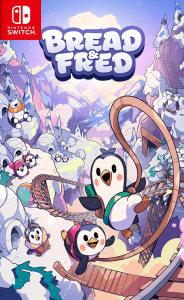
Bread and Fred Switch NSP brings a demanding cooperative platforming climb to Nintendo Switch, pairing two penguin friends in a snowy ascent where timing, communication, and recovery matter as much as a well-made jump. Published by Apogee Entertainment, the USA release arrived on May 24, 2024, with a premise built around two players facing the same danger from opposite ends of a rope.
Bread and Fred on Nintendo Switch: Release Details at a Glance
Bread and Fred is a platformer published by Apogee Entertainment for the USA region. Its Nintendo Switch release date is May 24, 2024. The game frames its challenge around cooperative movement rather than independent play: Bread and Fred are two penguins connected to one another throughout their climb.
That simple setup gives the game a clear identity. A platformer can usually ask a player to judge a jump, a landing, or an obstacle alone. Here, each decision also affects a partner. The two penguins must account for their shared momentum, their rope connection, and the consequences of a missed move. The result is a climb where coordination is not an optional extra; it is the route forward.
A Snowy Climb Built Around Two Penguin Friends
The Bread and Fred story follows two inseparable penguin pals separated from their other friends, who are waiting at the summit of a towering, snow-covered mountain. Bread and Fred set out to reach them, turning the mountain into both the game’s destination and its central obstacle.
The snowy setting supports the game’s mix of charm and pressure. The penguins’ goal is warm-hearted, but the path is treacherous. Each section of the climb asks the pair to work through difficult terrain and maintain their connection while attempting to gain height. Reaching the summit means reuniting with their waiting friends, giving the ascent a shared purpose beyond simply clearing a sequence of platforming challenges.
The presentation is closely tied to that premise: two small penguins facing an enormous peak together. It is an approachable image, though the mountain does not promise an easy trip. The contrast between the friendly characters and the punishing climb helps set expectations for a game that can produce laughter, frustration, and satisfaction in quick succession.
How the Rope Tether Defines the Co-op Challenge
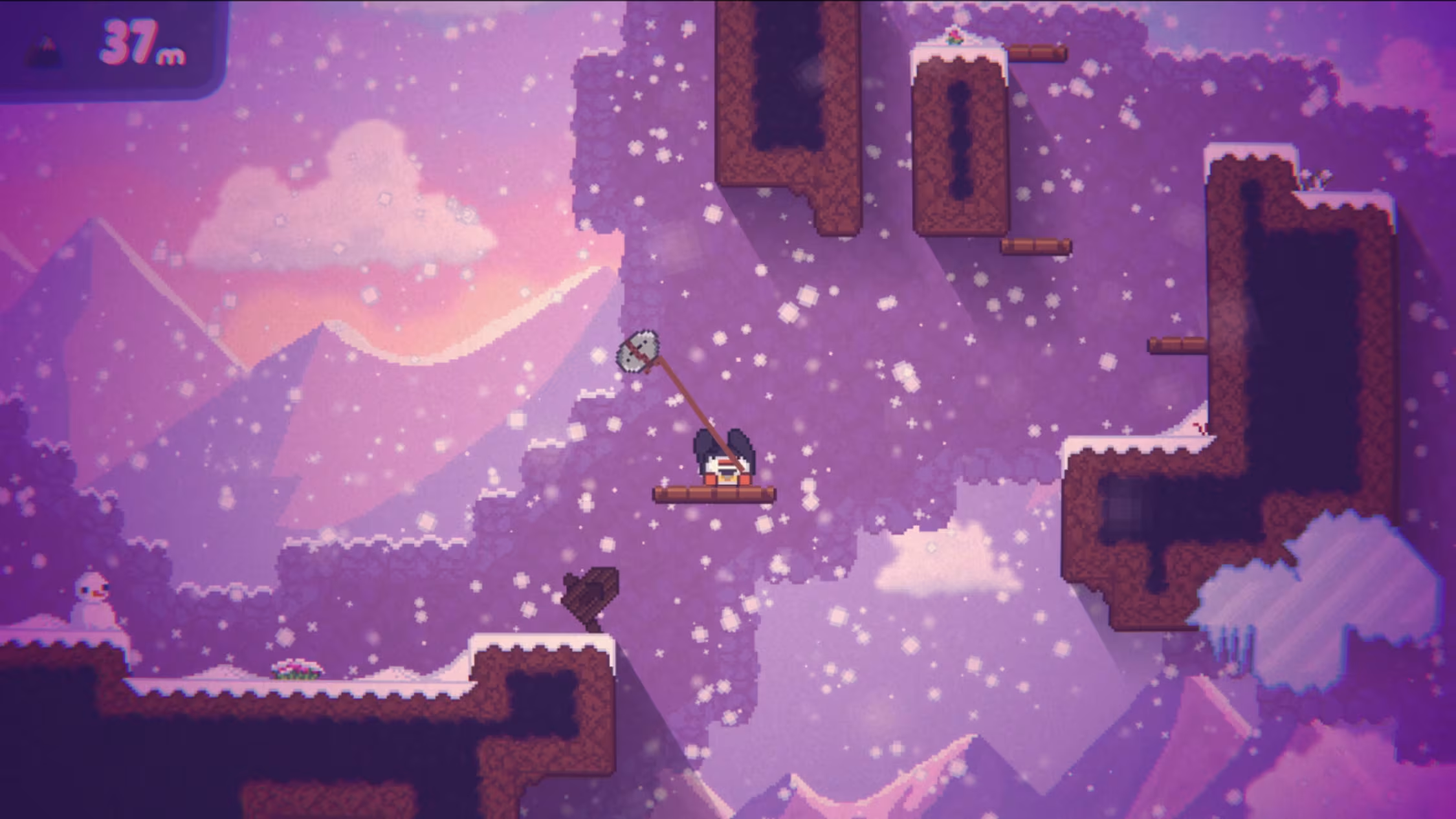
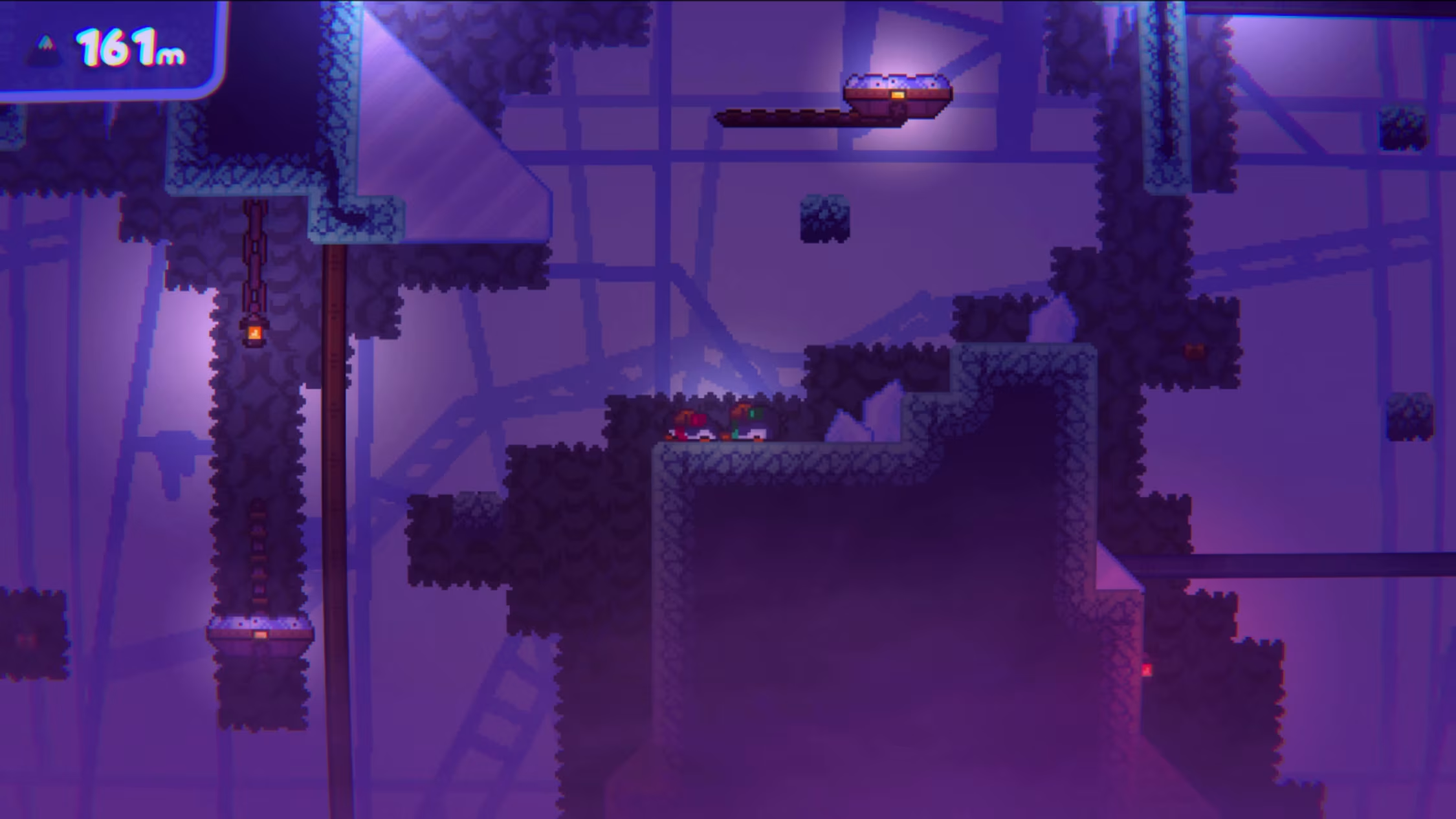
The rope between Bread and Fred is the defining mechanic. It is both a useful tool and a constant constraint, physically linking the two players as they navigate the mountain. Partners can use the tether to pull, swing, and launch one another across gaps, creating movement options that would not exist in a conventional two-player platformer.
Those options depend on precision. A swing requires the players to understand momentum and timing. A launch asks one partner to provide the right position and force while the other prepares for a landing. Even a straightforward pull can become important when a player needs leverage or a safer route through an obstacle.
- Pull together: The rope lets one penguin help reposition the other when a direct jump is not the best answer.
- Build momentum: Swinging on the tether can create the movement needed to cross difficult gaps.
- Launch with purpose: Players can use their connection to send a partner toward a higher or more distant landing area.
- Mind the timing: Every jump, grab, and swing depends on both players acting with a shared plan.
- Recover carefully: A controlled pull or a useful ledge can sometimes save an attempt that initially looks lost.
Because the rope is always present, the game’s co-op is not merely about two players occupying the same level. Bread and Fred make each other’s movement possible, but they can also interfere with one another when they act out of sync. The mechanic gives each successful crossing a collaborative feel: progress is earned through a joint understanding of position, speed, and risk.
The Challenge of Shared Failure and Shared Progress
Bread and Fred makes mistakes consequential. One mistimed jump or poorly judged swing can send both penguins tumbling down the mountain. That shared failure is a major part of the game’s tension, because a player is responsible not only for their own footing but also for their partner’s.
Repeated attempts are therefore part of the experience. Difficult sections invite players to try a route again, adjust their timing, and develop a better sense of how the rope behaves. A fall can reveal that a swing needed more momentum, that a ledge offered better leverage, or that a simpler pull would have been safer than an ambitious jump.
This structure gives successful recoveries and completed sections extra weight. The climb asks for patience, and progress can come from small improvements rather than a single flawless run. Players who keep practicing can refine the way they handle complex sections, making replaying a route part of the process of mastering it.
Bread and Fred Switch NSP is consequently well suited to players who appreciate a challenge with visible cause and effect. The difficult moments are tied to communication, coordination, and the physical behavior of the tether, not to a detached scoring system. When the pair finally reaches a safer position after several failed attempts, both players have contributed to that result.
Who Bread and Fred’s Cooperative Platforming Suits
This is a natural fit for two friends or family members who want a cooperative game built around active communication. Players need to discuss intended moves, timing, and trajectory, especially when preparing a swing or launch. Silence can make a hard section harder; a clear plan can prevent avoidable errors.
It also suits pairs willing to replay demanding areas. The game rewards practice with the rope mechanic and a growing awareness of how different tether lengths and momentum affect movement. Patience is useful, as is the ability to reset after a fall without turning every setback into a disagreement.
Players looking for a relaxed, independent two-player experience may find the shared dependency demanding. Bread and Fred is designed around synchronization. Its appeal lies in the fact that neither penguin can simply leave the other behind: both partners must make the climb work together.
Bread and Fred Switch Language Support and Technical Metadata
The Nintendo Switch title ID for Bread and Fred is 0100AF401B6A4000. The listed firmware requirement is 18.0.0, and the file size is 406 MB.
Language support includes English, Japanese, Spanish, Portuguese, French, German, Italian, Korean, Simplified Chinese, and Traditional Chinese. With its broad language selection and a focused two-player premise, Bread and Fred presents a snowy platforming climb where trust, technique, and a well-timed rope swing can be just as important as reaching the next ledge.