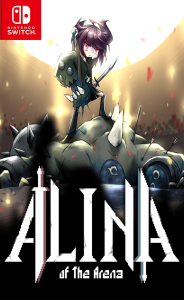
Alina of the Arena Switch NSP
Report Link Error
Select the broken download file, then submit the report.
Screenshots
About Game
Alina of the Arena Switch NSP places survival ahead of spectacle. Its heroine enters a hostile gladiatorial system where each arena battle carries more than a simple victory condition: Alina is fighting to preserve her dignity, uncover the circumstances behind her captivity, and force a path toward freedom. The game combines tactical turns, card-driven decisions, weapon choices, and roguelite uncertainty into a demanding arena campaign.
Alina’s Fight for Freedom in the Arena
The Alina of the Arena story follows a captured gladiator compelled to face relentless opponents in dangerous arenas. Alina’s struggle is framed by an oppressive system that treats combat as a means of control, giving her victories a personal weight beyond advancement to the next encounter.
As she survives successive battles, more of Alina’s past and the forces surrounding her predicament come into view. The arena narrative is therefore not solely about defeating foes. It is also about endurance, self-respect, and the possibility of escape. The setting is perilous rather than triumphant, with every new opponent and battlefield reinforcing the pressure placed on someone forced to fight.
That sense of gladiator survival suits the game’s tactical focus. Alina cannot simply charge forward without consequence. Success depends on adapting to difficult situations, recognizing threats, and making the most of the tools collected along the way.
How Turn-Based Hex-Grid Battles Shape Every Encounter
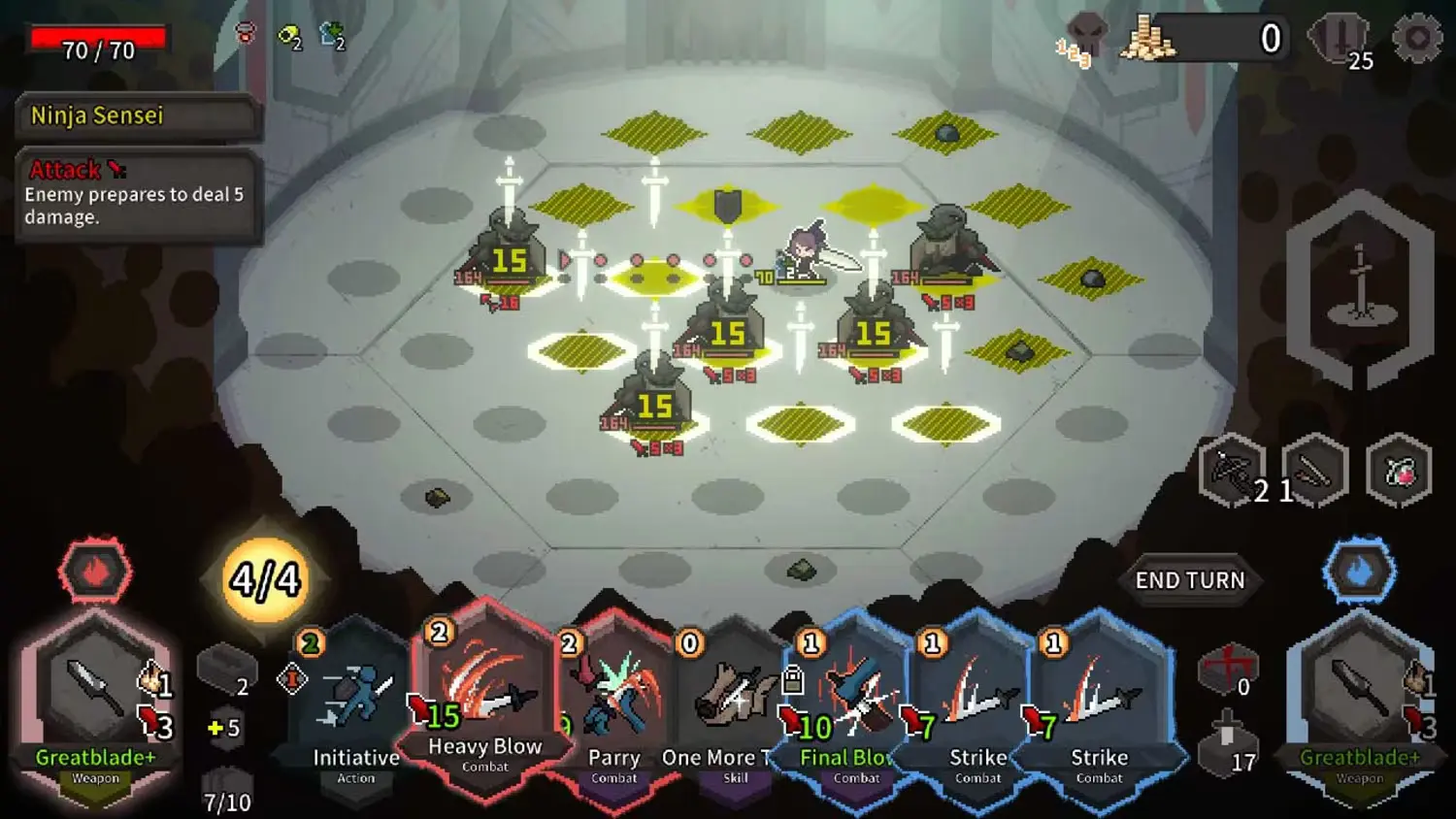
Combat unfolds in turns on a hexagonal grid, where location is as important as attack power. Alina must consider where enemies can move, what angles they can threaten, and which spaces offer the safest or most productive next step. A strong attack may not be worthwhile if it leaves her exposed to several enemy responses.
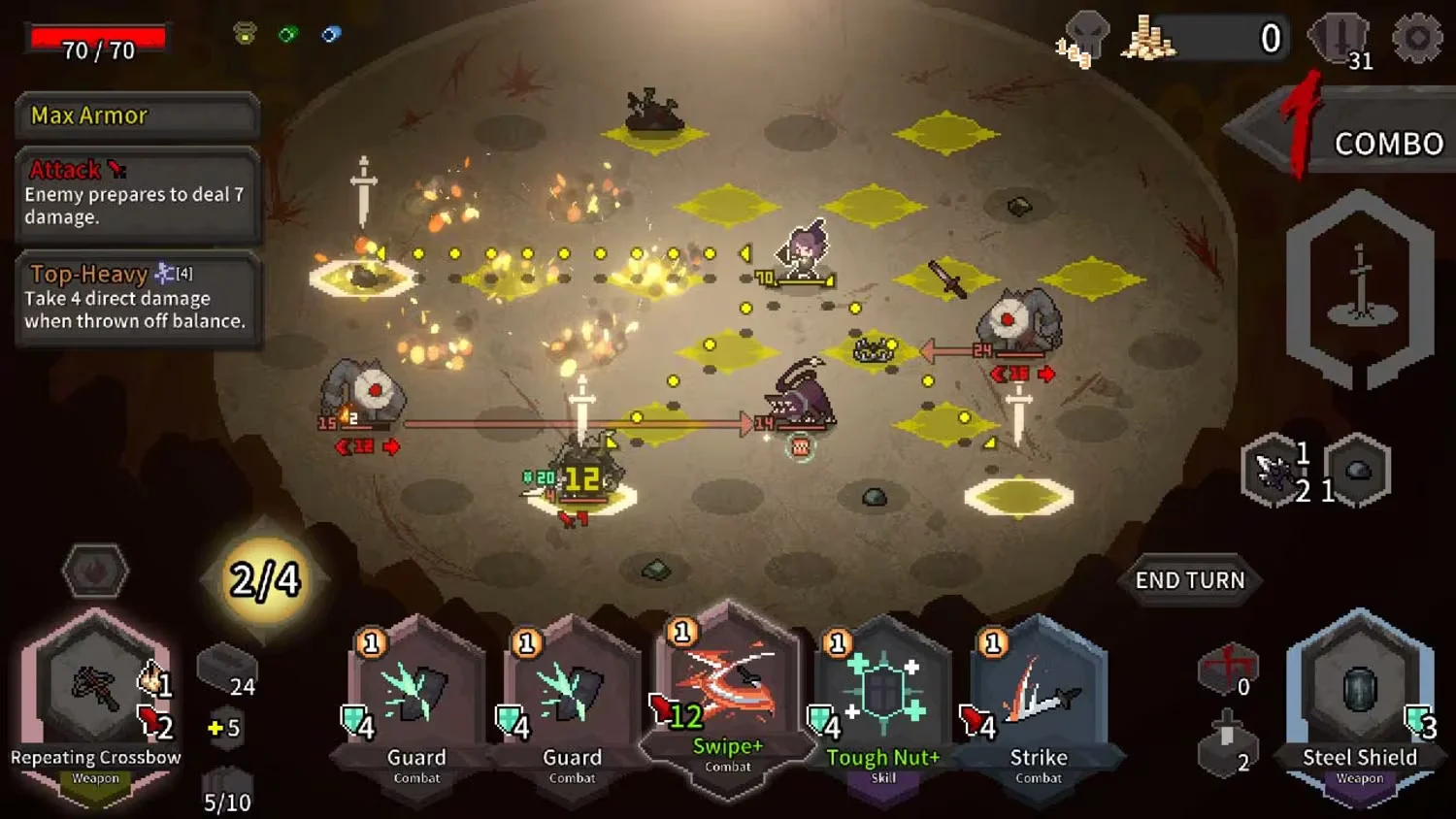
These hexagonal grid tactics make movement a central resource. Repositioning can reduce incoming damage, create better attack lanes, or set up an opponent for environmental danger. Arena hazards matter: enemies can be pushed into traps or sent off ledges, allowing a carefully chosen action to change an encounter without relying only on direct damage.
Enemy types bring distinct attack patterns, so reading the field becomes part of every turn. The game asks players to assess immediate danger while preparing for the next exchange. Boss encounters further emphasize this process, requiring approaches tailored to formidable opponents rather than one repeated tactic.
The result is turn-based combat with a measured pace. Each choice can affect positioning, defense, card availability, and the shape of the battlefield that remains after the turn ends.
Deck-Building Choices That Define Alina’s Strategy
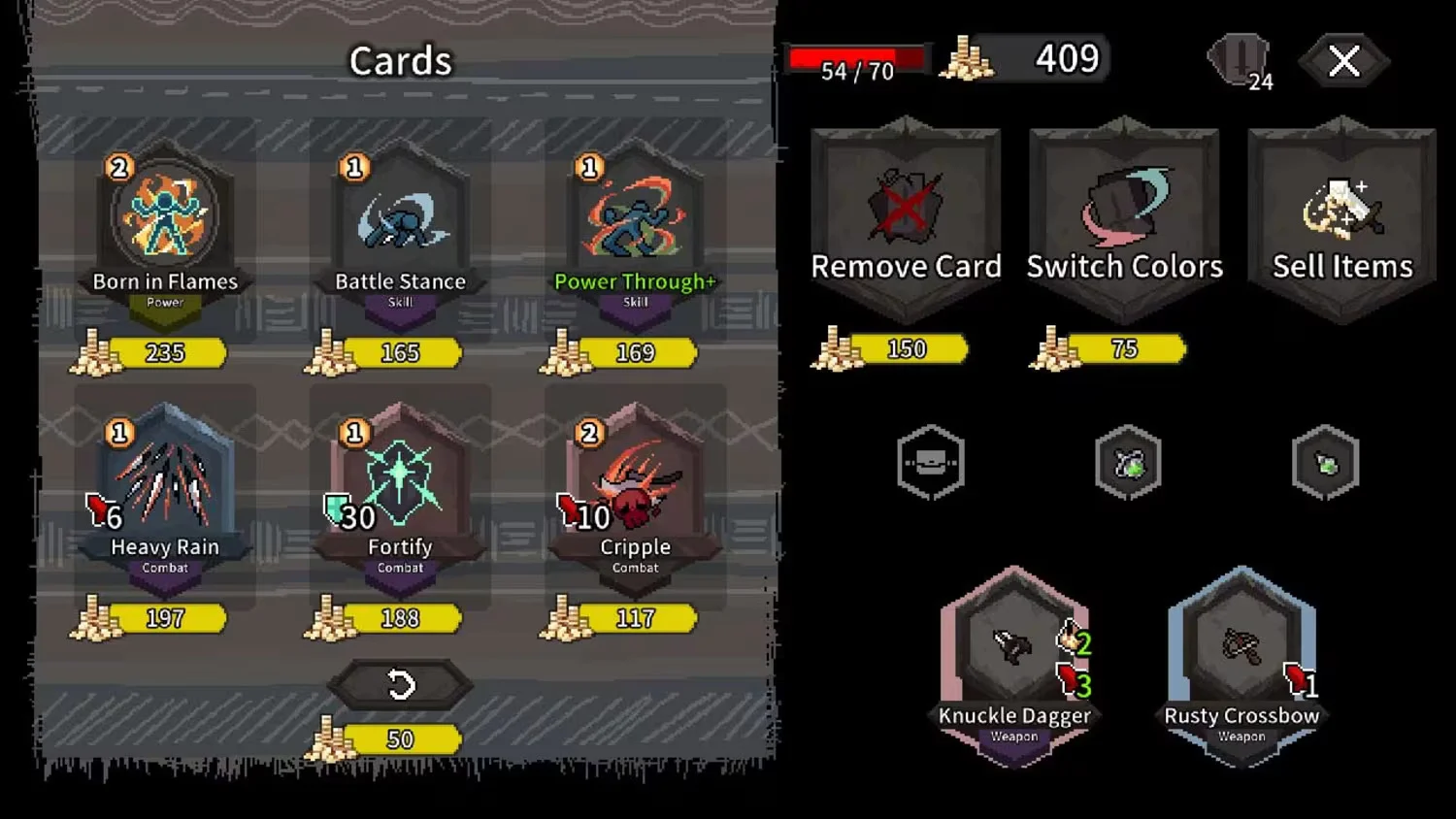
Alina’s options are shaped by a deck-building structure that lets players collect, refine, and use combat cards across a run. Cards and items support different tactical approaches, meaning the best choice can vary according to the enemies ahead, the weapons equipped, and the arena layout.
A key part of this strategic deck-building is the dual-wielding system. Alina can equip two different weapons, with each weapon associated with its own deck of cards. This creates room for combinations between weapon styles and encourages experimentation with complementary tools rather than dependence on a single routine.
The available pool includes hundreds of cards alongside powerful items, while weapons, armor, and abilities provide further ways to shape her fighting style. A deck can be refined around direct offense, safer positioning, environmental plays, or other responses suited to a particular run. The important consideration is not simply adding options, but building a set of cards that works with Alina’s equipment and the tactical demands of the arena.
That makes the game a roguelite deckbuilder in a practical sense: progression is tied to decision-making. New cards may be useful, but their value depends on timing, synergy, and how well they answer the threats on the grid.
A Step-by-Step Approach to Smarter Arena Turns
The intensity of a crowded arena can make a quick attack tempting, but a deliberate sequence is more reliable. This turn-based strategy guide reflects the priorities encouraged by the game’s combat design.
- Read the formation. Identify enemy positions, attack patterns, and the opponents most likely to create immediate danger.
- Map movement first. Check the hexes Alina can reach and consider how a new position could reduce exposure or improve an attack angle.
- Review the hand. Look at available combat cards in relation to the equipped weapons, rather than treating each card as an isolated action.
- Use the arena. Watch for traps, ledges, and other hazards that may allow an enemy to be pushed into a disadvantageous space.
- Commit with purpose. Choose the play that best balances damage, safety, and the likely enemy response on the following turn.
These Alina of the Arena tips are less about finding one universal move than establishing a dependable battlefield assessment. A turn that protects space and limits enemy options may be more valuable than one that produces the largest immediate hit.
The Roguelite Structure and Replayable Arena Runs
The roguelite framework gives repeated arena runs their changing character. Deck options, equipment choices, enemies, and battlefield decisions can differ from one attempt to another, asking players to adjust rather than follow a fixed sequence. A strategy that succeeds with one weapon pairing or card selection may need to change when a later run presents different tools.
This variety supports replayability through tactical adaptation. Players can test weapon combinations, explore card synergies, and make different decisions about which items, armor, abilities, and combat options best suit Alina’s situation. The shifting circumstances also keep enemy patterns and arena hazards relevant, since positioning remains important regardless of a build’s strengths.
For players who enjoy deliberate planning, deck refinement, and encounters where environmental awareness matters, the dynamic arena runs offer a substantial reason to return. The action genre label fits the gladiatorial premise, but its battles reward patience and foresight as much as aggression.
Alina of the Arena on Nintendo Switch: Release and Version Details
Alina of the Arena Switch NSP was released in the USA on November 23, 2023. DANGEN Entertainment is listed as both publisher and developer. The game is categorized under Arcade, Action, Fighting, and Strategy, reflecting its combination of arena combat, tactical movement, and card-based planning.
The listed version is 1.1.5.11, and the file size is 277MB. Supported languages are English, German, Japanese, Korean, Russian, Simplified Chinese, Spanish, and Traditional Chinese.
Its blend of tense arena narrative, tactical hex-grid battles, dual-wielding card options, and replayable roguelite structure makes it particularly suited to players looking for strategic combat that rewards careful decisions under pressure.