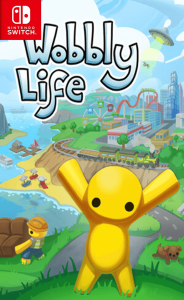
Wobbly Life Switch NSP
Report Link Error
Select the broken download file, then submit the report.
Screenshots
About Game
Wobbly Life Switch NSP brings a lighthearted simulation adventure to Nintendo Switch, built around a large island, loose player goals, and deliberately unstable physics. Released in the USA on May 29, 2025, Curve Games’ simulation game invites players to make their own fun through work, exploration, customization, and the kind of small mishaps that can turn an ordinary trip across town into a comic scene.
Wobbly Life on Nintendo Switch: A Physics-Based Open-World Sandbox
Wobbly Life is less concerned with directing players down a single path than with giving them a playful island to inhabit. Its physics-based open world contains towns, countryside, activities, vehicles, properties, and scattered discoveries, leaving plenty of room for self-made adventures. A player may decide to focus on earning enough for a new house, take to the roads in search of collectibles, or simply see what happens when an awkwardly controlled character tries to carry an object through a busy area.
The presentation is shaped by its cheerful, goofy atmosphere. Characters move with a loose wobble, and the world is designed to support moments of improvised comedy rather than perfect precision. That approach makes the simulation game accessible: progress matters, but so does the amusement found in an accidental collision, a clumsy landing, or an ill-timed vehicle trip.
It can be played solo, while local or online co-op supports a group of up to four players. That gives the island two distinct moods. Alone, it can feel like a relaxed place to pursue personal goals. With friends, familiar jobs and journeys can become much less predictable.
Create Your Own Wobbly Story Instead of Following a Linear Plot
The Wobbly Life story begins with the player as a Wobbly citizen on an island full of possibilities. There is no fixed narrative route dictating which activity must come next. Instead, players choose how they want to spend their time, earn money through jobs and activities, and gradually shape a version of island life that suits them.
Money supports a clear but flexible sense of progression. Earnings can go toward houses, vehicles, and clothing items, including hats and accessories. These purchases give practical and cosmetic reasons to keep engaging with the world, but they do not force every player into the same routine. One person may prioritize a vehicle collection, while another may concentrate on outfits, property, or the satisfaction of uncovering places they had not seen before.
This open-ended gameplay makes personal goals more important than scripted objectives. The game accommodates players who enjoy working through activities efficiently, as well as those who prefer to wander, experiment, and let an unexpected situation determine the next plan.
Jobs and Activities That Help You Earn Money
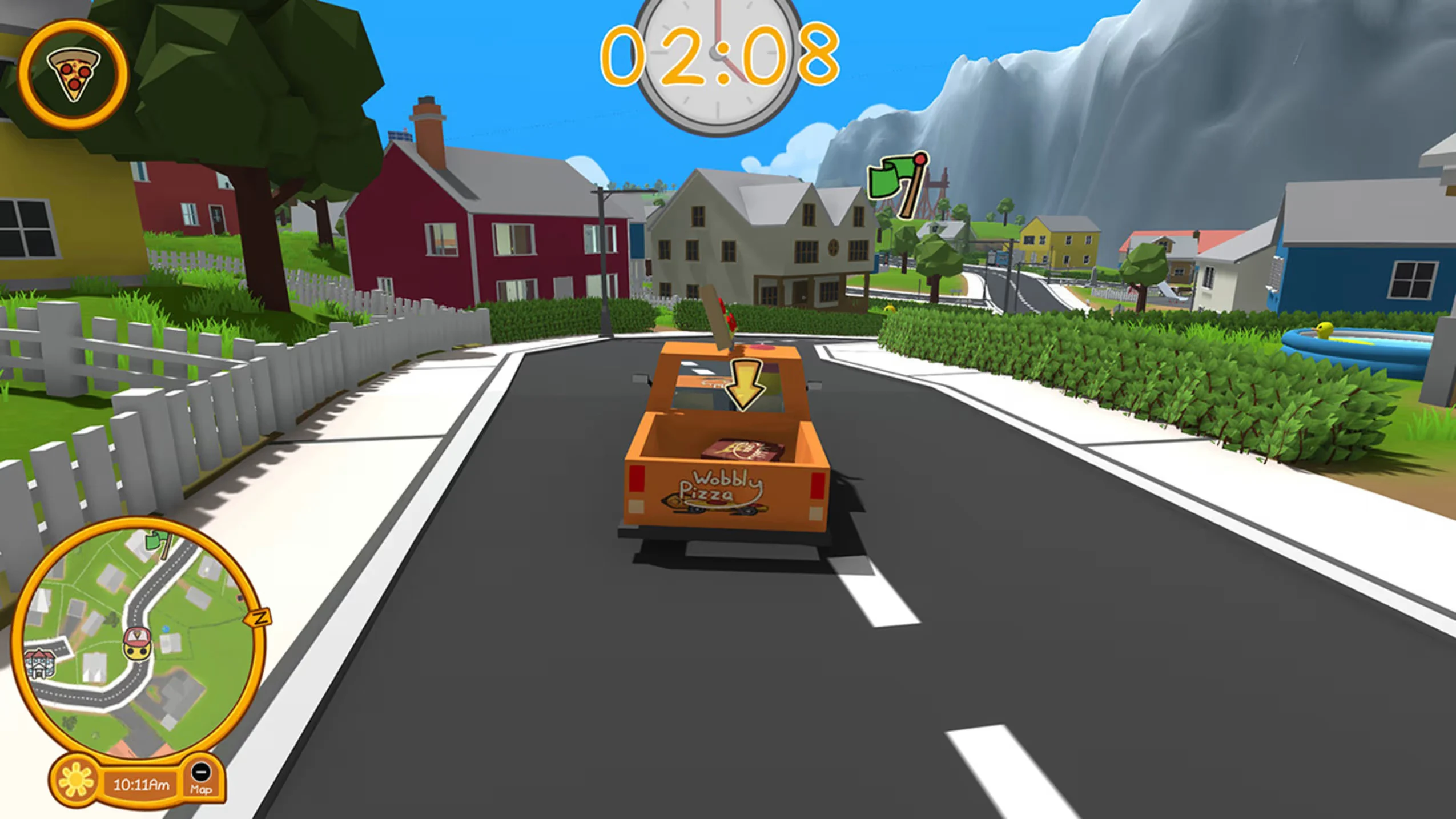
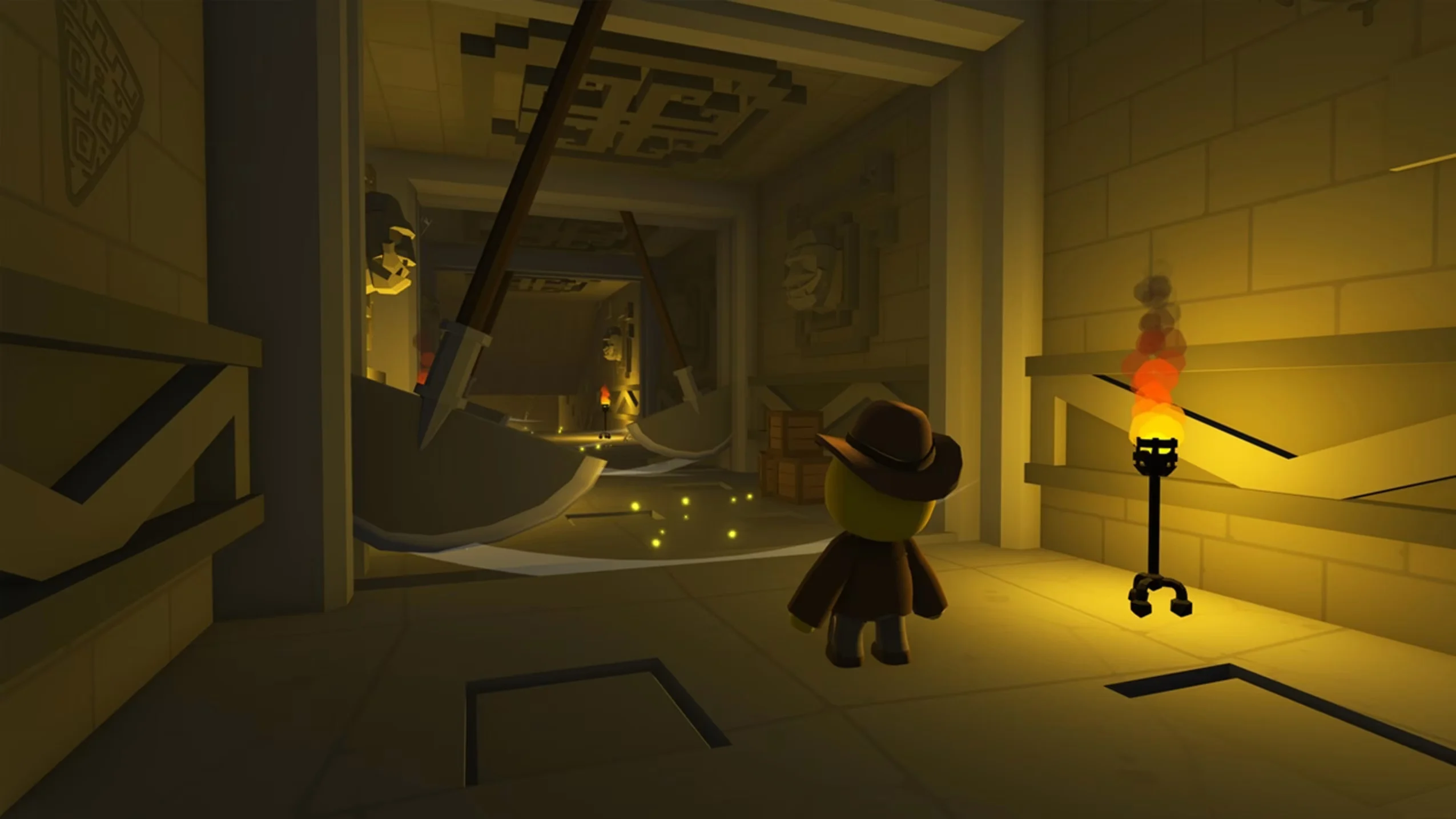
Jobs provide the main route to earning money, and their variety helps prevent the island from feeling like a single-purpose workplace. Pizza delivery is one of the supplied examples, turning a simple task into something potentially complicated by driving and wobbly movement. Zoo work offers another type of activity, while archaeology adds a more exploratory flavor to the list of possible occupations.
These tasks do more than fund purchases. They encourage players to travel across different parts of the island and to test how they handle vehicles, objects, and the environment. A job may be approached as a straightforward way to build savings, or as a chance to see how much chaos can be created before the task is complete.
That balance is important to the game’s replay value. Repeating an activity need not feel identical when the player changes vehicles, takes a different route, brings co-op partners, or simply reacts to the physics in a new way. The structure rewards both practical planning and a willingness to accept that plans may unravel.
Exploring the Island’s Towns, Countryside, and Hidden Secrets
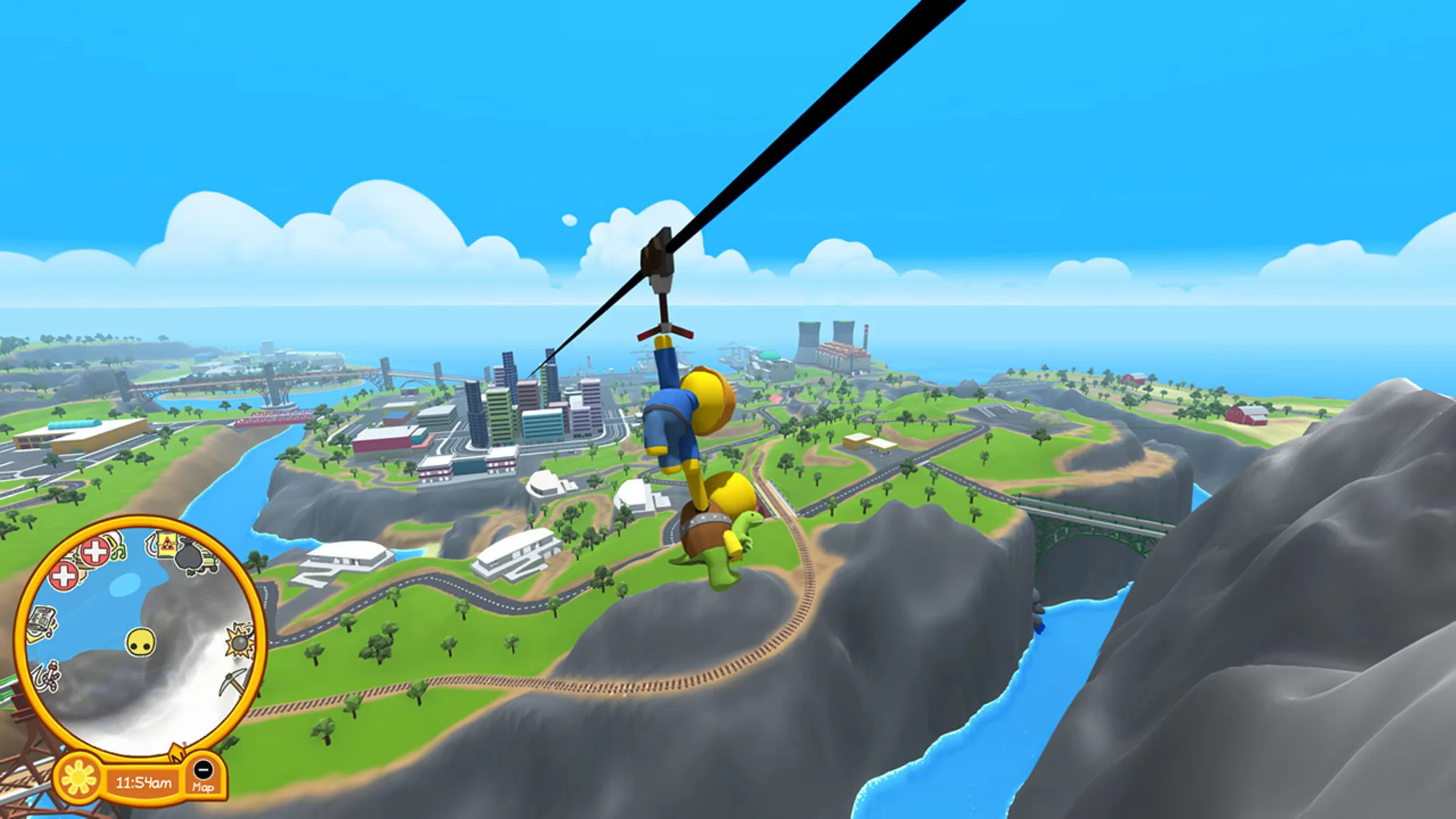
The Wobbly Life island is designed for free-roaming exploration, with bustling towns set alongside quieter countryside and other varied locations. It is not only a backdrop for jobs. Hidden secrets, collectibles, and mini-games give players reasons to leave the most obvious routes and investigate the edges of the map.
Exploration can become its own form of progression. Finding a concealed area or a collectible creates a small sense of discovery, while mini-games offer another break from earning money and managing purchases. Players who like to search thoroughly can take their time between jobs, checking unfamiliar locations and revisiting areas from a different direction.
The island’s varied spaces also support the game’s relaxed atmosphere. A player can move from a busy town task to a trip through the countryside without needing a strict story prompt. For younger players, families, and groups looking for a playful shared sandbox, that freedom can be especially appealing. More goal-focused players still have a reason to explore, since the world contains opportunities beyond the standard job loop.
Why Wobbly Physics Make Everyday Activities Unpredictable
Wobbly Life physics are central to its identity. The character’s movement is intentionally unsteady, and interactions with objects and other Wobbly characters can produce surprises. Walking, driving, flying, or attempting to manage an everyday task all carry the possibility of physics shenanigans.
That unpredictability changes the texture of ordinary actions. A car is not merely transport; it can become part of a slapstick mishap. Flying a plane is not just a faster way across the island; it is another opportunity to test control against the game’s playful handling. Even picking up or moving an object can require a little adjustment when wobbly character movement refuses to behave neatly.
The result is a game that values improvisation. Players who demand exact control may need patience, but those who enjoy humorous accidents are likely to find the movement system part of the appeal. In co-op, the same physics can turn coordinated work into a mess of competing plans, rescues, and accidental interference.
5 Practical Ways to Get More From Your Wobbly Life Adventure
- Try different work: Rotate between jobs such as pizza delivery, zoo work, and archaeology to keep earning money while seeing different activities.
- Test the transport: Experiment with cars and planes rather than relying on one routine method of travel; vehicles can change both efficiency and the kind of mishaps that occur.
- Search beyond the main route: Make time for hidden areas, collectibles, and mini-games instead of treating each journey as a direct trip between objectives.
- Coordinate in co-op: Bring friends into local or online play to tackle jobs together, divide tasks when useful, and accept that teamwork may become comic disorder.
- Use the chaos: When physics disrupt a plan, treat it as part of the adventure. Improvisation is often more in keeping with Wobbly Life gameplay than restarting for a perfect result.
For players seeking a structured story with tightly controlled movement, this may be a deliberately different proposition. Wobbly Life Switch NSP is better suited to players who enjoy open exploration, simple personal progression, humorous physical interactions, and a sandbox that leaves room for a new plan every time they return.
Title ID: 010039501F11C000
Genre: Simulation
Publisher: Curve Games
Languages: English, Portuguese, Spanish, French, German, Italian, Russian, Korean, Chinese, and Traditional Chinese
File Size: 846 MB
Recommended Similar Games
 Mystery Box: Hidden Secrets Switch NSPView Game
 Love is all around Switch NSPView Game
 Shin chan: Me and the Professor on Summer Vacation – The Endless Seven-Day Journey Switch NSPView Game
 Bright Lights of Svetlov Switch NSPView Game
 This War of Mine: Complete Edition Switch NSP XCIView Game
 Summer Games Challenge Switch NSPView Game
