Dragon’s Dogma: Dark Arisen Switch NSP XCI

Report Link Error
Select the broken download file, then submit the report.
Screenshots
About Game
Dragon’s Dogma: Dark Arisen Switch NSP XCI places a personal loss at the centre of a broad fantasy journey. It is an action role-playing game built around dangerous travel, real-time battles, and a party system that gives the road through Gransys a sense of shared experience. The result is a demanding adventure where preparation, positioning, and knowledge of the enemy can matter as much as the strength of a weapon.
From Fishing Village to Arisen: The Central Quest
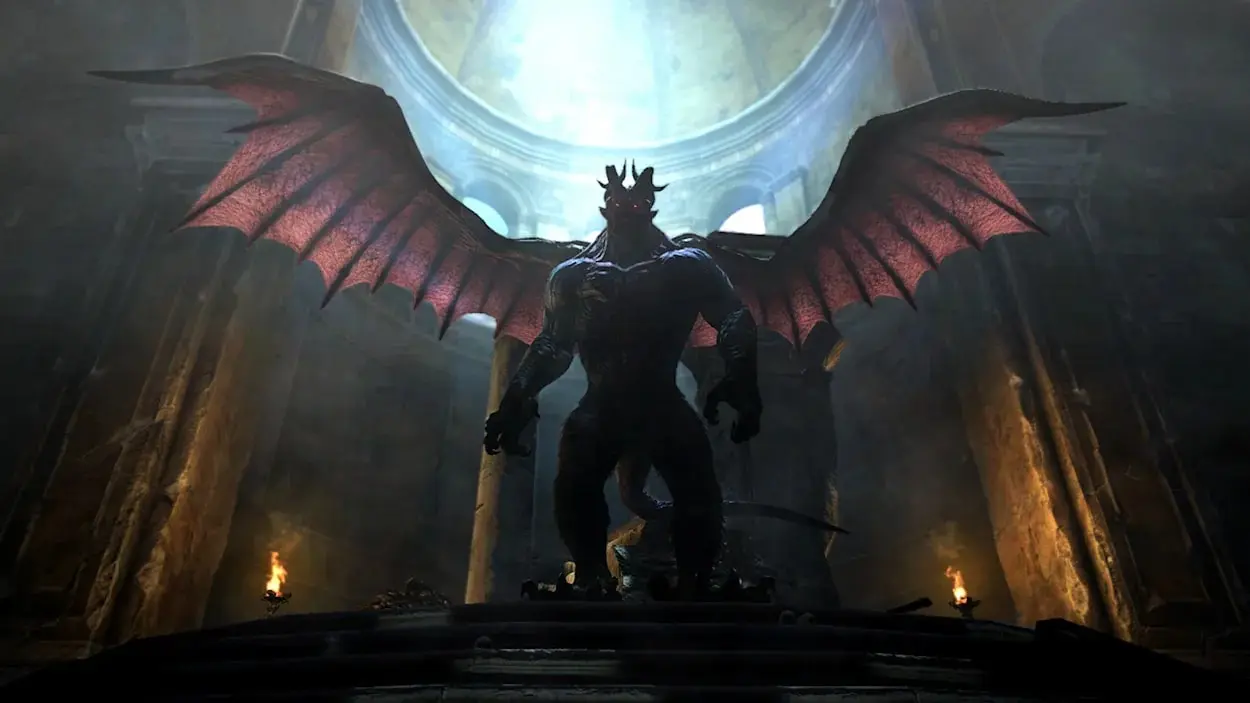
The story begins when Grigori, a powerful dragon, descends on the protagonist’s fishing village. The attack changes everything: the dragon takes the protagonist’s heart, yet the victim survives and becomes the Arisen. That impossible survival establishes the central purpose of the journey—cross Gransys, find answers, gather allies, and eventually confront Grigori.
Gransys provides the setting for that search. Its towns, ruins, dungeons, and open spaces are not merely stops between story scenes; they frame an adventure shaped by quests, exploration, and encounters with people whose motives are not always clear. The wider mystery concerns both the dragon’s nature and the Arisen’s role in a destiny that grows more complicated as the journey continues.
There is a directness to this premise that suits the game’s tone. Losing one’s heart is not abstract motivation. It gives the quest an immediate personal stake, while the scale of Gransys allows that private loss to develop into a larger fantasy story.
Action Combat Built Around Enemy Weaknesses
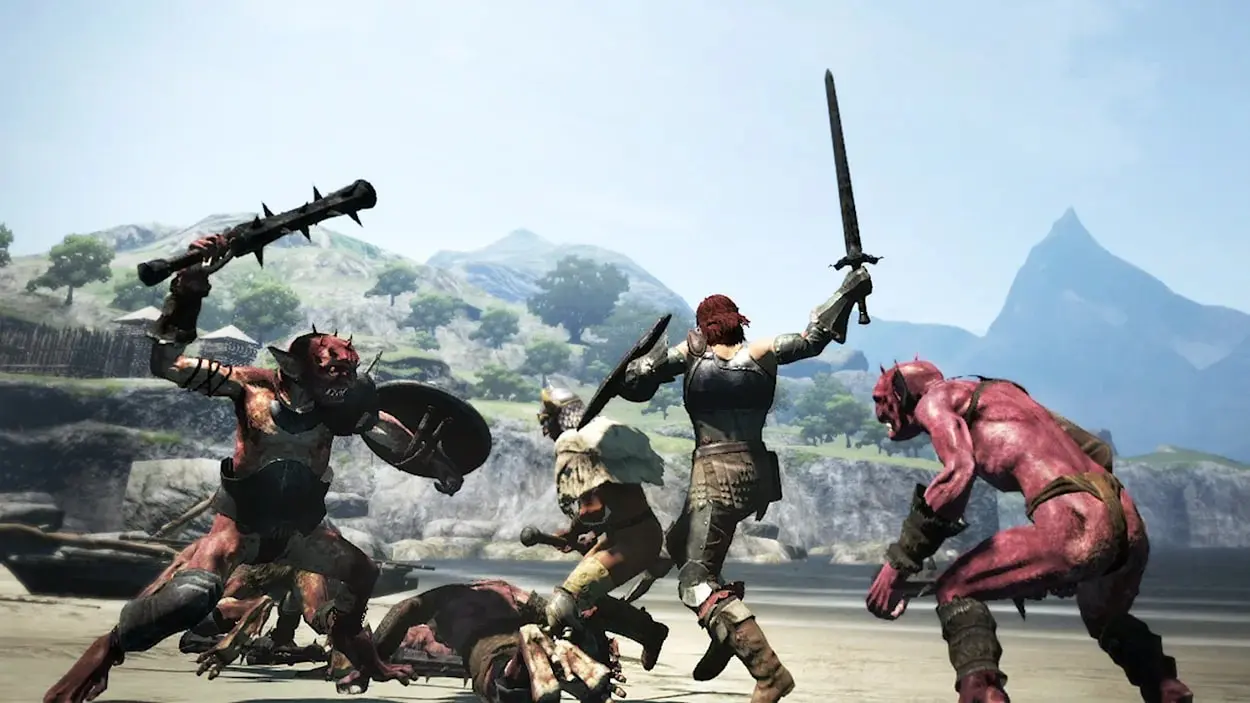
Combat in Dragon’s Dogma: Dark Arisen unfolds in real time and asks players to react to the threat in front of them. Goblins, hydras, griffins, and other mythical beasts create different pressures, and the game encourages attention to enemy weaknesses rather than treating every fight as a simple exchange of damage.
The climbing mechanic is one of the clearest expressions of that design. Large foes can be scaled so the Arisen can strike vulnerable points directly. It gives battles against colossal enemies a physical quality: the player is not only choosing attacks, but also deciding where to stand, when to climb, and when to retreat.
That approach makes encounters feel tense even outside major boss battles. A party caught unprepared can be pushed into a difficult struggle, while a group that understands an opponent’s weak spots has more options. The action combat is therefore not just fast; it is strategic, with movement and observation carrying real weight.
The Pawn System and a Party That Learns
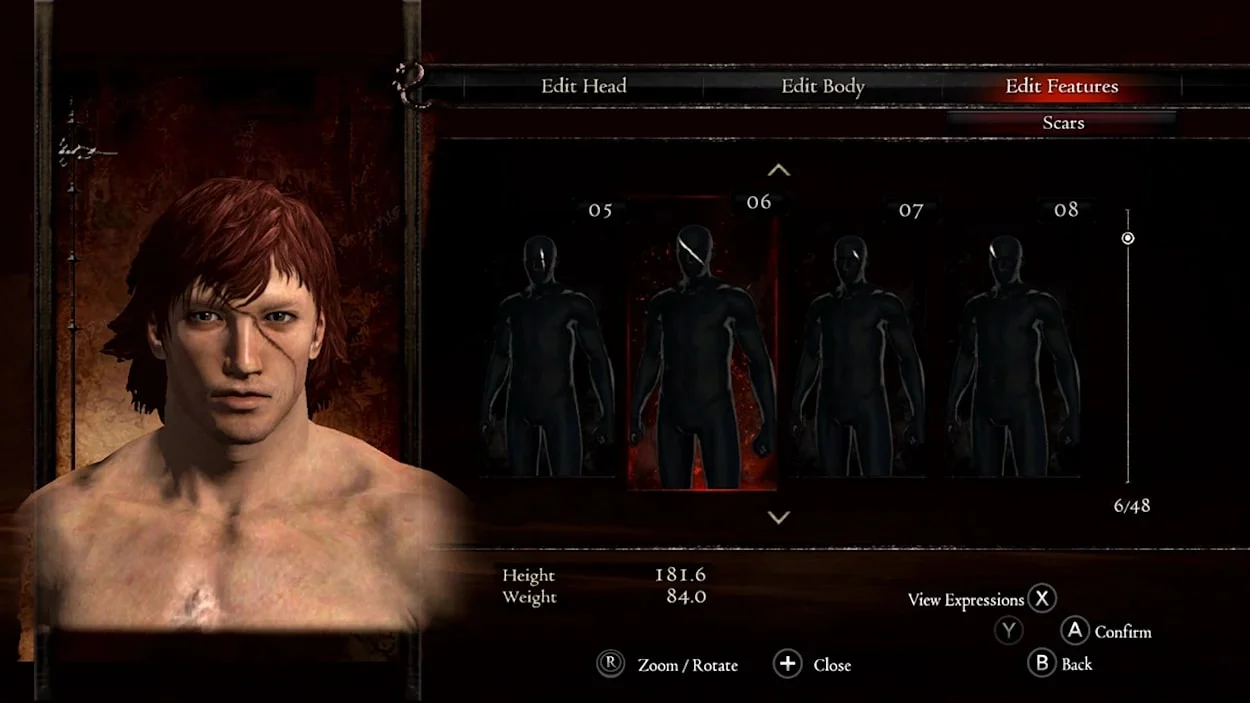
The Pawn system gives the adventure its most distinctive layer of companionship. Players create a Main Pawn, an AI companion that accompanies the Arisen and learns from the player’s actions. Two additional Pawns created by other players can also be recruited, creating a four-person group that can combine different skills in battle and exploration.
This structure makes party strategy important. Pawns bring their own abilities and accumulated knowledge, helping the group respond to enemies, hazards, and the demands of travel. A balanced party can cover more situations than a lone character, especially when combat calls for different approaches or an area presents an obstacle that benefits from companion support.
The system also supports a sense of progression beyond equipment. As the Main Pawn learns and adapts, it becomes part of the player’s developing approach to Gransys. That relationship gives the party more character than a fixed set of allies would provide, while the recruitable Pawns keep the group flexible.
Building an Arisen Through Vocations and Gear
Character building begins with vocations. The available paths include Fighter, Strider, Mage, and advanced classes, allowing the Arisen and companions to take on different roles. A Fighter can favour direct combat, a Strider offers another style of action, and a Mage brings a different set of practical options to the party. Changing or testing vocations is part of finding a setup that suits the player’s preferred rhythm.
Weapons and armor extend that customization. Gear can be collected and upgraded, providing a tangible reason to explore, complete quests, and prepare for stronger foes. The most useful equipment is not simply a display of progress; it supports a particular vocation and helps a party meet the increasing demands of the journey.
This is where the game’s progression feels especially open-ended. The Arisen can be shaped through class choices, equipment, and party composition, while the Main Pawn can be built to complement those decisions. A player looking for a more deliberate role-playing experience has room to experiment rather than being locked into one combat identity.
Bitterblack Isle: Dark Arisen’s Greater Challenge
The Dark Arisen expansion leads to Bitterblack Isle, an isolated and cursed location beneath Gransys. Its atmosphere is markedly more oppressive, and its dangers are more severe. The island contains challenging enemies, stronger equipment, ancient evils, and a darker story that sits alongside the main journey.
Bitterblack Isle is not simply another stretch of countryside. It is designed as a greater test for the Arisen, asking more from combat skills, party choices, and strategic thinking. Its powerful gear offers a reason to push deeper, but the setting makes clear that this is a place to approach with care.
For players who want a harsher extension of the main adventure, the expansion adds a concentrated dose of pressure. Its darker presentation and more dangerous creatures give it a distinct identity while remaining connected to the world of Gransys.
9 Early Survival Priorities for New Arisen
New players do not need to master every system immediately. These priorities combine the game’s most useful early lessons into a practical path through the first stages of Dragon’s Dogma: Dark Arisen Switch NSP XCI.
- Build the party first: Create a useful Main Pawn and recruit two additional Pawns so the group can draw on a wider range of skills and learned knowledge.
- Study the enemy: Pay attention to enemy weaknesses, especially when facing mythical beasts whose vulnerable points can change the shape of a battle.
- Use the climb: When a large opponent allows it, climbing can open access to weak spots and create opportunities for more effective attacks.
- Search beyond the road: Explore dungeons, ruins, towns, and other parts of Gransys, then use quests to expand understanding of the world and find new challenges.
- Refine the build: Upgrade weapons and armor, then test vocations such as Fighter, Strider, and Mage to find a role and party arrangement that works.
- Respect dangerous travel: Prepare before difficult journeys, and treat Bitterblack Isle as a higher-level challenge with tougher creatures, stronger gear, and greater risk.
The game is best suited to players who enjoy action RPGs that ask them to engage with their systems. Its replay value comes from experimenting with vocations, equipment, Pawn combinations, quests, and different approaches to combat. Gransys can be inviting, but it rarely suggests that the Arisen should travel carelessly—and that restraint is a major part of its appeal.
Recommended Similar Games
 Float Survival Simulator – Ocean Survivor Switch NSPView Game
 Touhou Danmaku Kagura Phantasia Lost Switch NSP XCIView Game
 Punch Club 2: Fast Forward Switch NSPView Game
 S.T.A.L.K.E.R.: Clear Sky Switch NSPView Game
 Sonic Forces Switch NSP XCIView Game
 Knight vs Giant: The Broken Excalibur Switch NSPView Game
