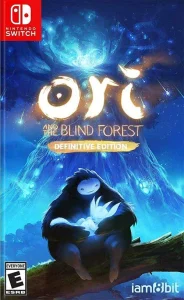
Ori and the Blind Forest Definitive Edition Switch NSP XCI
Report Link Error
Select the broken download file, then submit the report.
Screenshots



About Game
Ori and the Blind Forest Definitive Edition Switch NSP XCI brings Moon Studios’ platform-adventure to Nintendo Switch with a story rooted in loss, recovery, and the fate of a dying woodland. Released on September 27, 2019 by Xbox Game Studios, this Definitive Edition follows Ori, a small white guardian spirit, through Nibel as its once-living spaces fall into decay. The result is an action-platformer built around exact movement, connected environments, and a presentation shaped by hand-drawn art and an orchestral soundtrack.
A Return to Nibel in the Definitive Edition
Nibel is not simply a backdrop for Ori’s journey. Its failing condition drives the entire adventure. A catastrophic event has dimmed the light of the Spirit Tree, leaving the forest weakened and its inhabitants affected by corruption. Ori begins as an orphan cared for by Naru, and their relationship gives the opening events a personal focus before the larger mission to restore balance begins.
The journey asks Ori to recover the elements of Water, Wind, and Warmth, each of which is tied to healing the forest and rekindling the Spirit Tree. That structure gives the game a clear forward purpose while allowing the world to open outward through exploration. Areas connect into a larger map, with new routes becoming accessible as Ori gains movement and combat tools.
On Nintendo Switch, the Definitive Edition presents Nibel as a place of contrast: delicate natural scenery sits beside hazardous passages, dangerous creatures, and ruined locations. The visual style and music support the story’s emotional direction without replacing the need for careful play. Nibel can appear peaceful, but its challenges demand attention.
Kuro and the Conflict at the Heart of the Forest
Kuro, a giant owl, serves as the principal antagonist in Ori’s effort to save Nibel. Her presence gives the story a direct source of conflict, but she is not framed as a simple obstacle placed in Ori’s path. Kuro’s actions are shaped by a tragic past, and learning about her motivations adds context to the damage surrounding the forest.
That history gives the narrative more weight than a straightforward battle between a hero and an antagonist. Ori’s quest is concerned with restoring life to Nibel, yet it also moves through themes of family, sacrifice, hope, and redemption. Naru’s bond with Ori remains central to the emotional stakes, while Kuro’s story complicates the struggle for the Spirit Tree’s light.
The game’s dramatic moments are therefore connected to both plot and place. The decaying forest, its corrupted creatures, and Kuro’s opposition all reflect a world that has been damaged rather than merely invaded. This helps the adventure maintain an emotional tone alongside its demanding platforming.
Precision Platforming Across an Interconnected World
Ori and the Blind Forest Definitive Edition Switch NSP XCI is built around agile movement through an interconnected world. Ori runs, jumps, climbs, and eventually gains further options for crossing hazardous terrain. These mechanics support a Metroidvania-style structure in which an unreachable ledge, blocked passage, or suspicious corner may become useful after a later ability is unlocked.
Platforming challenges often require precise timing rather than brute force. Players must guide Ori through spikes, moving hazards, unstable routes, and narrow openings while keeping momentum under control. The fluidity of Ori’s movement makes these sequences responsive, but the game still expects repetition and practice when an exact jump or evasive maneuver is required.
Environmental puzzles are woven into that movement. A route may involve manipulating the surroundings, using a newly learned power, or recognizing how a familiar mechanic applies in a different area. Exploration is not separated from challenge; the act of searching Nibel frequently leads into new traversal tests, hidden areas, collectibles, and pieces of lore.
Combat is another part of the rhythm. Ori uses a spirit flame guided by Sein against corrupted enemies and bosses. Encounters reward quick reactions and sensible use of powers, especially when fighting spaces are crowded or movement hazards remain active. The game does not treat combat and platforming as isolated systems, since the same mobility that helps Ori reach secrets can also create room during a dangerous encounter.
Abilities That Expand Ori’s Movement Options
Progression is closely tied to Ori’s expanding set of abilities. New powers increase traversal possibilities, improve combat potential, and encourage returns to earlier parts of Nibel. A previously inaccessible section can become a path forward once Ori has the right movement tool, giving exploration a practical reason beyond collecting extras.
The skill tree adds another layer to this growth. Unlocks and upgrades allow players to develop Ori’s capabilities as the journey continues, making decisions about which improvements will best support their own approach. Some may favor tools that assist movement through difficult terrain, while others may value added help in combat or exploration.
The Definitive Edition includes abilities such as Dash and Light Burst. Dash extends Ori’s mobility and can help with demanding traversal, while Light Burst provides another power to use in the world’s platforming and combat situations. Their inclusion reinforces the game’s larger design principle: every meaningful new ability changes how players read the map.
That steady growth also supports replay value. Returning to older areas with a broader toolkit can reveal hidden routes that were visible but unavailable on a first visit. The connected layout gives players reason to revisit Nibel, search more carefully, and apply familiar abilities in new combinations.
Why the Ginso Tree and Forlorn Ruins Stand Out
The Ginso Tree and the Forlorn Ruins are among the game’s notable sequences because they place its strengths under pressure. Both locations are part of the larger adventure, but they are also remembered for platforming challenges that ask players to apply movement skills in dramatic circumstances.
The Ginso Tree is associated with an especially intense stretch of traversal, turning a major story location into a test of timing and control. The Forlorn Ruins similarly combines the game’s environmental design with demanding navigation. In each case, the challenge is not presented as an optional distraction from the story. It is part of the adventure’s momentum.
These sequences show how Ori’s presentation and mechanics work together. The hand-drawn world and orchestral score establish mood, while the platforming requires the player to react decisively. For players who enjoy demanding action-platformers, the Ginso Tree and Forlorn Ruins provide clear examples of the game’s willingness to ask for precision.
5 Practical Approaches to Surviving Nibel’s Challenges
- Practice movement first. Ori’s agile controls are central to platforming challenges, so repeated attempts at difficult jumps, hazards, and escape routes can improve timing and confidence.
- Combine abilities creatively. New powers are useful beyond a single obstacle. Experiment with movement and combat abilities together when a puzzle, route, or encounter seems difficult.
- Search beyond the main route. Nibel contains hidden areas, collectibles, and lore-related discoveries. Revisiting earlier spaces after gaining new abilities can reveal paths that were previously out of reach.
- Choose upgrades thoughtfully. The skill tree provides ways to improve Ori’s capabilities. Consider which upgrades best support current needs, especially when platforming and combat challenges become more demanding.
- Adapt during combat. Corrupted creatures and bosses call for quick reflexes and careful use of Ori’s powers. Keep moving, use available space, and adjust tactics when an enemy or arena changes the pressure.
With its action and platformer design, emotional story, and broad language support including English, Japanese, French, German, Italian, Spanish, Russian, Chinese, and Portuguese, the game is suited to players looking for a visually expressive adventure that also expects persistence. Its strongest appeal lies in the relationship between Nibel’s atmosphere and the disciplined movement needed to survive it.
Recommended Similar Games
 The Legend of Heroes: Trails into Reverie Switch NSP XCIView Game
 RetroRealms Double Feature: Halloween and Ash vs Evil Dead Switch NSPView Game
 Eiyuden Chronicle: Rising Switch NSPView Game
 Hitman: Absolution Switch NSPView Game
 Crash Bandicoot N. Sane Trilogy Switch NSP XCIView Game
 Rubber Bandits Switch NSPView Game
