OCTOPATH TRAVELER II Switch NSP XCI
Report Link Error
Select the broken download file, then submit the report.
Screenshots
About Game
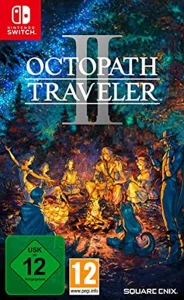
OCTOPATH TRAVELER II Switch NSP XCI frames its role-playing journey around eight travelers whose personal ambitions unfold across a changing world. Released on February 24, 2023, the Square Enix-developed and published game places careful turn-based planning alongside a richly detailed visual style, inviting players to explore Solistia through character stories, shifting towns, and battles where timing matters.
Solistia: A World Between Tradition and Industry
Solistia is divided into eastern and western continents, with the sea between them serving as both a boundary and a route for travel. Ships crossing the oceans are part of a world moving into an era of expanding industry. That contrast gives the setting a distinct mood: progress is visible, yet each region still has its own people, routines, and problems waiting to be discovered.
The game’s eight protagonists enter this changing landscape with separate motivations. Their stories begin from individual perspectives, rather than from a single shared quest. A warrior seeks justice, a dancer follows a dream, and a merchant pursues fame. Other paths involve revenge and a search for answers about a mysterious past. These independent narratives gradually intersect, giving Solistia the feel of a large place seen through several very personal journeys.
Exploration supports that structure. Towns, side quests, hidden dungeons, and powerful bosses add layers beyond the travelers’ main stories. The setting is not merely a backdrop for combat; it is a place where character goals, local information, and new routes can influence the next step forward. For players who enjoy a role-playing game that moves between intimate character drama and broad regional exploration, Solistia offers room to follow both.
The 2D-HD Visual Identity of OCTOPATH TRAVELER II
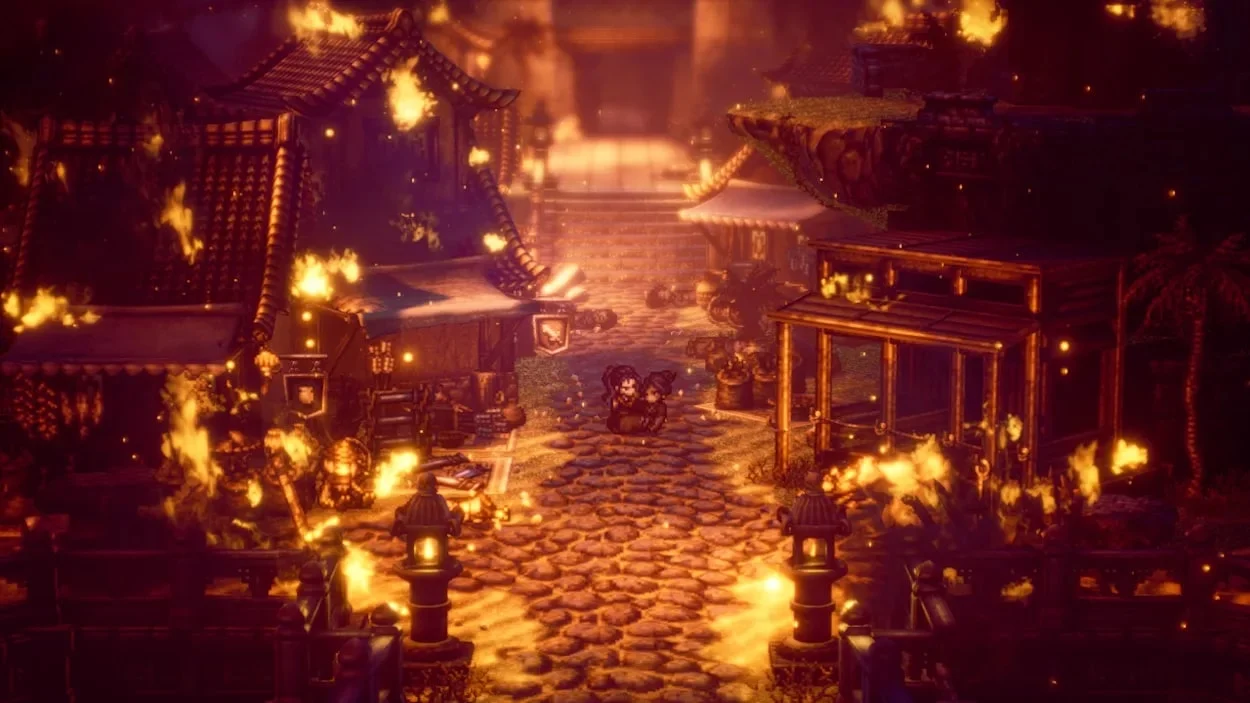
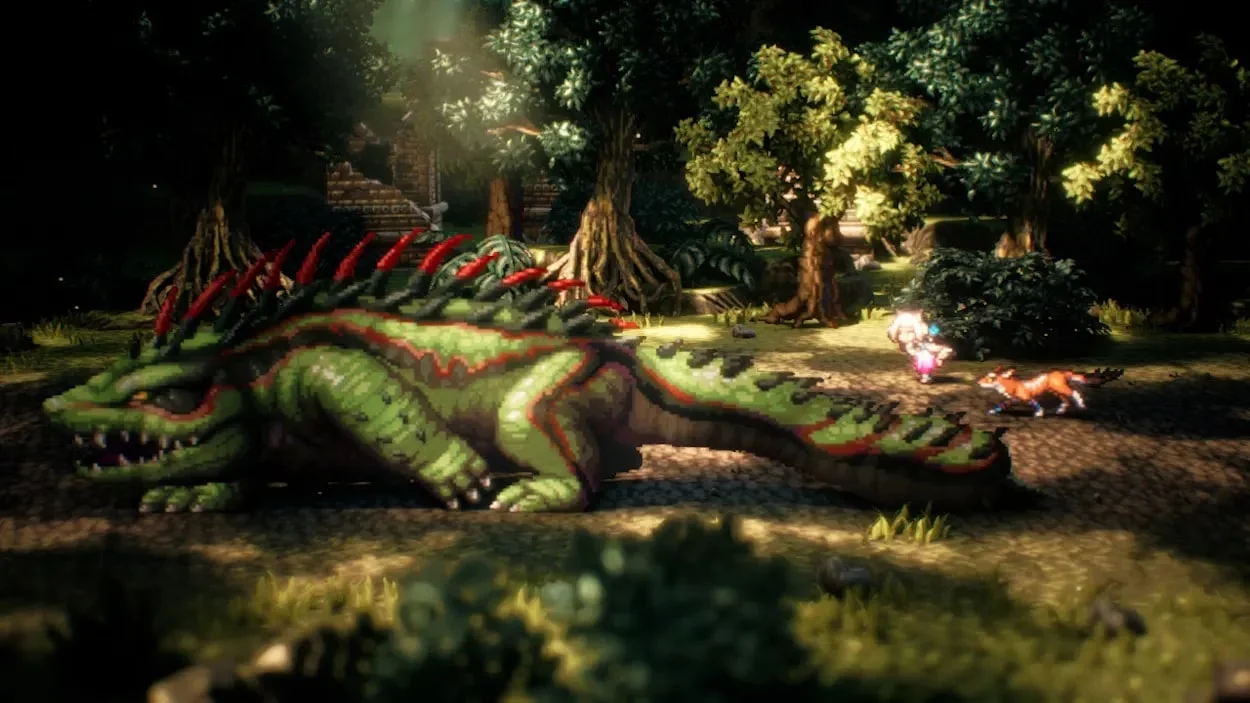
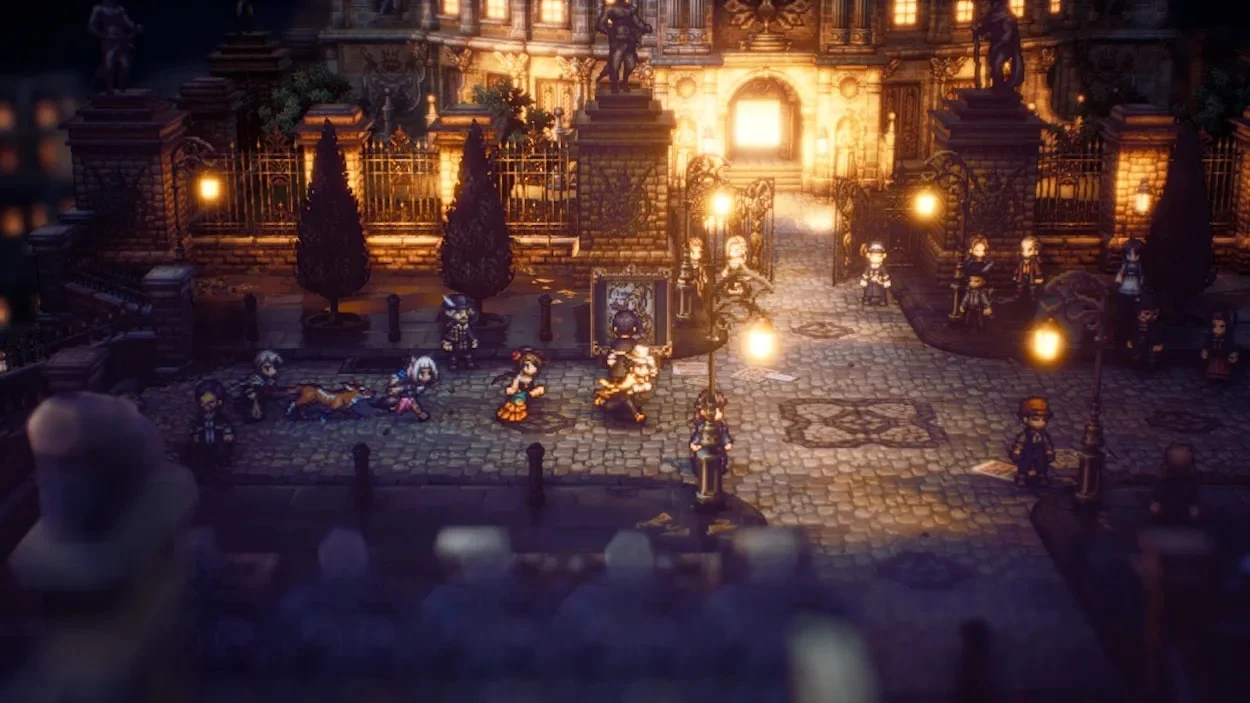
The presentation combines sprite-based characters with detailed three-dimensional environments, creating the game’s recognizable 2D-HD world. Characters retain the immediate readability of pixel-art figures, while towns, landscapes, and interiors gain depth through layered scenery and environmental detail. The result is a visual approach that connects classic role-playing game imagery with a more dimensional sense of place.
These Nintendo Switch RPG visuals are particularly suited to Solistia’s mix of ports, settlements, roads, and more remote areas. The contrast between compact sprites and elaborate surroundings helps make locations feel handcrafted without losing the clarity needed during exploration and battle. It also supports the game’s atmosphere: an industrial era can feel active and forward-looking, while quieter locations can still carry a sense of history and distance.
For anyone approaching OCTOPATH TRAVELER II Switch NSP XCI for its visual identity, the appeal is not just nostalgia. The 2D-HD approach gives the world a deliberate texture, pairing familiar sprite work with environments built to convey scale, detail, and a sense of travel between distinct regions.
Strategic Turn-Based Combat and the Break System
Combat is turn-based, but success depends on more than choosing the strongest available attack. Enemies display shield icons, and those shields are reduced by striking known weaknesses. Weapons and abilities matter because finding the correct weakness is the route to lowering an opponent’s defenses.
When an enemy’s shields are depleted, it enters a Break state. A Broken foe becomes vulnerable, creating an opening for more forceful attacks and abilities. This is the central tension of the Break system: players must decide when to spend turns uncovering or exploiting weaknesses, and when to prepare for the vulnerable window that follows.
The system gives ordinary encounters a tactical rhythm and makes stronger enemies more demanding. A party can include up to four characters, each bringing distinct jobs and abilities, so battle planning also involves deciding which tools are available. Switching jobs and sub-jobs expands that planning further, encouraging party setups that can cover different enemy weaknesses while still supporting effective attacks once a Break has been achieved.
Using Boost Points at the Right Moment
Boost Points add another layer to battle strategy. They can empower attacks and abilities, but spending them immediately is not always the best answer. A player may benefit more from saving Boost Points until an enemy is close to Breaking, already vulnerable, or preparing a dangerous response.
This creates a useful relationship between Break and Boost. Breaking an enemy opens the door; Boost Points can help make that opening count. Using a strengthened ability against a vulnerable opponent can shift the momentum of a difficult fight, while holding points in reserve can preserve options for a critical later turn.
The important lesson is restraint. Boost Points are most effective when attached to a clear purpose: reaching a Break threshold, increasing the impact of an important attack, or responding to a battle’s changing pressure. That measured approach makes encounters feel less like routine exchanges and more like a sequence of calculated decisions.
Day and Night Path Actions
Solistia changes with the day night cycle, and so do the travelers’ Path Actions. Each traveler has ways to interact with non-player characters, but those opportunities can differ depending on the time of day. A conversation, source of information, shop, or exploration route may not offer the same possibilities after the world shifts from daylight to night.
This system gives towns more than one useful state. Revisiting a familiar location after changing the time can reveal different interactions, hidden information, or access to different shops. It also encourages players to slow down and look again rather than treating a settlement as a one-time stop between story objectives.
Path Actions bring character identity into exploration as well. The travelers’ distinct approaches to NPCs complement their separate stories, while the day night cycle makes those interactions more flexible. For players who enjoy investigating towns as carefully as combat encounters, this is one of the game’s most rewarding sources of progression.
5 Combat Habits for New Travelers
- Inspect before committing. Watch the shield icons beside enemy health bars and test available weapons or abilities to identify weaknesses. Information is often the first step toward controlling an encounter.
- Prioritize the Break. When an enemy is close to losing its remaining shields, focus on finishing that task. A vulnerable foe creates a valuable chance to attack with greater force.
- Save Boost for purpose. Do not spend Boost Points simply because they are available. Hold them for an important attack, a useful ability, or the moment an enemy becomes vulnerable.
- Change the party plan. Experiment with party members, jobs, and sub-jobs early. Different combinations can provide wider weakness coverage and create stronger synergies in battle.
- Return after nightfall. Revisit towns after shifting the day night cycle. Different Path Actions can uncover new information, opportunities, shops, and reasons to keep exploring.
With English, French, German, Italian, Japanese, Korean, Chinese, and Spanish language support, the game is positioned for a broad audience of strategic role-playing fans. Its strongest fit is for players drawn to thoughtful turn-based combat, character-led stories, flexible party customization, and a world worth revisiting from more than one angle.