Final Fantasy VI Switch NSP
Report Link Error
Select the broken download file, then submit the report.
Screenshots
About Game
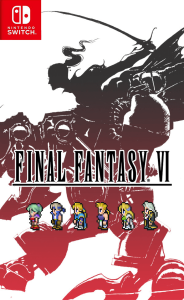
Final Fantasy VI Switch NSP refers to Square Enix’s role-playing release for Nintendo Switch, dated April 19, 2023. Published and developed by Square Enix, it brings a celebrated fantasy conflict of vanished magic, industrial ambition, and a wide-ranging ensemble to the platform. Its 1.3GB release is listed across Europe, USA, Asia, and Japan, with language support including English, French, German, Italian, Japanese, Korean, Portuguese, Russian, Chinese, and Spanish.
Final Fantasy VI on Nintendo Switch: A 2023 Release Overview
The Final Fantasy VI Switch release arrives as a role-playing game built around exploration, party management, and tactical encounters. Square Enix fills the world with a tension between old forces and new technology: magic appears to have faded from the world, while Magitek gives military power a dangerous new direction.
That premise gives the game a distinctive atmosphere. The setting is not simply a traditional fantasy land, nor is it wholly mechanical. Its drama grows from the collision of both ideas, with the fate of magic becoming inseparable from the ambitions of an empire. The result is a Square Enix RPG whose journey shifts from personal uncertainty to a far larger struggle over the future of the world.
The Nintendo Switch version’s release information lists Title ID 0100AA001415E000, a base firmware requirement of v15.0.1, and an update firmware requirement of v16.0.3. Those details sit alongside a release designed for players interested in a substantial, story-led RPG with a large group of characters and many opportunities to shape a party’s abilities.
A World of Magitek, Lost Magic, and Imperial Power
The story of Final Fantasy VI Switch NSP begins in a world where magic has seemingly disappeared. In its place, Magitek has become a potent force, and the Gestahlian Empire seeks to use it in order to revive magic for its own ends. That pursuit places the Empire’s power in direct opposition to global peace.
Terra Branford is central to the opening conflict. Enslaved by the Empire, she possesses mysterious magical abilities, and her escape sets the larger story in motion. From there, the narrative gathers a group of rebels and allies whose reasons for fighting are personal as well as political.
The Returners oppose the Empire’s expansion, with figures including General Celes and the elusive Locke joining the resistance. Their fight is not framed only as a military campaign. The stakes involve identity, loss, hope, and the consequences that follow when power is pursued without restraint. Magitek therefore functions as more than scenery: it is a sign of how the Empire attempts to control a world it does not understand.
Kefka Palazzo and the Story’s Escalating Stakes
Kefka Palazzo serves as the Empire’s primary antagonist, a chaotic figure whose ambitions intensify as the story develops. His role gives the conflict an unpredictable edge. While the Empire supplies the institutional threat, Kefka’s actions push events toward a far more destructive scale.
The narrative reaches a world-changing turn that divides the game into two distinct phases. This structural break matters because it changes the emotional weight of the journey. Early resistance and discovery give way to a harsher struggle shaped by the consequences of what has already happened.
That escalation also supports the game’s large cast. Different party members bring their own lore, combat styles, and connections to the world around them, making the broader crisis feel experienced from more than one perspective. Kefka is not merely an obstacle at the end of a long adventure; he is a force whose choices alter the conditions under which the entire party must continue.
How Active Time Battle Shapes Each Encounter
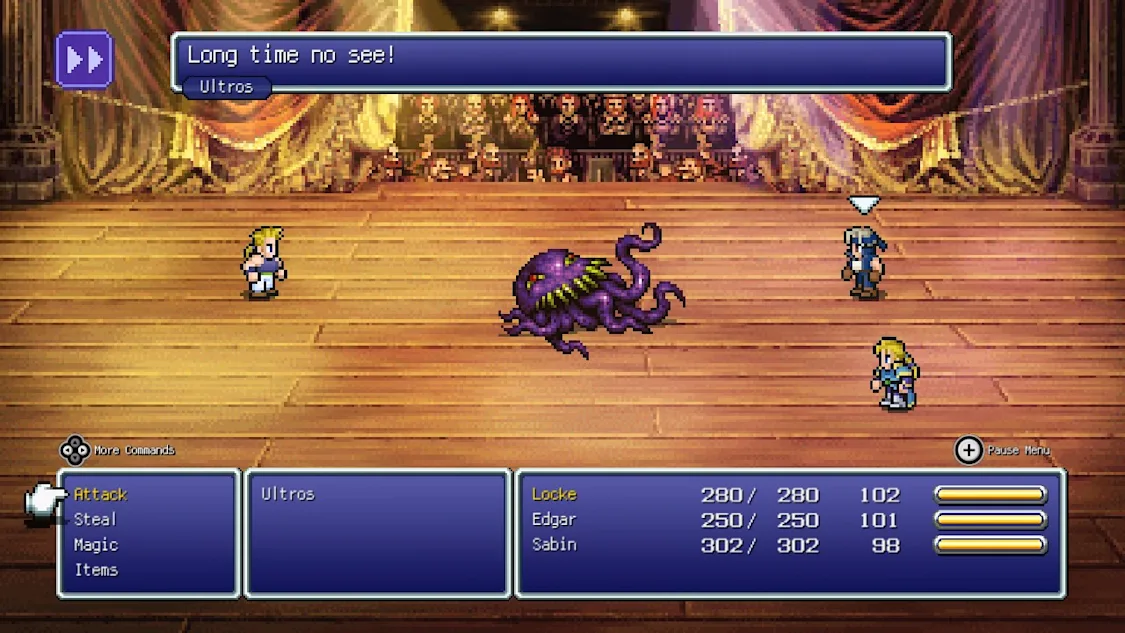
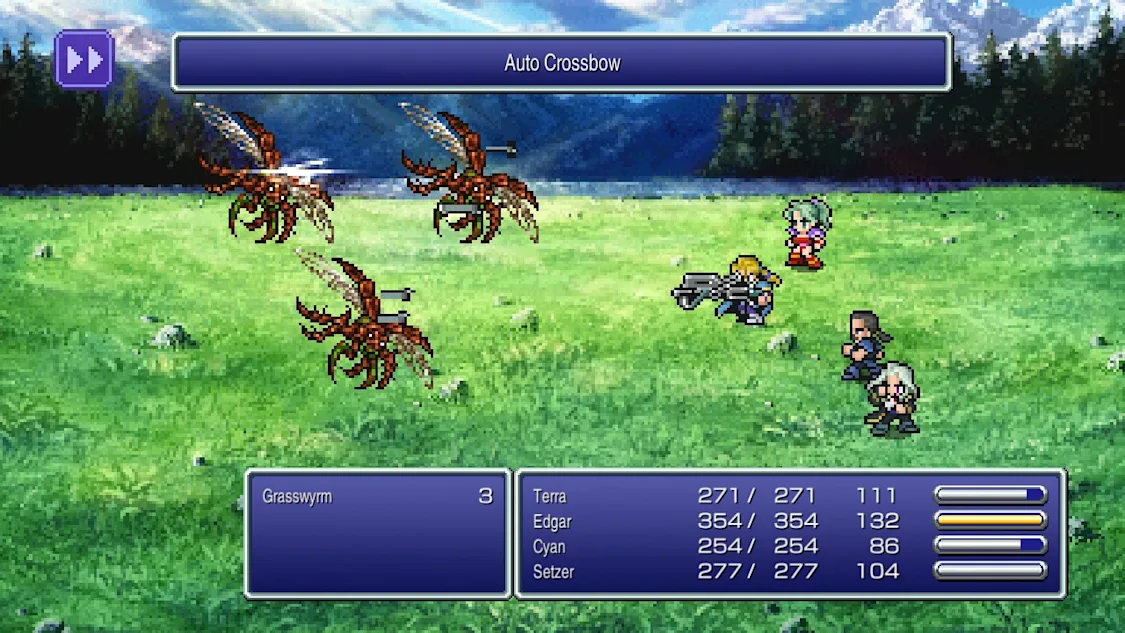
Combat uses the Active Time Battle system. Rather than presenting turns as a fixed sequence, it uses time gauges to determine when characters can act. This adds urgency to turn-based RPG decision-making. A command still needs to be chosen carefully, but the player must also pay attention to the flow of battle and the timing of incoming actions.
That balance gives encounters a strategic rhythm. Party composition, equipment, magic, and each character’s individual abilities all affect how a group responds to different threats. The system encourages active consideration rather than treating every fight as a routine exchange of attacks.
- Watch the gauges: Timing is part of the battle plan, since actions become available through the Active Time Battle system.
- Use distinct strengths: The playable roster includes characters with their own combat abilities and styles.
- Plan equipment: Choices involving magic and gear can meaningfully affect difficult encounters.
- Prepare for pressure: Desperation Attacks are powerful character-specific moves that can trigger randomly when HP is low.
- Adjust the party: Different situations can reward a new mix of abilities, commands, and support options.
Magicite, Espers, and Relics: Building a Flexible Party
Customization is one of the game’s most important progression systems. Magicite lets characters learn spells, gain stat boosts, and summon Espers. Equipping it provides a reason to think beyond a character’s starting role, since the party can be developed in different directions over the course of the adventure.
Espers add another layer to combat planning through their summon capability, while Magicite supports ongoing spell learning. The system invites players to experiment with how they distribute magical options across the roster. A group can be shaped around the needs of the current challenge rather than locked into a single approach.
Relics further expand that flexibility. These equipable items can grant passive benefits or unique combat commands, increasing the range of possibilities available to each party member. Together, Magicite, Espers, and Relics make progression feel connected to practical choices: who will learn which spells, who benefits from particular stat boosts, and which abilities best support the group’s immediate goals.
A Large Cast, Exploration, and Airship Travel
Final Fantasy VI features more than a dozen playable characters, giving the adventure a broad collection of personalities, abilities, and narrative connections. Rotating party members is not simply a cosmetic decision. It creates opportunities to test different combat tools and to find combinations that suit a player’s preferred tactics.
Outside battle, the game moves across a vast world map and through intricate dungeons. Exploration includes hidden treasures and puzzles, making progress about more than advancing from one confrontation to the next. The world invites attention, especially for players who enjoy searching beyond the direct path for secrets and useful rewards.
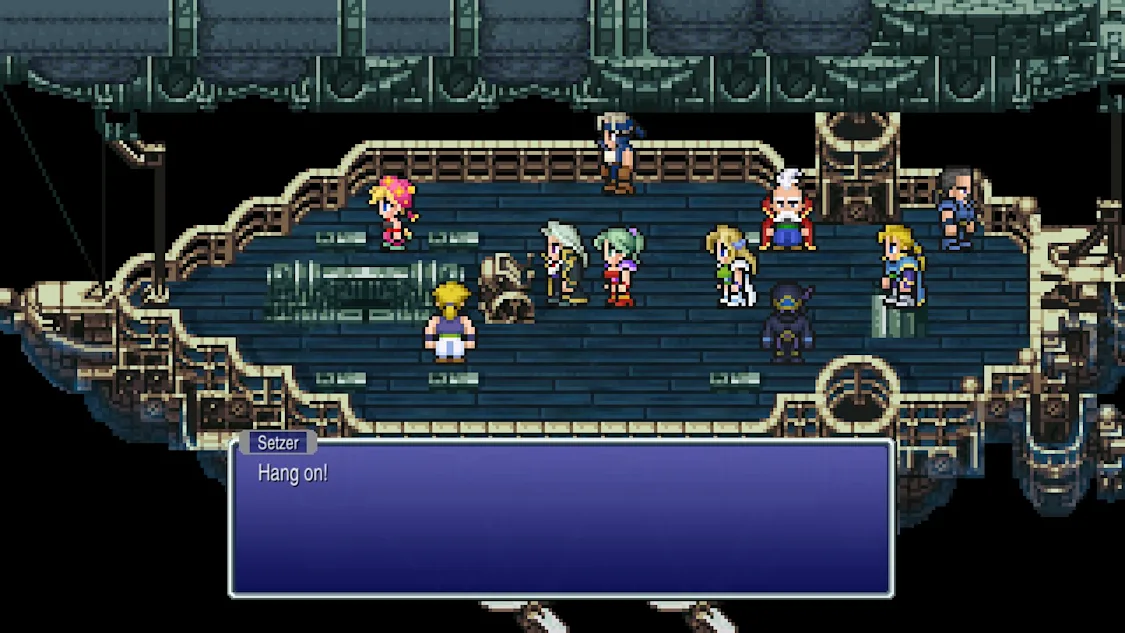
Later, airship travel offers swift movement across the expansive world and opens access to additional areas and discoveries. That development reinforces the sense of scale in the adventure, turning travel into a meaningful part of progression rather than a simple transition between story scenes.
For players drawn to strategic turn-based combat, flexible character growth, exploration, and an increasingly high-stakes fantasy narrative, Final Fantasy VI provides a substantial role-playing journey. Its lasting appeal comes from how its systems and story support one another: a diverse party faces a changing world, while every new spell, Relic, Esper, and destination can reshape the way forward.