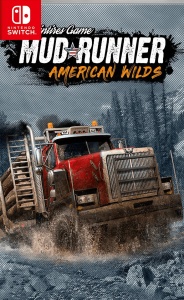
MudRunner – American Wilds Switch NSP XCI
Report Link Error
Select the broken download file, then submit the report.
Screenshots
About Game
MudRunner – American Wilds Switch NSP XCI arrived on Nintendo Switch on November 27, 2018, bringing a demanding off-road simulation to a portable format. Published and developed by Maximum Games, this Region Free release places trucks in rugged American wilderness environments where mud, water, forests, rocky slopes, and difficult routes turn every trip into a calculated effort. It is a simulation game built around weight, traction, route planning, and the satisfaction of getting a heavy vehicle through terrain that does not want to let it pass.
American Wilds on Nintendo Switch: A Challenging Off-Road Simulation
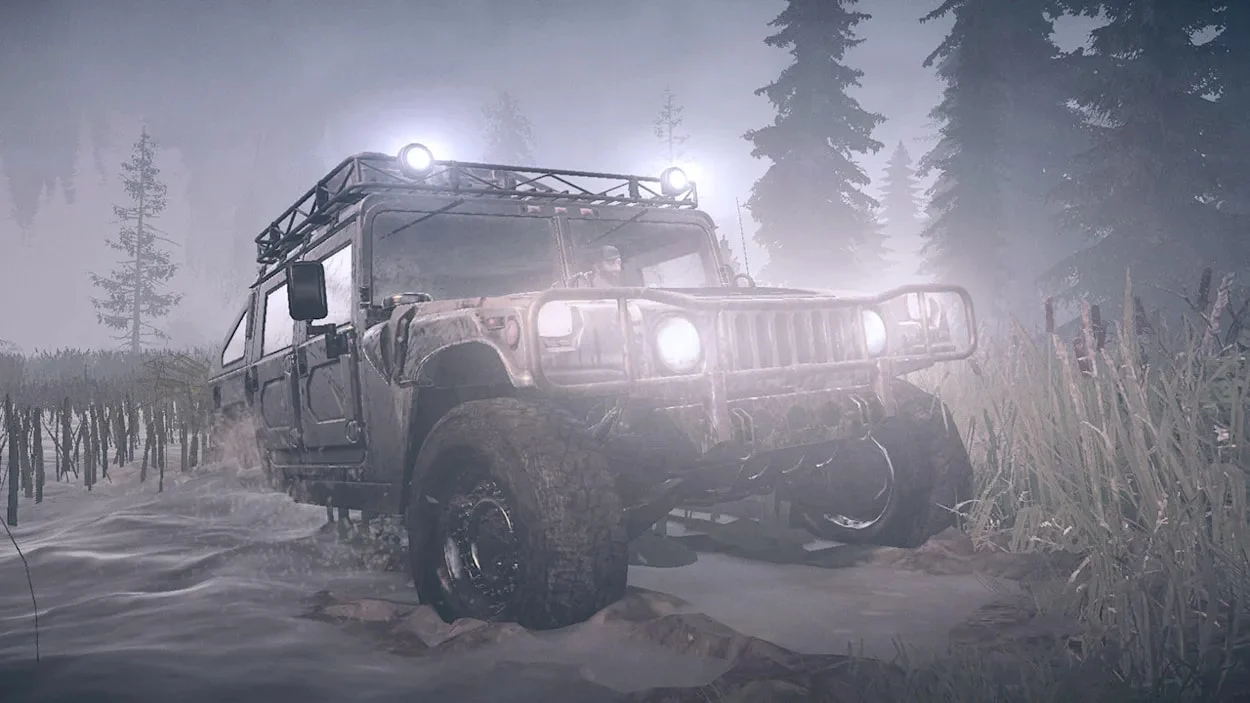
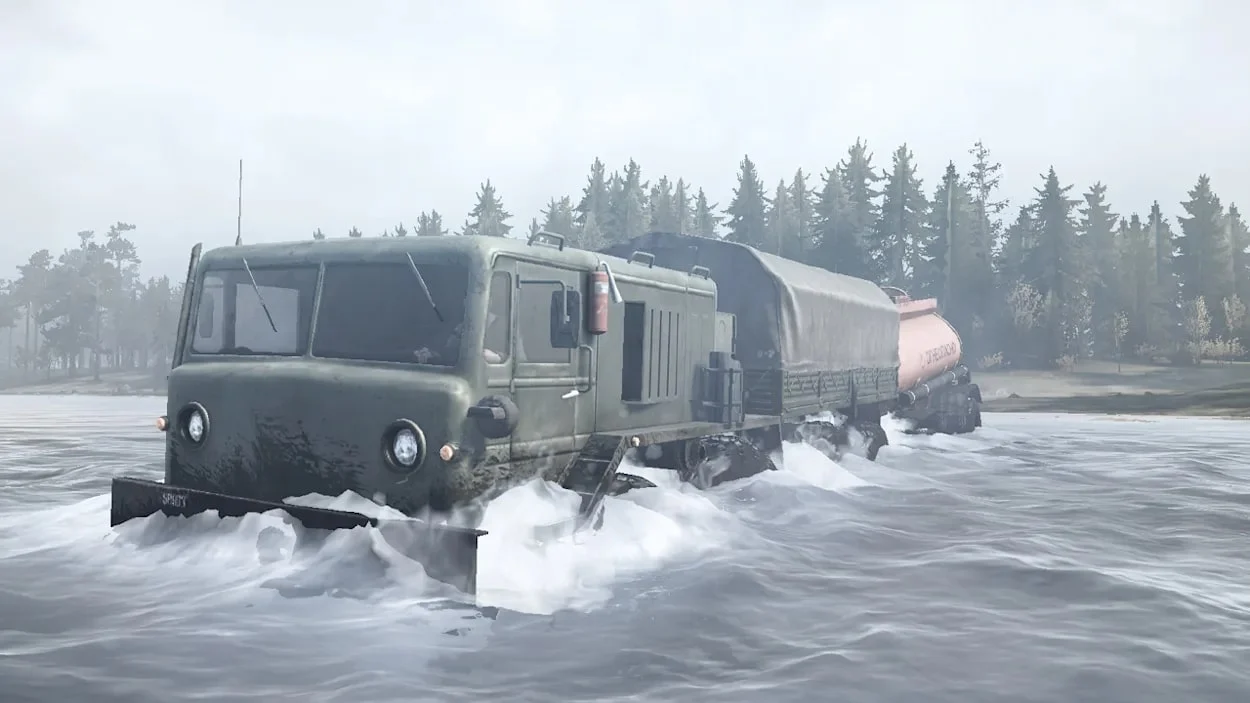
The appeal of MudRunner American Wilds Switch is rooted in its harsh environments and deliberate pace. Rather than treating roads as simple lines between objectives, the game makes the ground itself part of the challenge. Mud can slow a truck’s progress, water crossings demand care, and rough surfaces test suspension and handling. A route that appears short on the map may prove costly if it leads into deep terrain or an unsafe river crossing.
The American wilderness setting gives the driving a rugged atmosphere. Dense forests, open maps, rivers, and uneven ground create spaces that invite observation before movement. There is no suggestion that speed alone is the answer. The simulation asks players to consider a vehicle’s position, its load, available fuel, and the condition of the terrain before committing to a route.
Its presentation is therefore closely tied to function. The terrain, water, vehicle weight, and suspension behavior are not merely background details; they are the systems that shape each task. When a truck starts to bog down, the challenge is not just to keep moving, but to decide whether to change direction, use equipment, or call on another vehicle for help.
A Player-Driven Journey Instead of a Traditional Story
MudRunner American Wilds story elements come from the player’s own work rather than named protagonists or cinematic plotlines. The game does not rely on a conventional scripted narrative. Its progression is built from individual efforts: a difficult delivery completed, a stranded truck recovered, a new route explored, or a vehicle brought home after a risky crossing.
That structure makes each session feel personal. A successful logging run may be remembered because of the route chosen and the obstacles overcome, while a rescue can become an improvised problem-solving exercise. The game’s off-road missions create small stories of endurance, especially when an early mistake forces a change of plan.
Progression also includes unlocking new maps and vehicles. This gives players a reason to keep returning to the wilderness, while the varied conditions on open maps support replay value. Familiar terrain can play differently when approached with another truck, attachment, load, or cooperative plan.
The 30-Vehicle Fleet and Choosing the Right Truck for the Job
The game includes a fleet of 30 off-road vehicles, spanning scouting vehicles and heavy-duty logging trucks. These machines have distinct characteristics and available attachments, so choosing a truck is part of preparing for an objective rather than a cosmetic decision.
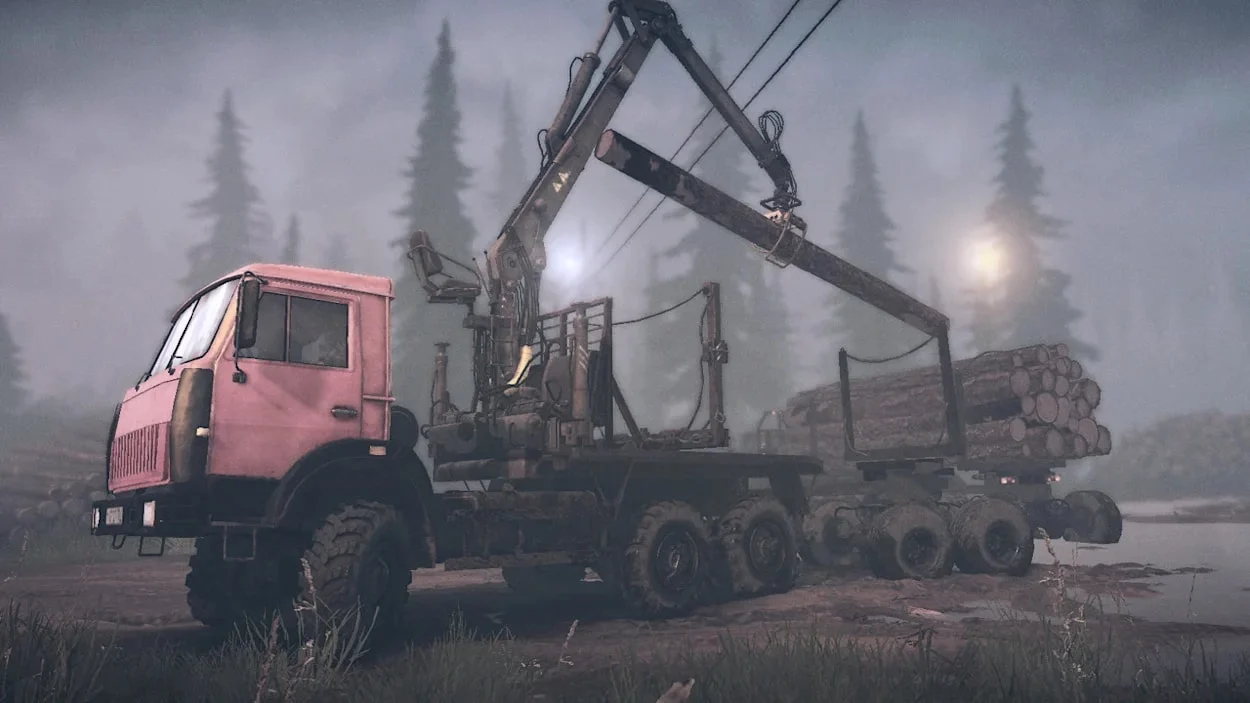
Smaller and lighter vehicles can be useful for scouting routes and moving through tighter spaces. Heavy-duty trucks are better suited to major loads, including logging work, but their size and weight can make poor terrain more punishing. A capable driver must match the vehicle to the job, then account for what the route may demand.
This planning gives the fleet practical depth. A truck selected for carrying logs may not be the best first choice for checking a narrow path or reaching a stuck vehicle. The right combination of vehicle and attachment can make an objective more manageable, while the wrong choice can leave a player facing a difficult recovery.
Logging Deliveries, Rescues, and Open-Map Objectives
MudRunner objectives revolve around work that fits its demanding terrain. Transporting logs is a central task, with drivers carrying heavy loads across unstable ground. Rescuing stuck vehicles adds another type of challenge, often requiring a truck to reach an awkward location before it can help. Exploration is equally important, as open maps reward players who search for workable paths instead of assuming the most direct route is safest.
These goals are connected by the same core demands: careful driving, fuel management, and attention to potential vehicle damage. A delivery is not complete simply because a destination has been selected. The journey must account for mud depth, water crossings, steep ground, and the risk of getting trapped far from an easy recovery point.
The winch is an important tool in these situations. It can pull a vehicle out of trouble or assist another truck, making it useful during both solo recoveries and vehicle rescue work. Differential locks also have a clear role when traction becomes difficult, giving drivers another way to respond to hostile ground.
Four-Player Cooperative Challenges on Switch
Cooperative multiplayer supports up to four players, allowing a group to take on difficult routes together. This format suits the game’s slower, practical style. One player can scout ahead in a lighter vehicle, while others move heavy loads or remain ready to assist with a recovery.
Teamwork can be especially useful when mud, water, or a badly chosen route stops a truck’s progress. A second vehicle can provide winch assistance, help manage a complicated recovery, or support the wider task by exploring safer ground. Four-player multiplayer does not remove the environmental challenge, but it gives players more ways to respond when plans go wrong.
For players who enjoy cooperative driving without a traditional story framework, MudRunner – American Wilds Switch NSP XCI offers shared objectives built around communication and vehicle coordination. The strongest moments come from solving a terrain problem together rather than simply racing to a finish line.
7 Practical Steps for Tackling Difficult MudRunner Routes
- Scout before committing. Use a suitable scouting vehicle to inspect the route and avoid discovering deep mud or tight passages after a heavy truck is already committed.
- Look for safer crossings. Compare water routes and seek shallower crossings when possible, since rushing into water can complicate a delivery or recovery.
- Match truck to task. Choose lighter vehicles for scouting and tighter terrain, while reserving heavy-duty logging trucks for substantial loads.
- Watch the fuel supply. Demanding routes require fuel management, so route choices should account for the distance and difficulty ahead.
- Respect vehicle damage. Rough terrain can damage a vehicle, making controlled driving and careful route selection more valuable than reckless momentum.
- Use differential locks wisely. When difficult ground reduces traction, differential locks can help a truck continue through challenging conditions.
- Keep the winch in mind. Use it to recover your own vehicle from a sticky situation or to assist another truck during a rescue.
With English, German, Spanish, French, Italian, Japanese, Korean, Dutch, and Chinese language support, the game is positioned for a broad range of players. It is best suited to people who enjoy measured driving challenges, heavy vehicles, open-map objectives, and the patient satisfaction of turning a seemingly impossible route into a completed job.