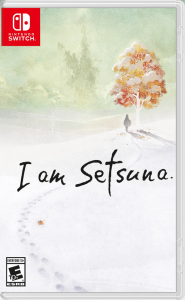
I Am Setsuna Switch NSP XCI
Report Link Error
Select the broken download file, then submit the report.
Screenshots
About Game
I Am Setsuna Switch NSP XCI frames its role-playing journey around a world locked beneath snow, where beauty and grief are inseparable. Released on March 03, 2017, this Square Enix-published game from Tokyo RPG Factory follows a solemn pilgrimage shaped by monsters, ritual, and the painful certainty of an approaching sacrifice.
I Am Setsuna’s Snowbound World and Its Melancholic Tone
The snow-covered world of I Am Setsuna is more than a backdrop. Its frozen landscapes give the adventure a hushed, reflective quality, setting a fitting tone for a story in which every mile forward brings its central character nearer to an appointed fate. Towns, wilderness areas, and dangerous routes are all part of a land burdened by a recurring threat: monster attacks that continue to intensify.
That threat has produced a grim tradition. A sacrifice must periodically be offered to prevent catastrophe, and the journey toward that offering becomes the emotional center of this melancholic JRPG. The setting supports the story’s weight without needing to rush it. Snow-laden environments and quiet travel reinforce the sense that the party is moving through a world that has accepted hardship as part of daily life.
For players drawn to classic role-playing games with a somber mood, the atmosphere is a key part of the appeal. The adventure is not presented as a carefree expedition. Its world, its central ritual, and the nature of its journey all point toward questions that are difficult to ignore.
Endir and the Companions Shaped by the Journey
Setsuna is the young woman chosen for the next sacrifice, and her destination is the Last Lands, where the ritual is meant to take place. Endir, a mercenary, is assigned to protect her during the perilous procession. His role gives the journey an immediate sense of purpose: the party is not searching for a distant objective so much as escorting Setsuna toward a fate already defined by the world around her.
The larger group matters just as much. The I Am Setsuna companions join for their own reasons, bringing individual perspectives to a shared route. Their presence gives the narrative room to explore character bonds formed under pressure. As the party travels, the emotional stakes are shaped not only by the sacrifice itself, but by the relationships that develop while it remains unavoidable.
This structure makes the group feel central to the experience. Endir’s protection of Setsuna is the starting point, while the companions’ stories and motivations expand the journey into something more personal. The procession becomes a place where duty, friendship, uncertainty, and grief can exist at the same time.
Themes of Sacrifice, Destiny, and the Value of Life
The I Am Setsuna story is built around sacrifice and destiny, but it also leaves room for personal choice and emotional connection. Setsuna’s role in the ritual is known from the outset, creating an atmosphere of impending loss. The question is not simply what the party will face along the road; it is how each character responds to the meaning of the journey.
That focus gives the narrative its emotional RPG identity. The group’s travel toward the Last Lands places their conversations, loyalties, and conflicts in the shadow of an outcome that appears fixed. The game’s concern with the value of life is tied directly to its world’s survival, making sacrifice both a public necessity and an intensely personal burden.
I Am Setsuna Switch NSP XCI is therefore best approached as a story-led RPG with a deliberately weighty premise. Its character development is connected to the pilgrimage rather than separated from it, and the party’s bonds gain significance because time and distance continue to narrow the path ahead.
How the Active Time Battle System Shapes Combat
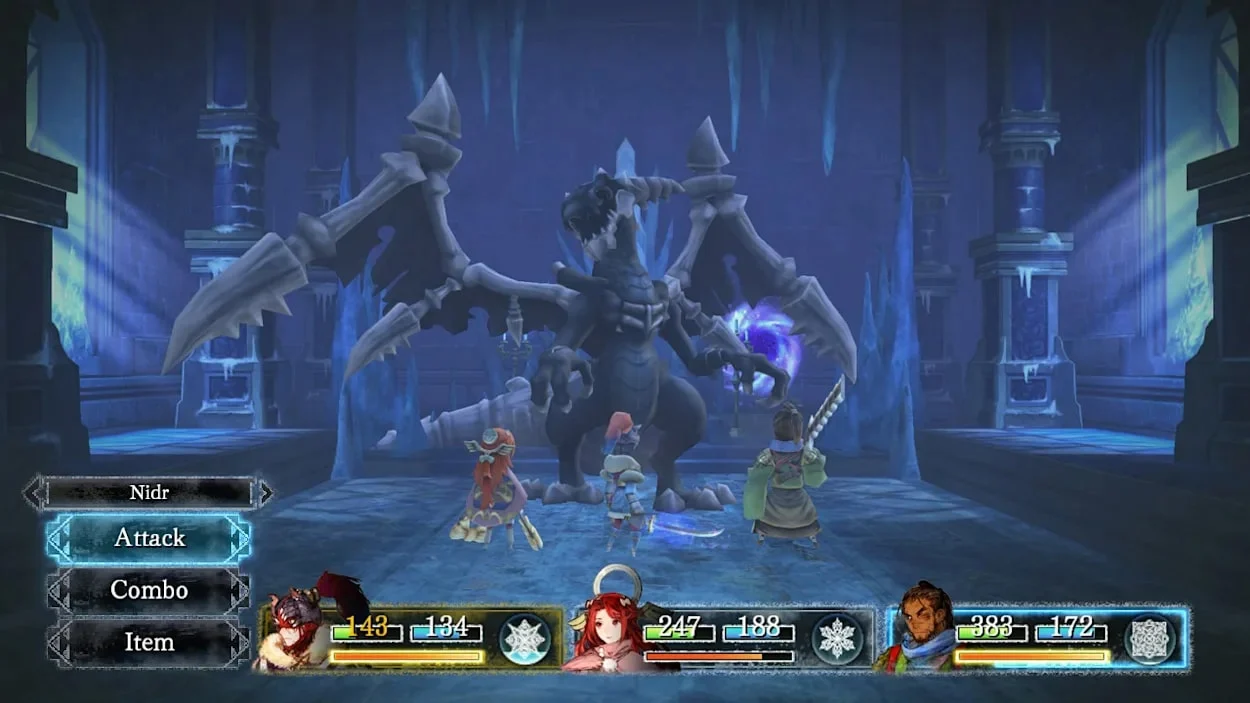
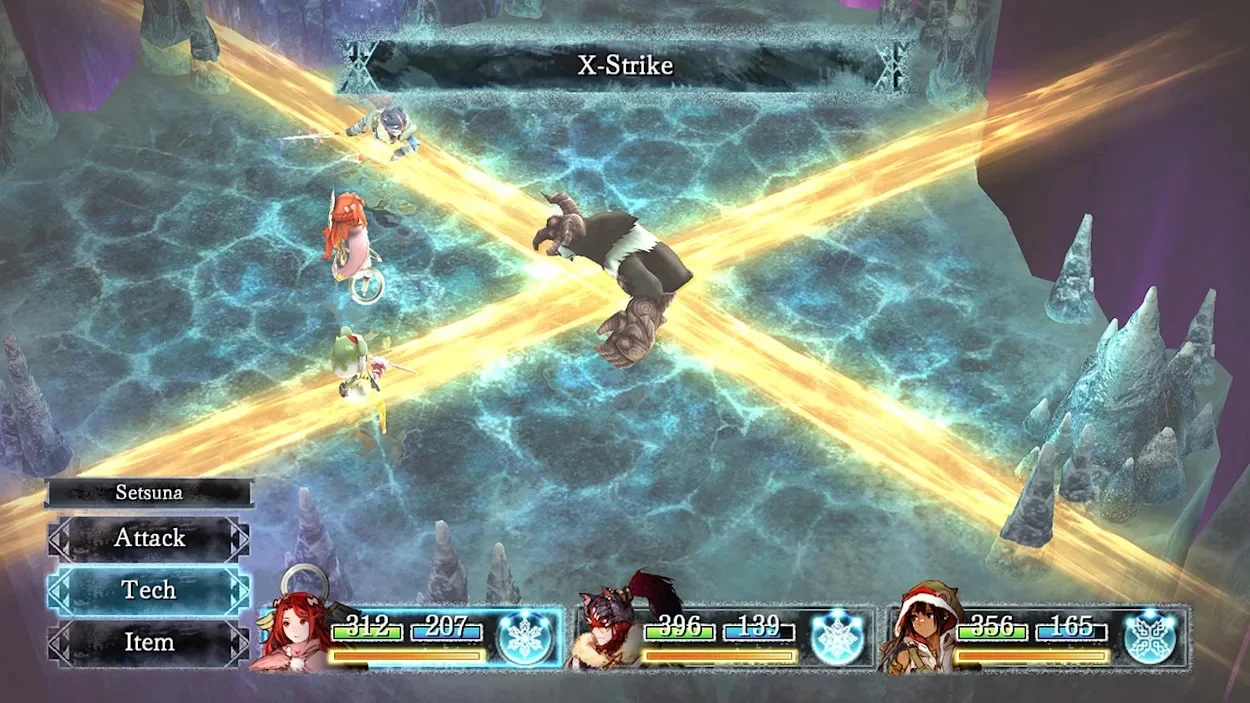
Combat uses a modernized Active Time Battle system that calls for careful turn management rather than simple command selection. Characters act as their turns become available, so timing matters. Players need to consider when to issue commands, how abilities fit the immediate situation, and how the party can respond to challenging foes.
Battles occur seamlessly on the field instead of moving to separate battle screens. This keeps exploration and conflict closely connected, allowing the party’s movement through dungeons and hostile areas to feel continuous. The result is a familiar JRPG structure with a more direct flow between discovering a location and confronting the dangers within it.
Progression also supports strategic party building. Players can manage party formation and equipment, while the Spritenite system allows abilities and magic to be customized by equipping skills to talismans. These systems encourage attention to how different characters work together, especially when preparing for more demanding encounters.
- Watch the turn flow: Active Time Battle rewards awareness of when each character can act and which command is most useful at that moment.
- Build Momentum: Saving this tactical resource for an important attack or effect can help shift a difficult fight.
- Shape the party: Formation, equipment, abilities, and magic can be adjusted to support a more deliberate battle plan.
- Prepare before major fights: Thoughtful setup can make challenging enemies and environmental obstacles more manageable.
- Explore beyond the route: Hidden paths, side quests, and secrets give travel through the snow-covered world added purpose.
Using Momentum for Better-Timed Attacks and Effects
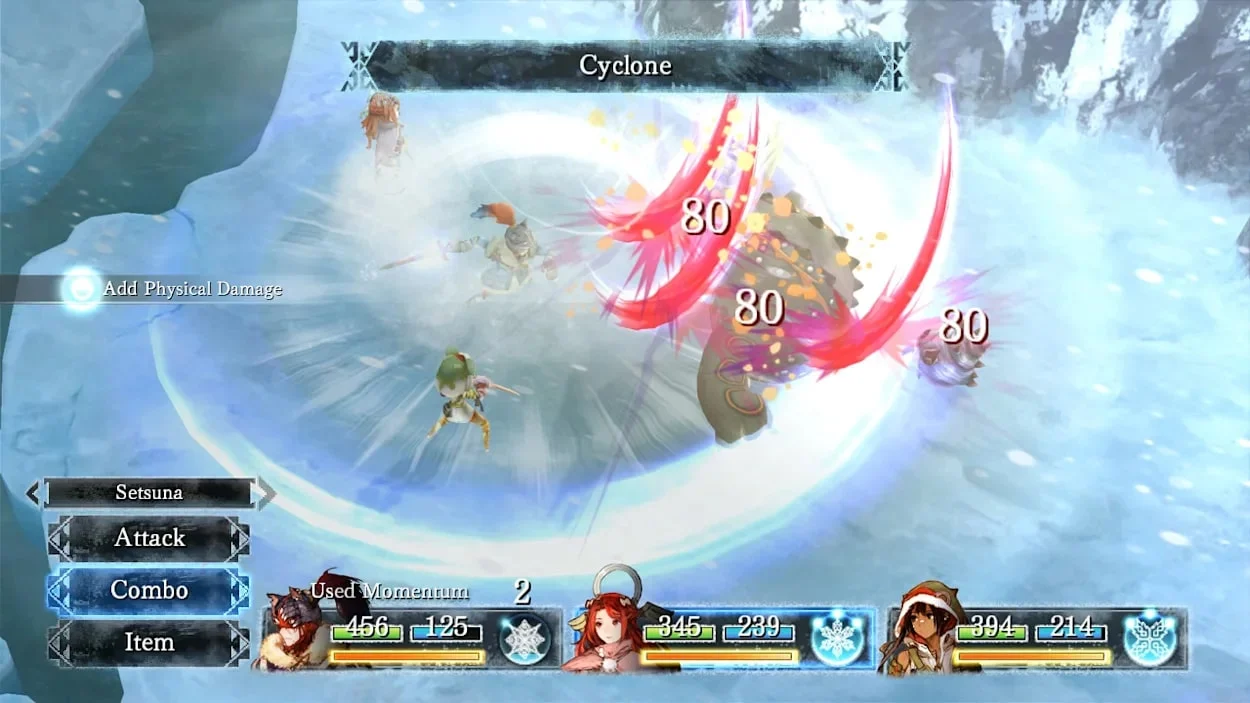
The Momentum system adds another layer to I Am Setsuna combat. Rather than treating every available turn the same way, players can activate Momentum at the appropriate time to enhance attacks or effects. This makes combat timing a meaningful part of battle strategy, especially when a stronger result is needed more than an immediate action.
Momentum works alongside the Active Time Battle structure instead of replacing it. A player still needs to manage turns, abilities, and party roles, but the system offers an additional decision: when is the right moment to strengthen a command? Used carefully, it can help the party take better advantage of key openings.
This emphasis on timing gives the combat a tactical rhythm. The strongest choice is not always the first command available. Waiting, planning, and choosing a more effective moment can be as important as selecting the right skill.
Exploring Towns, Dungeons, and Hidden Paths in I Am Setsuna
Outside combat, I Am Setsuna exploration follows traditional JRPG patterns. The party travels through snow-covered locations, visits towns, enters dungeons, and searches for hidden pathways. These spaces provide opportunities to meet characters, uncover secrets, pursue side quests, and face environmental challenges that require preparation as well as persistence.
The world’s snowy presentation gives exploration a consistent identity, while the variety of towns and dungeons prevents the journey from being only a march toward its narrative destination. Hidden routes reward attention, and side content offers reasons to look beyond the most direct path.
Players interested in a classic role-playing structure will find familiar elements here: exploration, party progression, equipment management, ability customization, and strategic encounters. The game is suited to those who appreciate emotionally serious narratives and combat that asks for considered command timing. Its strongest appeal lies in the way its snowbound journey brings story, party relationships, and tactical play together.