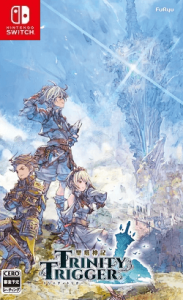
Trinity Trigger Switch NSP XCI
Report Link Error
Select the broken download file, then submit the report.
Screenshots
About Game
Trinity Trigger Switch NSP XCI refers to the Nintendo Switch release of FuRyu’s role-playing game, developed by Three Rings. Released on September 15, 2022, it places a character-driven fantasy story alongside real-time action, a three-member party system, transforming weapons, and local cooperative play. The Switch version is associated with the USA, Asia, and Japan regions, with Chinese, Japanese, Korean, and Taiwan language support.
Trinity Trigger on Nintendo Switch: Release and Core Details
Trinity Trigger arrived on Nintendo Switch as a Role-Playing game published by FuRyu and developed by Three Rings. Its setting, Trinitia, is shaped by a long-running conflict between the Gods of Order and the Gods of Chaos. Humanity lives under the shadow of that struggle, with chosen representatives known as God’s Proxies sent to fight on behalf of the opposing powers.
The game’s structure combines travel through fields, towns, and dungeons with action-focused encounters. Its world is described as colorful and varied, but the tone is not simply carefree: the central conflict concerns a cycle of divine warfare and the human cost of a fate imposed from above. That contrast gives the journey a fantasy atmosphere rooted in danger, discovery, and the possibility of change.
For the Switch release, the base game is listed with firmware version 14.1.2, while its update is listed with version 15.0.1. These technical details sit behind a game built around responsive combat, character growth through equipment, and exploration that can lead players toward treasures, hidden routes, monsters, and environmental puzzles.
Cyan’s Journey to Defy a Predetermined Fate
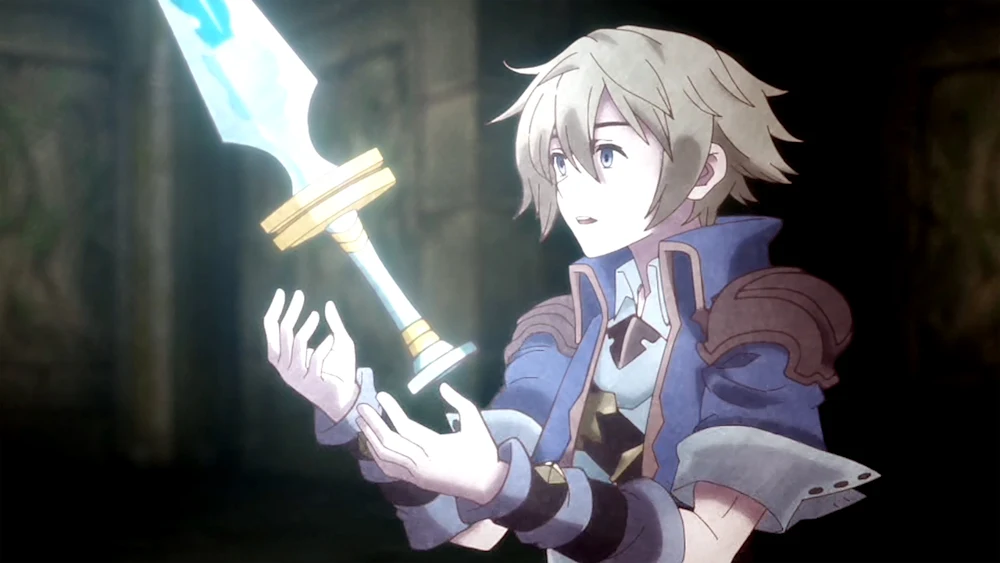
The Trinity Trigger story begins with Cyan, a young man whose life is altered when he discovers that he is a Proxy of Chaos. Rather than remaining in the quiet circumstances he knew before, Cyan is drawn into the larger struggle that has defined Trinitia for generations.
His role is not framed as a simple call to serve the gods. Cyan and his companions seek to resist the route already laid out for them. Their journey concerns ancient prophecies, the nature of Trinitia, and the hope of ending a destructive pattern that has repeatedly placed humanity between rival divine forces.
This makes Cyan’s path more than a contest between Order and Chaos. The question is whether a Proxy can refuse the purpose assigned to him and help create another future. The stakes are personal for Cyan, but they extend to the people of Trinitia, whose lives have long been shaped by decisions beyond their control.
Triggers and Their Weapon Transformations
Cyan does not travel alone. His companions include mystical beings called Triggers, which can change into different weapon forms. These transformations are a central part of combat, allowing the party to use tools such as swords, bows, and axes against the threats encountered across Trinitia.
The system gives weapon choice a practical role instead of treating it as a purely cosmetic change. A sword supports one approach to an encounter, while a bow or axe can encourage another. Since enemies present different challenges, changing weapon types can become an important response when a direct approach is not working.
Triggers also connect the game’s combat systems to its fantasy premise. They are companions within the story as well as the source of the party’s changing arsenal. That combination gives the weapon transformations a distinct place in the adventure, linking tactical decisions to the world’s mystical elements.
Real-Time Combat and Three-Character Party Switching
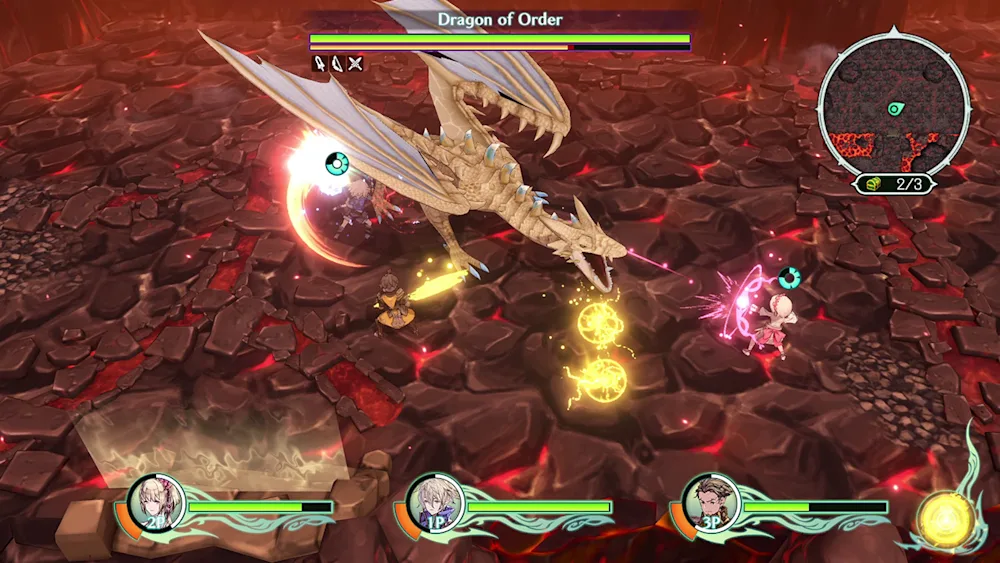
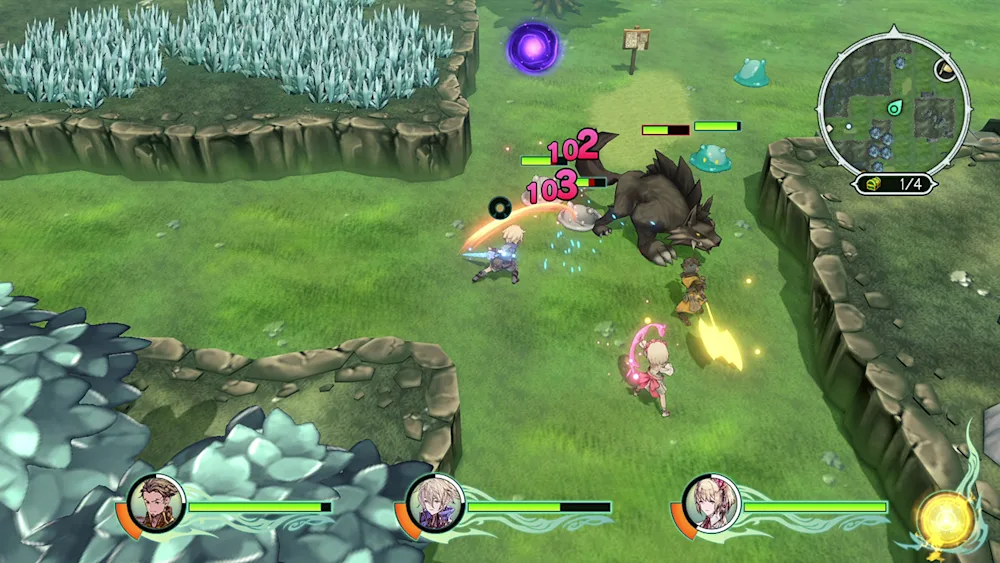
Trinity Trigger uses real-time combat rather than turn-based battles. Players directly control one of three main characters, each with a different playstyle, and can swap among them immediately during encounters. The result is an action RPG structure that asks players to react as battles unfold.
Party switching adds flexibility to the system. A player can move from one character’s style to another without leaving the fight, then pair that change with a different Trigger weapon. This creates room for adaptation when facing tougher opponents or when a particular weapon type appears better suited to the situation.
The combat is supported by exploration and progression. Fields, dungeons, and towns provide the spaces between encounters, while hidden paths, treasure, puzzles, and monsters offer reasons to look beyond the most direct route. Weapons and armor can also be upgraded, giving the party stronger equipment as the journey develops.
The exact title keyword Trinity Trigger Switch NSP XCI is often used in reference to this release, but the game itself is best defined by this blend of immediate action, party management, weapon transformation, and a story about refusing a prescribed destiny.
4 Steps for Building a Flexible Trinity Trigger Battle Strategy
- Switch with purpose. Move between the three playable characters during battle when another playstyle may better suit the enemy or the moment.
- Test each Trigger form. Experiment with swords, bows, axes, and other available weapon transformations instead of relying on one familiar option.
- Match weapons to the challenge. Different enemy types can call for different approaches, so changing weapon combinations can provide a tactical advantage.
- Improve the party’s equipment. Upgrade weapons and armor to strengthen the group for more demanding fights and continued exploration.
These approaches do not replace quick reactions in real-time combat, but they make the party system more useful. The game’s strategy comes from combining character choice, weapon form, and equipment progression rather than treating any one of those elements in isolation.
Local Cooperative Play for Up to Three Players
Alongside its single-player party structure, Trinity Trigger supports local cooperative play for up to three players. Two additional players can join, aligning the cooperative option with the game’s three-character combat setup.
This feature gives the party-based action a more communal form. Instead of one player switching among the available characters, multiple players can share the active group during local play. The same essentials remain in place: real-time encounters, transformed Trigger weapons, and the need to respond to enemies with suitable character and weapon choices.
The game is suited to players looking for a fantasy action RPG with a story-led campaign, direct combat, and a manageable party of three characters. Its local co-op option also makes it appropriate for groups that want to tackle its battles together on Nintendo Switch, while its exploration, equipment upgrades, and weapon experimentation provide continuing reasons to engage with its systems throughout the adventure.
Recommended Similar Games
 DRAGON QUEST TREASURES Switch NSP XCIView Game
 The Smurfs 2 – The Prisoner of the Green Stone Switch NSPView Game
 Disgaea 7: Vows of the Virtueless Switch NSP XCIView Game
 Pillars of Eternity: Complete Edition Switch NSPView Game
 Goblin Slayer -ANOTHER ADVENTURER- NIGHTMARE FEAST Switch NSPView Game
 Big Farm Story Switch NSPView Game
