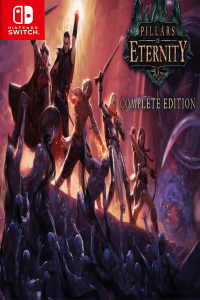
Pillars of Eternity: Complete Edition Switch NSP
Report Link Error
Select the broken download file, then submit the report.
Screenshots
About Game
Pillars of Eternity: Complete Edition Switch NSP brings a dense, party-driven fantasy adventure to Nintendo Switch, built around difficult choices, tactical battles, and a world where souls are more than an abstract idea. Developed by Obsidian Entertainment and published by Versus Evil, this role-playing game places the player in Eora, a land of political tension, ancient secrets, and unsettling questions about fate and divinity.
Entering Eora as a Watcher
The adventure begins with an unusual burden: the protagonist is a Watcher, someone able to perceive and interact with souls. That gift is not treated as a simple power fantasy. It becomes the lens through which the player confronts personal histories, hidden motives, and the larger mystery affecting the Dyrwood.
Central to that mystery is the Hollowborn plague, in which children are born without souls. The condition casts a dark shadow over the region and gives the journey an immediate sense of unease. Eora is not presented as a cleanly divided world of heroes and villains; it is shaped by competing factions, cultural divisions, religious questions, and people trying to make sense of events they cannot fully control.
The Watcher’s abilities connect the personal and political sides of the narrative. Encounters can reveal more about companions, strangers, and the player character’s own past, while the main investigation gradually expands into questions about identity, destiny, and the nature of divine authority. The atmosphere is firmly rooted in dark fantasy, but its conflicts often ask for reflection rather than a quick moral answer.
A Party-Based Isometric RPG on Nintendo Switch
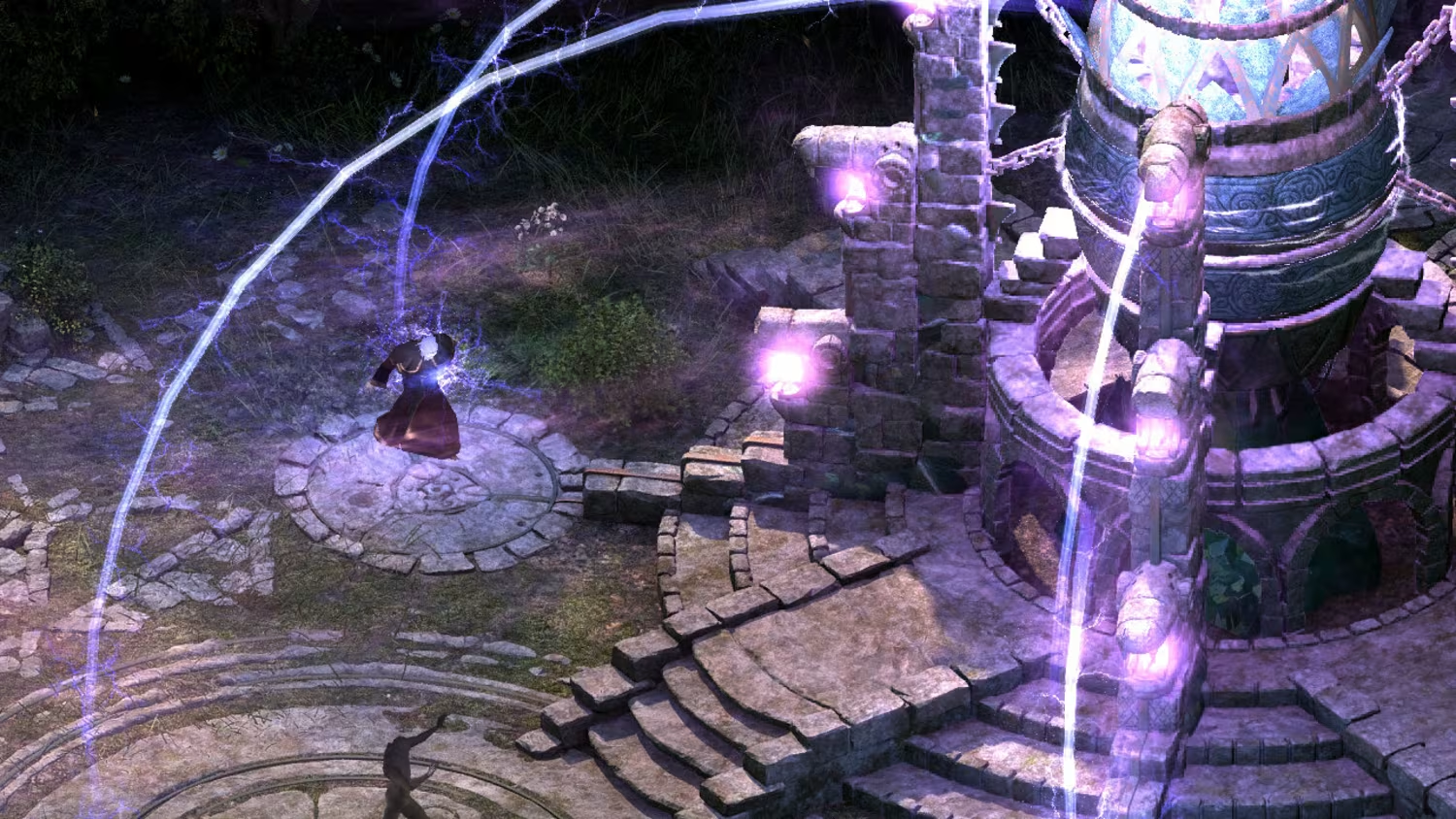
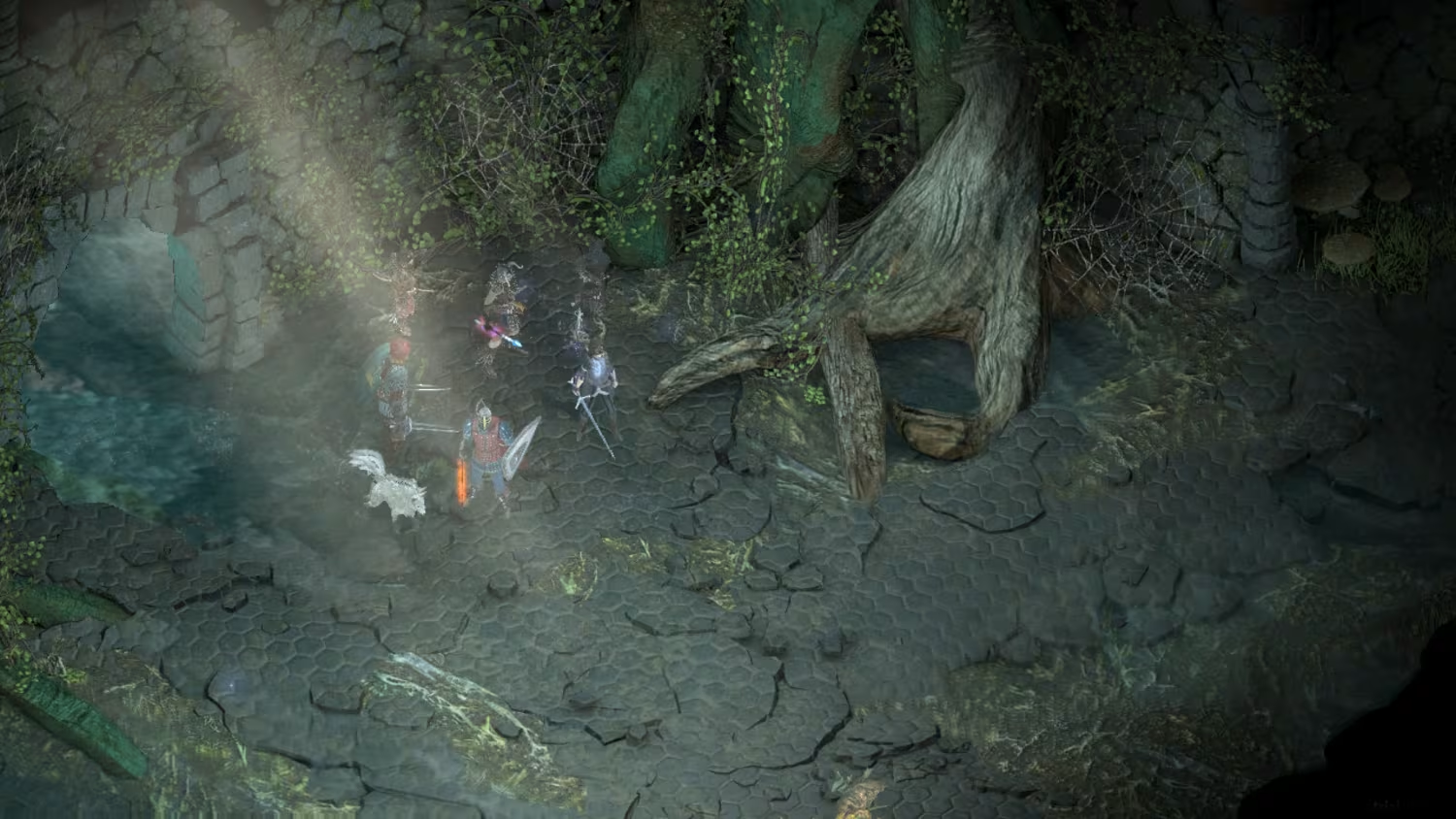
Pillars of Eternity Complete Edition uses a classic isometric RPG structure. Players travel through hand-painted environments, enter settlements and wilderness areas, investigate side quests, search for hidden rewards, and meet NPCs whose conversations can lead to new opportunities or complications. The perspective supports a broad view of the battlefield and makes exploration feel deliberate, especially when a location conceals an encounter or a piece of local lore.
The game allows a party of six adventurers, creating room for varied roles within the group. Fighters, Rogues, Wizards, Paladins, and Ciphers are among the eleven available classes, each bringing different abilities to combat and different possibilities for character building. A player can also customize a hero’s appearance, background, and attributes, then shape the rest of the group through recruited companions.
That party structure is a major part of the game’s appeal. Companions contribute useful skills, but they also bring their own motivations and personal storylines. Their quests add context to the larger journey and make the group feel like more than a set of combat roles. On Nintendo Switch, the lengthy CRPG format also suits players who want to continue an extended campaign in portable play, moving between exploration, dialogue, and combat at their own pace.
Real-Time Combat With Pause: Planning Every Encounter
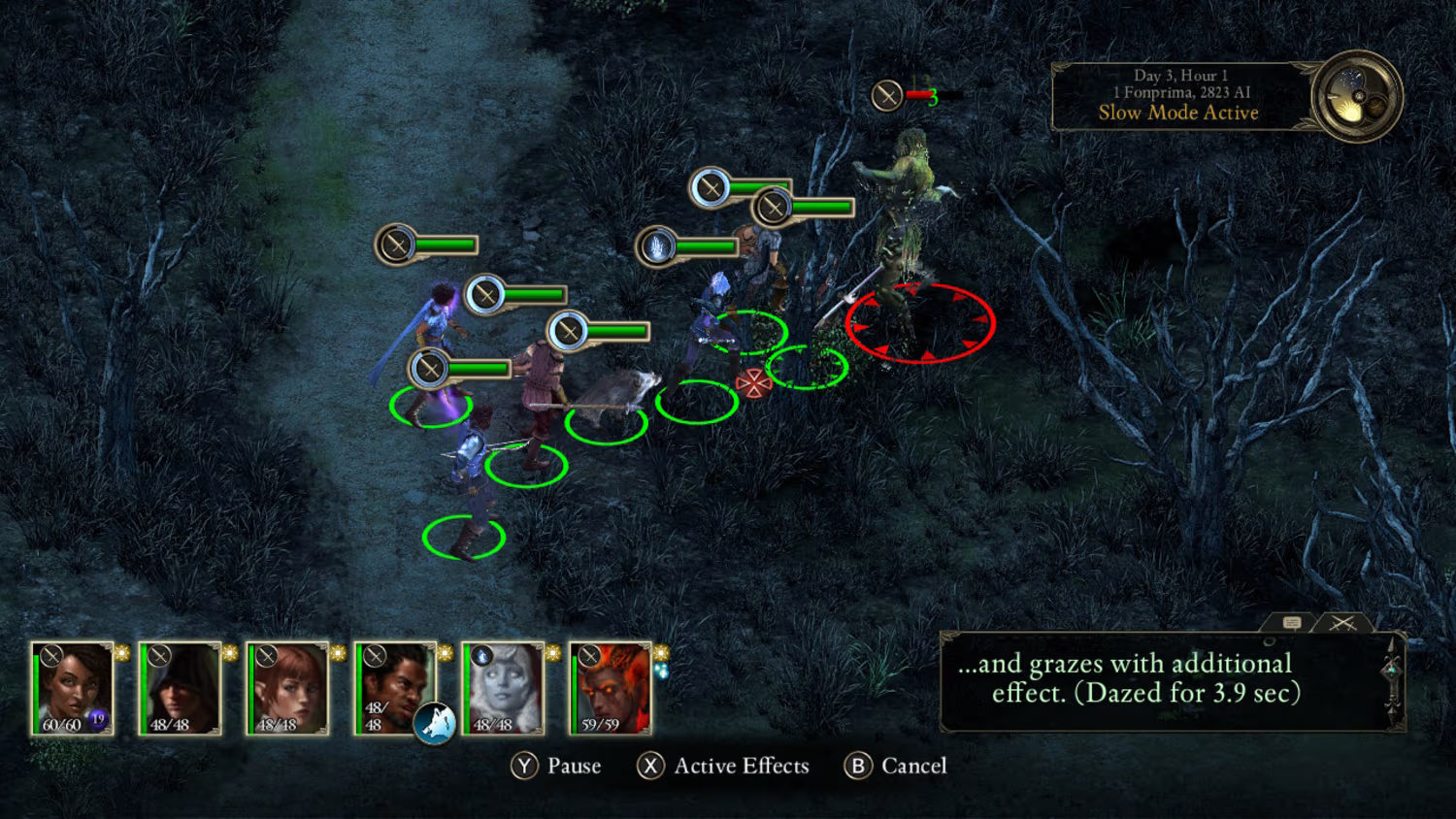
Combat unfolds in real time, but the ability to pause is essential. Real-time combat with pause gives players the space to stop an encounter, assess threats, issue commands, and then watch the plan develop. This structure rewards attention more than speed. A rushed formation can leave vulnerable characters exposed, while a carefully timed spell or repositioned defender can change the direction of a battle.
Positioning matters throughout the campaign. Durable front-line characters can hold enemies in place while ranged fighters and spellcasters work from safer positions. Area effects need to be placed with care, and party members must be moved in response to enemy behavior rather than treated as a static formation. Spells are valuable not only for damage, but also for controlling space and responding to specific battlefield problems.
The bestiary supports that tactical approach because different creatures call for different responses. There is no single party setup or repeated command sequence that solves every encounter. Players are encouraged to consider the strengths of their team, the threat in front of them, and the tools available before committing to a strategy. The result is combat that feels closer to managing a small adventuring company than simply directing one protagonist.
Choices, Reputation, and Philosophical Themes
Dialogue is one of the game’s defining systems. Conversations allow players to shape the Watcher’s personality, react to difficult situations, and influence relationships with factions and individuals. These dialogue choices can affect reputation, alliances, and the way the story unfolds, giving decisions a practical as well as narrative role.
That emphasis on consequence fits the setting’s larger concerns. Eora’s conflicts repeatedly return to identity, fate, divinity, and moral consequence. The game asks how much a person is defined by memory, belief, social position, or the expectations placed upon them. It also gives weight to the consequences of intervention. Helping one group may create friction with another, and a seemingly direct solution may carry an uncomfortable cost.
Replay value comes from this combination of character customization, companion interactions, exploration, and meaningful decisions. Different classes alter the feel of combat, while dialogue choices and shifting alliances can make another journey through the Dyrwood feel distinct. The game is particularly suited to players who enjoy reading closely, considering their responses, and accepting that not every situation has a perfect outcome.
Caed Nua and the Value of a Stronghold
Caed Nua gives the adventure a continuing point of investment beyond individual quests and battles. This stronghold serves as a base of operations, offering the player a place that develops alongside the campaign. Rather than functioning only as a stop between destinations, it creates a sense that the Watcher is building a lasting presence in Eora.
Managing Caed Nua provides passive bonuses, tying progression to more than experience gains and equipment. The stronghold also helps anchor a game that ranges across large areas and many separate storylines. After a difficult expedition or an important decision, returning to a place under the player’s care adds a different kind of continuity to the adventure.
7 Tactical Priorities for New Watchers
- Build a balanced party. Combine durable front-line characters, ranged support, and spellcasters so the group can respond to different threats.
- Pause often. Use the pause system to issue orders, reassess danger, and avoid letting a fast-moving encounter become disorderly.
- Use positioning. Keep vulnerable party members protected and place abilities carefully when enemies and allies are close together.
- Match tactics to enemies. The game’s creatures require different approaches, so adjust plans instead of relying on one routine.
- Explore thoroughly. Search the game’s varied environments for quests, lore, secrets, and hidden treasures.
- Speak with NPCs. Conversations can reveal new information, shape reputation, and open paths through the story.
- Develop companion strengths. Make use of each companion’s skills and personal perspective, both in battle and in their individual quests.
For players seeking a Nintendo Switch RPG with deliberate pacing, layered writing, and tactical party management, the game offers a substantial journey through Eora. Its strongest moments come from the way investigation, combat, companion stories, and difficult decisions continually feed into one another.