Taiko no Tatsujin: Rhythm Festival Switch NSP XCI
Report Link Error
Select the broken download file, then submit the report.
Screenshots
About Game
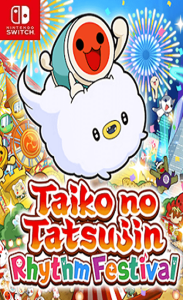
Taiko no Tatsujin: Rhythm Festival Switch NSP XCI is a 2022 music game from Bandai Namco Entertainment that brings the series’ colorful drumming format to Nintendo Switch. Set around the lively Omiko City festival setting, it gives returning players a familiar route to score-chasing while offering newcomers a direct, approachable way into Taiko’s note-matching rhythm play.
What Taiko no Tatsujin: Rhythm Festival Brings to Nintendo Switch
Released on September 20, 2022, Taiko no Tatsujin: Rhythm Festival places drumming, songs, and festival activities at the center of its presentation. Bandai Namco Entertainment serves as both publisher and developer, and the game’s focus remains clear: follow the music, read the notes, and improve a performance one song at a time.
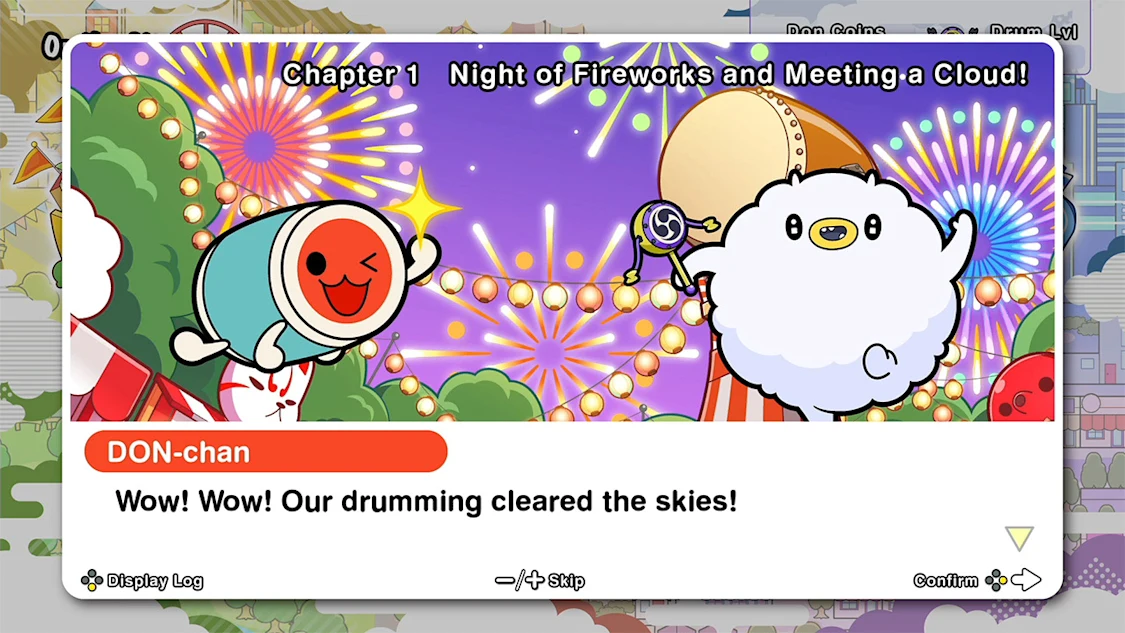
Omiko City acts as the backdrop for Don-chan’s journey alongside Kumo-kyun. The pair take part in musical challenges and festival events while working toward the goal of becoming Taiko Masters. That framing gives the game’s progression a light narrative context without distracting from the rhythm action. New characters, activities, and rewards are tied to clearing songs and pursuing stronger results.
The festival theme also supports a broad social feel. There are solo challenges for players interested in concentration and accuracy, but the game also includes competitive, cooperative, and party-oriented activities. Its bright setting, recognizable drum imagery, and accessible note language make it suitable for players looking for a Nintendo Switch rhythm game that can support both focused practice and shared sessions.
The Core Don and Ka Drumming System Explained
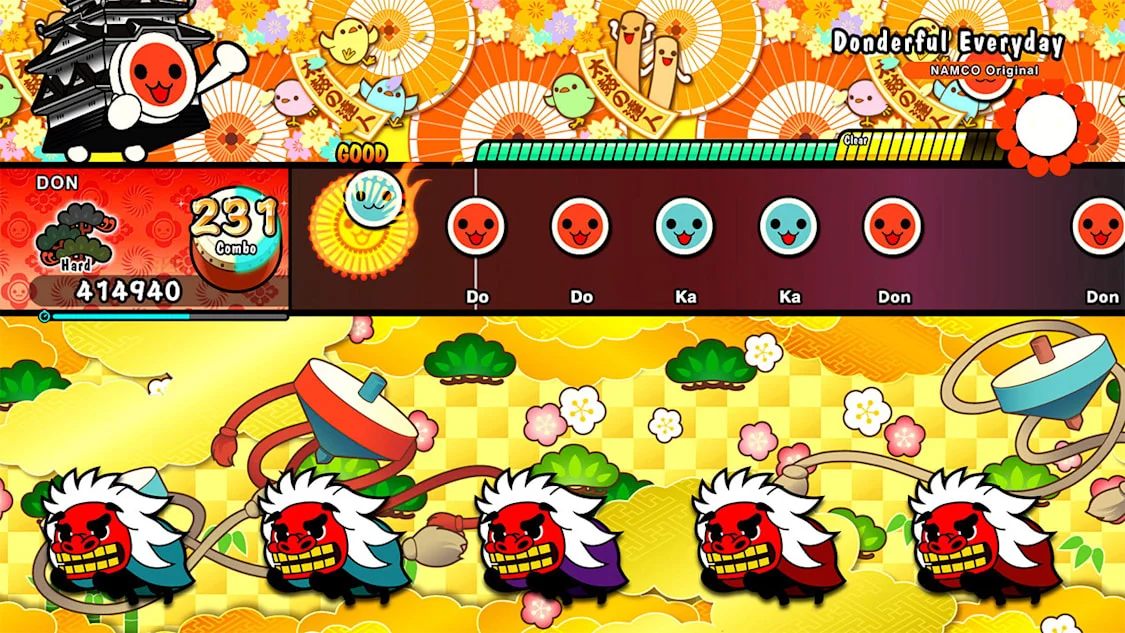
Taiko no Tatsujin gameplay is built around reading incoming notes and responding in time with a song. Red notes are called Don notes, while blue notes are Ka notes. The essential task is simple to understand but demanding to perform consistently: identify the color, make the corresponding hit, and maintain the beat as patterns become more involved.
This structure gives each track a clear score-chasing appeal. A good run requires more than recognizing individual notes; players need to hold tempo, react to changing sequences, and keep their timing steady over the full song. Higher scores are meaningful because they contribute to progression and unlocks, turning repeat plays into a practical part of the experience rather than a purely optional challenge.
Players can use Joy-Cons as drumsticks, while a traditional drum controller is also supported for those seeking a more dedicated drumming setup. The underlying rhythm language remains consistent across songs, which helps players carry learned habits from one genre to another. As familiarity grows, the focus shifts from simply catching notes to refining accuracy and building more confident performances.
Cooperative Performances in Don-chan's Band
Don-chan’s Band expands the usual solo drumming format into a cooperative activity. Up to four players can perform together, with each participant handling a different instrument part. It is a useful change of pace from chasing an individual result, since the group must follow the same musical performance while contributing separate parts.
The mode gives Taiko no Tatsujin multiplayer a more collaborative character. Instead of placing all attention on one drum chart, players can share the presentation of a song and work through their assigned roles as a group. That makes Don-chan’s Band a natural fit for households or gatherings where players want to participate together rather than take turns on a single challenge.
Other activities add further variety. Omikoshi Battle introduces competition built around energizing a portable shrine, while Taiko Land offers mini-games and party modes. These options help the game maintain its festival atmosphere: rhythm remains the foundation, but the surrounding modes offer different reasons to return between standard song performances.
Song Variety Across Anime, J-Pop, Classical, and Game Music
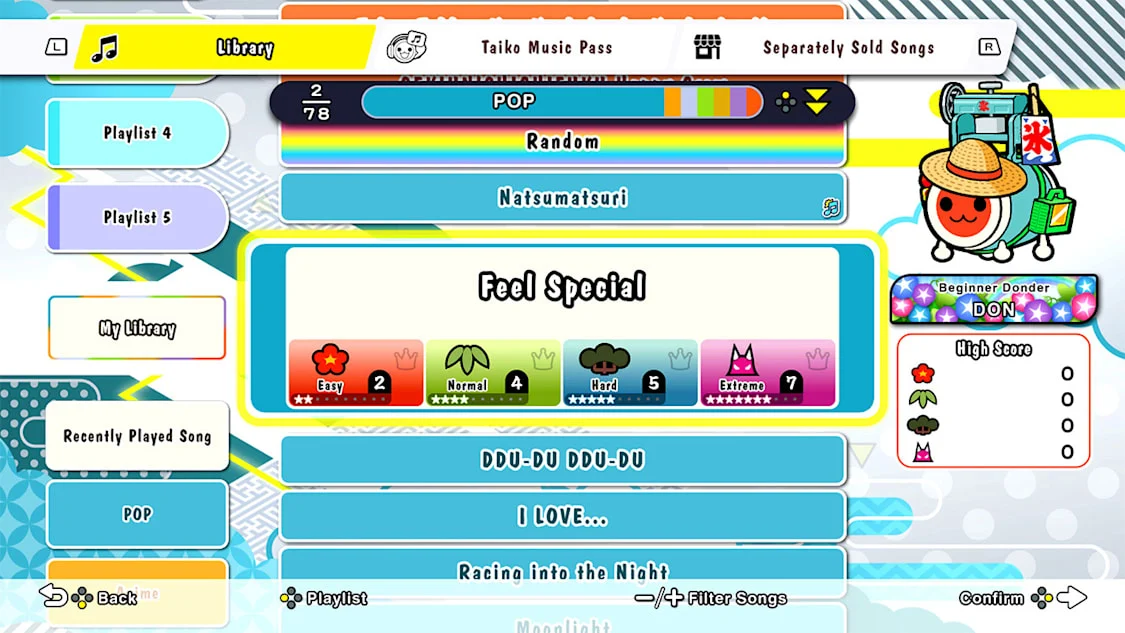
A broad selection of categories is important to the game’s replay value. The documented Taiko no Tatsujin song list includes anime music, J-Pop, classical selections, game music, and original Taiko tunes. That range lets the same Don-and-Ka system take on different musical moods, from familiar pop-oriented material to more traditional rhythmic energy.
For an anime music listener, a J-Pop rhythm game fan, or someone drawn to game music, the category spread creates multiple entry points. Classical pieces bring another contrast, while original Taiko tracks keep the series’ drumming identity present. Players are not limited to learning one style of arrangement; shifting between genres can reveal different pacing, note patterns, and performance demands.
The benefit is not simply quantity. A varied music library encourages players to test their timing against songs that feel different from one another. A player who is comfortable with one type of track can select another category and encounter a fresh rhythmic problem while still using the same fundamental controls.
Customization, Unlocks, and Progression Rewards
Progress in Rhythm Festival is connected to playing songs well and continuing through Omiko City’s activities. Clearing songs and earning higher scores can unlock new songs, characters, and items. This gives improvement a visible reward beyond a number on a results screen, and it encourages players to revisit performances they want to master.
Taiko no Tatsujin customization extends to both Don-chan and the player avatar. Outfits and accessories can be unlocked through gameplay, allowing players to alter the look of their drummer and companion character as they advance. These rewards suit the game’s upbeat festival presentation, where personality and visual flair sit alongside rhythmic precision.
The result is a progression loop with several layers: learn a song, aim for a better score, unlock something new, and use the expanding set of options to continue exploring. The exact title keyword, Taiko no Tatsujin: Rhythm Festival Switch NSP XCI, points to a game whose identity is rooted in that combination of drumming practice, colorful presentation, and repeated performance.
5 Ways to Improve Your Rhythm Festival Performance
- Learn the colors first. Build a dependable response to red Don notes and blue Ka notes before worrying about higher scores. Clear recognition makes later patterns easier to read.
- Practice timing, not just completion. Finishing a song is useful, but replaying it with attention to rhythmic accuracy is the stronger path toward improved scores and progression rewards.
- Study recurring patterns. Songs often ask players to respond to sequences of Don and Ka notes in quick succession. Repeated attempts help those combinations become more familiar.
- Move between music categories. Try anime tracks, J-Pop, classical selections, game music, and original Taiko tunes. Different styles provide fresh practice without changing the core controls.
- Choose the right activity. Solo performances suit concentrated score-chasing, while Don-chan’s Band supports four-player cooperation. Omikoshi Battle and Taiko Land offer additional ways to engage with the festival activities.