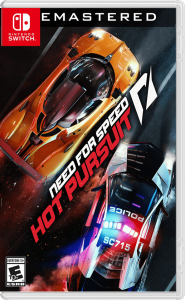
Need for Speed: Hot Pursuit Remastered Switch NSP XCI
Report Link Error
Select the broken download file, then submit the report.
Screenshots
About Game
Need for Speed: Hot Pursuit Remastered Switch NSP XCI frames driving as a contest between speed and control. Released on November 13, 2020, this Electronic Arts racing game brings the rivalry between racers and police officers to Seacrest County, pairing exotic cars, pursuit technology, and high-pressure events with a structure built for repeated competition rather than a character-led story.
How the Two Career Paths Shape the Experience
The central choice in Need for Speed: Hot Pursuit Remastered is not about following a single protagonist. Its careers instead offer two sides of the same road conflict: the racer career and the cop career. Each has its own events, vehicles, abilities, and progression, giving the game a different rhythm depending on which side a player selects.
Racers are concerned with winning events, escaping the police, and building a reputation through fast, risky driving. Their challenge is often evasive: maintaining momentum, finding room to pass, and using defensive tools to stay ahead when pursuit pressure builds. The appeal comes from turning a seemingly clean race into a tense escape, where a small mistake can allow the police to close the gap.
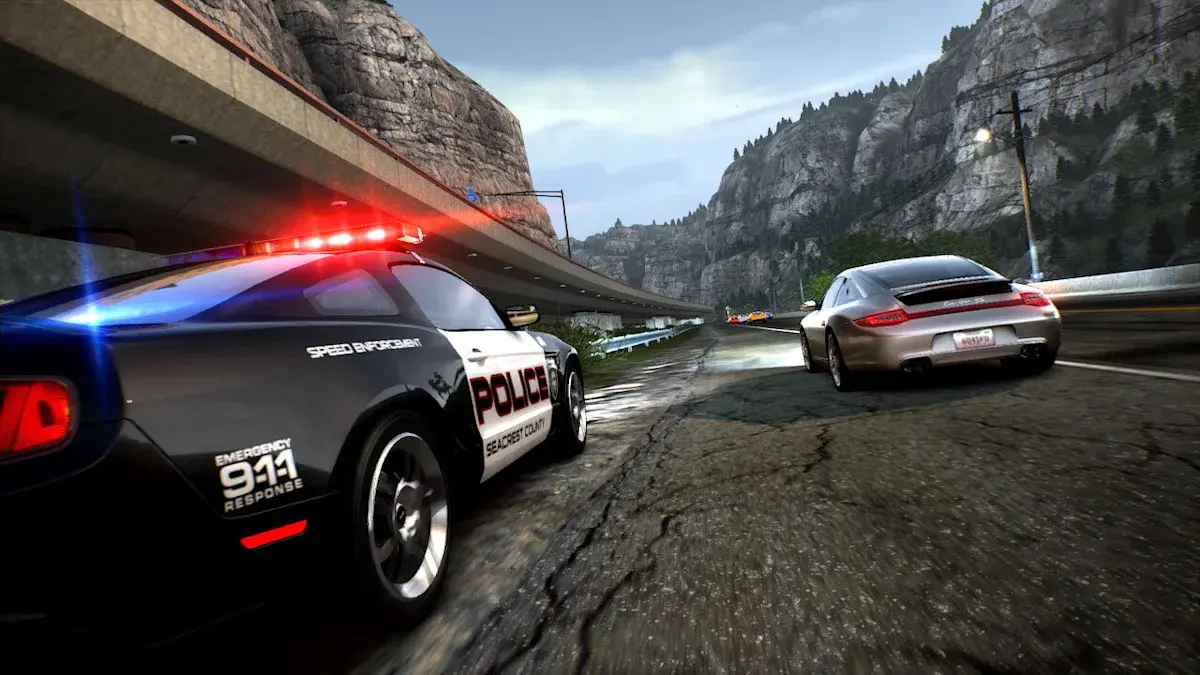
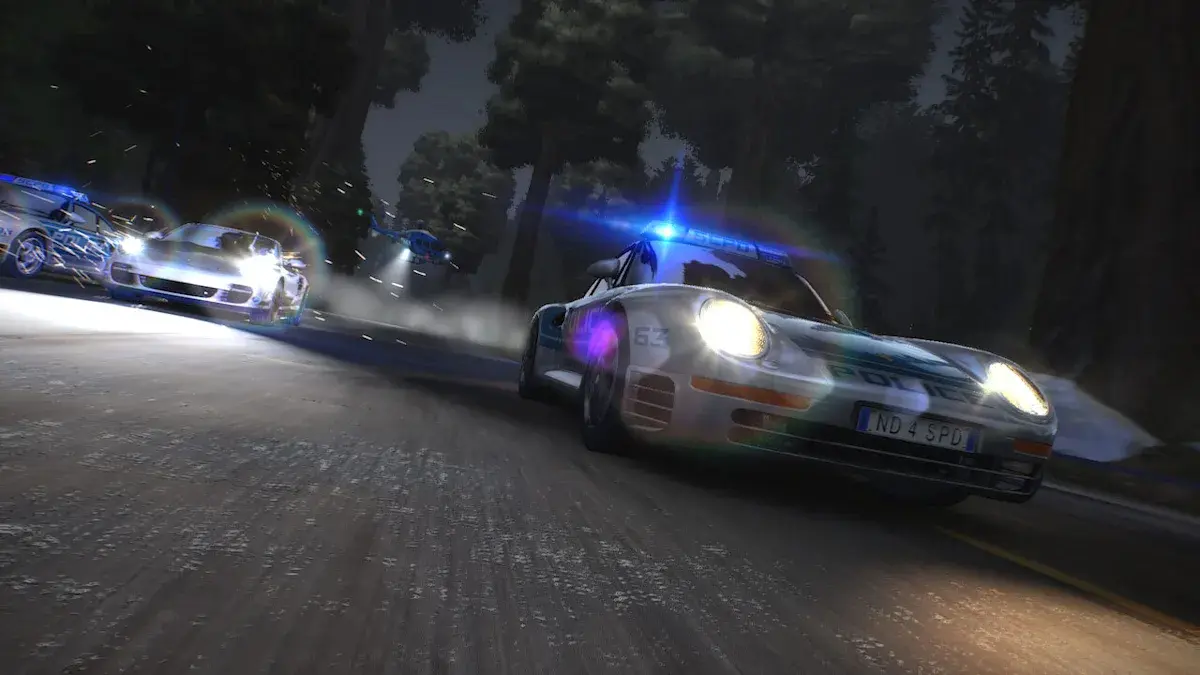
The cop career reverses those priorities. Police officers pursue illegal racers, aim to stop them, and use pursuit technology to create openings for takedowns. Rather than simply setting the fastest time, the police player has to read an opponent’s line, anticipate a route, and decide when a gadget or contact will produce a decisive result. This makes the cop career more focused on interception and pressure.
Both paths progress through their own challenges, so the rivalry remains active without becoming a linear narrative. The game’s licensed exotic cars and selectable paint jobs also support the fantasy of choosing a machine suited to a particular event. For players who enjoy switching roles, the two careers give Seacrest County two distinct competitive perspectives.
Seacrest County’s Roads: Coastlines, Forests, and Mountain Routes
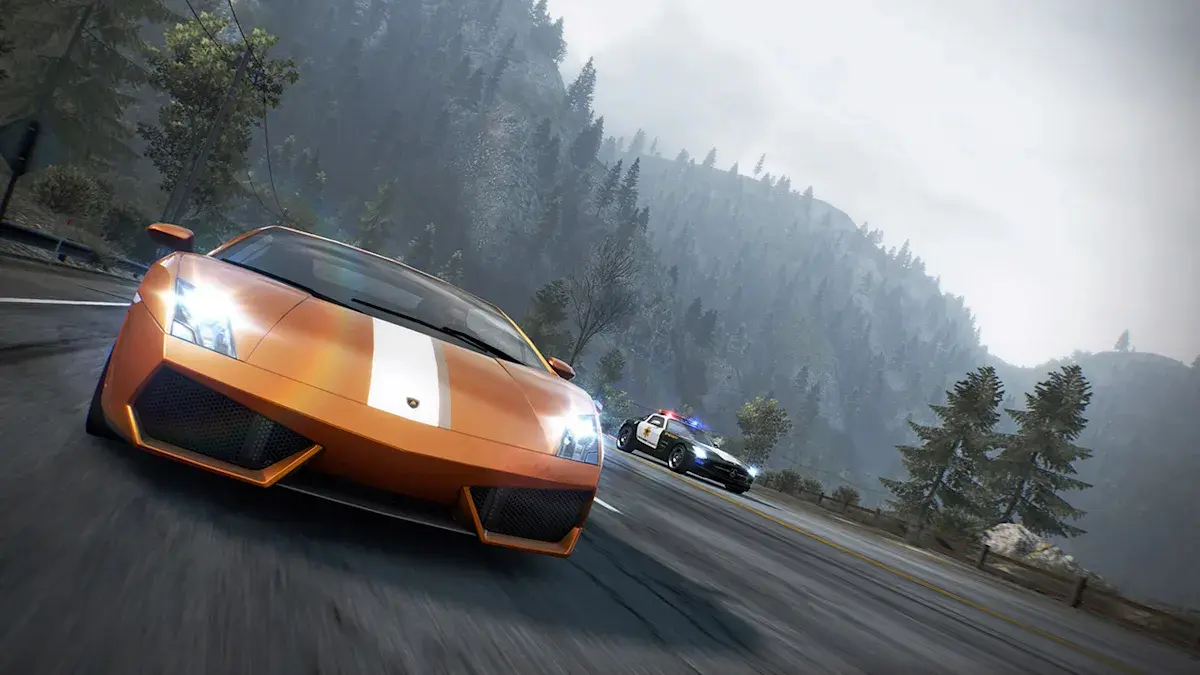
Seacrest County supplies the setting for races, time trials, and high-speed chases. Its roads move through sunny coastlines, dense forests, and winding mountain routes, creating a varied atmosphere for an arcade racer built around long stretches of speed and sudden danger.
Coastal sections can encourage outright pace and broad racing lines, while forest roads narrow the player’s attention and make hazards feel closer. Mountain routes add turns and elevation to the mix, demanding more careful positioning when a racer needs to preserve a lead or a cop wants to force an error. The point is not simulation-level road study, but quick interpretation under pressure.
That variety is especially useful in Hot Pursuit events. A route that seems favorable to a fast racer may also give pursuing police a chance to set up an attack. A winding section can help an escaping driver break a clean line of sight, yet it can also make a poorly timed maneuver more costly. Seacrest County’s different environments keep high-speed chases from feeling like the same straight-line contest repeated.
Why Arcade Speed and Vehicular Combat Work Together
The driving model favors accessible arcade racing, but speed alone is not enough. Vehicular combat gives each encounter a tactical layer: players make rapid choices about positioning, evasion, attacks, and when to protect a lead rather than chase another small burst of speed.
Police can use tools such as spike strips and EMPs to disrupt racers. Racers have their own answers, including turbo boosts and defensive options that can help them withstand or avoid pursuit tactics. These systems work because they are tied to the immediate problem on the road. A gadget is most useful when it is timed around an opponent’s movement, an approaching hazard, or a moment when the route limits escape options.
Takedown pressure also changes the meaning of contact. The goal is not merely to bump another vehicle; it is to turn a chase into an advantage while still keeping control of one’s own car. The resulting gameplay can shift quickly between clean racing, evasive driving, and direct confrontation. That balance suits players looking for a racing game with a more aggressive competitive edge than a standard lap-based event.
Presentation supports that urgency through the contrast between polished exotic cars and the open roads of Seacrest County. The remastered release includes enhanced visuals, while the setting’s coastlines, forests, and mountains give the action a changing backdrop instead of a single fixed circuit environment.
Autolog and the Social Side of Competition
Need for Speed Hot Pursuit Remastered Autolog extends competition beyond the moment when players are online together. The system compares player stats with friends and creates asynchronous challenges across the game’s modes. A result in a race or time trial can become a target for someone else to answer later.
This is a useful fit for a game built around individual events and measurable performance. A player can return to improve a result, test a different vehicle, or revisit an event after seeing a friend’s statistics. The challenge is personal without requiring every competitor to be present at the same time.
Autolog also adds replay value to both career paths. A racer’s best escape or a cop’s strongest pursuit can be part of an ongoing comparison, encouraging another run even after an event has been completed. It makes skill improvement visible and gives the game’s broad collection of races, time trials, and Hot Pursuit events a continuing social context.
Cross-Platform Multiplayer on Nintendo Switch
The Nintendo Switch version supports cross-platform multiplayer, allowing players to compete with friends using other gaming systems. For an Electronic Arts racing game focused on direct rivalry, that support helps keep the multiplayer side connected across platform preferences.
Multiplayer gives the racer-versus-cop structure its most immediate form. Human opponents can react to a blockade, bait a pursuit tool, or alter their driving line in ways that make each chase less predictable. Combined with Autolog’s asynchronous challenges, cross-platform play offers both real-time competition and a reason to keep comparing results between sessions.
Need for Speed: Hot Pursuit Remastered Switch NSP XCI is listed for USA, EUR, JPN, and Asia regions, with English and Chinese language support. Its base firmware is v9.1.0, while the update firmware is v11.0.1.
5 Practical Steps for Handling a Hot Pursuit
- Match the car to the event. Consider the strengths and weaknesses of the chosen vehicle before committing to a race or pursuit. A comfortable choice can make it easier to preserve control when traffic, turns, or opponents create pressure.
- Learn the route. Pay attention to the character of the road, from open coastal runs to forest sections and mountain turns. Familiarity helps reveal where speed is safe and where an opponent may try to attack.
- Respect hazards. A high-speed chase can change quickly around a sharp bend, blockage, or busy stretch of road. Leave enough room to react instead of treating every section as an invitation to drive flat out.
- Use pursuit tech with purpose. Spike strips, EMPs, turbo boosts, and other tools are more effective when timed around an opponent’s position. Avoid spending a valuable advantage before it can meaningfully affect the chase.
- Adapt to the other side. Racers should expect pressure and look for ways to keep moving; cops should anticipate evasive lines and opportunities for a takedown. The best Hot Pursuit strategy changes with the road, the vehicle, and the tactics already in play.
This structure makes the game particularly suitable for players who want fast arcade racing with competitive aggression, varied events, and the option to approach the same roads from opposing sides of the law.