Sphinx and the Cursed Mummy Switch NSP
Report Link Error
Select the broken download file, then submit the report.
Screenshots
About Game
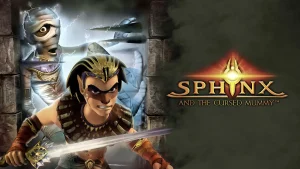
Sphinx and the Cursed Mummy Switch NSP brings an ancient Egyptian action-adventure to Nintendo Switch, pairing mythological danger with a deliberately unusual partnership. Released on January 29, 2019, this THQ Nordic-published version of Eurocom’s game follows a demigod in training and a cursed prince whose sharply different abilities drive both the story and its challenges.
An Ancient Egyptian Adventure Revisited on Nintendo Switch
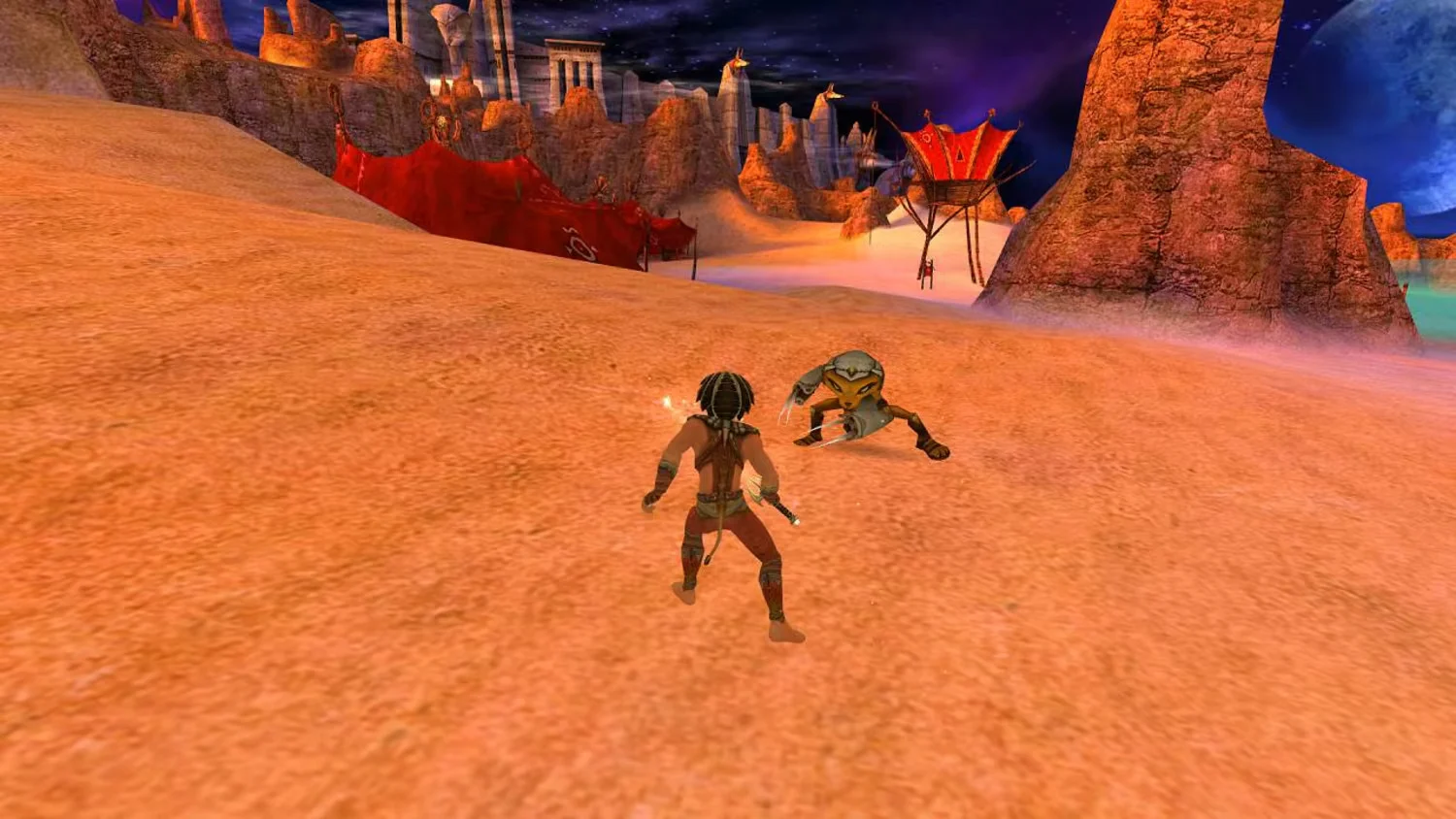
Set amid mystical lands, temples, powerful artifacts, and ancient lore, Sphinx and the Cursed Mummy uses its Egyptian setting as more than decoration. Exploration leads through spaces built around obstacles, secrets, combat encounters, and environmental puzzles, while the wider conflict concerns the god Set and a threat to the world.
The journey begins with Sphinx becoming caught up in Set’s plans while attempting to recover a stolen relic. Along the way, he encounters Prince Tutankhamen, who has been transformed into a mummy by a curse. Their shared goal gives the adventure a clear dramatic direction: Sphinx must confront the danger surrounding Set, while the duo also seeks a way to break Tutankhamen’s curse.
That premise allows the game to shift between heroic action and stranger, more comic puzzle situations. Sphinx is a capable adventurer suited to direct encounters and traversal, while the Mummy’s condition makes him a much less conventional problem-solver. The result is an ancient Egyptian adventure with room for danger, discovery, and eccentric character-driven moments rather than a single uninterrupted combat campaign.
For players interested in a game where exploration is tied to mythology and shifting character roles, the setting provides a useful sense of place. Temples, hidden areas, collectible items, and lore all support the feeling of moving through a larger world with secrets still to uncover.
Why the Two-Hero Structure Shapes Every Challenge
The central idea behind Sphinx and the Cursed Mummy gameplay is the contrast between its two protagonists. Players alternate between Sphinx and the Mummy, and each is built to approach obstacles differently. This is not simply a cosmetic change of perspective: character switching informs how puzzles are read and how routes through an area are understood.
Sphinx is agile and action-oriented. His role naturally suits combat, platforming, gathering items, and exploring areas that demand movement and direct interaction. The Mummy is more limited in how he moves, but his cursed state gives him invulnerability. That constraint-and-advantage balance is the foundation for many of the game’s puzzle ideas.
Some situations call for the character who can reach, fight, or traverse. Others require the character who can endure conditions that would stop the other hero. The game therefore asks players to avoid treating every obstacle as a straightforward action challenge. A blocked path can be a prompt to switch characters, reconsider an apparent solution, or identify a property unique to one member of the duo.
This structure also gives the adventure a varied pace. Moments of active exploration with Sphinx can give way to more deliberate puzzle-solving with the Mummy, then return to combat or platforming. The two protagonists are tied together by the story, but their mechanical differences are what make their partnership meaningful during play.
Sphinx’s Action Toolkit: Combat, Platforming, and Exploration
Sphinx carries the more familiar action-adventure side of the experience. His toolkit includes sword and shield combat, magical abilities, platforming, item collection, and exploration. These elements make him the character most directly associated with confronting threats and navigating the world’s physical challenges.
Sphinx combat centers on engaging enemies with his equipment and abilities, while the adventure’s action component is complemented by places that ask for careful movement. Platforming sections bring timing and navigation into the mix, preventing exploration from becoming only a matter of walking from one objective to the next.
Magical abilities add another dimension to Sphinx’s role. Alongside swords and shields, they reinforce the game’s mythological atmosphere and give the hero more than one way to engage with the world. Items and upgrades collected during the journey further connect exploration to progression: searching beyond the most obvious route can contribute to the abilities available over time.
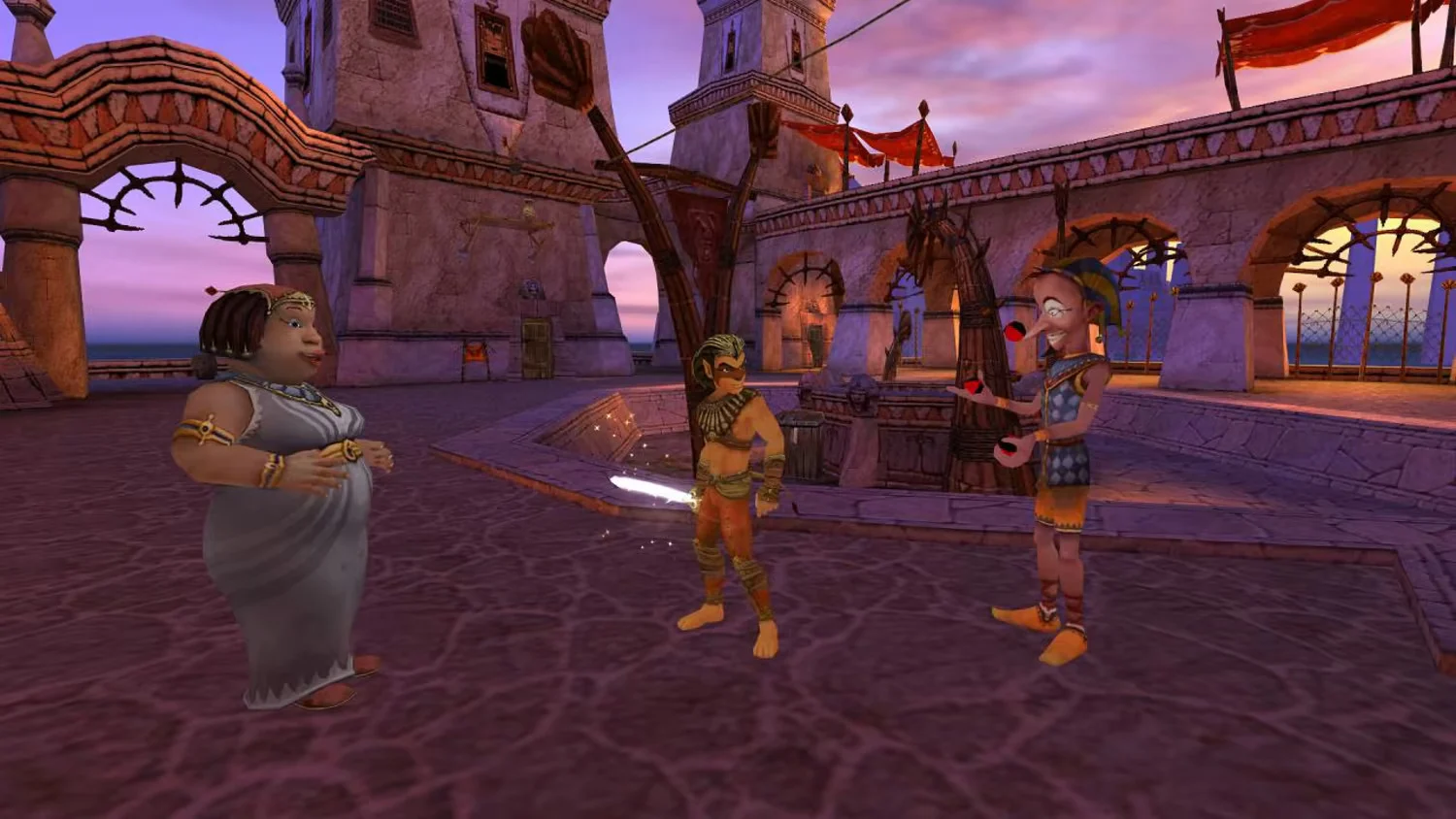
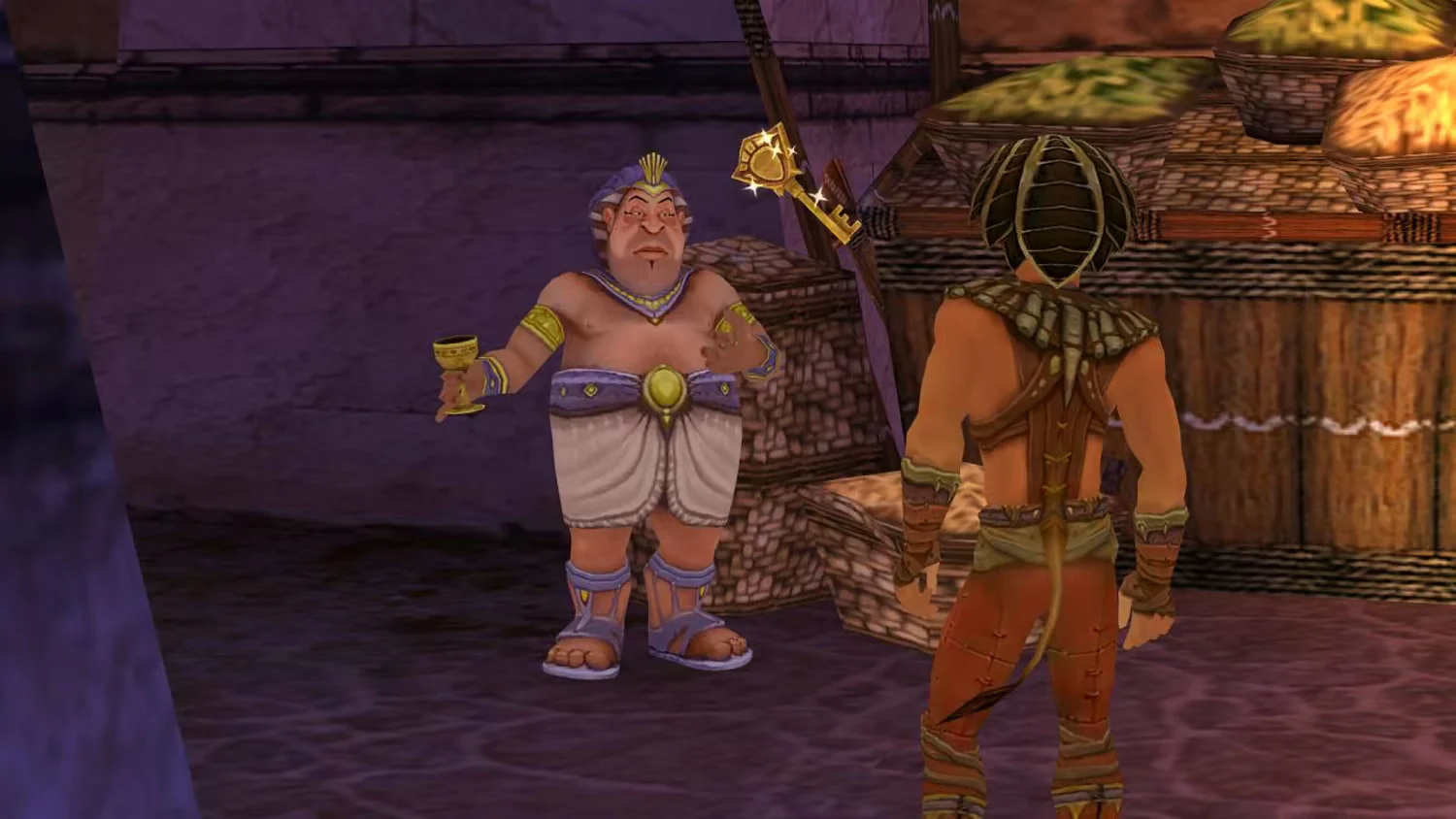
His sections are also where the game’s broad adventure structure is most visible. Sphinx travels through dangerous environments, meets a range of characters, finds secrets, and pushes toward the larger conflict. The combination of combat, movement, and discovery keeps his side of the journey active, even when a particular goal ultimately depends on the Mummy’s unusual talents.
Enemies, Mythical Creatures, and Boss Encounters
The threat level rises beyond environmental obstacles through a variety of enemies, mythical creatures, and boss battles. These encounters give Sphinx’s combat tools a practical purpose and place action challenges alongside the game’s puzzle-focused sequences.
Boss battles offer larger confrontations within the adventure’s Egyptian fantasy setting, while regular foes and creatures help populate the journey between major objectives. The game does not rely on one kind of challenge alone: combat is part of a broader rhythm that includes traversal, hidden areas, item gathering, and puzzles involving both protagonists.
This balance matters because the Mummy’s invulnerability does not turn every problem into a fight. His role is limited in movement and designed around unconventional solutions, whereas Sphinx is equipped to meet danger more directly. The contrast lets action combat and puzzle-solving occupy distinct but connected places in the same adventure.
5 Practical Tips for Solving Puzzles and Exploring Thoroughly
- Test both heroes. If a route or obstacle seems impossible with Sphinx, switch to the Mummy and consider how his invulnerability and different limitations may change the situation.
- Question the obvious answer. The most direct-looking solution is not always the useful one, particularly in puzzles designed around the Mummy’s unconventional role.
- Match the task to the character. Use Sphinx for agile exploration, platforming, combat, and his magical abilities; reserve the Mummy for challenges that benefit from his unique condition.
- Search carefully. Take time around temples and other environments instead of only following the main route, since the adventure includes secrets and hidden areas.
- Watch for useful finds. Items and upgrades are part of progression, so collecting them can support the abilities needed during the journey.
These Sphinx and the Cursed Mummy tips are less about rushing toward a single solution and more about observing what the game is asking of each protagonist. The strongest approach is often to pause, inspect the environment, and reconsider which hero has the appropriate advantage.
Nintendo Switch Release Details: Date, Regions, and Languages
Sphinx and the Cursed Mummy Switch NSP refers to the Nintendo Switch release published by THQ Nordic and developed by Eurocom. It launched on January 29, 2019, with Europe and USA regions listed for this edition. Its genres are Adventure and Action.
The release supports English, German, Spanish, French, Italian, and Korean. Its Title ID is 0100BD500BA94000, and the listed base firmware is v6.2.0. The game’s blend of action combat, platforming, exploration, magical abilities, environmental puzzles, and two-character problem-solving makes it particularly suited to players looking for an adventure that alternates between direct heroic challenges and more deliberate puzzle scenarios.